Zucchinis from Sowing to Harvest
Growing Zucchini: The Gift That Keeps on Giving! 🥒🌱
If there’s one vegetable that knows how to produce a bumper crop, it’s the humble zucchini! These enthusiastic growers are famous for their generosity, and just two or three healthy plants can keep a small family supplied with fresh zucchini throughout summer. In fact, you may soon find yourself giving them away to friends and neighbours!
Zucchini are warm-season vegetables belonging to the squash family, and they’re surprisingly easy to grow. Whether you have a large veggie patch, a raised garden bed or just a few pots, there’s a zucchini variety to suit your space.
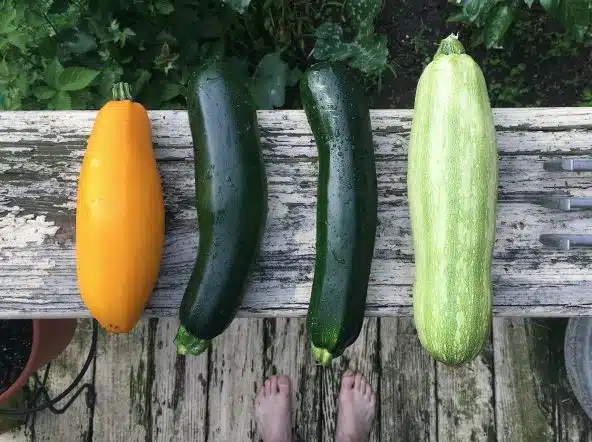
🌿 Bush varieties are ideal for smaller gardens, raised beds and large containers. Popular varieties include Black Beauty, Golden, Genovese, Lebanese, Grey, Cocozelle Di Tripoli, Ronde De Nice and Yellow Straightneck. Some are more compact than others, so allow plenty of room for their large leaves.
🌿 Trailing varieties have long, sprawling stems that can be trained up sturdy supports. None of the zucchini varieties currently listed at Seed Station are true trailing varieties, although some bush types have a more spreading growth habit.
| Zucchini variety | Growth habit |
|---|---|
| Black Beauty | Bush, fairly compact |
| Cocozelle Di Tripoli | Bush, vigorous and spreading |
| Genovese | Bush, fairly compact |
| Golden | Bush, compact |
| Grey | Bush, spreading |
| Lebanese | Bush, fairly compact |
| Ronde De Nice | Bush, spreading |
| Yellow Straightneck | Bush, fairly compact |
Best varieties for pots and smaller gardens: I’d recommend Black Beauty, Golden, Lebanese and Genovese. They have a bush growth habit, although they still need a generously sized container and plenty of room for their leaves.
☀️ Position: Give Them Sunshine and Good Soil
Zucchini love warmth and sunshine, so choose a position that receives at least 4–8 hours of direct sunlight each day.
A little shelter from strong winds is also helpful, particularly when plants begin flowering. Bees are essential for pollination, so a sunny, sheltered position makes their job easier.
With their enormous leaves and rapid growth, zucchini are hungry feeders. Preparing the soil before planting will make a big difference to how well they grow and produce.
- 🌱 Improve your soil by digging in plenty of well-rotted compost or aged animal manure.
- 🌱 Add organic fertiliser to provide nutrients throughout the growing season.
- 🌱 Create a planting pocket by digging a generous hole, filling it with compost and mixing some of the original soil back in. This gives young plants a nutrient-rich start.
- 🌱 Allow plenty of room for the large leaves to spread without crowding neighbouring plants.
Healthy soil produces healthy plants, and with zucchini, that usually means plenty of delicious fruits!
🌱 Sowing: Getting Your Zucchini Started
Zucchini seeds germinate quickly in warm soil, making them a satisfying vegetable for beginners and experienced gardeners alike.
Direct sowing is usually the easiest method once the danger of frost has passed and the soil has warmed.
- Prepare your planting area by loosening the soil and incorporating compost.
- Sow two seeds approximately 2 cm deep, allowing 60–90 cm between bush plants, or more for vigorous trailing varieties.
- Water gently and keep the soil consistently moist while the seeds germinate.
- Once seedlings have developed their first true leaves, remove the weaker seedling, leaving the strongest plant to grow.
🌼 Getting a head start: In cooler regions, seeds can be started indoors or in a greenhouse a couple of weeks before the weather is suitable for planting outside.
Use individual pots filled with quality seed-raising mix, and sow one seed per pot. Zucchini dislike having their roots disturbed, so transplant carefully while the seedlings are still young.
A little patience pays off! Zucchini grow so quickly in warm conditions that plants sown directly into the garden often catch up with those started earlier in pots.
💧 Maintenance: Keeping Your Plants Happy
Once zucchini get going, their growth can be astonishing. Those enormous leaves need plenty of water, particularly during hot Australian summers.
Water deeply and regularly, aiming the water at the base of the plant rather than over the leaves. Consistent moisture helps support steady growth and good fruit development.
Apply a generous layer of straw, sugarcane mulch or other organic mulch around your plants to help retain moisture, regulate soil temperature and suppress weeds.
Keep mulch slightly away from the main stem to prevent excess moisture collecting around it.
🐝 Where Are All the Female Flowers?
Don’t be surprised if your zucchini initially produces lots of flowers but no fruit!
Zucchini plants commonly produce male flowers first, with female flowers appearing a little later.
You can easily tell the difference:
- 🌼 Male flowers grow on long, slender stems.
- 🌼 Female flowers have a tiny zucchini-shaped swelling directly behind the flower.
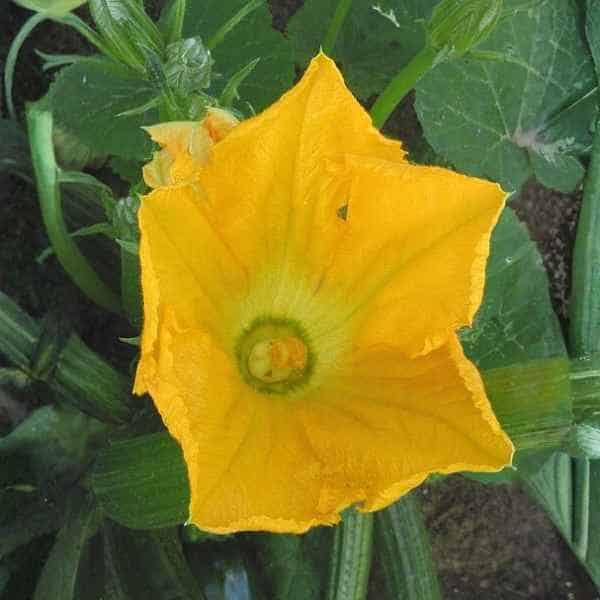


Bees normally transfer pollen between the flowers, but cool, wet or windy conditions can sometimes interfere with pollination.
If you notice tiny zucchini starting to develop and then shrivelling or rotting, poor pollination may be the culprit.
Hand pollination is easy! Simply pick a freshly opened male flower, remove its petals and gently brush the pollen-covered centre against the centre of a freshly opened female flower. Alternatively, use a small, soft paintbrush.
Early morning is usually the best time, when the flowers are fully open.
🍃 Powdery Mildew: Don’t Let It Spoil Your Harvest!
One of the most common problems zucchini growers encounter is powdery mildew, particularly as plants mature and the season progresses.
You’ll recognise it by the white, powdery patches appearing on the leaves. As the infection spreads, leaves may yellow, dry out and eventually die.
The good news is that a little powdery mildew doesn’t necessarily mean the end of your zucchini harvest! Healthy, established plants can often continue producing despite a mild infection.
Prevention is always easier than trying to control a severe outbreak.
🌬️ 1. Improve Airflow
Good airflow is one of the simplest ways to reduce the risk of powdery mildew.
Avoid overcrowding your plants and allow plenty of room between them. If the foliage becomes particularly dense, carefully remove a few older or badly affected leaves to improve circulation.
Always use clean secateurs and avoid removing too many healthy leaves, as the plant still needs them for photosynthesis and fruit production.
🥛 2. Try a Diluted Milk Spray
It might sound unusual, but ordinary milk diluted with water is a well-known gardening remedy that has shown promising results against powdery mildew on zucchini.
Make a simple milk spray:
- Mix 1 part milk with 9 parts water.
- For example, use 100 ml of milk and 900 ml of water.
- Pour into a clean spray bottle and shake gently.
- Spray both the upper and lower surfaces of affected leaves.
Apply approximately once a week, preferably early in the morning so the foliage has time to dry.
Milk sprays work best when used early, before mildew becomes widespread. They may help slow the development of the disease but won’t restore leaves that are already badly damaged.
💚 4. Keep Your Plants Healthy
A healthy zucchini plant is better equipped to cope with disease.
Water regularly, avoid overhead watering where possible, and remove badly infected leaves to reduce the spread.
And remember, powdery mildew often becomes more noticeable as zucchini plants approach the end of their productive life. Sometimes the simplest solution is to remove an exhausted plant and make room for something new.
🥒 Harvesting: Pick Often and Pick Young!
This is where zucchini really reward your efforts!
Depending on the variety and growing conditions, you may be harvesting your first zucchini around 6–8 weeks after sowing.
For the best flavour and texture, pick fruits while they’re still young and tender, generally around 10–20 cm long.
Smaller zucchini have a firmer texture, fewer developed seeds and a lovely mild, slightly nutty flavour. They’re delicious grilled, roasted, stuffed, added to stir-fries or grated into fritters and cakes.
The secret to a long and productive harvest is to pick regularly!
Check your plants every day or two during warm weather. Zucchini can grow remarkably quickly, and that perfectly sized fruit you spotted yesterday may become an enormous marrow before you know it!
Use a sharp knife or secateurs to cut the fruit from the plant, leaving a short piece of stem attached.
Regular harvesting encourages the plant to continue producing new fruits rather than putting all its energy into maturing older ones.
🌼 Don’t forget the flowers! Zucchini flowers are edible too. They’re delicious stuffed, lightly battered or added to salads. Just remember to leave enough female flowers to develop into zucchini and enough male flowers for pollination.
🌱 A Final Gardening Tip
If you love zucchini but dread having twenty ready to harvest at once, try sowing just one or two plants initially, then another five or six weeks later while the weather is still warm enough.
Staggering your sowings can help spread the harvest and provide younger, productive plants as the first ones begin to tire.
And if you do find yourself with a mountain of zucchini, don’t despair. There’s always zucchini slice, zucchini fritters, zucchini cake, or a grateful neighbour who’ll happily take a few off your hands!
Happy growing, and may your zucchini harvest be plentiful! 🌱🥒
.