



Yanchep Rose
$6.59
Diplolaena Angustifolia
- Seed Count 35
- Excellent Feature Plant
- Perennial
Only 1 left in stock
Description
Yanchep Rose is a little-known treasure from Western Australia, bringing soft winter colour, wildlife value, and resilient charm to the garden. It takes its name from the Yanchep region north of Perth, where it grows naturally among coastal dunes, limestone hills, and rocky ridges. You’ll often find it nestled into sandy soils, holding firm where other plants may falter.
This species is well-adapted to our climate and landscape, particularly those classic Aussie conditions that swing between dry heat and cold nights. It’s both drought and frost tolerant, which makes it a reliable choice for gardeners across much of southern and western Australia who want to establish long-term, water-wise plantings.
Yanchep Rose is modestly sized and well-behaved. It typically reaches around 1.5 metres in height, with a spread of about 1 metre, making it a great mid-level shrub in layered plantings. Its growth habit can range from compact and erect to a little more spreading, depending on conditions and age. This versatility gives it a natural, informal feel that is never too tidy, but never unruly either.
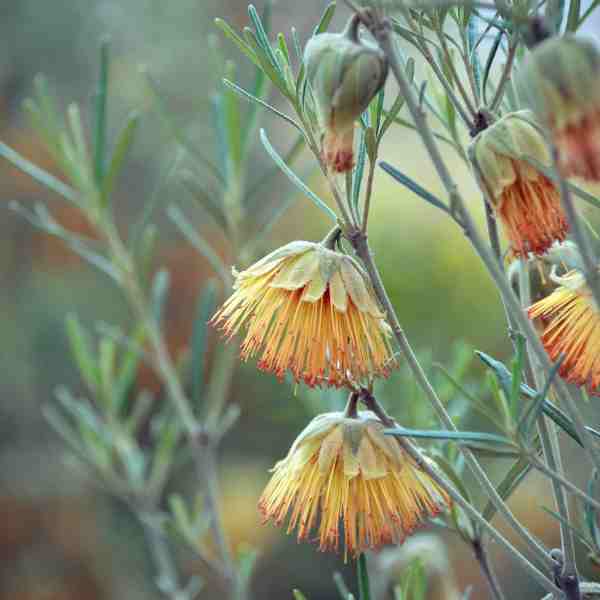
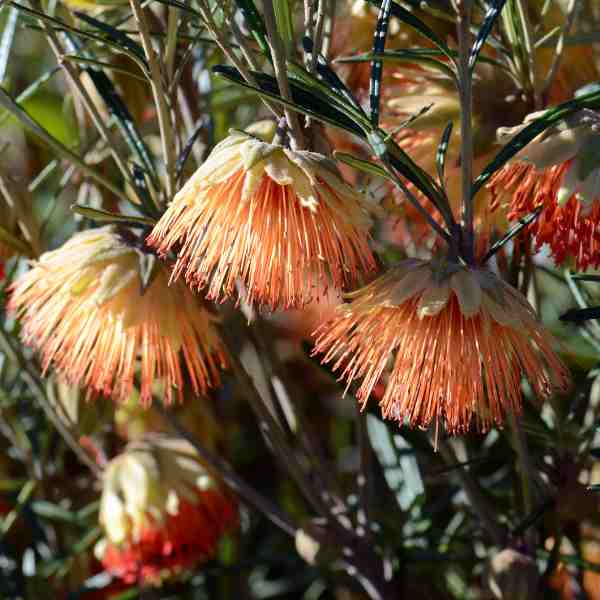
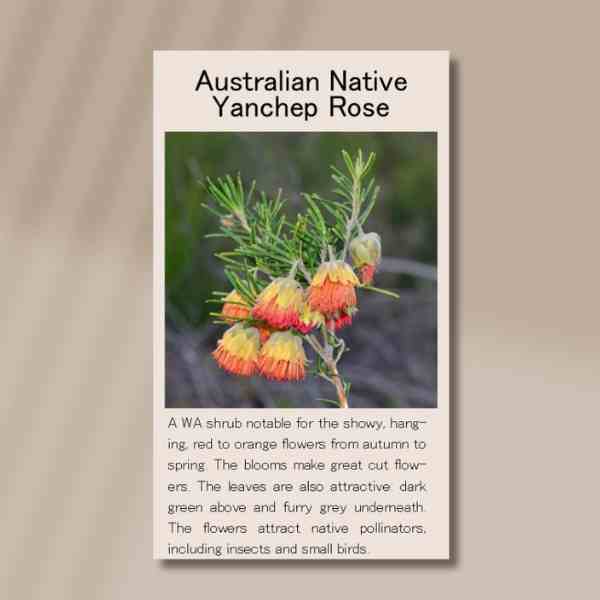
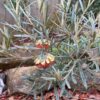
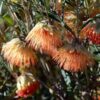
It blooms from June through to October, offering a gentle wash of colour right through the cooler months. The flowers are small and softly ornamental, with a mix of dusky red-orange outer petals and delicate yellow stamens. They sit just above the foliage, creating a lantern-like effect that draws the eye without being showy. Up close, they’re a delight being subtle, intricate, and full of quiet character. The foliage is just as appealing. The narrow leaves have a light, pleasant fragrance when crushed and add fine texture to the garden throughout the year.
The flowers attract native pollinators, including insects and small birds, making it an ecologically valuable choice for gardeners who want more than just good looks from their plants.
It works beautifully in bush-style gardens, but is equally comfortable in more formal beds as a soft filler or seasonal interest piece. Whether you’re planting on a larger scale or just tucking a few native species into a suburban backyard, this is the kind of plant that fits seamlessly into the big picture. Its compact shape and modest size also make it a good candidate for smaller gardens, nature strips, or native verge plantings.
| Method: Start in trays | Soil Temp: 15°C - 20°C |
| Cool Mountain: Nov - Dec | Position: Full sun to light shade |
| Arid: May - Jun | Row Spacing: 1m apart |
| Temperate: Apr - May | Planting Depth: 1mm |
| Sub Tropical: May - Jun | Harvest: 700 days |
| Tropical: Apr - May | Plant Height: 1.5m |
🌹 Yanchep Rose Grow Guide
Yanchep rose is a hardy, evergreen, coastal-style native shrub grown for its fine foliage, unusual pendant flowers, and strong value in wildlife-friendly gardens. It has a naturally elegant shape, with narrow leaves and warm-toned blooms that attract small pollinators. Once established, it is well suited to low-water gardens, sandy soils, verge plantings, native-style borders, rockeries, and exposed coastal gardens.
This is not a fast plant from seed. It rewards patience rather than urgency. Germination can be slow and uneven, and young seedlings need careful moisture control while they establish. Once the plant has settled into the garden, however, it becomes much tougher and easier to manage.
🌱 Sowing in Trays vs Direct Sowing
Yanchep rose can be grown from seed, but raising seedlings in trays is the best method. The seed can be slow to germinate, and tray sowing gives much better control over moisture, drainage, warmth, pests, and seedling protection. This is especially important because the seed is valuable and germination may not happen all at once.
Use a free-draining native seed-raising mix, ideally with a sandy texture. Fill small pots or tubes rather than shallow trays if possible, as young shrubs benefit from room for early root development. Sow the seed shallowly, cover lightly with fine sand or sieved seed mix, and water gently. Keep the mix just moist, never wet. Place the tray in a bright, protected position with good airflow.
Direct sowing is possible, but it is much less reliable. Seed can be lost to ants, birds, drying winds, heavy rain, weeds, or soil crusting. It also becomes difficult to tell whether the seed has failed or is simply taking longer than expected. Direct sowing is only worth considering in a very well-prepared sandy site where the area can be clearly marked and protected.
Best choice: sow in trays, tubes, or small pots first, then transplant once seedlings are sturdy and well rooted.
🔥 Seed Pre-Treatment
Yanchep rose seed benefits from pre-treatment. The seed can have a hard coat and may also respond well to smoke-based germination cues.
The most useful approach is to use smoke treatment before or during sowing. This can be done with smoke water, smoke granules, or smoke-infused vermiculite. Follow the product directions carefully, as strengths vary. Smoke treatment helps mimic natural germination triggers and can improve results.
A gentle warm water soak may also help soften the seed coat. Place the seed in warm water, not boiling water, and leave it to soak before sowing. Some growers also lightly nick or rub the seed coat, but this must be done carefully because damaging the inner seed can ruin it. For most gardeners, smoke treatment plus a warm water soak is the safest and simplest option.
After treatment, sow shallowly and be patient. Germination may take several weeks or longer, and seedlings may appear unevenly.
☀️ Soil and Position
Yanchep rose prefers free-draining soil above almost everything else. Sandy soil, sandy loam, gravelly soil, raised beds, and rockery-style plantings suit it well. It can tolerate poor, low-nutrient ground, but it does not like heavy, wet, compacted soil.
If your soil is clay-based, improve drainage before planting. Raised mounds, sandy native garden beds, or large containers are better than planting into heavy ground that stays wet. Avoid rich compost-heavy mixes, fresh manure, or strong fertilisers, as these can create soft growth and root stress.
Choose a position in full sun to light shade. Full sun encourages stronger flowering and compact growth. Light shade can be helpful in very exposed or harsh positions, but too much shade may lead to sparse growth and fewer flowers.
This shrub also benefits from good airflow. Avoid planting it where water pools, where roof runoff floods the root zone, or where dense plants crowd around its base.
🌿 Care and Maintenance
Water young plants regularly while they establish, keeping the soil lightly moist but never soggy. Once established, Yanchep rose becomes much more drought tolerant and usually needs only occasional deep watering during extended dry periods.
Mulch around the plant with a coarse, native-friendly mulch, such as gravel, coarse bark, or chunky wood mulch. Keep mulch away from the stem so moisture does not sit against the crown. Fine, wet mulch packed tightly around the base can encourage rot.
Feed lightly, if at all. Use only a low-phosphorus fertiliser suitable for native plants. Too much fertiliser can cause weak growth, leaf burn, or root problems. In many sandy or low-nutrient gardens, a light feed is enough.
Pruning should be gentle. Tip prune young plants to encourage bushiness, and lightly shape after flowering to keep the shrub compact. Avoid hard cutting into old, bare wood unless the plant is clearly shooting from lower stems. Regular light pruning is better than severe pruning.
🐝 Companion Planting Guide
Yanchep rose pairs beautifully with other waterwise, sun-loving plants that enjoy sharp drainage and low to moderate fertility. It works well in layered native-style gardens where different shrubs, groundcovers, and flowering plants support beneficial insects and small wildlife.
Good companions include kangaroo paw, fan flower, wax flower, grevillea, coastal rosemary, native daisies, everlasting daisies, correas, native grass clumps, blue flax lily, and small tea trees. These plants suit similar conditions and help create a resilient, low-water garden with texture, colour, and habitat value.
Avoid planting Yanchep rose beside thirsty vegetables, lawn edges, bog plants, or vigorous shrubs that compete heavily for water and root space. It is also best kept away from plants that need rich soil and frequent feeding, as their care needs are very different.
✂️ How to Harvest
Yanchep rose is mainly grown as an ornamental and habitat plant, but flowers and stems can be harvested lightly for small arrangements.
Harvest flowering stems when blooms are open and fresh. Use clean, sharp secateurs and cut in the cooler part of the day. Place stems straight into clean water. The flowers are delicate and are best used in small displays rather than large bunches.
Do not overharvest young plants. Allow the shrub to build a strong framework before cutting many stems. Once mature, light harvesting can be combined with gentle pruning to keep the plant neat.
For seed, leave selected flowers on the plant until the seed capsules mature and begin to dry.
⚠️ Common Issues and Fixes
| Issue | Likely Cause | Fix |
|---|---|---|
| Poor germination | No smoke treatment, hard seed coat, old seed, or inconsistent moisture | Use smoke treatment, try a warm water soak, sow fresh seed, and keep moisture steady |
| Seeds rot before sprouting | Mix too wet or poorly drained | Use a sandy native seed mix, water lightly, and improve airflow |
| Seedlings collapse | Damping off from excess moisture or poor ventilation | Use clean trays, avoid overwatering, and keep seedlings in a bright airy position |
| Slow seedling growth | Normal slow establishment, cool conditions, or low light | Be patient, provide bright light, and avoid overfeeding |
| Yellow leaves | Poor drainage, root stress, or unsuitable fertiliser | Check drainage, reduce watering, and use only native-safe low-phosphorus fertiliser |
| Leaf burn | Strong fertiliser or excess phosphorus | Flush the pot gently with water and avoid standard garden fertilisers |
| Root rot | Waterlogged soil or mulch against the crown | Replant into raised sandy soil and keep mulch clear of the stem |
| Sparse flowering | Too much shade or excessive feeding | Move to a sunnier position and reduce fertiliser |
| Leggy growth | Crowding, shade, or lack of pruning | Improve light, increase spacing, and tip prune lightly |
| Pest damage on new growth | Sap-sucking insects or stressed plants | Spray with water, encourage beneficial insects, and improve plant health |
| Plant fails after transplanting | Root disturbance or sudden exposure | Transplant carefully, harden off first, and water gently until established |
🌾 Detailed Seed Saving Guide
To save seed from Yanchep rose, choose the healthiest and most attractive plant. Look for strong growth, good flower colour, compact form, and no major disease problems. Seed saved from weak or stressed plants may produce less vigorous seedlings.
Leave flowers on the shrub until they finish and the seed capsules begin to mature. The capsules should become dry and firm before collection. Do not pick them too early, as immature seed may not germinate well. At the same time, do not leave them too long once they are dry, as seed may drop naturally.
Cut mature seed heads into a paper bag or place a clean tray underneath while collecting. Keep the material in a dry, shaded, airy place until fully dry. Once dry, gently crush or rub the capsules to release the seed. Work slowly, as the seed can be small and mixed with chaff.
Separate the seed from dry plant material by hand sorting, sieving, or gently blowing away the lighter chaff. Make sure the seed is completely dry before storage. Any trapped moisture can cause mould.
Store seed in a labelled paper envelope inside an airtight jar. Keep it in a cool, dark, dry place. Label with the plant name and collection date. For best results, use seed while it is fresh, as germination can decline with age.
When sowing your saved seed, use smoke treatment again. Even fresh seed may germinate slowly, so avoid discarding trays too early.
🌼 Final Thoughts
Yanchep rose is a beautiful choice for gardeners who enjoy resilient native shrubs, unusual flowers, and low-water planting. It is not the quickest seed to raise, but it is very rewarding once established. The key is to provide smoke treatment, sharp drainage, careful watering, low-phosphorus feeding, and patience.
For best results, start seed in trays or tubes, keep the mix sandy and lightly moist, and transplant only once seedlings are strong. Once settled, Yanchep rose becomes a graceful, hardy shrub that brings subtle colour, texture, and wildlife value to the garden.

Postage Charge
Orders under $40 attract a $5.50 shipping charge. Orders $35 and above have free shipping.
*** We cannot deliver to Parcel Lockers ***
Order Times
Seed orders are normally dispatched within three business days. You will receive an email when seeds are mailed out.
Postage Days
Seeds are mailed out Tuesday to Friday at 1pm. Except for the Friday of long weekends.
Postage Times
WA 2-3 Days: SA,NT 3-5 Days: NSW, ACT, QLD, VIC: 5-7 Days
Carrier
We use Australia Post Letter Postage for the majority of orders.
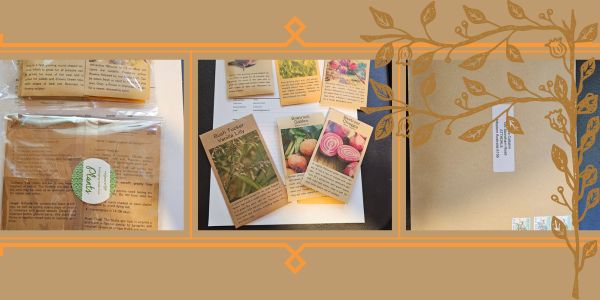
Not only are our seeds packed in recycled paper envelopes, we keep the theme going when we post out website orders. To protect your seeds from moisture and the letter box munchers (snails), we use a very special plastic free material made from plants. They are then put into recycled mailing envelopes. Green all the way ????????
Delivery Guarantee
We take great care to make sure your seeds arrive safely. If your order is lost or damaged in transit, we’ll happily send a replacement. Unfortunately, we can’t replace or refund orders that arrive later than the estimated delivery date, as delays can sometimes occur that are outside our control.
Please note that all dispatch and delivery times listed are estimates only. While we do our best to post promptly, delivery timeframes can vary due to postal service delays, weather events, or other unforeseen circumstances. We’re unable to take responsibility for any loss, damage, or cost that results from a late delivery.
An order is not considered missing until at least 20 business days have passed from the postage date. You’ll receive an email once your seeds have been posted, letting you know they’re on their way. If you don’t see it in your main inbox, please check your Spam or Promotions folders as sometimes our emails like to hide there.

Reviews
There are no reviews yet