



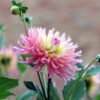
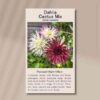

Dahlia Cactus Flower Mix
$4.95
Dahlia Variabilis
- Seed Count 20
- Curvaceous Blooms
- Perennial
- Height 120 cm
In stock
Description
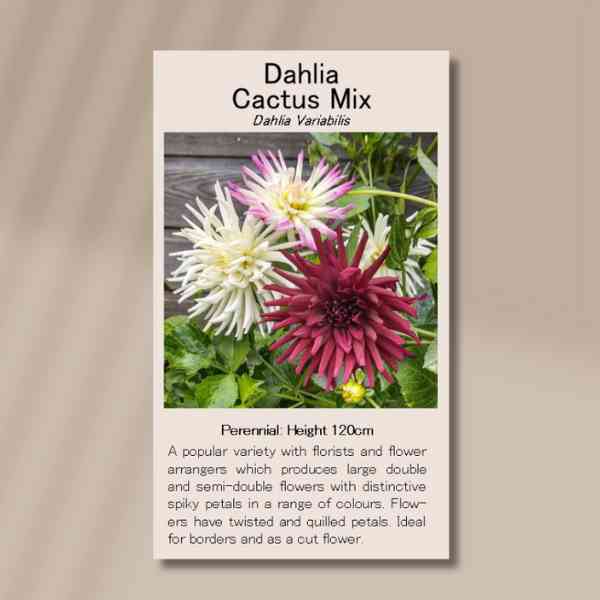
Dahlia Cactus Flower Mix brings together the dramatic form and bold presence that cactus dahlias are known for. Each bloom is made up of long, narrow petals that are rolled, quilled, or twisted along their length, tapering to pointed tips. This creates a spiky, starburst effect that sets cactus dahlias apart from the rounder, softer forms or pompon types.
Expect a lively combination of rich solids and eye catching bi colours, often with subtle shading or contrasting tips that add depth to each bloom. Warm tones sit comfortably alongside cooler hues, creating a balanced mix that works just as well in a mixed border as it does in a carefully planned cutting garden. For anyone who enjoys variety without chaos, this mix strikes a pleasing middle ground.
These dahlias are tall by nature, giving them a strong vertical presence in the garden. Their height allows the flowers to sit proudly above surrounding foliage, making them ideal as focal points or as a backdrop to lower growing plants. The long, straight stems are one of the reasons cactus dahlias are so valued by florists. They lend themselves beautifully to cutting, holding their shape and colour well in arrangements, whether used as a single statement bloom or as part of a generous bouquet.
One often overlooked quality of cactus dahlias is their resilience. The star shaped form of the flowers, combined with their narrower petals, means they are less likely to collect water and become heavy during periods of rain. This makes them more resistant to damage from wet weather compared to some of the fuller, broader petalled dahlia types. They also cope better with wind, as the blooms offer less resistance than large flat flowers. That said, their height means they can still benefit from staking, especially in exposed gardens or areas prone to strong gusts.
It is worth noting that dahlias are tender perennials and can be sensitive to frost. In warm climates, they can be grown on year after year, developing tubers that increase in size and vigour over time. In cooler areas, many gardeners choose to lift and store the tubers over winter, or treat the plants as annuals. This flexibility is part of what makes dahlias so widely grown across Australia, as they can be adapted to suit a range of conditions and gardening styles.
When grown from seed, dahlias follow a slightly different rhythm compared to those started from established tubers. Seed grown plants focus on building strength in their early years, gradually forming tubers beneath the soil. For this reason, it is best not to disturb the plants for the first two years if tuber development is the goal. In colder climates, starting plants in pots allows the developing tubers to be protected during winter, offering an extra layer of security for gardeners who experience frost.
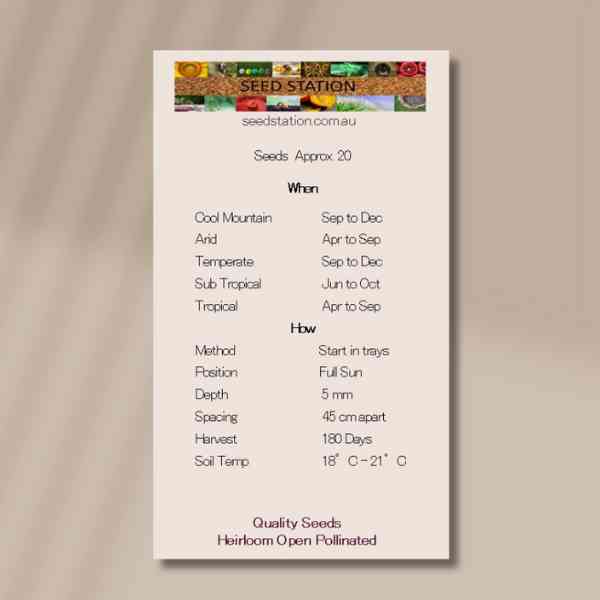
| Method: Sow direct | Soil Temp: 18°C - 21°C |
| Cool Mountain: Sep - Dec | Germination: 3 - 5 Days |
| Arid: Apr - Sep | Position: Full sun |
| Temperate: Sep - Dec | Row Spacing: 45cm apart |
| Sub Tropical: Jun - Oct | Planting Depth: 5mm |
| Tropical: Apr - Sep | Harvest: 115 days |
🌸 Dahlia Grow Guide
Dahlias are spectacular flowering plants grown for their bold blooms, long flowering display, and huge variety of shapes, colours, and sizes. They can be grown from seed, although seed-grown dahlias are naturally variable. This means the plants may not look exactly like the parent plant, which is part of their charm. Some may produce single flowers, while others may produce semi-double or decorative blooms in unexpected colours.
Unlike named dahlia varieties grown from tubers or cuttings, seed-grown dahlias are best enjoyed as a mixed surprise crop. They are excellent for garden beds, borders, pots, cottage gardens, pollinator patches, and cut flower growing. With warmth, light, fertile soil, and steady care, they can grow quickly into generous flowering plants.
🌿 Seed Pretreatment
Seed pretreatment is not required. Dahlia seed usually germinates readily when sown into a warm, moist, free-draining seed-raising mix.
There is no need to soak, chill, scarify, or treat the seed before sowing. Fresh seed generally gives the best germination. The most important factors are warmth, light, moisture, and good airflow.
Avoid overwatering during germination. Dahlia seedlings are vigorous once growing, but young seedlings can suffer if the mix is too wet or stagnant.
🪴 Sowing in Trays vs Direct Sowing
Dahlias can be grown either by direct sowing or by starting in trays, but tray sowing is usually the best method.
Starting seed in trays gives better control over moisture, warmth, spacing, and early protection. Dahlia seedlings are attractive to slugs, snails, and chewing insects, so raising them in a protected area helps them develop into stronger plants before they are placed into the garden.
To sow in trays, use a quality seed-raising mix that drains well but holds light moisture. Sow the seed shallowly and cover with a thin layer of mix. Keep the tray warm, bright, and evenly moist, but not wet. Once seedlings have developed strong leaves and a healthy root system, transplant them carefully into pots or directly into the garden.
Direct sowing can work in a finely prepared garden bed, especially where conditions are warm and pest pressure is low. However, direct-sown seedlings can be lost to drying, heavy rain, birds, slugs, snails, or competition from weeds. For this reason, tray sowing is more reliable for most gardeners.
When transplanting, handle seedlings gently and plant them at the same depth they were growing in the tray. Water them in well and protect them from harsh conditions until established.
🌞 Soil and Position
Dahlias grow best in a sunny, open position with good airflow. They need plenty of light to produce strong stems and generous flowers. Too much shade usually results in weak, stretched growth and fewer blooms.
The soil should be fertile, loose, and well drained. Dahlias are hungry plants, but they dislike sitting in wet soil. Heavy, waterlogged soil can cause root and tuber rot. Improve the soil with compost, aged manure, and organic matter before planting. If the soil is heavy clay, raise the bed slightly or add compost and coarse organic material to improve drainage.
In pots, use a premium potting mix rather than garden soil. Choose a container with excellent drainage holes. Larger varieties need larger pots, while compact varieties are better suited to containers and smaller spaces.
Dahlias benefit from soil that holds moisture evenly without becoming soggy. A mulch layer helps keep the root zone cooler, reduce water stress, and limit weed competition.
💧 Care and Maintenance
Dahlias grow quickly and need regular care to perform well. Keep the soil consistently moist, especially once plants are actively growing and forming buds. Water deeply rather than lightly sprinkling the surface. Avoid keeping the foliage constantly wet, as damp leaves can encourage fungal disease.
Feed regularly, but avoid overdoing high-nitrogen fertilisers. Too much nitrogen can produce large leafy plants with fewer flowers. A balanced fertiliser during early growth, followed by a flower-focused fertiliser as buds form, works well. Compost and aged organic matter are also excellent for building steady fertility.
Pinching young plants encourages bushier growth. When seedlings have several sets of leaves, pinch out the growing tip to encourage side shoots. This usually produces a fuller plant with more flowering stems.
Tall dahlias often need staking. Place stakes early so roots are not damaged later. Tie stems loosely as they grow, allowing room for movement and thickening. Wind and heavy flowers can snap unsupported stems, so staking is especially important for large-flowered types.
Deadheading is one of the most important maintenance jobs. Remove spent flowers regularly to encourage more blooms. Cut back to a strong pair of leaves rather than just removing the flower head. This keeps the plant tidy and promotes fresh flowering shoots.
Mulch around the base of plants once they are established. Keep mulch slightly away from the main stem to reduce the risk of rot.
🌼 Companion Planting Guide
Dahlias pair beautifully with plants that enjoy similar sunny, fertile, well-drained conditions. Good companions include zinnias, cosmos, marigolds, calendula, salvia, snapdragons, lavender, basil, thyme, parsley, chives, nasturtiums, alyssum, sunflowers, and ornamental grasses.
Flowering companions such as cosmos, calendula, alyssum, and salvia help attract bees, hoverflies, and other beneficial insects. These visitors improve garden biodiversity and may help reduce pest pressure naturally.
Herbs such as basil, chives, thyme, and parsley can be useful nearby because they attract pollinators and beneficial insects while making good use of garden space. Low-growing flowers such as alyssum and nasturtiums can soften the edges of dahlia beds and help cover bare soil.
Avoid planting dahlias too closely with very aggressive or thirsty plants. Large shrubs, dense groundcovers, and heavy-feeding crops can compete for nutrients and moisture. Dahlias also need airflow, so avoid crowding them tightly with plants that trap humidity around the leaves.
🌺 Harvesting Flowers
Dahlias are excellent cut flowers. Harvest blooms when they are almost fully open, as closed dahlia buds generally do not open well after cutting.
Use clean, sharp secateurs or scissors and cut early in the day when the plants are well hydrated. Choose strong stems and cut deeply into the plant, just above a pair of leaves. This encourages new flowering shoots to develop.
Remove lower leaves from the stem before placing flowers in water. Change the vase water regularly and recut stems if needed. Dahlias do not last as long as some cut flowers, but they make up for it with colour, shape, and abundance.
For the garden display, deadhead faded flowers before they set seed. This keeps plants flowering for longer and prevents energy being diverted into seed production unless seed saving is your goal.
⚠️ Common Issues and Fixes
| Issue | Likely Cause | Fix |
|---|---|---|
| Poor germination | Old seed, cold conditions, seed sown too deeply, or mix too wet | Use fresh seed, sow shallowly, keep warm, and maintain light moisture |
| Seedlings collapse | Damping off from excess moisture and poor airflow | Use clean seed mix, avoid overwatering, thin crowded seedlings, and improve airflow |
| Weak, leggy seedlings | Not enough light | Move to a brighter position and avoid overcrowding |
| Few flowers | Too much shade, too much nitrogen, poor feeding balance, or lack of deadheading | Provide full sun, use balanced feeding, avoid excess nitrogen, and deadhead often |
| Yellowing leaves | Overwatering, poor drainage, nutrient deficiency, or natural ageing | Check drainage, water correctly, feed if needed, and remove old leaves |
| Powdery mildew | Humid conditions, poor airflow, or overhead watering | Space plants well, water at soil level, remove affected leaves, and improve airflow |
| Slug and snail damage | Young soft growth attracting pests | Use barriers, hand-pick at night, reduce hiding places, and protect seedlings |
| Aphids | Soft new growth and flower buds | Hose off, squash small colonies, encourage ladybirds, or use insecticidal soap if needed |
| Stems snapping | Wind, heavy flowers, or lack of support | Stake early and tie stems loosely as they grow |
| Tuber or root rot | Waterlogged soil or mulch piled against stems | Improve drainage, avoid overwatering, and keep mulch away from stems |
| Small flowers | Lack of water, poor feeding, overcrowding, or plant stress | Water deeply, feed regularly, give space, and mulch |
| Plants wilt despite wet soil | Root damage or rot | Check drainage, reduce watering, and remove badly affected plants |
🌾 Detailed Seed Saving Guide
Saving dahlia seed is simple, but it is important to understand that seedlings may not grow true to the parent plant. Dahlias cross easily, and seed-grown plants can show a wide range of flower colours, forms, heights, and growth habits. This makes seed saving exciting if you enjoy surprises.
To save seed, choose the strongest and healthiest plants with flowers you like. Look for good stem strength, attractive flower colour, strong branching, and overall vigour. Avoid saving seed from weak, diseased, or poorly flowering plants.
Allow selected flowers to remain on the plant after they fade. Do not deadhead these blooms. The flower centre will gradually mature and form a seed head. It may turn dry, brown, and papery as the seed develops. Seed heads need time to mature properly, so be patient.
Once the seed head is dry, cut it from the plant and place it in a labelled paper bag. Keep it in a dry, airy place until fully crisp. Avoid sealing fresh seed heads in plastic, as trapped moisture can cause mould.
When fully dry, break the seed head apart gently with your fingers. Dahlia seed is usually dark, narrow, and papery. Separate the plump seeds from dry petals, chaff, and empty pieces. Not every piece in the seed head will be viable seed, so choose the firmest, best-formed seeds for storage.
Spread the cleaned seed on paper for several more days to make sure it is completely dry. Once dry, store it in a labelled paper envelope or airtight container in a cool, dark, dry place. Include the plant description and date saved. For example, note flower colour, height, or shape if you want to track traits over future generations.
Because dahlias cross readily, isolate plants if you want more control over parentage. For casual home seed saving, isolation is not essential, but the results will be mixed. If you want to experiment, save seed from several favourite plants separately and label each batch. This lets you compare which parent plants produce the most appealing seedlings.
🌟 Final Thoughts
Dahlias are generous, colourful, and rewarding plants that bring drama and abundance to the garden. They are usually best started in trays because this gives young seedlings protection and creates stronger transplants. Seed pretreatment is not needed, and germination is usually straightforward when seed is fresh and conditions are warm and moist.
The main keys to success are sun, fertile well-drained soil, steady watering, regular feeding, staking where needed, and frequent deadheading. Seed-grown dahlias are wonderfully unpredictable, making them ideal for gardeners who enjoy variety and surprise.
With good care, a small packet of seed can produce a vibrant display of unique plants, each with its own colour, shape, and character.
1 review for Dahlia Cactus Flower Mix

Postage Charge
Orders under $40 attract a $5.50 shipping charge. Orders $35 and above have free shipping.
*** We cannot deliver to Parcel Lockers ***
Order Times
Seed orders are normally dispatched within three business days. You will receive an email when seeds are mailed out.
Postage Days
Seeds are mailed out Tuesday to Friday at 1pm. Except for the Friday of long weekends.
Postage Times
WA 2-3 Days: SA,NT 3-5 Days: NSW, ACT, QLD, VIC: 5-7 Days
Carrier
We use Australia Post Letter Postage for the majority of orders.
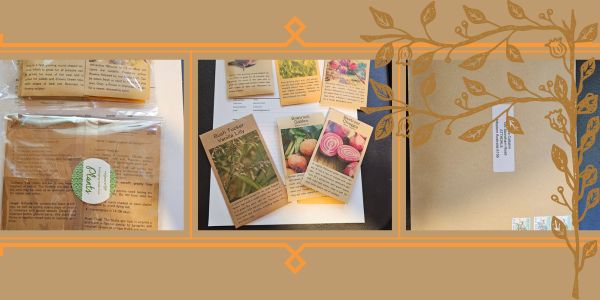
Not only are our seeds packed in recycled paper envelopes, we keep the theme going when we post out website orders. To protect your seeds from moisture and the letter box munchers (snails), we use a very special plastic free material made from plants. They are then put into recycled mailing envelopes. Green all the way ????????
Delivery Guarantee
We take great care to make sure your seeds arrive safely. If your order is lost or damaged in transit, we’ll happily send a replacement. Unfortunately, we can’t replace or refund orders that arrive later than the estimated delivery date, as delays can sometimes occur that are outside our control.
Please note that all dispatch and delivery times listed are estimates only. While we do our best to post promptly, delivery timeframes can vary due to postal service delays, weather events, or other unforeseen circumstances. We’re unable to take responsibility for any loss, damage, or cost that results from a late delivery.
An order is not considered missing until at least 20 business days have passed from the postage date. You’ll receive an email once your seeds have been posted, letting you know they’re on their way. If you don’t see it in your main inbox, please check your Spam or Promotions folders as sometimes our emails like to hide there.
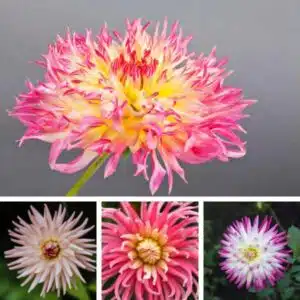
See all our verified customer reviews on our official CusRev profile.