



Carob
$6.59
Ceratonia Siliqua
- Seed Count 20
- Attractive Evergreen Tree
- 100 Year Life Span
Only 9 left in stock
Description
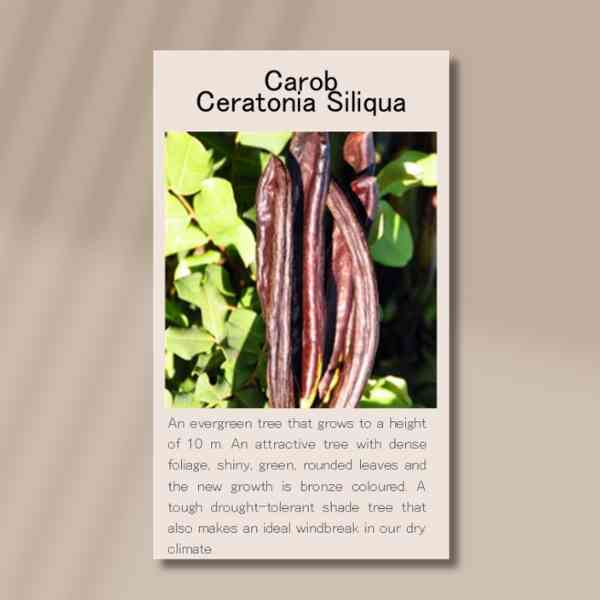
Carob is an evergreen tree that grows to a height of 10 m, best grown in temperate regions of Australia. An attractive tree with dense foliage, shiny, green, rounded leaves and the new growth is bronze coloured. They are often used as street trees and are good in an orchard situation. They are a tough drought-tolerant shade tree that also makes an ideal windbreak in our dry climate.
The pods can be eaten fresh or roasted and ground into powder. One of the world’s best natural sweeteners, the leathery pods are commonly used as a substitute for cocoa and have been cultivated throughout the Mediterranean as a staple food source for thousands of years. They are also a useful fodder feed.
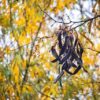
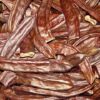
The emerging pod is pale green and turns a dark brown when mature. It is a flattened pod, 13 – 30 cm in length and about 2.5 cm wide, containing a sweet, chocolate tasting pulp and several bean-like seeds. The sugar content of the pods can be as high as 50%. A healthy alternative for caffeine and chocolate addicts, they are high in antioxidants and vitamin E and help to improve digestive health and lower cholesterol.
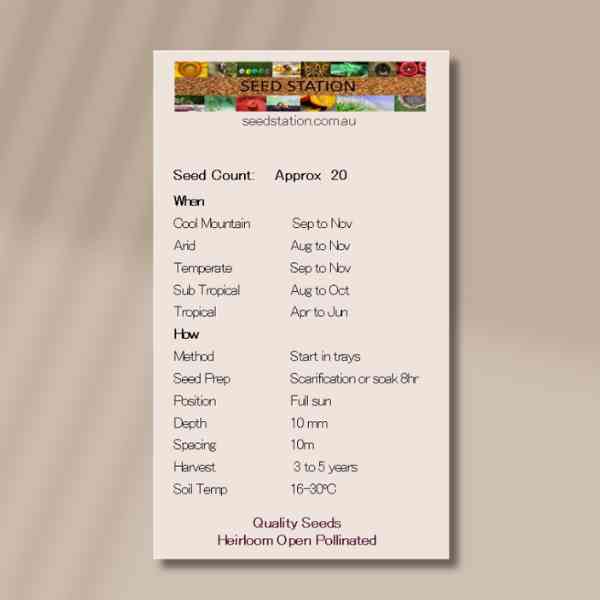
| Method: Start in Trays | Soil Temp: 16°C - 30°C |
| Cool Mountain: Sep - Nov | Position: Full sun |
| Arid: Aug - Nov | Row Spacing: 10 m apart |
| Temperate: Sep - Nov | Planting Depth: 10 mm |
| Sub Tropical: Aug - Oct | Harvest: 3 - 5 years |
| Tropical: Apr - Jun | Plant Height: 10 m |
🌳 Carob Grow Guide
🌱 Overview
Carob is a long-lived, evergreen fruiting tree valued for its glossy foliage, drought tolerance, shade, ornamental form, and sweet brown pods. The mature pods are commonly dried and ground into carob powder, which has a naturally sweet, cocoa-like flavour without caffeine. Carob is especially useful in dry gardens, food forests, shelterbelts, large edible landscapes, and low-water orchards.
This is a tough tree once established, but it is slow and deliberate in its early years. Seed-grown plants can take a long time to fruit, and not every seedling will produce pods. Carob trees may be male, female, or occasionally self-fertile, so gardeners wanting reliable pod production should grow more than one seedling or later graft a known fruiting form onto a strong rootstock.
Carob is best suited to gardeners who have space and patience. It rewards good early care with a resilient tree that can live for decades, handle dry conditions, and provide useful edible pods once mature.
🌾 Sowing in Trays Versus Direct Sowing
Carob is best started in deep pots or forestry tubes rather than direct sown into the ground. The seed has a very hard coat, and seedlings form a strong root system early, so container sowing gives better control over germination, moisture, drainage, and root development.
To sow in trays or pots, use a deep container rather than a shallow punnet. Fill it with a free-draining seed-raising mix or a blend of seed mix and coarse sand. Sow each seed around 1 to 2 cm deep, then water gently. Keep the mix lightly moist but never soggy. Warmth helps germination, but the seed should not be left in cold, wet mix.
Direct sowing is possible, but it is less reliable. Seeds may rot, be taken by pests, dry out before germinating, or struggle in compacted soil. Direct sowing also makes it harder to manage the taproot and protect young seedlings from weeds and grazing.
Best method: deep pot sowing is strongly recommended. It protects the seedling while allowing the young root system to develop properly before planting out.
💧 Seed Pretreatment
Carob seed has a very hard seed coat, so pretreatment is strongly recommended. Without it, germination may be slow, uneven, or poor.
The most reliable method is scarification followed by soaking. Gently nick, file, or sand a small section of the seed coat until the lighter inner layer is just visible. Do not cut deeply into the seed itself. After scarifying, soak the seeds in warm water for 24 hours. Seeds that swell are ready to sow.
Another method is to pour hot, not boiling, water over the seeds and leave them to soak as the water cools. However, careful hand scarification is often more dependable because carob seed coats can be extremely tough.
After soaking, sow the seeds promptly. Do not leave softened seeds sitting wet for too long, as they can rot.
🪴 Soil and Position
Carob prefers a full sun position with open airflow and plenty of space. Young trees need protection while small, but mature trees are highly tolerant of heat, dry conditions, wind, and poor soils.
The ideal soil is well drained, moderately fertile, and slightly alkaline to neutral. Sandy loam, loam, gravelly soil, limestone-based soils, and raised well-drained sites are suitable. Carob does not like waterlogged soil, especially while young. Heavy clay should be improved by planting on a mound or raised area so excess water drains away from the roots.
Avoid rich, constantly wet garden beds. Carob is a dryland tree and prefers deep watering followed by a drying period rather than frequent shallow watering.
For pots, grow young seedlings in deep containers with excellent drainage. Use a quality potting mix blended with coarse sand or fine gravel. Do not leave pots sitting in water.
🌿 Care and Maintenance
Carob needs careful watering while young. Keep seedlings evenly moist but not wet. Once planted out, water deeply to help roots move downward. As the tree establishes, reduce watering frequency and encourage it to become more self-reliant.
Mulch around young trees with coarse mulch, straw, bark, or gravel, keeping it away from the trunk. Mulch helps reduce weed competition and protects soil moisture, but a wet mulch collar against the trunk can encourage rot.
Weed control is important during the first few years. Carob grows slowly at first, and grass or weeds around the base can steal moisture and nutrients. Keep a clear ring around young trees.
Feeding should be modest. A light application of compost or a low-strength balanced fertiliser can help young trees, but heavy feeding is not needed. Too much nitrogen may encourage soft leafy growth rather than strong structure.
Prune lightly while young to create a strong shape. Choose one main trunk if you want a tree form, or allow several stems if you prefer a broad shelter or hedge form. Remove weak, crossing, damaged, or badly placed branches. Mature carob trees usually need little pruning beyond shaping and removing dead wood.
Carob can become a large tree, so plant it where it will not crowd buildings, pipes, paving, or smaller garden beds.
🌼 Companion Planting Guide
Carob grows well with companions that enjoy sun, drainage, and low to moderate water. It suits Mediterranean-style gardens, dryland orchards, herb gardens, and food forest edges.
Good companions include lavender, rosemary, thyme, oregano, sage, santolina, yarrow, calendula, nasturtium, borage, comfrey, pomegranate, fig, olive, grapevine, bay tree, and drought-tolerant native shrubs.
Flowering herbs are especially useful because they attract bees, hoverflies, lacewings, and other beneficial insects. Groundcovers and herbs can also help protect the soil surface, but keep them away from the trunk while the tree is young.
Avoid planting carob beside thirsty crops that need constant irrigation, such as celery, mint in open ground, watercress, or heavily watered leafy greens. Also avoid crowding it with vigorous trees that will shade it before it is established.
✂️ How to Harvest
Carob pods are ready to harvest when they turn deep brown, dry, leathery, and sweet-smelling. Mature pods should feel firm and may rattle slightly when fully dry. Green pods are not ready and should be left on the tree to mature.
Harvest by hand or with clean secateurs. Avoid tearing branches, as fruiting wood can be damaged. Spread harvested pods in a dry, airy place to finish curing if they still feel slightly flexible.
Once fully dry, pods can be stored whole in airtight containers. They can also be broken, deseeded, roasted lightly if desired, and ground into powder. The seeds are extremely hard and should not be ground in ordinary kitchen equipment unless they have been removed first.
Use only clean, fully mature pods. Discard mouldy, insect-damaged, or damp pods.
⚠️ Common Issues and Fixes
| Issue | Likely Cause | Fix |
|---|---|---|
| Poor germination | Hard seed coat not treated | Scarify seed carefully, soak for 24 hours, and sow promptly |
| Seeds rot before sprouting | Mix too wet or too cold | Use free-draining mix, avoid overwatering, and keep conditions warm |
| Seedlings fail after sprouting | Poor drainage or root disturbance | Use deep pots, avoid soggy soil, and transplant carefully |
| Yellow leaves | Waterlogging, nutrient stress, or cold wet soil | Improve drainage, reduce watering, and feed lightly only if needed |
| Slow growth | Normal early behaviour, low warmth, or root restriction | Use deep containers, provide full sun, and avoid disturbing roots |
| Leaves dropping | Drought stress in young plants or transplant shock | Deep water, mulch lightly, and protect from harsh wind while establishing |
| No pods after many years | Tree may be male, too young, or lacking pollination | Grow several trees, graft a known fruiting form, or ensure a compatible pollen source nearby |
| Flowers but no pods | Poor pollination, unsuitable tree sex, or stress | Improve pollinator habitat, reduce stress, and check whether a fruiting tree is present |
| Branch breakage | Heavy pods, poor structure, or wind exposure | Train young trees early and remove weak crossing branches |
| Scale insects | Stressed growth or poor airflow | Prune lightly for airflow, hose off pests, and use horticultural oil if needed |
| Root problems | Wet soil or planting too deeply | Plant into raised, well-drained soil and keep the trunk base clear |
🌰 Detailed Seed Saving Guide
To save carob seed, choose fully mature, dry brown pods from a healthy, productive tree with good flavour and strong growth. Pods should be sweet-smelling, firm, and free from mould or insect damage.
Break the pods open carefully and remove the hard brown seeds. Carob seeds are very tough, smooth, and long-lasting. Discard any cracked, shrivelled, soft, or damaged seeds.
Wash the seeds if they are sticky with pod pulp, then spread them on a plate or mesh screen in a shaded, airy place until completely dry. Make sure they are fully dry before storage, as trapped moisture can cause mould.
Store the seed in a labelled paper envelope inside an airtight jar. Keep it in a cool, dark, dry place. Add a silica gel sachet if humidity is a concern. Label the seed with the plant name, collection date, pod flavour notes, and parent tree performance if known.
Seed-grown carob can vary widely. Some seedlings may grow strongly, some may be slower, and some may not produce pods. Because male and female trees can occur from seed, saving and sowing several seeds gives the best chance of raising a useful fruiting tree later.
Before sowing saved seed, use the same pretreatment method: scarify, soak, and sow into a deep container.
🌳 Final Thoughts
Carob is a slow but valuable tree for gardeners with space, patience, and well-drained soil. Its main needs are simple: scarified seed, deep pots, full sun, excellent drainage, careful early watering, and minimal root disturbance.
Once established, carob becomes tough, elegant, drought tolerant, and highly useful. It can provide shade, structure, habitat, and sweet edible pods for many years, making it a worthwhile choice for dry edible landscapes and long-term garden planning.
3 reviews for Carob

Postage Charge
Orders under $40 attract a $5.50 shipping charge. Orders $35 and above have free shipping.
*** We cannot deliver to Parcel Lockers ***
Order Times
Seed orders are normally dispatched within three business days. You will receive an email when seeds are mailed out.
Postage Days
Seeds are mailed out Tuesday to Friday at 1pm. Except for the Friday of long weekends.
Postage Times
WA 2-3 Days: SA,NT 3-5 Days: NSW, ACT, QLD, VIC: 5-7 Days
Carrier
We use Australia Post Letter Postage for the majority of orders.
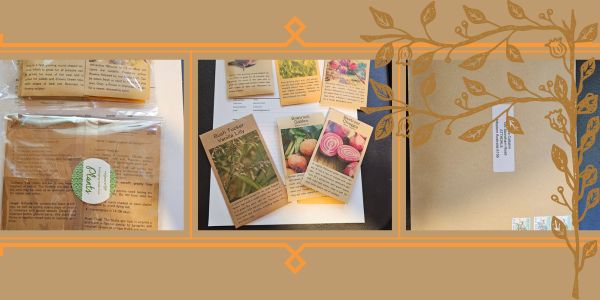
Not only are our seeds packed in recycled paper envelopes, we keep the theme going when we post out website orders. To protect your seeds from moisture and the letter box munchers (snails), we use a very special plastic free material made from plants. They are then put into recycled mailing envelopes. Green all the way ????????
Delivery Guarantee
We take great care to make sure your seeds arrive safely. If your order is lost or damaged in transit, we’ll happily send a replacement. Unfortunately, we can’t replace or refund orders that arrive later than the estimated delivery date, as delays can sometimes occur that are outside our control.
Please note that all dispatch and delivery times listed are estimates only. While we do our best to post promptly, delivery timeframes can vary due to postal service delays, weather events, or other unforeseen circumstances. We’re unable to take responsibility for any loss, damage, or cost that results from a late delivery.
An order is not considered missing until at least 20 business days have passed from the postage date. You’ll receive an email once your seeds have been posted, letting you know they’re on their way. If you don’t see it in your main inbox, please check your Spam or Promotions folders as sometimes our emails like to hide there.

See all our verified customer reviews on our official CusRev profile.
See all our verified customer reviews on our official CusRev profile.
I have not planted this yet.
See all our verified customer reviews on our official CusRev profile.