

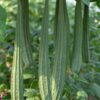

Luffa
$4.95
Luffa Aegyptica
- Seed Count 5
- Also known as Vegetable Sponge
- Annual
In stock
Description
When most people hear the word Luffa,” they think of the natural sponge hanging in the shower. And it is true, Luffa Aegyptica is the very plant that, when left to mature and dry on the vine, produces those fibrous sponges we know so well. But before it becomes a scrubber for the bath or kitchen, luffa is also a delicious and versatile vegetable that deserves a place on the dinner table.
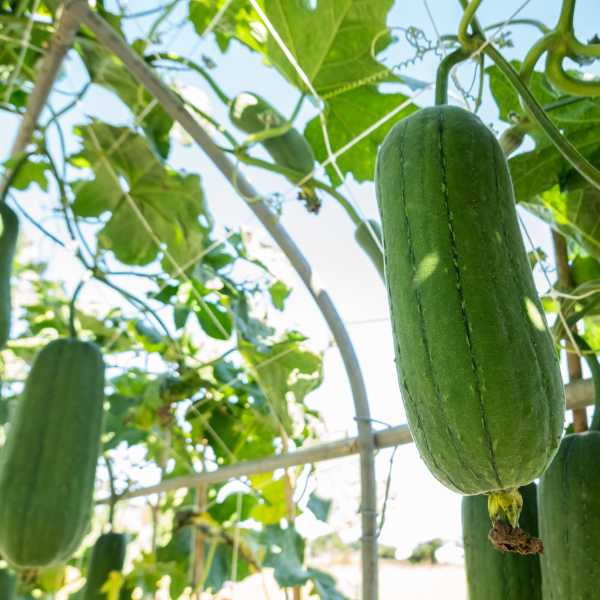
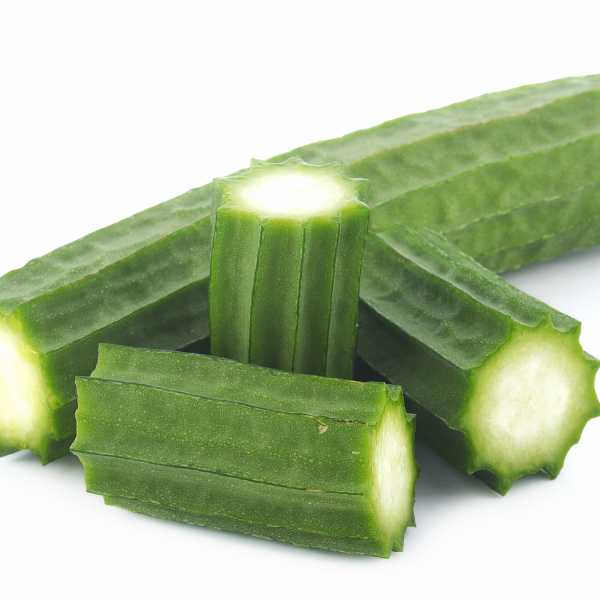
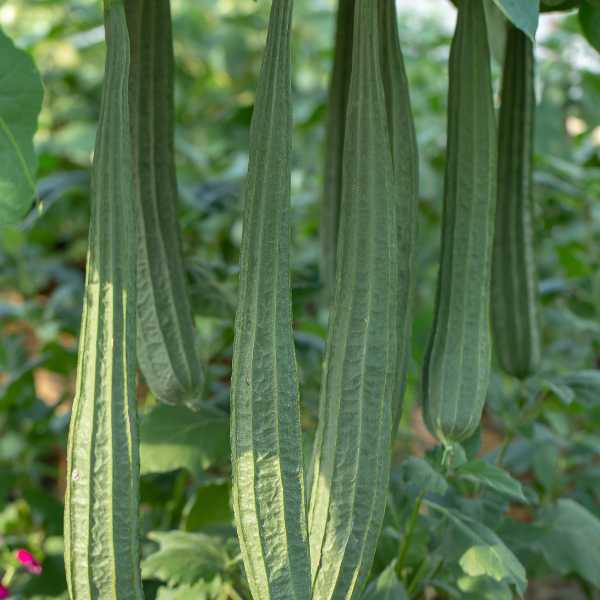
In its early stages, the fruit looks like a smooth cucumber or slim zucchini. Picked young, it can be eaten raw, sliced into salads where its crisp bite and mild cucumber flavour really shine. It pairs beautifully with tomatoes, herbs, and cheese and is an easy way to add something different to summer salads.
Cooking with luffa opens even more possibilities. Its soft, silky flesh has a wonderful ability to soak up flavours, much like eggplant or tofu. In stir fries, it carries garlic and ginger beautifully. In soups and curries, it takes on the richness of the broth or spices while adding its own gentle sweetness.
The fruits are best for the kitchen when they are about 20 cm long. They make an excellent stand-in for zucchini, squash, or eggplant. Once you get used to them, it is easy to see why they are such a popular ingredient in parts of Asia and the Middle East, where they are regularly used in everyday cooking.
Luffa also lends itself well to preserving. Young fruits can be turned into pickles, and the young leaves can be used fresh in salads or lightly cooked like spinach. It is a plant where very little goes to waste, which makes it especially rewarding for gardeners who like to use what they grow in as many ways as possible.
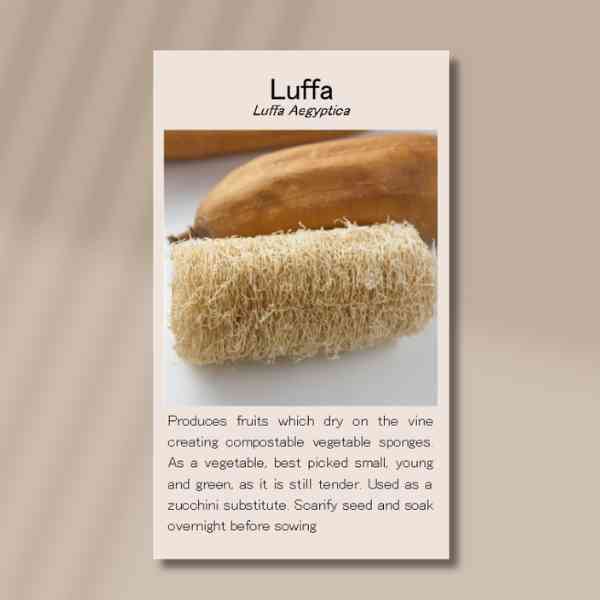
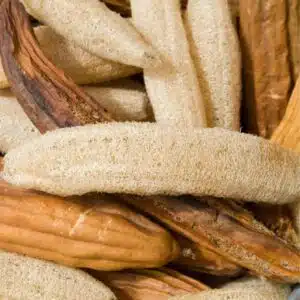
And then there is the luffa’s second life, the one most people already know. If the fruits are left to mature fully, they dry out into the familiar fibrous skeleton that becomes the natural sponge. Once peeled and cleaned, these sponges are excellent as exfoliating scrubbers in the bathroom or as eco-friendly dishcloths and pot scrubbers in the kitchen. They are long-lasting, biodegradable, and completely free from plastics.
Related Article – Grow Your Own Bath Sponge
| Method: Set seedlings | Soil Temp: 20°C - 30°C |
| Cool Mountain: Sep - Nov | Position: Full sun |
| Arid: Aug - Sep | Row Spacing: 50 cm |
| Temperate: Sep - Dec | Planting Depth: 10 mm |
| Sub Tropical: Aug - Jan | Harvest: 180 Days |
| Tropical: Apr - Jul | Plant Height: Trailing |
🌱 Luffa Grow Guide
🌿 Overview
Luffa is a vigorous climbing vine grown for two main uses: young edible fruits and mature natural sponges. When harvested young, the fruit is tender and can be cooked in stir-fries, soups, curries, stews, and vegetable dishes. When left to fully mature on the vine, the inside develops a strong fibrous network that can be dried, cleaned, and used as a natural sponge.
This is a large, energetic plant that needs warmth, sun, space, strong support, and regular moisture. It is best suited to gardeners who can give it a sturdy trellis, arch, fence, or frame to climb. A well-grown luffa vine can be extremely productive, but it should not be crowded into a small unsupported space. Give it room from the beginning and it will reward you with fast growth, attractive yellow flowers, useful fruit, and excellent seed-saving potential.
🌱 Sowing in Trays vs Direct Sowing
Luffa can be grown either by sowing seed directly into the garden or by starting seed in trays or pots. Both methods can work, but starting in individual pots or deep cells is usually the best method because luffa seed can be slow or uneven to germinate, and young seedlings are vulnerable to pests, cold soil, and rotting.
For tray or pot sowing, use a free-draining seed-raising mix and sow one seed per cell or small pot. Individual pots are better than open trays because luffa dislikes root disturbance. Cover the seed lightly and keep the mix evenly moist, not wet. Warmth is important for strong germination. Once seedlings have developed a healthy root system and several true leaves, transplant them carefully without breaking the root ball. Harden them off gradually before planting into their final position.
Direct sowing can be successful where soil is warm, loose, and protected from pests. Sow seed into prepared soil beside a strong support structure. Keep the area evenly moist until seedlings establish. Direct sowing avoids transplant shock, but it gives less control over germination and exposes the seed to slugs, snails, birds, soil pests, and inconsistent moisture.
For most home gardeners, sowing in individual pots is recommended. It gives the best balance of control and plant strength, while still allowing careful transplanting before the seedlings become root-bound.
💧 Seed Pre-Treatment
Luffa seed often benefits from pre-soaking. The seed coat can be firm, and soaking helps moisture enter more evenly. Place the seed in room-temperature water for about 12 to 24 hours before sowing. Do not soak for much longer, as overly wet seed may rot.
For older seed or very hard seed, gently rubbing one edge with fine sandpaper can help water enter the seed coat. This should be done lightly and carefully. The aim is to thin a small part of the outer coating, not damage the inside of the seed.
After soaking, sow the seed promptly into a warm, free-draining mix. Avoid cold, soggy conditions, as luffa seed is prone to rotting before it germinates.
🌞 Soil and Position
Luffa needs a full sun position and plenty of space. The vine grows strongly and performs best where it receives direct sun for most of the day. It also needs good airflow to reduce fungal issues and support healthy flowering.
The soil should be rich, deep, fertile, and well-drained. Before planting, improve the bed with compost, aged manure, worm castings, or well-rotted organic matter. Luffa is a hungry vine and appreciates soil that holds moisture while still draining freely. Heavy clay should be improved with compost and formed into a raised mound if drainage is poor. Sandy soil should be enriched heavily with organic matter to improve moisture retention.
A strong support is essential. Use a trellis, arch, pergola, fence panel, or sturdy frame. The support should be in place before planting, as mature vines become heavy, especially when carrying fruit. Growing luffa vertically keeps fruit straighter, improves airflow, reduces rot, saves space, and makes harvesting much easier.
🌿 Care and Maintenance
Luffa grows quickly once established and needs consistent care to crop well. Water deeply and regularly, especially during flowering and fruit development. The soil should stay evenly moist, but never waterlogged. Irregular watering can cause stress, poor fruit development, flower drop, and misshapen fruit.
Mulch around the base of the plant to conserve soil moisture, suppress weeds, and protect the roots. Keep mulch slightly away from the stem to prevent rot. Because luffa is a strong feeder, apply compost or a balanced vegetable fertiliser as the vine grows. Once flowering begins, avoid excessive nitrogen, as this can encourage lots of leaves at the expense of fruit.
Train young vines onto their support early. Tie stems gently with soft ties if needed. Once the vine begins climbing, it will usually attach itself with tendrils. Remove weak, damaged, or overcrowded growth if airflow becomes poor, but avoid heavy pruning unless the vine becomes unmanageable.
Luffa produces male and female flowers. Female flowers have a small immature fruit behind the flower. Bees and other pollinators are important for good fruit set. Encourage pollinators by planting flowers nearby and avoiding unnecessary sprays. If fruit is not setting, hand pollination can help. Pick a fresh male flower, remove the petals, and gently brush the pollen onto the centre of a female flower.
🌼 Companion Planting Guide
Luffa grows well with companions that attract pollinators, improve garden diversity, or occupy lower spaces without competing too aggressively. Good companions include basil, parsley, coriander, dill, marigold, calendula, nasturtium, alyssum, borage, beans, lettuce, spring onion, and radish.
Flowering companions are especially useful because luffa relies on pollination for good fruit set. Borage, calendula, alyssum, marigold, and nasturtium help bring bees, hoverflies, and other beneficial insects into the garden. Herbs such as coriander, dill, and parsley are also helpful when allowed to flower nearby.
Lettuce, radish, and spring onion can be grown near young luffa vines while the plants are still small, but they may become shaded as the vine matures. Beans can grow nearby if there is enough space and support, but avoid letting them tangle too heavily through the luffa vines.
Avoid planting luffa too close to other large, hungry sprawling crops such as pumpkins, melons, cucumbers, and squash unless there is plenty of room. These plants compete heavily for water, nutrients, space, and airflow.
🧺 How to Harvest
Luffa can be harvested at two different stages depending on how you want to use it.
For eating, harvest the fruit young and tender. At this stage, the skin is still soft, the seeds are immature, and the flesh is suitable for cooking. Young luffa is best picked before it becomes tough or fibrous. Use a knife or secateurs to cut the fruit from the vine rather than pulling, as tugging can damage the plant.
For sponges, leave the fruit on the vine until it becomes fully mature. The skin will turn dry, lighter in colour, and sometimes brown. The fruit will feel lighter as the flesh dries and the fibrous sponge develops inside. Once fully dry, pick the fruit and peel away the outer skin. Shake out the seeds, then rinse the sponge thoroughly to remove remaining pulp. The sponge can be soaked, washed, and dried in the sun until clean and firm.
If wet weather threatens mature fruit, harvest them once they are well developed and allow them to finish drying in a warm, airy, protected place. Fruit that remains damp too long may mould.
⚠️ Common Issues and Fixes
| Issue | Likely Cause | Fix |
|---|---|---|
| Poor germination | Cold soil, old seed, seed coat too hard, excess moisture | Soak seed before sowing, use fresh seed, keep warm, use free-draining mix |
| Seed rotting | Mix too wet, poor drainage, low warmth | Water lightly, improve drainage, avoid soggy conditions |
| Seedlings collapse | Damping off from excess moisture and poor airflow | Use clean seed mix, avoid overwatering, improve airflow |
| Slow early growth | Low warmth, poor soil, root disturbance | Start in individual pots, transplant carefully, feed lightly once established |
| Lots of leaves but few flowers | Too much nitrogen, not enough sun | Reduce high-nitrogen feeding, improve sun exposure, use balanced feeding |
| Flowers drop without fruit | Poor pollination, water stress, heat stress | Encourage pollinators, water consistently, hand pollinate if needed |
| Small or misshapen fruit | Inconsistent watering, poor pollination, nutrient shortage | Water deeply, mulch well, feed with compost or balanced fertiliser |
| Fruit rotting | Fruit sitting on soil, poor airflow, damp conditions | Grow vertically, improve spacing, remove overcrowded foliage |
| Powdery white leaves | Powdery mildew from stress, poor airflow, dry roots | Improve airflow, water soil deeply, remove badly affected leaves |
| Chewed leaves | Caterpillars, beetles, grasshoppers, slugs or snails | Inspect regularly, hand-remove pests, protect young seedlings |
| Aphids on new growth | Soft growth, crowded vines, low beneficial insect activity | Spray off with water, improve airflow, attract ladybirds and hoverflies |
| Mature sponges moulding | Fruit not drying properly, wet conditions | Harvest mature fruit and dry in a warm, airy place |
🌾 Detailed Seed Saving Guide
Luffa is excellent for seed saving because mature sponge fruit usually contains plenty of large, easy-to-handle seed. Begin by choosing the healthiest and most productive plants. Select vines that show strong growth, good fruit shape, disease resistance, and reliable cropping. Avoid saving seed from weak, sickly, or poorly performing plants.
For seed saving, allow selected fruit to mature fully on the vine. The fruit should become dry, light, and fibrous inside. The outer skin may turn brown, tan, or papery. A fully mature luffa often feels much lighter than a green edible-stage fruit. If shaken, seeds may rattle inside.
Cut the mature fruit from the vine and let it dry further in a warm, airy position if needed. Once dry, crack or peel away the outer skin. Break open one end and shake the seeds out into a clean bowl or tray. Good seed is usually plump, firm, and dark. Discard pale, flat, damaged, or mouldy seed.
After removing the seed, spread it in a single layer on a plate, tray, or fine mesh screen. Leave it somewhere dry, shaded, and well ventilated for at least a week to ensure any remaining moisture has gone. Do not store seed while it is even slightly damp, as it may mould in storage.
Once fully dry, place the seed in a labelled paper envelope or airtight container. Write the crop name, variety if known, and year collected. Store in a cool, dark, dry place. A small moisture absorber can be added to the storage jar if conditions are humid. Properly dried and stored luffa seed can remain viable for several years, though freshest seed usually gives the strongest germination.
To keep seed true to type, grow only one variety or keep different varieties well separated. Insect pollination can move pollen between compatible plants, so mixed plantings may produce seed that gives varied results in the next generation.
🌟 Final Thoughts
Luffa is a rewarding crop for gardeners who enjoy plants with more than one use. It can be eaten young as a vegetable, left to mature into natural sponges, used for seed saving, and grown as a vigorous ornamental screen over a trellis or arch. The keys to success are starting seed with warmth, using individual pots, transplanting gently, providing rich soil, giving strong support, watering consistently, and encouraging pollinators.
With enough space and a sturdy climbing structure, luffa becomes an impressive and productive vine. It is one of the most satisfying crops to grow from seed because the harvest can move from kitchen use to practical household use, all from the same plant.
4 reviews for Luffa

Postage Charge
Orders under $40 attract a $5.50 shipping charge. Orders $35 and above have free shipping.
*** We cannot deliver to Parcel Lockers ***
Order Times
Seed orders are normally dispatched within three business days. You will receive an email when seeds are mailed out.
Postage Days
Seeds are mailed out Tuesday to Friday at 1pm. Except for the Friday of long weekends.
Postage Times
WA 2-3 Days: SA,NT 3-5 Days: NSW, ACT, QLD, VIC: 5-7 Days
Carrier
We use Australia Post Letter Postage for the majority of orders.
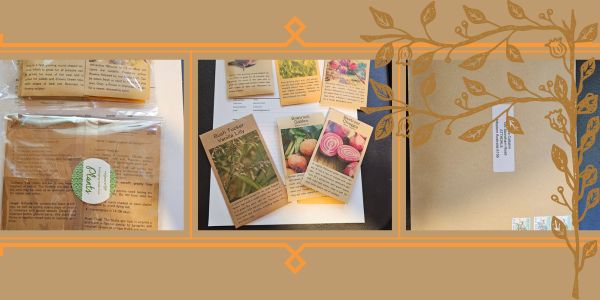
Not only are our seeds packed in recycled paper envelopes, we keep the theme going when we post out website orders. To protect your seeds from moisture and the letter box munchers (snails), we use a very special plastic free material made from plants. They are then put into recycled mailing envelopes. Green all the way ????????
Delivery Guarantee
We take great care to make sure your seeds arrive safely. If your order is lost or damaged in transit, we’ll happily send a replacement. Unfortunately, we can’t replace or refund orders that arrive later than the estimated delivery date, as delays can sometimes occur that are outside our control.
Please note that all dispatch and delivery times listed are estimates only. While we do our best to post promptly, delivery timeframes can vary due to postal service delays, weather events, or other unforeseen circumstances. We’re unable to take responsibility for any loss, damage, or cost that results from a late delivery.
An order is not considered missing until at least 20 business days have passed from the postage date. You’ll receive an email once your seeds have been posted, letting you know they’re on their way. If you don’t see it in your main inbox, please check your Spam or Promotions folders as sometimes our emails like to hide there.
See all our verified customer reviews on our official CusRev profile.
See all our verified customer reviews on our official CusRev profile.
See all our verified customer reviews on our official CusRev profile.
See all our verified customer reviews on our official CusRev profile.