

Squash Vegetable Spaghetti
$6.59
¨ Cucurbita Pepo
- Seed Count 8
- Spaghetti Alternative
- Annual
Only 9 left in stock
Description
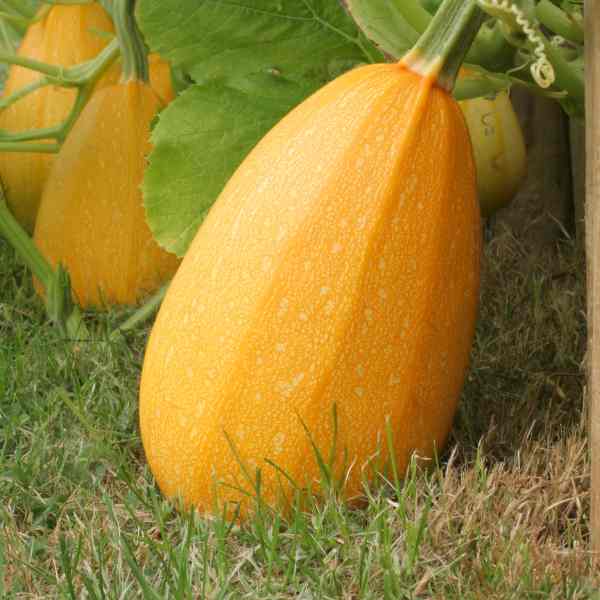
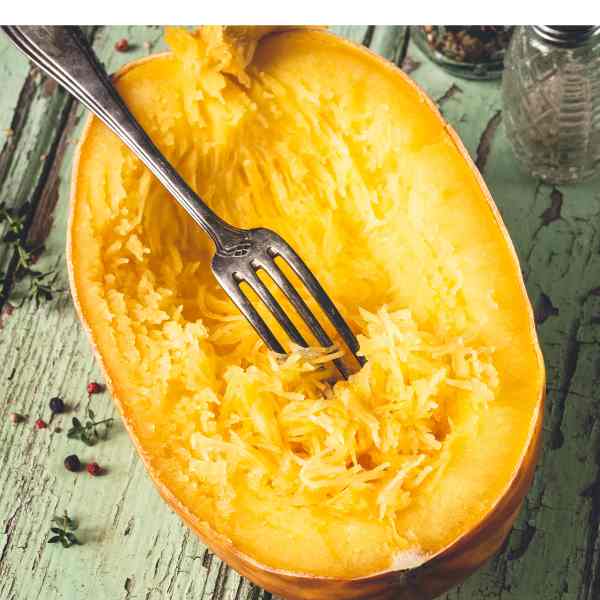
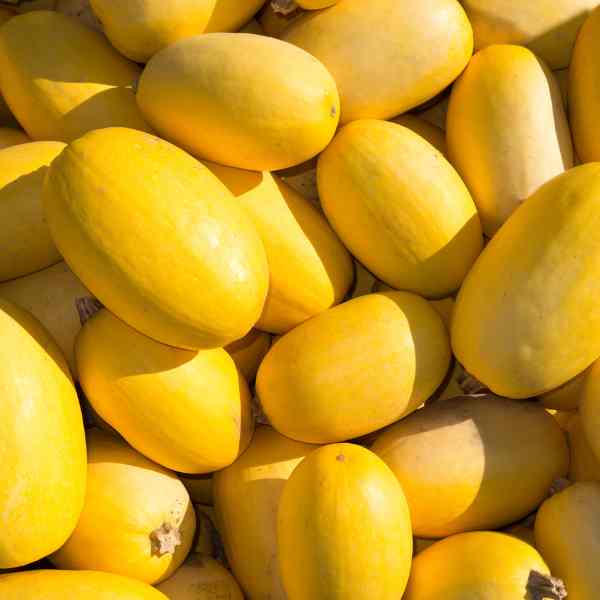
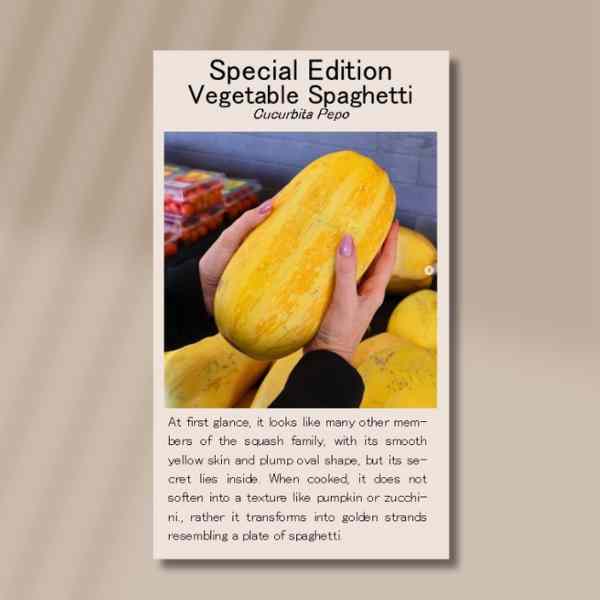
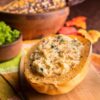
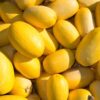
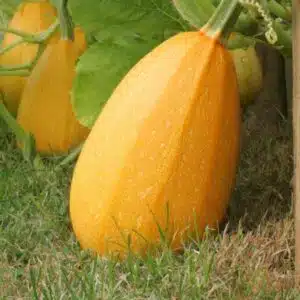
At first glance, the squash Vegetable Spaghetti looks like many other members of the squash family, with its smooth yellow skin and plump oval shape, but its secret lies inside. When cooked, the firm flesh of the squash does not soften into a uniform texture like pumpkin or zucchini. Instead, it transforms into golden strands that pull apart into long, stringy pieces, resembling a plate of spaghetti.
Gardeners know it as a vigorous vine, with lush growth and a strong trailing or climbing habit. From this energy come the bright yellow fruits that typically grow to around thirty centimeters in length. On a healthy vine, one can expect four to five fruits, each weighing in at roughly two kilograms when fully grown. The vines are generous, their large leaves sheltering the fruit until the skin develops a firm, glossy surface.
Many cooks first meet it as a substitute for traditional pasta, and it performs this role remarkably well. The strands can be teased out with a fork once the squash is cooked, producing a pile of tender, lightly crisp threads that look so much like noodles it is hard to believe they came from a vegetable. Tossed with olive oil, herbs, and perhaps a little garlic, they make for a simple but satisfying dish. The mild flavour of the squash is the key here. Unlike some squashes that have a stronger earthy or sweet flavour, the Vegetable Spaghetti Squash is gentle, with just a hint of sweetness and a delicate nutty undertone.
This makes it a perfect carrier for sauces, herbs, and spices of all sorts. It is happy to sit under a rich tomato sauce, blend with creamy cheese, or form the base for lighter dishes with lemon and herbs. For those who wish to cut down on carbohydrates or simply add more vegetables to their meals, it offers an easy and tasty swap for pasta.
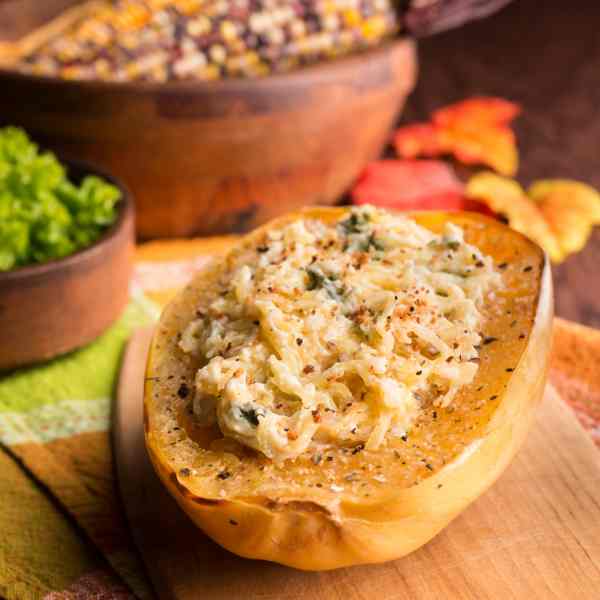
Beyond pasta substitutes, the squash has plenty of other uses. Its slightly crisp texture means that it can be added to salads, where it brings both bulk and interest. It holds together well in sauces and casseroles, its strands weaving through the dish without dissolving. In stuffed dishes, the hollowed-out shell makes a natural bowl, ready to be filled with grains, lentils, or meat and then baked until everything is tender and golden. The fact that this one vegetable can play so many roles in the kitchen is part of what makes it so rewarding to grow. It is not just a novelty but a practical and adaptable ingredient that fits into all sorts of meals.
Another quality that sets this squash apart is how well it stores. While many fresh vegetables must be eaten within days of harvest, the Vegetable Spaghetti Squash can be kept for months if treated properly. Fruits picked at around twenty centimeters in size, usually about fifteen weeks after planting, are considered the best for eating, as the strands inside have developed their stringy quality while still tender.
Larger fruits, which can grow to full size at around two kilograms, are also useful, though sometimes a little more fibrous. Once harvested, the fruits can be wiped down with a highly diluted bleach solution, which helps to prevent mould or rot from developing on the skin. As long as the skins are unbroken and unbruised, the squashes will sit patiently in storage, waiting to be called upon for a meal. This ability to store well makes them an excellent crop for gardeners who like to extend their harvest into the cooler months, drawing on the fruits of summer long after the vines have finished their work.
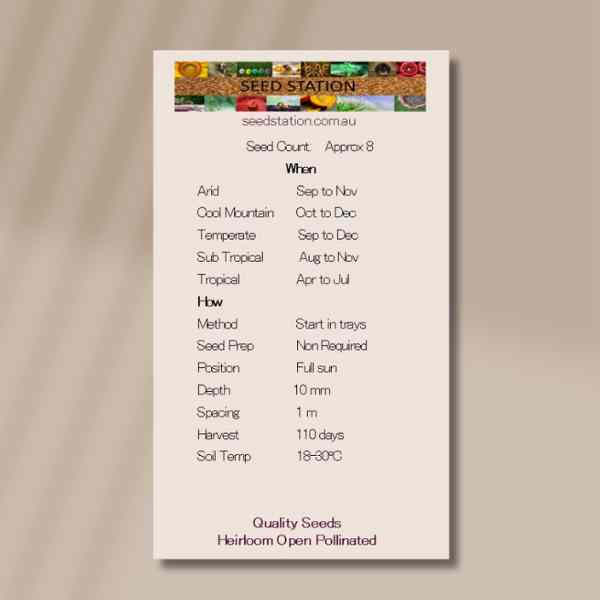
| Method: Start in Trays | Soil Temp: 18°C - 30°C |
| Arid: Sep - Nov | Row Spacing: 1m apart |
| Cool Mountain: Oct - Nov | Position: Full sun |
| Temperate: Sep - Dec | Planting Depth: 10mm |
| Sub Tropical: Aug - Nov | Harvest: 110 days |
| Tropical: Apr - Jul | Plant Height: 45cm |
🍝 Vegetable Spaghetti Grow Guide
🌱 Overview
Vegetable spaghetti is a productive trailing squash grown for its oval fruits that form noodle-like strands when cooked. Once mature, the firm outer skin protects a pale golden flesh that separates into long spaghetti-like fibres, making it useful for baking, roasting, stuffing, casseroles, fritters, soups, and lighter vegetable-based meals.
This plant grows as a vigorous vine and needs space, warmth, sun, fertile soil, and steady moisture. It is not a small crop, so it is best placed where its vines can trail freely, climb a strong support, or spread through a productive garden bed without smothering smaller plants. With good soil preparation and regular care, vegetable spaghetti can produce a generous harvest of long-storing fruits.
🌱 Sowing in Trays Versus Direct Sowing
Vegetable spaghetti can be grown by direct sowing or by starting seed in trays, but direct sowing is usually the best method where soil conditions are warm and settled. Squash seedlings grow quickly and dislike having their roots disturbed, so sowing seed directly into its final position allows the plant to establish a strong root system without interruption.
To direct sow, prepare a mound or planting area with compost-rich, free-draining soil. Sow seed about 2 to 3 cm deep, water gently, and keep the soil evenly moist until seedlings emerge. Once seedlings are growing well, thin to the strongest plant or plants, depending on the space available. Mounded planting is useful because it improves drainage and gives the young plant a slightly raised, warmer root zone.
Tray sowing is still useful when pests are active, garden beds are not ready, or you want extra control over early growth. If using trays, sow into individual pots or large cells rather than a shared punnet. This reduces root disturbance at planting time. Sow one or two seeds per pot, keep the strongest seedling, and transplant while the plant is still young and compact. Do not let seedlings become root-bound, as this can slow growth after planting out.
For most gardeners with suitable soil and enough space, direct sowing is the strongest and simplest option. If protection is needed, use individual pots and transplant carefully with the root ball intact.
🌾 Seed Pre-Treatment
Vegetable spaghetti seed does not usually require special pre-treatment. There is no need for chilling, scarifying, or smoke treatment. Fresh seed should germinate well when sown into warm, moist, well-drained soil.
Pre-soaking is optional. Soaking seed in room-temperature water for a few hours can help soften the seed coat and may speed germination, but it is not essential. If soaking is used, sow the seed promptly afterward and do not leave it sitting wet for too long, as soaked seed can rot if conditions are poor.
The most important points are to use fresh seed, sow at the correct depth, avoid waterlogged soil, and protect young seedlings from pests.
🌞 Soil and Position
Vegetable spaghetti grows best in a full sun position with plenty of room for the vines. Strong sunlight supports healthy leaves, good flowering, strong fruit set, and better fruit maturity. In too much shade, plants may produce lots of vine growth but fewer good fruits.
The soil should be fertile, moisture-retentive, and well-draining. This is a hungry crop, so prepare the bed with compost, aged manure, or well-rotted organic matter before sowing. The soil should hold enough moisture to support fast vine growth, but it must not remain soggy around the roots.
Raised mounds, large garden beds, and compost-rich planting pockets work very well. In sandy soil, add extra compost to improve water and nutrient retention. In heavy soil, improve structure with organic matter and consider planting on mounds to keep the crown and roots healthier.
Vegetable spaghetti can be grown in large containers, but the container must be generous. Use a large pot, tub, or grow bag with drainage holes and a quality potting mix. Container plants need more regular watering and feeding than plants grown in open ground.
💧 Care and Maintenance
Water consistently, especially while the plant is flowering and fruiting. Irregular watering can stress the vine and may lead to poor fruit set, misshapen fruit, or fruit splitting. Water deeply at the base rather than lightly sprinkling the leaves. Keeping foliage drier helps reduce disease pressure.
Mulch around the plant once seedlings are established. Mulch conserves moisture, suppresses weeds, and keeps developing fruit cleaner if vines trail along the ground. Keep mulch slightly away from the main stem so the crown does not stay damp.
Feed moderately but regularly during active growth. A compost-rich bed gives the plant a strong start. Once vines begin growing strongly, a balanced liquid feed or side-dressing of compost can support flowering and fruit development. Avoid excessive high-nitrogen feeding, as this can produce large leafy vines with fewer fruits.
Vegetable spaghetti needs pollination to set fruit. The plant produces separate male and female flowers. Bees and other insects usually do the work, but if fruits are forming then yellowing and dropping off while still tiny, poor pollination may be the cause. Hand pollination can help. Take pollen from a freshly opened male flower and transfer it to the centre of a freshly opened female flower. Female flowers are easy to recognise because they have a small swelling behind the flower that looks like a tiny fruit.
If space is limited, vines can be trained up a strong trellis, but the support must be sturdy. Developing fruits may need slings made from soft cloth or netting to prevent the stems from tearing. Ground-grown vines can be gently guided so they do not overwhelm paths or neighbouring crops.
🌼 Companion Planting Guide
Vegetable spaghetti grows well with plants that attract pollinators, cover soil, or make use of space before the vines become large. Good companions include corn, beans, nasturtium, marigold, calendula, borage, sunflower, radish, lettuce, basil, and dill.
Corn and beans can be grown nearby in larger garden systems where spacing is generous. Nasturtium, calendula, borage, marigold, sunflower, basil, and dill help attract pollinators and beneficial insects, which can improve fruit set and support natural pest balance.
Radish and lettuce are useful short-term companions while vegetable spaghetti seedlings are still small. They can be harvested before the vines need more space. Nasturtium can also act as a living groundcover, but it should be managed so it does not smother young squash seedlings.
Avoid planting vegetable spaghetti too close to small, slow-growing crops that can be buried under vines. Also avoid crowding it with other large sprawling squash or melons unless you have plenty of space, water, and fertility available.
✂️ How to Harvest
Vegetable spaghetti should be harvested when the fruit is fully mature. The skin should be hard and difficult to mark with a fingernail, and the fruit should have developed its mature colour. Immature fruits do not store as well and may not form the best spaghetti-like strands.
Use clean secateurs or a sharp knife to cut the fruit from the vine, leaving a short stem attached. Do not pull or twist the fruit off, as this can damage the stem end and shorten storage life.
Handle fruit carefully after harvest. Bruising, cracked skin, or broken stems can lead to rot. Cure harvested fruit in a warm, dry, airy place so the skin hardens further. Once cured, store in a cool, dry, well-ventilated position. Check stored fruit regularly and use any damaged ones first.
To prepare vegetable spaghetti, cut the fruit open, remove the seeds and pulp, then bake or roast until tender. Once cooked, scrape the flesh with a fork to release the spaghetti-like strands. The strands can be served with sauces, herbs, roasted vegetables, cheese, or savoury fillings.
⚠️ Common Issues and Fixes
| Issue | Likely Cause | Fix |
|---|---|---|
| Poor germination | Cold soil, old seed, waterlogged soil, seed sown too deeply | Use fresh seed, sow into warm free-draining soil, avoid overwatering |
| Seedlings disappear | Slugs, snails, birds, rodents, or cutworms | Protect seedlings with barriers, covers, traps, or collars |
| Seedlings collapse | Damping off from wet conditions or poor airflow | Use clean mix if tray sowing, avoid soggy soil, improve airflow |
| Lots of leaves but few flowers | Too much nitrogen, not enough sun, immature plant | Reduce high-nitrogen feeding, provide full sun, allow plant to mature |
| Flowers but no fruit | Poor pollination or lack of female flowers | Encourage pollinators, avoid spraying flowers, hand pollinate if needed |
| Tiny fruit yellows and drops | Incomplete pollination, water stress, heat stress | Hand pollinate, water consistently, mulch well |
| Powdery mildew | Humid conditions, poor airflow, stressed plants | Space plants well, water at soil level, remove badly affected leaves |
| Yellow leaves | Nutrient shortage, overwatering, old foliage, disease | Check drainage, feed moderately, remove old leaves |
| Fruit rotting underneath | Fruit sitting on wet soil or dense mulch | Place fruit on straw, boards, tiles, or dry mulch |
| Split fruit | Irregular watering after dry periods | Keep moisture steady and mulch around plants |
| Chewed leaves | Caterpillars, beetles, grasshoppers, slugs, or snails | Inspect regularly, remove pests by hand, protect young plants |
| Poor storage | Fruit harvested immature, bruised, uncured, or stored damp | Harvest mature fruit, cure properly, store dry and ventilated |
🌰 Detailed Seed Saving Guide
Saving seed from vegetable spaghetti is simple, but it must be done from fully mature fruit. Choose healthy, productive plants with strong vines, good fruit shape, good flavour, and no major disease problems. Avoid saving seed from weak plants or fruit that developed poorly.
Allow selected fruit to mature completely on the vine. For seed saving, fruit should be fully ripe with a hard skin and mature colour. If possible, leave the fruit on the plant until it is clearly mature, then harvest it with the stem attached.
After harvest, let the fruit cure before removing seed. Curing gives the seed inside extra time to finish maturing. When ready, cut the fruit open and scoop out the seed and surrounding pulp into a bowl.
Add water to the bowl and rub the seed gently between your fingers to separate it from the stringy pulp. Good mature seed is usually plump and firm. Discard flat, damaged, or poorly formed seed. Rinse the seed through a sieve until clean.
Spread the cleaned seed in a single layer on a plate, baking paper, fine mesh screen, or non-stick surface. Avoid drying seed in a thick pile, as it may mould. Place it in a shaded, dry, airy position and stir daily so all sides dry evenly. Do not dry seed in harsh heat, as excessive heat can reduce viability.
Once seed is fully dry, it should feel hard and snap rather than bend. Store it in a labelled paper envelope or airtight container. Include the plant name, fruit notes, and collection date. Keep seed in a cool, dark, dry place.
Vegetable spaghetti can cross-pollinate with some other squash grown nearby. If you want future plants to remain true to the same type, grow only compatible matching types for seed or isolate flowers and hand pollinate them. For casual home seed saving, some variation may occur if different squash are flowering nearby.
🌻 Final Thoughts
Vegetable spaghetti is a rewarding squash that offers both novelty and usefulness in the kitchen. It is best direct sown where conditions are suitable because the seedlings grow quickly and dislike root disturbance, though individual pots are useful when early protection is needed.
Give it full sun, rich well-drained soil, steady moisture, room to spread, and plenty of pollinator activity. Harvest mature fruit carefully, cure it well, and store it dry. With thoughtful care, vegetable spaghetti can provide a generous crop of long-keeping fruits and a delicious vegetable alternative to pasta-style dishes.
1 review for Squash Vegetable Spaghetti

Postage Charge
Orders under $40 attract a $5.50 shipping charge. Orders $35 and above have free shipping.
*** We cannot deliver to Parcel Lockers ***
Order Times
Seed orders are normally dispatched within three business days. You will receive an email when seeds are mailed out.
Postage Days
Seeds are mailed out Tuesday to Friday at 1pm. Except for the Friday of long weekends.
Postage Times
WA 2-3 Days: SA,NT 3-5 Days: NSW, ACT, QLD, VIC: 5-7 Days
Carrier
We use Australia Post Letter Postage for the majority of orders.
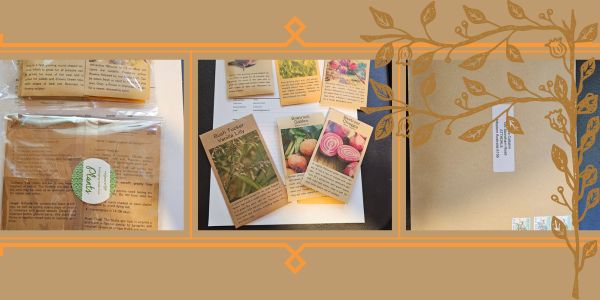
Not only are our seeds packed in recycled paper envelopes, we keep the theme going when we post out website orders. To protect your seeds from moisture and the letter box munchers (snails), we use a very special plastic free material made from plants. They are then put into recycled mailing envelopes. Green all the way ????????
Delivery Guarantee
We take great care to make sure your seeds arrive safely. If your order is lost or damaged in transit, we’ll happily send a replacement. Unfortunately, we can’t replace or refund orders that arrive later than the estimated delivery date, as delays can sometimes occur that are outside our control.
Please note that all dispatch and delivery times listed are estimates only. While we do our best to post promptly, delivery timeframes can vary due to postal service delays, weather events, or other unforeseen circumstances. We’re unable to take responsibility for any loss, damage, or cost that results from a late delivery.
An order is not considered missing until at least 20 business days have passed from the postage date. You’ll receive an email once your seeds have been posted, letting you know they’re on their way. If you don’t see it in your main inbox, please check your Spam or Promotions folders as sometimes our emails like to hide there.
See all our verified customer reviews on our official CusRev profile.