






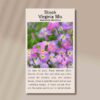

Stock Virginia Mix
$4.95
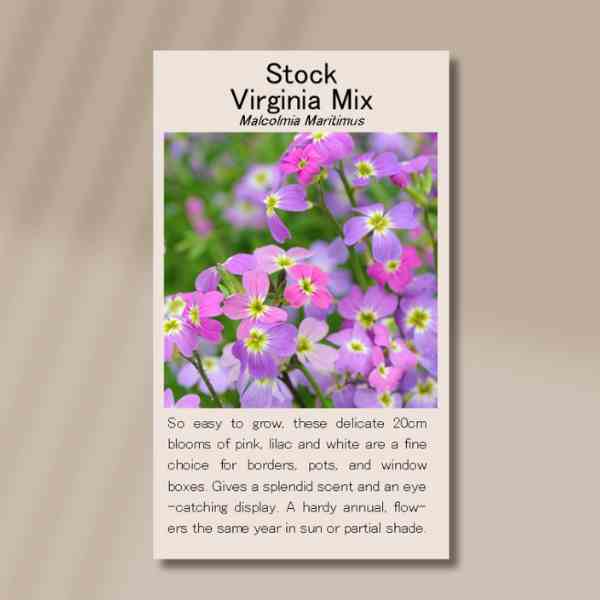
Malcolmia Maritima
- Seed Count 1500
- Highly Scented
- Annual
- Height 20 cm
Only 5 left in stock
Description
Stock Virginia Mix stands out as a wonderfully easy-to-grow annual with a low-growing, spreading habit, and a generous flowering season that brings colour and fragrance to the garden from late winter right through to summer.
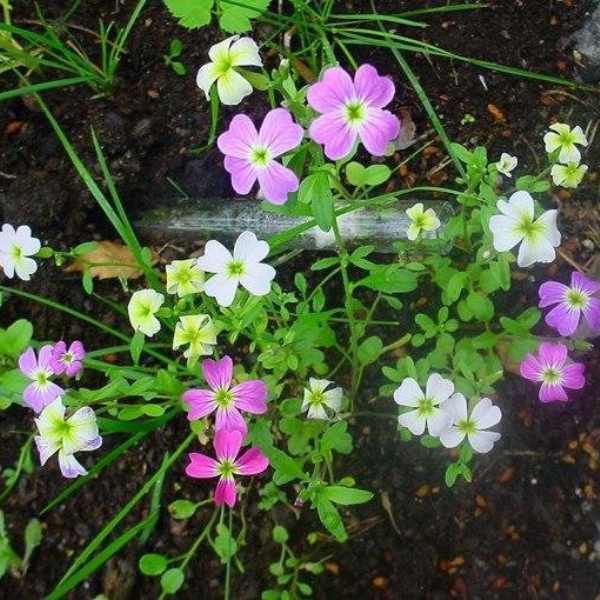
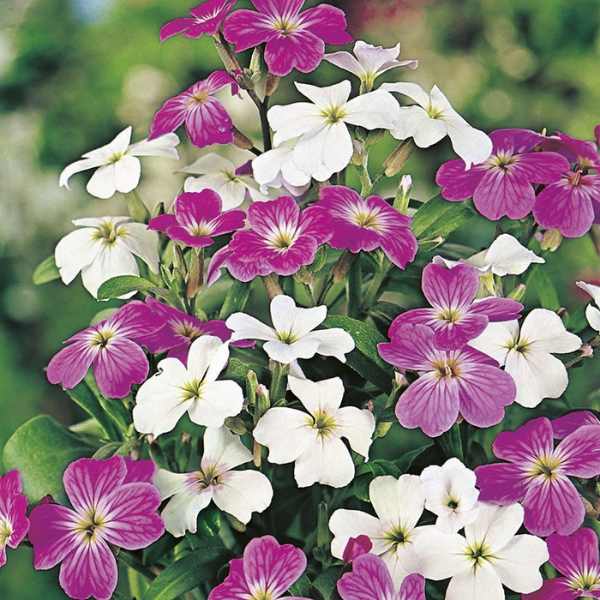
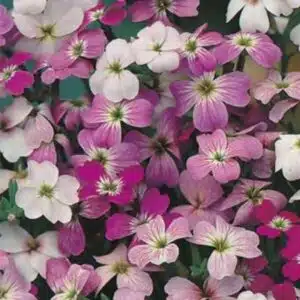
This particular mix combines a palette of soft, soothing colours like blush pink, lilac, and crisp white ideal decorative planting. Think of them as the pastel watercolour in your garden’s seasonal painting, gentle, calming, and beautifully blended.
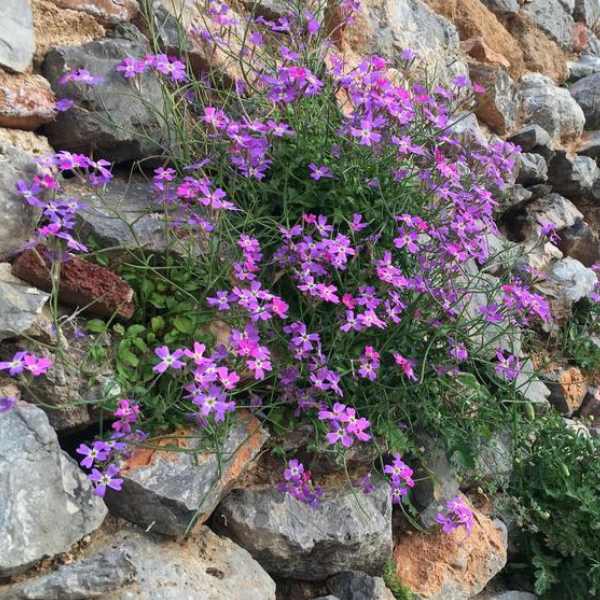
Its grey-green foliage has a soft, velvety texture and stays low to the ground, spreading gently in a mat-like form. The contrast between the silvery leaves and the pastel flowers adds a natural elegance to any design, particularly when planted en masse.
It’s a top pick for pots, edging and planters thanks to its low, compact form and its trailing habit makes it a lovely candidate for hanging baskets or raised planters. Try lining a path or driveway with it, you’ll find the fragrance delightful as you pass by each day.
Another standout features is its fragrance. Stock Virginia Mix produces highly scented blooms that release their perfume particularly strongly in the evenings and early mornings. The scent is sweet and spicy, and it draws both people and pollinators into the garden. Bees find the flowers attractive, and they’ll be buzzing happily among the blooms throughout the season.
| Method: Sow direct or seedlings | Soil Temp: 10°C - 25°C |
| Cool Mountain: Nov - Dec | Position: Full sun |
| Arid: Aug - Jan | Row Spacing: 30cm apart |
| Temperate: Sep-Nov, Mar-Jun | Planting Depth: 3 mm |
| Sub Tropical: May - Oct | Harvest: 100 days |
| Tropical: Jun - Aug | Plant Height: 20cm |
🌸 Stock Grow Guide
🌱 Overview
Stock is a beautiful, fragrant flowering plant grown for its upright flower spikes, soft colours, and sweet clove-like scent. It is especially valued in cottage gardens, borders, containers, pollinator beds, and cut-flower gardens. The flowers can be single or double, depending on the type, and they come in shades of white, cream, pink, rose, mauve, purple, apricot, and red.
This is a rewarding plant for gardeners who want flowers with both beauty and perfume. Stock suits formal beds, mixed flower borders, balcony pots, and cutting patches. It is not a difficult plant to grow, but it performs best when given good light, free-draining soil, steady moisture, and protection from extreme stress.
🌱 Sowing in Trays vs Direct Sowing
Stock can be grown by sowing in trays or direct sowing, but sowing in trays is usually the best method.
Tray sowing gives better control over moisture, spacing, and early seedling protection. Stock seedlings are small at first and can be vulnerable to drying out, slugs, snails, heavy rain, and weed competition. Use a fine seed-raising mix, sow the seed shallowly, and cover with a light layer of mix or vermiculite. Keep the mix evenly moist but not soggy. Once seedlings are large enough to handle, transplant them carefully into small pots or their final position.
Direct sowing can work in a finely prepared garden bed, especially where the soil is loose, weed-free, and easy to keep moist. The drawback is that small seedlings are more exposed to pests and weather, and thinning may be needed if seedlings come up too thickly.
For most home gardeners, tray sowing is preferred because it produces stronger, more even seedlings and makes it easier to place plants neatly in borders, pots, or cut-flower rows.
💧 Seed Pre-Treatment
Stock seed does not require special pre-treatment. No soaking, chilling, scarifying, or heat treatment is needed.
The key to good germination is fresh seed, shallow sowing, gentle watering, and consistent moisture. Avoid burying the seed too deeply, as this can reduce germination. A light covering is enough to hold moisture around the seed while still allowing the seedling to emerge easily.
If germination is patchy, the most common causes are old seed, drying out, sowing too deeply, or seed trays becoming too wet and cold.
🌞 Soil and Position
Stock grows best in a sunny position with good airflow. Strong light encourages sturdy stems, better flowering, and richer colour. In very hot or exposed positions, light afternoon protection can help reduce stress and keep flowers lasting longer.
The soil should be fertile, well-drained, and slightly alkaline to neutral if possible. Stock dislikes heavy, wet soil around the roots. If the soil is clay-heavy, improve it with compost and grow plants in a slightly raised bed to help drainage. In pots, use a quality potting mix and make sure containers have clear drainage holes.
Before planting, mix compost into the soil to improve structure and moisture-holding ability. Avoid very fresh manure or excessive high-nitrogen fertiliser, as this can encourage leafy growth at the expense of flowers. A balanced flower fertiliser or compost-based feeding approach is usually enough.
🌿 Care and Maintenance
Stock prefers steady care rather than neglect. Keep the soil evenly moist, especially while plants are young and while flower spikes are forming. Avoid waterlogging, as soggy soil can lead to root disease. Water at the base of the plant rather than over the flowers to reduce fungal issues.
Mulch lightly around plants to help retain soil moisture and reduce weeds, but keep mulch away from the main stem. Good airflow is important, so avoid crowding plants too closely.
Feed lightly once plants are established. A balanced liquid feed or flower-focused fertiliser can support strong stems and better blooms. Too much nitrogen should be avoided because it may produce soft, weak growth.
Remove spent flowers to keep the plant tidy and encourage further display where the plant still has energy to bloom. Taller plants may need light support in windy areas, especially when flower spikes are heavy. In containers, check moisture often because pots dry out faster than garden beds.
🌼 Companion Planting Guide
Stock works beautifully in mixed flower plantings and cottage-style gardens. Its fragrance attracts people, while its flowers can support pollinators and beneficial insects.
Good companions include alyssum, calendula, pansy, viola, snapdragon, dianthus, lavender, thyme, sage, rosemary, chamomile, yarrow, lettuce, silverbeet, cabbage, kale, and broccoli. In ornamental beds, it pairs well with low edging flowers and herbs that enjoy similar drainage and sunlight.
Stock is useful near vegetable beds because flowering plants help add diversity and attract insect activity. It is especially attractive along bed edges, near paths, or close to outdoor sitting areas where the scent can be enjoyed.
Avoid planting stock in crowded, damp, poorly ventilated areas. It is also best not placed beside very vigorous plants that will shade or smother it. Keep it away from plants that need constantly wet soil, as stock prefers moisture without soggy conditions.
A practical layout is to grow stock in groups near alyssum, calendula, and herbs, with enough spacing for airflow and easy flower cutting.
✂️ How to Harvest
Stock is excellent as a cut flower. Harvest flower stems when the lower blooms on the spike have opened and the upper buds are still closed or just beginning to show colour. This gives the stem a longer vase life and allows more flowers to open indoors.
Use clean, sharp scissors or secateurs and cut stems early in the day once the plant is well hydrated. Place stems into clean water immediately after cutting. Remove any leaves that would sit below the waterline to reduce bacterial growth.
For garden display, remove faded flowers as they age. This keeps plants looking fresh and can encourage additional blooming on some types. If saving seed, leave selected flower spikes uncut so seed pods can form and mature.
🛠️ Common Issues and Fixes
| Issue | Likely Cause | Fix |
|---|---|---|
| Poor germination | Old seed, deep sowing, drying seed mix | Use fresh seed, sow shallowly, keep evenly moist |
| Seedlings collapsing | Overwatering, poor airflow, fungal disease | Water gently, improve airflow, use clean seed mix |
| Yellowing leaves | Poor drainage, nutrient imbalance, overwatering | Improve drainage, reduce watering, feed lightly |
| Weak, leggy seedlings | Not enough light, overcrowding | Move to brighter light, thin seedlings, transplant promptly |
| Few flowers | Too much shade, excess nitrogen, plant stress | Provide more sun, reduce nitrogen, water consistently |
| Floppy stems | Wind exposure, weak light, overcrowding | Stake lightly, improve spacing, grow in stronger light |
| Root rot | Soil staying too wet | Improve drainage, use raised beds or pots, avoid overwatering |
| Aphids | Soft new growth attracting sap-sucking insects | Spray off with water, encourage beneficial insects, use insecticidal soap if needed |
| Chewed leaves | Slugs, snails, caterpillars | Hand-pick pests, use barriers, check plants regularly |
| Powdery mildew | Poor airflow, humidity, crowded planting | Space plants well, water at soil level, remove affected leaves |
| Flower spikes fading quickly | Heat stress, dry soil, old blooms | Water evenly, provide light protection, harvest earlier |
| Seed pods not forming | Double flowers may be infertile, poor pollination | Save seed from single fertile flowers and allow pollinators access |
🌰 Detailed Seed Saving Guide
Stock can be saved for seed, but it is important to choose the right plants. Select strong, healthy plants with good colour, sturdy stems, and a growth habit you would like to keep. Avoid saving seed from weak, diseased, or poorly flowering plants.
Leave several flower spikes on the plant after flowering. As the flowers fade, slender seed pods will begin to form along the stem. These pods need to mature fully before collection. They will gradually change from green to tan or brown and become dry and papery.
Do not harvest seed pods while they are still green and soft, as the seed inside may be immature. Watch the pods closely as they dry, because fully mature pods can split and release seed. When most pods are dry, cut the whole stem and place it upside down in a paper bag.
Leave the stems in a dry, airy place until the pods are completely crisp. Once dry, gently crush or split the pods over a tray or sheet of paper. Separate the seed from the dry pod pieces by hand or with a fine sieve.
Spread the cleaned seed on paper for several more days to make sure it is fully dry. Store it in a labelled paper envelope or airtight jar in a cool, dark, dry place. Include the plant name, flower colour, and collection date.
Some highly double-flowered stock plants may not produce useful seed because the flower structure can limit fertile seed formation. For reliable seed saving, allow single-flowered plants to mature and set pods. If growing several colours close together, seedlings from saved seed may show some natural variation, which can be part of the charm in a cottage-style garden.
🌟 Final Thoughts
Stock is a charming and fragrant flower that brings colour, scent, pollinator value, and cut-flower beauty to the garden. It is best started in trays, as this gives the small seedlings the protection and consistency they need before planting out.
Give stock a sunny position, well-drained fertile soil, steady moisture, and good airflow. Avoid soggy roots, overcrowding, and excessive nitrogen. With gentle care, it rewards the gardener with elegant flower spikes, rich perfume, and a classic cottage-garden feel that works beautifully in beds, borders, pots, and cutting gardens.
1 review for Stock Virginia Mix

Postage Charge
Orders under $40 attract a $5.50 shipping charge. Orders $35 and above have free shipping.
*** We cannot deliver to Parcel Lockers ***
Order Times
Seed orders are normally dispatched within three business days. You will receive an email when seeds are mailed out.
Postage Days
Seeds are mailed out Tuesday to Friday at 1pm. Except for the Friday of long weekends.
Postage Times
WA 2-3 Days: SA,NT 3-5 Days: NSW, ACT, QLD, VIC: 5-7 Days
Carrier
We use Australia Post Letter Postage for the majority of orders.
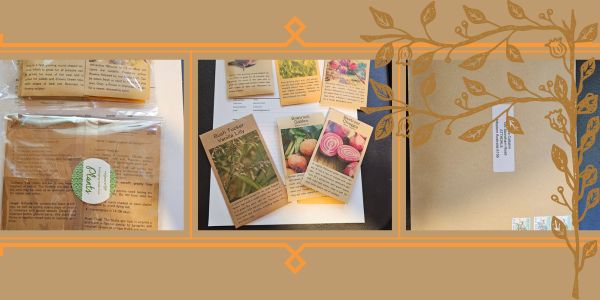
Not only are our seeds packed in recycled paper envelopes, we keep the theme going when we post out website orders. To protect your seeds from moisture and the letter box munchers (snails), we use a very special plastic free material made from plants. They are then put into recycled mailing envelopes. Green all the way ????????
Delivery Guarantee
We take great care to make sure your seeds arrive safely. If your order is lost or damaged in transit, we’ll happily send a replacement. Unfortunately, we can’t replace or refund orders that arrive later than the estimated delivery date, as delays can sometimes occur that are outside our control.
Please note that all dispatch and delivery times listed are estimates only. While we do our best to post promptly, delivery timeframes can vary due to postal service delays, weather events, or other unforeseen circumstances. We’re unable to take responsibility for any loss, damage, or cost that results from a late delivery.
An order is not considered missing until at least 20 business days have passed from the postage date. You’ll receive an email once your seeds have been posted, letting you know they’re on their way. If you don’t see it in your main inbox, please check your Spam or Promotions folders as sometimes our emails like to hide there.
See all our verified customer reviews on our official CusRev profile.