

Kangaroo Paw Manglesii
$6.59
Anigozanthos Manglesii
- 150 seeds
- Floral Emblem of WA
- Perennial
Out of stock
Email when stock available
Description
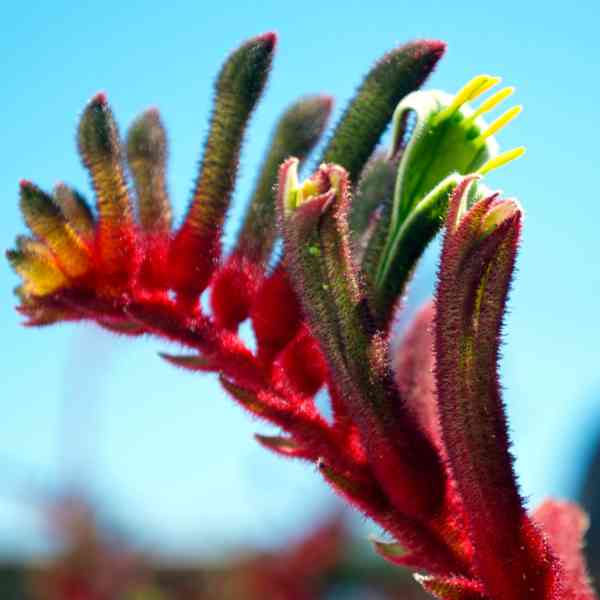
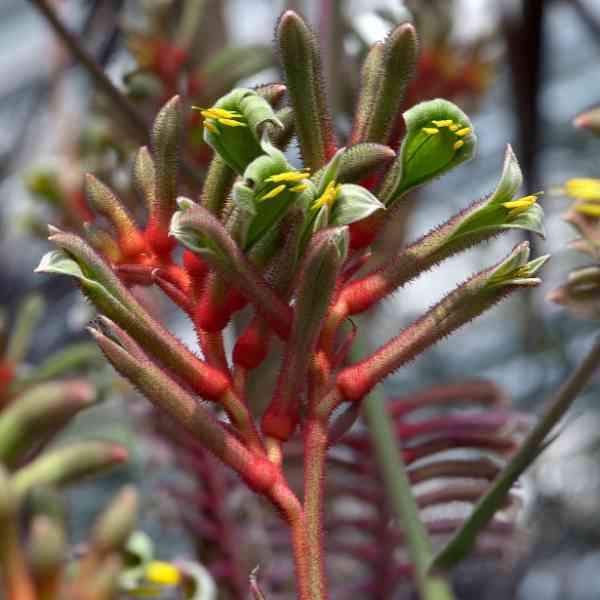
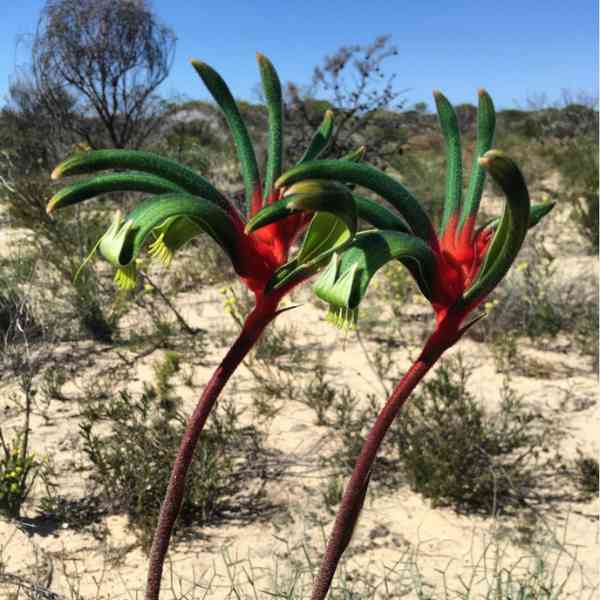
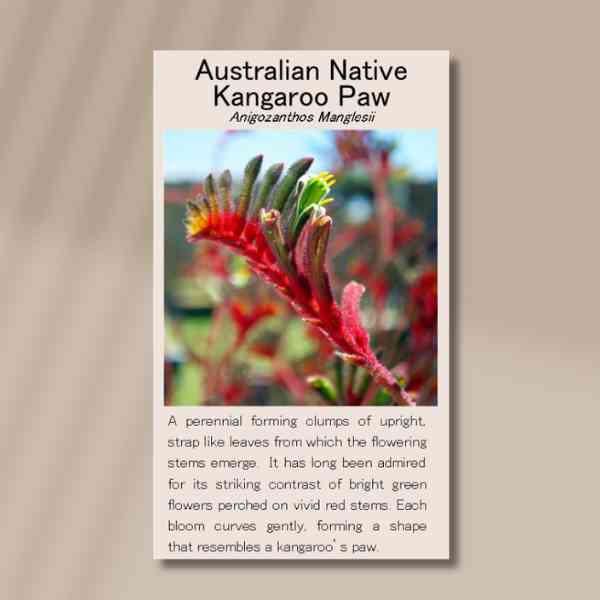
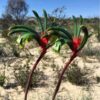
The Kangaroo Paw Manglesii is a species that feels uniquely Australian in every sense. Bold, vibrant and just a little bit wild, it captures the colour and character of the landscape it comes from. Native to the south west of Western Australia, it has long been admired for its striking contrast of bright green flowers perched on vivid red stems. Each bloom curves gently, forming a shape that really does resemble a kangaroo’s paw.
Flowering begins in late winter and continues right through spring and into summer. At a time of year when many gardens are still waking up, The Kangaroo Paw is already in full colour. Those tall stems rise above the strappy foliage, often reaching close to a metre in height, creating a strong vertical accent. In a mixed planting, they stand proudly above lower growing companions, bringing both height and movement.
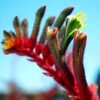
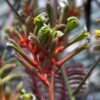
The colour combination is what truly sets this species apart. The intense red stems are bold and clean, not muddy or dull. The green flowers sit at the top like bright crowns. Together they create a vibrant contrast that feels fresh and energetic. It is a pairing that works beautifully in both naturalistic plantings and more structured garden designs.
As a perennial, Anigozanthos Manglesii forms clumps of upright, strap like leaves from which the flowering stems emerge. In ideal conditions it will persist for several years, building into a generous display. That said, it can be somewhat short lived in periods of high rainfall or humidity. In its native habitat, it is accustomed to sandy, free draining soils and a climate with dry summers. When grown in areas that experience heavier rainfall or higher humidity, its lifespan can be reduced.
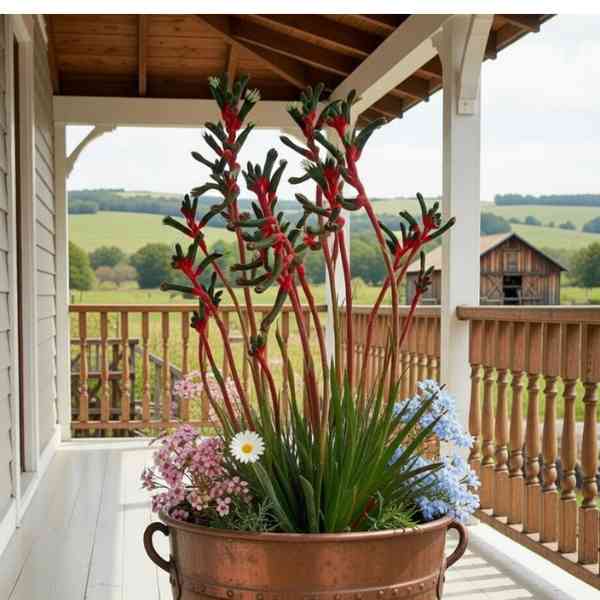
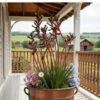
This is where thoughtful placement makes all the difference. Raised beds and large pots offer the drainage and airflow that this species appreciates, helping to extend its growing life. In large containers, it performs exceptionally well. The upright stems and vivid colouring make it a standout feature plant for patios, courtyards and entryways. Even a single well grown clump can create a strong focal point.
Beyond the garden, Kangaroo Paws have long been valued as a cut flower. The stems are sturdy and long, and the flowers hold their colour beautifully. Arranged in a vase, they bring that same bold Western Australian spirit indoors. Florists prize them for their texture and unique form, which pairs well with both native foliage and more traditional blooms.
There is also a cultural significance to this species. As the floral emblem of Western Australia, it appears in artwork, logos and community celebrations. It is a plant that represents place, resilience and natural beauty. For many people, it is a symbol of home. Growing it from seed adds another layer of connection.
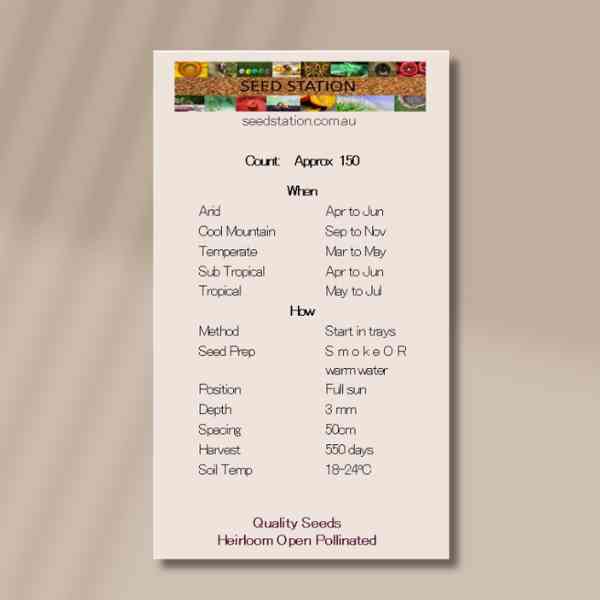
| Method: Sow direct | Soil Temp: 18°C - 24°C |
| Cool Mountain: Sep - Nov | Position: Full sun |
| Arid: Apr - Jul | Spacing: 50cm apart |
| Temperate: Mar - May | Planting Depth: 3mm |
| Sub Tropical: Apr - Jun | Harvest: 550 days |
| Tropical: May - Jul | Plant Height: 1 m |
🌿 Kangaroo Paw Grow Guide
Kangaroo Paw is a striking clump-forming perennial grown for its upright sword-like leaves and unusual fuzzy tubular flowers that resemble tiny paws. Flower colours vary widely depending on the species or hybrid, including red, orange, yellow, pink, green, burgundy, and near black. It is excellent for ornamental beds, wildlife gardens, cut flowers, containers, and low-water landscapes once established.
Kangaroo Paw is usually grown as a short-lived to medium-lived perennial. Some varieties are naturally tougher and longer lasting than others, while many modern hybrids are bred for larger flowers and vivid colours but may need more care. The plant grows from a rhizomatous base, forming a spreading clump over time. Good drainage, sunlight, airflow, and careful watering are the keys to long-term success.
🌱 Sowing in Trays vs Direct Sowing
Kangaroo Paw can technically be grown in trays or direct in the ground, but sowing in trays is the best method. The seed is fine, seedlings are delicate, and germination can be slow or uneven. Tray sowing gives much better control over moisture, drainage, pests, and early growth.
Use a free-draining seed-raising mix suitable for native plants. A blend with coarse sand or perlite is helpful because Kangaroo Paw seedlings dislike soggy conditions. Sow seed on the surface or cover very lightly with fine mix, as deep sowing can reduce germination. Water gently with a fine mist or bottom-water the tray so the seed is not washed away.
Once seedlings are large enough to handle, prick them out carefully into small pots or tubes. Handle by the leaves rather than the tiny crown or roots. Grow them on until they form a strong little clump before planting into their final position.
Direct sowing is not recommended for most home gardeners. Small seedlings are easily lost to drying soil, weeds, ants, snails, heavy rain, or crusted soil. It may work in carefully managed native garden beds, but tray sowing is far more reliable.
🔥 Seed Pre-Treatment
Seed pre-treatment is recommended. Kangaroo Paw seed often germinates better after exposure to smoke-related germination compounds. In the home garden, this is usually done with smoke water, smoked vermiculite, or smoke-treated seed-raising granules.
To use smoke water, moisten the seed-raising mix with diluted smoke water according to the product directions, then sow the seed. Alternatively, soak the seed briefly in smoke water if the product label allows it. Smoked vermiculite can be sprinkled lightly over the surface after sowing.
Heat treatment is not usually the preferred method for Kangaroo Paw seed. The main trigger is smoke rather than boiling water or scarification. Do not use hot water treatment, as it may damage the seed.
Fresh, good-quality seed may still germinate without smoke treatment, but germination is often slower and less even. For best results, use a smoke treatment.
☀️ Soil and Position
Kangaroo Paw grows best in full sun with excellent drainage. Strong light encourages sturdy growth, better flowering, and reduced disease problems. In very hot inland locations, light afternoon shade can be helpful, but too much shade leads to weak leaves, fewer flowers, and greater fungal issues.
The soil should be sandy, gravelly, or loamy and free draining. Raised beds, slopes, rock garden positions, and large pots all suit Kangaroo Paw well. Heavy clay or soil that stays wet around the crown can quickly lead to root and crown rot. If drainage is poor, plant into a raised mound or container using a native potting mix with added coarse material.
Avoid rich, wet soil and avoid high-phosphorus fertilisers. Kangaroo Paw generally performs best with a low-phosphorus native plant fertiliser or a gentle organic feed suited to native plants. Good airflow around the clump is important, so avoid crowding it with dense plants.
💧 Care and Maintenance
Water young plants regularly while they establish, allowing the soil surface to dry slightly between watering. Once established, many Kangaroo Paw varieties can tolerate dry spells, but flowering is better with occasional deep watering during prolonged dry periods. Avoid frequent shallow watering, as this encourages weak roots and damp foliage.
Water at soil level rather than over the leaves. Wet foliage, poor airflow, and crowded growth can encourage fungal disease. Mulch lightly with gravel, coarse bark, or open-textured native mulch, keeping it away from the crown.
Feed lightly. A small amount of low-phosphorus native fertiliser during active growth can support flowering, but heavy feeding is unnecessary and may cause soft, disease-prone growth.
After flowering, cut spent flower stems down close to the base. Removing old stems keeps the clump tidy and encourages fresh growth. Also remove dead or blackened leaves by cutting them low rather than pulling hard, as tugging can damage the crown. Older clumps can be divided when they become crowded, but division should be done carefully, keeping firm rhizome sections with healthy shoots and roots.
🌼 Companion Planting Guide
Kangaroo Paw combines well with other plants that enjoy sun, airflow, and free-draining soil. Its upright flowers add height and movement, while lower-growing companions help cover the soil without smothering the crown.
Good companions include grevilleas, correas, banksias, westringia, scaevola, brachyscome, billy buttons, lomandra, dianella, native grasses, pigface, everlasting daisies, and small eucalypts or mallees. These plants generally suit similar low-fertility, well-drained conditions and create a wildlife-friendly planting.
For a container display, Kangaroo Paw pairs well with compact native grasses, small daisies, and trailing groundcovers that do not hold moisture against the crown.
Avoid planting it beside thirsty plants that need constant watering or rich soil. Also avoid dense groundcovers that creep tightly into the crown, as this can trap moisture and increase rot problems.
✂️ How to Harvest
Kangaroo Paw flowers are excellent for cutting. Harvest flower stems when the lower flowers have opened and the upper buds are still fresh. Use clean secateurs and cut stems low, close to the base of the plant. This gives a long vase stem and helps keep the clump tidy.
Place cut stems into water quickly after harvest. Remove any leaves that would sit below the waterline. Change the vase water regularly to extend vase life.
For garden display, leave flowers standing until they fade, then remove the entire spent stem from the base. Regular removal of old stems improves appearance and may encourage more flowering in repeat-blooming varieties.
⚠️ Common Issues and Fixes
| Issue | Likely Cause | Fix |
|---|---|---|
| Seeds germinate poorly | No smoke treatment, old seed, or sowing too deep | Use smoke water or smoked vermiculite, fresh seed, and shallow sowing |
| Seedlings collapse | Mix too wet or poor airflow | Use free-draining mix, avoid overwatering, and improve airflow |
| Leaves turn black | Ink spot disease, poor airflow, wet foliage, or humidity | Remove affected leaves, water at soil level, improve spacing |
| Crown rot | Soil too wet, mulch against crown, or poor drainage | Improve drainage, raise the plant, and keep mulch away from crown |
| Few flowers | Too much shade, poor nutrition, or overcrowding | Move to more sun, feed lightly, and divide crowded clumps |
| Weak floppy growth | Low light or too much nitrogen | Provide more sun and avoid heavy feeding |
| Brown leaf tips | Dry stress, salt build-up, wind scorch, or old foliage | Deep water occasionally, flush pots, and trim old leaves |
| Snail or slug damage | Pests feeding on young shoots | Use barriers, hand-pick pests, and reduce hiding places |
| Plant declines after flowering | Short-lived hybrid, stress, or exhausted clump | Cut back spent stems, improve care, and divide or replace if needed |
| Root problems in pots | Potting mix broken down or poor drainage | Repot into fresh native potting mix and ensure drainage holes are clear |
🌰 Detailed Seed Saving Guide
Saving Kangaroo Paw seed is possible, although seed-grown plants may vary from the parent, especially if the plant is a hybrid. This variation can be interesting, but it means flower colour, height, vigour, and disease resistance may not be identical to the original plant. If you want an exact copy, division is more reliable than seed.
To save seed, allow selected flower stems to remain on the plant after flowering. Choose strong, healthy plants with good flower colour, upright stems, and minimal disease. Let the flower heads dry naturally on the stem. The seed capsules should become dry and papery before collection.
Cut the dry flower stem and place it upside down in a paper bag. Keep the bag in a dry, shaded, airy place for further drying. Once fully dry, gently crush or shake the dried flowers to release the fine seeds. Separate as much chaff as practical, but do not worry if a small amount remains.
Spread the collected seed on a plate or sheet of paper for several days to make sure it is fully dry. Store it in a labelled paper envelope or airtight jar in a cool, dark, dry place. Label with the plant name, flower colour, parent plant details if known, and collection date.
When sowing saved seed, use a smoke treatment for best results. Because seedlings may vary, raise several and select the strongest plants with the best form and flower colour. Discard weak, disease-prone, or poorly shaped seedlings.
🌿 Final Thoughts
Kangaroo Paw is a bold, beautiful plant that rewards good drainage, full sun, and careful watering. It is best started in trays using a smoke treatment, then grown on until sturdy enough for planting. Once established, it can bring strong vertical colour, attract birds and pollinators, and provide excellent cut flowers. The main secret is to keep the crown dry, the soil free draining, and the plant open to light and airflow.
1 review for Kangaroo Paw Manglesii

Postage Charge
Orders under $40 attract a $5.50 shipping charge. Orders $35 and above have free shipping.
*** We cannot deliver to Parcel Lockers ***
Order Times
Seed orders are normally dispatched within three business days. You will receive an email when seeds are mailed out.
Postage Days
Seeds are mailed out Tuesday to Friday at 1pm. Except for the Friday of long weekends.
Postage Times
WA 2-3 Days: SA,NT 3-5 Days: NSW, ACT, QLD, VIC: 5-7 Days
Carrier
We use Australia Post Letter Postage for the majority of orders.
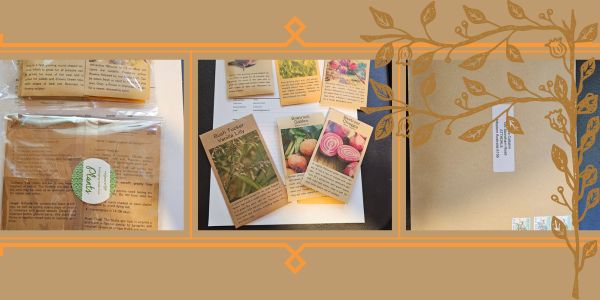
Not only are our seeds packed in recycled paper envelopes, we keep the theme going when we post out website orders. To protect your seeds from moisture and the letter box munchers (snails), we use a very special plastic free material made from plants. They are then put into recycled mailing envelopes. Green all the way ????????
Delivery Guarantee
We take great care to make sure your seeds arrive safely. If your order is lost or damaged in transit, we’ll happily send a replacement. Unfortunately, we can’t replace or refund orders that arrive later than the estimated delivery date, as delays can sometimes occur that are outside our control.
Please note that all dispatch and delivery times listed are estimates only. While we do our best to post promptly, delivery timeframes can vary due to postal service delays, weather events, or other unforeseen circumstances. We’re unable to take responsibility for any loss, damage, or cost that results from a late delivery.
An order is not considered missing until at least 20 business days have passed from the postage date. You’ll receive an email once your seeds have been posted, letting you know they’re on their way. If you don’t see it in your main inbox, please check your Spam or Promotions folders as sometimes our emails like to hide there.
Look forward to seeing the new plants
See all our verified customer reviews on our official CusRev profile.