





Vanilla Lily
$6.59
Arthropodium Milleflorum
- Seed Count 30
- Bush Tucker
- Perennial
Out of stock
Email when stock available
Description
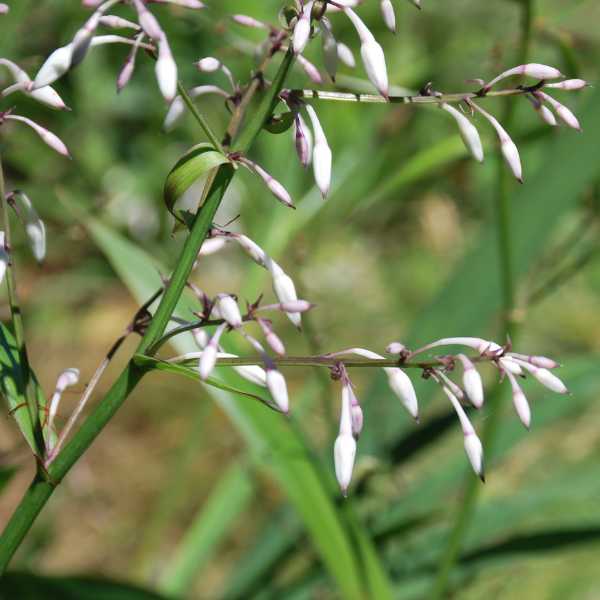
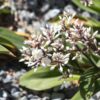
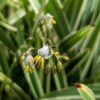
If you’ve ever wandered through native bushland in spring and caught the faintest whisper of vanilla on the breeze, you may have stumbled upon the Vanilla Lily a grass-like perennial with slender green leaves and fragrant starry flowers. Native to many parts of Australia, from the inland plains to coastal bushland, the Vanilla Lily has been a long-standing part of the landscape.
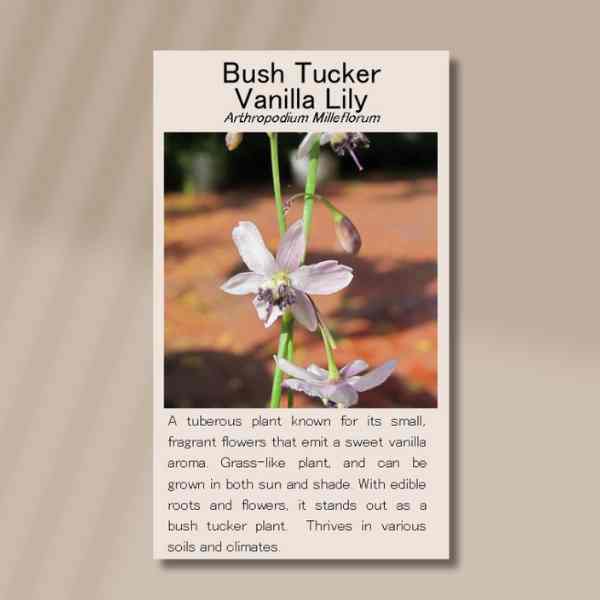
When in flower, the Vanilla Lily offers a lightly perfumed spectacle of delicate star-shaped blooms in pale shades of white, pink, or mauve dancing lightly above the foliage. It fits right into naturalistic landscapes, native beds, and shady rockeries. Planted en masse, it creates a soft groundcover effect when not in flower and a magical low floral display in full bloom. Even tucked between pavers or popping up along a gravel edge, it manages to look right at home.
Unlike fussier natives that demand a particular position or soil type, the Vanilla Lily is wonderfully adaptable. It will grow in full sun or part shade and even manages well in dappled light under trees, making it a brilliant understory option. It’s naturally drought-hardy too, thanks to its underground tubers that store moisture, so it suits low-maintenance gardens and water-wise designs.
With edible roots and flowers, it stands out as a bush tucker plant. The below-ground tubers are mild in flavour, something like a nutty potato and they become a tasty treat when roasted, boiled, or even popped into an air fryer. Thinly sliced and crisped up, they make an excellent garden-to-plate snack.
It’s best to wait until the plant is at least two years old before pulling up the roots as this gives the plant time to mature and allows you to enjoy the full cycle of flower and growth. Come early summer, when flowering winds down and the plant begins to die back, that’s the perfect moment to gently lift the tubers. Or, if you’re more of a ‘let it be’ type gardener, you can leave them in the ground. The plant will simply go dormant for a little while and return again with cooler autumn days.
The flowers carry that signature vanilla-like scent and can be sprinkled them over cakes, fruit salads, or ice cream for a unique and beautiful garnish.
Despite its native bushland origin, Vanilla Lily doesn’t mind being a bit pampered. In fact, it performs surprisingly well in containers. A medium-sized pot with free-draining soil will support its tuber growth and give you a front-row seat to its seasonal display. This makes it a fantastic choice for balcony gardeners, renters, or those with smaller spaces.
In garden beds, it weaves easily through native grasses, under small trees, or alongside other edible natives and it also pairs nicely with exotic cottage garden plants if you enjoy mixing styles. Rockeries, bush-inspired plantings, and wildflower-style displays also benefit from its soft form and delicate blooms. Because it’s low-growing and clump-forming, you can use it to edge paths or fill in gaps without it taking over.
| Method: Start in trays | Soil Temp: 15°C - 20°C |
| Cool Mountain: Oct - Dec | Position: Full sun - Part Shade |
| Arid: Apr - Jun | Row Spacing: 30cm apart |
| Temperate: Mar-May/Aug-Oct | Planting Depth: 1mm |
| Sub Tropical: Mar - May | Harvest: 700 days |
| Tropical: May - Jun | Plant Height: 100 cm |
🌸 Vanilla Lily Grow Guide
🌿 Overview
Vanilla lily is a delicate, grassland-style flowering plant grown for its slender leaves, soft starry blooms, and sweet vanilla-like fragrance. It is a beautiful choice for naturalistic gardens, meadow plantings, cottage borders, rockeries, habitat gardens, and pots. The flowers are usually held on fine stems above narrow foliage, giving the plant a light and airy look rather than a dense, bulky shape.
This is not a plant that needs heavy feeding or constant fussing. It performs best when given good drainage, gentle moisture, and enough space to settle into a natural clump. It can look modest when young, but once established it becomes a charming and useful flowering plant that blends especially well with grasses and other small flowering perennials.
🌱 Sowing in Trays vs Direct Sowing
Vanilla lily can be sown directly, but starting in trays or small pots is usually the best method. The seed is small, germination can be uneven, and young seedlings are easy to lose among weeds or pests if sown straight into the garden.
For tray sowing, use a fine, free-draining seed-raising mix. Scatter the seed thinly over the surface, then cover with only a very light layer of fine mix or vermiculite. The seed should not be buried deeply. Water gently with a fine spray or by sitting the tray in shallow water until the mix is moist. Keep the mix evenly damp, but never soggy.
Once seedlings are large enough to handle, prick them out carefully into small pots or tubes. Allow them to form a stronger root system before planting into their final position. Handle the seedlings gently, as young plants can be fine and fragile.
Direct sowing can work in a clean, prepared bed, especially in a naturalistic planting where many seedlings are welcome. However, it is less reliable because seed may dry out, wash away, be eaten, or be smothered by weeds. If direct sowing, prepare a fine seedbed, scatter seed thinly, cover very lightly, and protect the area until seedlings are established.
For vanilla lily, tray or pot sowing is recommended because it gives better control and a much higher chance of raising strong plants.
💧 Seed Pre-Treatment
Vanilla lily seed may germinate without treatment, but smoke treatment is helpful and often improves results. This is especially useful for older seed or seed that has been slow to germinate in the past.
The easiest method is to use smoke water or smoked vermiculite. Smoke water can be diluted according to the product instructions and used to moisten the seed-raising mix, or the seed can be soaked briefly before sowing. Smoked vermiculite can be sprinkled as a light covering over the seed so that smoke compounds move into the mix when watered.
Do not soak the seed for too long, and do not keep the tray wet and stagnant. The aim is to stimulate germination while still maintaining good airflow and drainage. After treatment, sow the seed shallowly and keep it evenly moist.
🌞 Soil and Position
Vanilla lily grows best in well-drained soil with a natural, open structure. It suits sandy loam, loam, gravelly soil, and improved clay if drainage has been corrected. It does not need rich, heavily fertilised soil, and it may struggle if planted into wet, compacted ground.
Choose a position in full sun to light shade. In full sun, plants usually flower strongly and remain more compact. In light shade, they may grow softer and slightly taller, but they can still perform well as long as the soil does not stay wet.
Before planting, remove weeds and loosen the soil gently. If the soil is heavy, plant into a raised mound or mix in coarse sand, fine gravel, composted bark, or well-aged compost to improve drainage. Avoid fresh manure and strong fertilisers, as these can encourage weak leafy growth rather than balanced flowering.
Vanilla lily also grows well in containers. Use a free-draining native or low-phosphorus potting mix, and choose a pot with excellent drainage holes.
🌿 Care and Maintenance
Vanilla lily is low-maintenance once established, but young plants need gentle care while they settle in. Water regularly during establishment, allowing the soil to drain between watering. The soil should remain lightly moist, not wet. Once plants are settled, they can handle drier periods better, although flowering and growth are improved with occasional deep watering.
Mulch lightly with gravel, leaf litter, or fine organic mulch. Keep mulch away from the base of the plant so the crown does not stay damp. A light mulch helps reduce weeds and protects the root zone without smothering the plant.
Feeding should be minimal. A small amount of low-phosphorus slow-release fertiliser or a thin layer of compost is enough. Overfeeding can make the plant soft and less resilient.
After flowering, leave some seed heads if you want seed, or trim spent stems to keep the plant tidy. Foliage may die back or look tired at certain times. This is normal for many grassland-style lilies. Do not assume the plant is dead just because the top growth has faded. Keep the area lightly marked so the dormant clump is not accidentally dug up.
🌼 Companion Planting Guide
Vanilla lily looks best with plants that enjoy similar open, well-drained conditions. Good companions include native grasses, bluebells, paper daisies, billy buttons, scaevola, brachyscome, everlasting daisies, flax lily, kangaroo grass, wallaby grass, correas, small saltbush, and low-growing pea flowers.
In a meadow-style garden, plant vanilla lily among fine grasses and small wildflowers so its flowers can rise naturally through the planting. This creates a soft, layered effect and also supports bees, small pollinators, and beneficial insects.
In pots, vanilla lily pairs well with other compact plants that do not overwhelm it. Avoid aggressive groundcovers or large, thirsty plants that will outcompete its fine roots.
It is best not to plant vanilla lily beside heavy feeders that need constant fertiliser and irrigation. It prefers a more balanced, natural planting style with good drainage and moderate care.
🧺 How to Harvest
Vanilla lily is usually harvested for flowers, seed, or division of established clumps, rather than food. For cut flowers, harvest stems when several blooms are open but some buds remain. Cut early in the day using clean scissors or secateurs, then place stems straight into clean water.
For seed harvest, allow the flower stems to finish naturally. Seed capsules will form after flowering and gradually dry. Watch them closely, as small seed can drop once capsules open. Harvest when the capsules are dry or nearly dry, then place the stems into a paper bag to finish drying.
If collecting for garden display or dried arrangements, cut the seed stems once they have formed attractive dry capsules. Hang them upside down in a shaded, airy place until fully dry.
⚠️ Common Issues and Fixes
| Issue | Likely Cause | Fix |
|---|---|---|
| Poor germination | Seed too deeply buried, old seed, no smoke treatment, dry seed mix | Sow shallowly, use fresh seed, try smoke treatment, keep mix evenly moist |
| Seed rotting | Mix too wet, poor drainage, seed soaked too long | Use free-draining mix, water gently, avoid soggy conditions |
| Seedlings collapsing | Damping off from excess moisture or poor airflow | Use clean seed mix, avoid overcrowding, improve airflow |
| Slow seedling growth | Low light, poor mix, cool conditions, tiny developing roots | Provide bright light, use fine seed mix, be patient, pot on carefully |
| Plants not flowering well | Too much shade, excess nitrogen, young plant not mature enough | Increase light, reduce feeding, allow clumps time to establish |
| Yellowing leaves | Overwatering, poor drainage, nutrient stress | Check drainage, reduce watering, use mild low-phosphorus feed if needed |
| Crown rot | Wet soil, mulch against the base, poor airflow | Improve drainage, pull mulch back, plant on a slight mound |
| Plants disappearing | Natural dormancy, accidental digging, dry stress | Mark the planting spot, water during establishment, avoid disturbing dormant clumps |
| Chewed leaves or flowers | Slugs, snails, caterpillars, grasshoppers | Inspect regularly, remove pests by hand, protect young plants |
| Weak floppy growth | Too much shade, rich soil, crowding | Move to brighter conditions, avoid heavy fertiliser, improve spacing |
| Weed competition | Fine seedlings overwhelmed by faster plants | Weed carefully by hand, raise seedlings in trays first |
| Poor container growth | Potting mix too wet or too rich | Use a free-draining mix, choose a pot with excellent drainage |
🌾 Detailed Seed Saving Guide
Saving vanilla lily seed is worthwhile because mature plants can produce many small seeds, and seed-grown plants are excellent for naturalistic garden displays. Begin by choosing the healthiest plants with strong flowering, good fragrance, sturdy stems, and clean foliage. Avoid saving seed from weak, diseased, or poorly flowering plants.
Allow selected flowers to remain on the plant after blooming. The flowers will form small seed capsules along the stems. These capsules should be allowed to mature and dry before collection. The key is to harvest when the capsules are dry enough to contain mature seed but before they open fully and scatter.
Place a paper bag over ripening stems if you are worried about losing seed. Once the capsules are dry, cut the stems and place them upside down in the bag. Keep the bag in a dry, airy, shaded place until the capsules become crisp.
When fully dry, gently shake or rub the capsules to release the seed. Work over a clean tray or sheet of paper so the tiny seed is not lost. Remove larger pieces of dry stem and capsule material by hand. A fine sieve can help separate seed from chaff, but take care because the seed may be small.
Spread the cleaned seed on a plate or tray for several more days to make sure it is completely dry. Do not store seed while it is even slightly damp, as it can mould.
Store the seed in a labelled paper envelope or small airtight jar. Include the plant name, flower colour if relevant, location or parent plant notes, and year collected. Keep the seed in a cool, dark, dry place. A small moisture absorber can be placed in the storage jar if conditions are humid.
For future sowing, smoke treatment is a useful step to improve germination. Sow saved seed shallowly in a free-draining mix and be patient, as germination may be uneven.
🌟 Final Thoughts
Vanilla lily is a graceful, fragrant, and rewarding plant for gardeners who enjoy subtle beauty rather than bold, heavy displays. It suits meadow gardens, native-style borders, pots, rockeries, and habitat plantings where its fine stems and scented flowers can be appreciated up close.
The keys to success are tray sowing, shallow seed covering, optional smoke treatment, excellent drainage, gentle watering, low feeding, and patience while young plants establish. Once settled, vanilla lily becomes a charming and resilient garden plant that offers fragrance, delicate flowers, seed for saving, and a soft natural look that blends beautifully with grasses and small flowering companions.
3 reviews for Vanilla Lily

Postage Charge
Orders under $40 attract a $5.50 shipping charge. Orders $35 and above have free shipping.
*** We cannot deliver to Parcel Lockers ***
Order Times
Seed orders are normally dispatched within three business days. You will receive an email when seeds are mailed out.
Postage Days
Seeds are mailed out Tuesday to Friday at 1pm. Except for the Friday of long weekends.
Postage Times
WA 2-3 Days: SA,NT 3-5 Days: NSW, ACT, QLD, VIC: 5-7 Days
Carrier
We use Australia Post Letter Postage for the majority of orders.
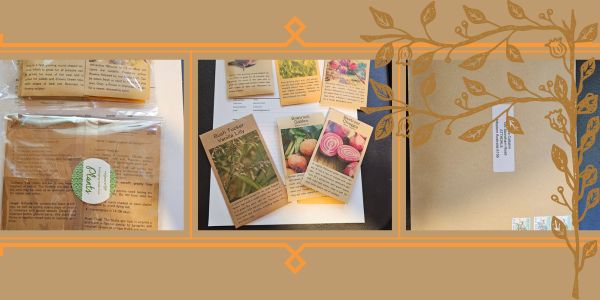
Not only are our seeds packed in recycled paper envelopes, we keep the theme going when we post out website orders. To protect your seeds from moisture and the letter box munchers (snails), we use a very special plastic free material made from plants. They are then put into recycled mailing envelopes. Green all the way ????????
Delivery Guarantee
We take great care to make sure your seeds arrive safely. If your order is lost or damaged in transit, we’ll happily send a replacement. Unfortunately, we can’t replace or refund orders that arrive later than the estimated delivery date, as delays can sometimes occur that are outside our control.
Please note that all dispatch and delivery times listed are estimates only. While we do our best to post promptly, delivery timeframes can vary due to postal service delays, weather events, or other unforeseen circumstances. We’re unable to take responsibility for any loss, damage, or cost that results from a late delivery.
An order is not considered missing until at least 20 business days have passed from the postage date. You’ll receive an email once your seeds have been posted, letting you know they’re on their way. If you don’t see it in your main inbox, please check your Spam or Promotions folders as sometimes our emails like to hide there.
Haven’t seen them yet. Order has not arrived.
See all our verified customer reviews on our official CusRev profile.
Hi Sean, I am sorry to hear that your order has not yet arrived. Email confirmation of postage goes out on the same day they are posted but sometimes it ends up in your spam or promotions folder. I have sent you an email to confirm the postal address supplied. If seeds do not arrive within 4 weeks of postage I send out a replacement set of seeds at no charge. Hopefully you will see them in the next few days. Every know and the Australia Post is a little slower than it should be.
See all our verified customer reviews on our official CusRev profile.
See all our verified customer reviews on our official CusRev profile.
See all our verified customer reviews on our official CusRev profile.