


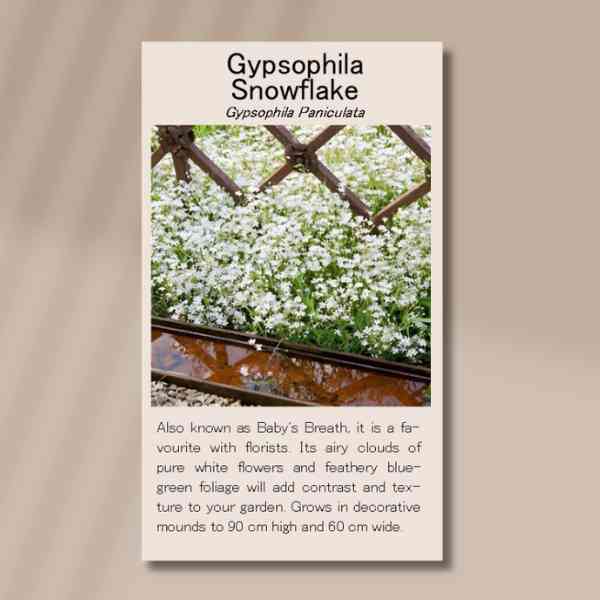






Gypsophila Snowflake
$4.95
Gypsophilia Paniculata
- Seed Count 350
- Gorgeous Cut Flower
- Perennial
- Height 90 cm
In stock
Description
Gypsophila Snowflake, better known to many as Baby’s Breath, is a visual multitasker. In the garden, it forms decorative mounds of feathery blue-green foliage, reaching up to 90cm in height and spreading 60cm wide. But it’s the flowers that steal the show. From late spring through summer, the plant becomes dotted with countless tiny, pure white blooms that linger, creating a long-lasting display that seems to hover above the foliage like a delicate veil.
Pair it with bold, vivid blooms such as roses or dahlias and watch how it softens their intensity, and planted en masse, it transforms into a sea of white suiting cottage gardens, modern landscapes, and everything in between.
Once established, it’s remarkably resilient, tolerating both drought and poor soils and its compact, self-supporting habit means minimal fuss with no staking or constant pruning. It simply does its job, year after year, with a solid reliability.
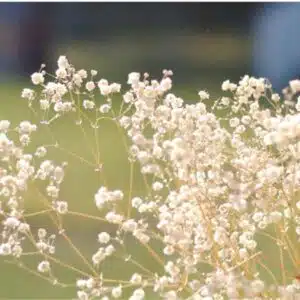
And then there’s its secondary life as a cut flower. Gypsophila’s tiny blooms are the florists’ secret weapon, adding volume, texture, and a touch of romance to bouquets. The stems dry beautifully, too, retaining their shape and colour long after summer fades. For anyone who loves bringing the garden indoors, this plant is ideal.
| Method: Sow direct or seedlings | Soil Temp: 10°C - 25°C |
| Cool Mountain: Nov - Dec | Position: Full sun |
| Arid: Aug - Jan | Row Spacing: 25 cm apart |
| Temperate: Sep-Nov, Mar-Jun | Planting Depth: 3 mm |
| Sub Tropical: May - Oct | Harvest: 80 days |
| Tropical: Jun - Aug | Plant Height: 90cm |
🌸 Gypsophila Grow Guide
Gypsophila, often called baby’s breath, is a delicate flowering plant grown for its airy sprays of tiny white, pink, or blush flowers. It is popular in cottage gardens, pollinator beds, borders, pots, and cut flower patches. Its fine branching stems create a soft cloud-like effect, making it useful both in the garden and in floral arrangements.
This plant is generally easy to grow from seed, provided it has excellent drainage, plenty of sun, and soil that is not too rich or wet. It dislikes heavy, soggy ground and can struggle if overwatered or overfed. Once established, gypsophila is usually low maintenance and rewards simple care with masses of light, graceful flowers.
🌱 Sowing in Trays Versus Direct Sowing
Gypsophila can be grown by both tray sowing and direct sowing, but direct sowing is usually the best method for most types. The plants develop best when their roots are not disturbed, and direct sowing allows them to settle naturally where they will flower.
To direct sow, prepare a fine, weed-free bed in a sunny position. Scatter the seed thinly over the surface and press it gently into the soil. Cover only very lightly, as gypsophila seed should not be buried deeply. Keep the soil evenly moist until seedlings appear, then thin them early so the remaining plants have room to branch and flower.
Tray sowing is still useful if you need better control over pests, wind, heavy rain, or patchy garden soil. Use a fine seed-raising mix and sow shallowly. Keep the tray in bright light and avoid overwatering. Transplant seedlings while they are still small, before they become root-bound. Handle them gently and disturb the roots as little as possible.
For garden beds and flower patches, direct sowing is the simplest and most natural method. For containers, small gardens, or protected starts, trays can be helpful as long as seedlings are moved on early.
💧 Seed Pre-Treatment
Gypsophila seed does not need special pre-treatment. There is no need for soaking, chilling, scarifying, smoke treatment, or heat treatment.
Fresh seed usually germinates well when sown shallowly into fine, moist soil or seed-raising mix. The most important requirements are light covering, steady moisture, good drainage, and bright conditions.
Avoid burying the seed too deeply. A very fine covering is enough. If the seed is covered too heavily or kept too wet, germination may be poor and seedlings may rot.
🌏 Soil and Position
Gypsophila grows best in full sun. Strong light encourages compact, sturdy plants and better flowering. In too much shade, plants may become stretched, weak, and less floriferous.
The soil must be free-draining. This is one of the most important points for success. Gypsophila dislikes heavy clay, boggy soil, and constantly damp roots. If your soil is dense, improve drainage by adding compost, coarse sand, fine gravel, or growing in a raised bed.
Gypsophila generally prefers soil that is not acidic. If your soil is very acidic, adding garden lime before planting can help create better conditions. Avoid very rich soil or heavy feeding, as this can encourage soft leafy growth instead of strong flowering stems.
For pots, use a well-draining potting mix and choose a container with drainage holes. A terracotta pot can be useful because it allows the mix to dry more evenly. Do not leave pots sitting in saucers of water.
🪴 Care and Maintenance
Gypsophila is low maintenance once established. Water young seedlings gently and regularly while they settle in, but avoid making the soil soggy. Once plants are growing strongly, allow the surface of the soil to dry slightly between watering.
Overwatering is one of the most common problems. Gypsophila is far more likely to suffer from wet roots than from slightly dry conditions. Water at soil level rather than over the foliage to reduce fungal issues.
Feed lightly. A small amount of compost or a gentle flower fertiliser is usually enough. Avoid heavy nitrogen feeding, as this can produce lush, floppy growth with fewer flowers.
Thin seedlings early so plants are not crowded. Good spacing improves airflow, reduces disease, and allows the plant to form a graceful branching shape. Taller varieties may need light support, especially if grown in windy areas.
Deadheading can encourage a longer flowering display. Remove spent flower sprays once they fade, unless you want to save seed. If plants become untidy after flowering, trim them lightly to refresh their shape.
🌼 Companion Planting Guide
Gypsophila is an excellent companion in sunny flower beds because its fine flowers soften stronger shapes and attract small beneficial insects. It pairs well with plants that enjoy similar conditions: sun, open airflow, and free-draining soil.
Good companions include roses, lavender, salvia, dianthus, echinacea, cosmos, coreopsis, zinnia, yarrow, marigold, calendula, alyssum, rosemary, thyme, oregano, catmint, and ornamental grasses. These plants create a colourful, pollinator-friendly garden with varied flower shapes and heights.
Gypsophila is especially attractive beside bold flowers because its fine sprays act as a soft filler. It can be planted near cut flower crops to provide airy stems for arrangements.
Avoid planting it beside moisture-loving shade plants or heavy feeders. It is not a good match for plants that need constantly damp soil, deep shade, or rich manure-heavy beds.
✂️ How to Harvest
Gypsophila is often harvested as a cut flower. Pick stems when many small flowers have opened but before the whole spray begins to age. Use clean scissors or secateurs and cut stems early in the day when the plant is hydrated.
Remove any lower leaves from the stem before placing it in water. For fresh arrangements, place stems straight into a clean bucket of water and keep them cool until used.
Gypsophila can also be dried. To dry it, cut flower stems when the blooms are open and fresh. Tie small bunches and hang them upside down in a dry, airy, shaded place. Once fully dry, store them away from moisture and strong sunlight.
For garden display, harvest by deadheading faded flower sprays. This keeps the plant tidy and can encourage more flowering. Leave some flower heads untouched if you want seed.
⚠️ Common Issues and Fixes
| Issue | Likely Cause | Fix |
|---|---|---|
| Poor germination | Seed buried too deeply, old seed, or dry soil surface | Sow shallowly, use fresh seed, and keep soil lightly moist |
| Seedlings collapsing | Overwatering, poor airflow, or fungal disease | Use free-draining mix, water gently, and improve airflow |
| Tall, weak seedlings | Not enough light or overcrowding | Move to stronger light and thin seedlings early |
| Few flowers | Too much shade, too much nitrogen, or overcrowding | Grow in full sun, feed lightly, and improve spacing |
| Floppy growth | Rich soil, excess water, or weak light | Reduce feeding, improve drainage, and grow in a sunnier position |
| Yellowing leaves | Wet roots, poor drainage, or nutrient stress | Let soil dry slightly, improve drainage, and avoid overwatering |
| Root rot | Heavy soil or constant moisture | Grow in raised beds, add drainage material, and water less often |
| Brown lower stems | Damp conditions around the crown | Keep mulch away from the base and improve airflow |
| Powdery coating on leaves | Poor airflow or plant stress | Space plants better, water at soil level, and remove affected growth |
| Chewed seedlings | Slugs, snails, or insects | Protect young plants, inspect at night, and use barriers if needed |
| Poor growth in pots | Pot too wet, poor drainage, or exhausted mix | Use a free-draining mix, check drainage holes, and feed lightly |
| Flowers fading quickly | Heat stress, dry wind, or old blooms | Harvest earlier and water deeply during dry spells |
🌾 Seed Saving Guide
Gypsophila is a good plant for seed saving because it produces many small flowers followed by seed heads. To save seed well, begin by choosing the healthiest and most attractive plants. Select plants with strong stems, good flower colour, long flowering, and a pleasing shape.
Do not save seed from weak, diseased, badly pest-damaged, or poorly flowering plants. Seed saving is also selection, so choose the plants you would be happy to grow again.
Allow some flowers to remain on the plant after blooming. The petals will fade, and small seed capsules will form where the flowers were. Leave these capsules on the plant until they turn dry and papery. Watch them closely, because very dry seed heads can release seed naturally.
When the seed heads are dry, cut the stems and place them upside down in a paper bag or over a tray. Keep them in a dry, airy place for several more days so the seed finishes drying fully.
Once dry, gently rub or shake the seed heads to release the tiny seeds. Separate the seed from dry petals, stems, and chaff as much as practical. The seed does not need to be perfectly clean, but it must be completely dry before storage.
Store the seed in a labelled paper envelope or small jar in a cool, dry, dark place. Label it with the flower colour, plant description, and collection year. Paper envelopes are useful because they allow any last trace of moisture to escape.
If different gypsophila varieties are flowering close together, saved seed may produce some natural variation in height, flower colour, or plant form. This can be lovely in cottage-style gardens. For more consistent results, save seed from one type grown separately from others.
🌿 Final Thoughts
Gypsophila is a graceful and rewarding flower that brings softness, movement, and charm to sunny gardens. It is especially useful for cut flowers, pollinator beds, cottage gardens, and borders where a light, airy texture is wanted.
Direct sowing is usually the best method, especially where the soil is already fine, sunny, and free-draining. Tray sowing is useful for extra control, but seedlings should be transplanted while young to avoid root disturbance. No special seed treatment is needed.
The keys to success are simple: full sun, excellent drainage, shallow sowing, light feeding, careful watering, and good airflow. With these conditions, gypsophila will produce clouds of delicate flowers and plenty of seed for future plantings.
2 reviews for Gypsophila Snowflake

Postage Charge
Orders under $40 attract a $5.50 shipping charge. Orders $35 and above have free shipping.
*** We cannot deliver to Parcel Lockers ***
Order Times
Seed orders are normally dispatched within three business days. You will receive an email when seeds are mailed out.
Postage Days
Seeds are mailed out Tuesday to Friday at 1pm. Except for the Friday of long weekends.
Postage Times
WA 2-3 Days: SA,NT 3-5 Days: NSW, ACT, QLD, VIC: 5-7 Days
Carrier
We use Australia Post Letter Postage for the majority of orders.
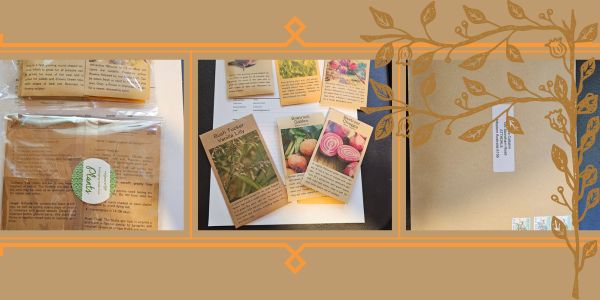
Not only are our seeds packed in recycled paper envelopes, we keep the theme going when we post out website orders. To protect your seeds from moisture and the letter box munchers (snails), we use a very special plastic free material made from plants. They are then put into recycled mailing envelopes. Green all the way ????????
Delivery Guarantee
We take great care to make sure your seeds arrive safely. If your order is lost or damaged in transit, we’ll happily send a replacement. Unfortunately, we can’t replace or refund orders that arrive later than the estimated delivery date, as delays can sometimes occur that are outside our control.
Please note that all dispatch and delivery times listed are estimates only. While we do our best to post promptly, delivery timeframes can vary due to postal service delays, weather events, or other unforeseen circumstances. We’re unable to take responsibility for any loss, damage, or cost that results from a late delivery.
An order is not considered missing until at least 20 business days have passed from the postage date. You’ll receive an email once your seeds have been posted, letting you know they’re on their way. If you don’t see it in your main inbox, please check your Spam or Promotions folders as sometimes our emails like to hide there.
See all our verified customer reviews on our official CusRev profile.
Well packaged. Can’t wait to plant them.
See all our verified customer reviews on our official CusRev profile.