




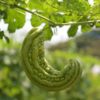



Bitter Melon
$6.59
Momordica Charantia
- Seed Count 6
- Easy To Maintain
- Perennial
Only 2 left in stock
Description
Bitter Melon has been grown for centuries across India, China, Southeast Asia and beyond. It is valued not only for its distinctive taste, but also for its long history in traditional diets and home cooking. It is bold. Its flavour is vibrant, earthy and unmistakably bitter, in a way that becomes more appealing the more you cook with it.
The plant itself is a vigorous climbing vine that can stretch up to five metres in length when in full growth. It has a lively, twining habit and produces delicate yellow flowers that sit among deeply cut green leaves. There is something quite beautiful about the contrast between the soft flowers and the textured fruit that follows.
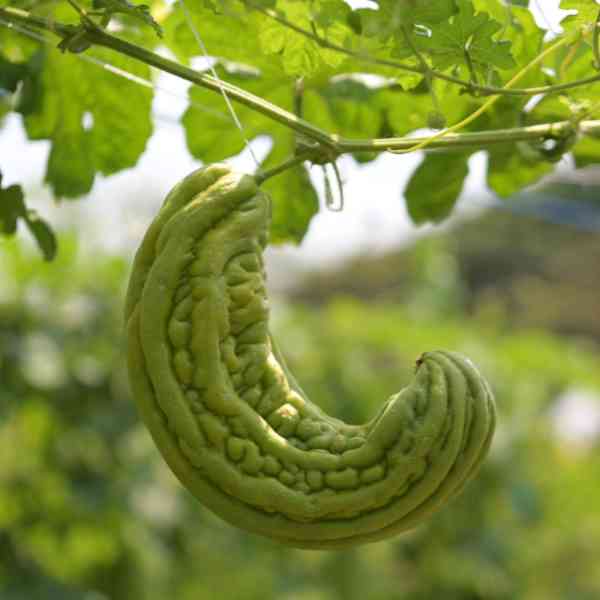
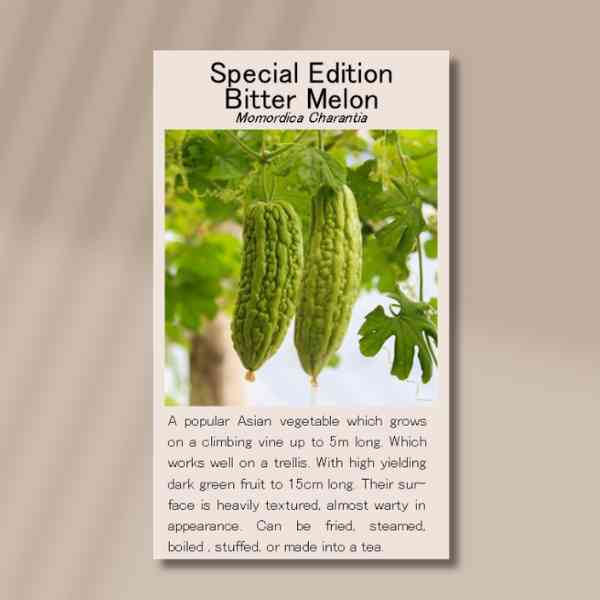
The fruits are small and dark green, typically measuring between 10 and 14 centimeters long. Their surface is heavily textured, almost warty in appearance, which gives them their unmistakable look. As they mature, the fruit can lighten in colour and eventually turn yellow or orange if left on the vine. Inside, the flesh is pale and firm, surrounding seeds encased in a vivid red coating when fully ripe. It is a striking plant in every stage of its life cycle.
This high yielding variety is known for its productivity. A healthy vine will set multiple fruits along its length, and once it begins producing, it tends to keep going steadily through the warm season. That generous nature is one of the reasons it has been so widely grown in home gardens and market plots throughout warm regions of the world.
Bitter Melon thrives in full sun and prefers well drained, loose soil. It is sensitive to frost, so it is best suited to warm environments where it can grow steadily without cold interruption. In Australia, it performs particularly well through the warmer months in temperate, subtropical and tropical regions. The vine’s enthusiasm for warmth is obvious once it begins to climb and spread.
In the kitchen, Bitter Melon earns its place through versatility. It is a staple in stir fries, where it is often sliced thinly and paired with garlic, chilli, egg or pork. In soups, it adds depth and complexity, particularly in clear broths where its flavour can shine. It is also widely used in pickles and chutneys, where its bitterness contrasts beautifully with sweetness and spice. Beyond the fruit, the young leaves and tender shoots are also edible when cooked. In many traditional cuisines they are lightly sautéed or added to soups. They carry a similar bitter note, though often milder, and contribute valuable nutrients to the dish.
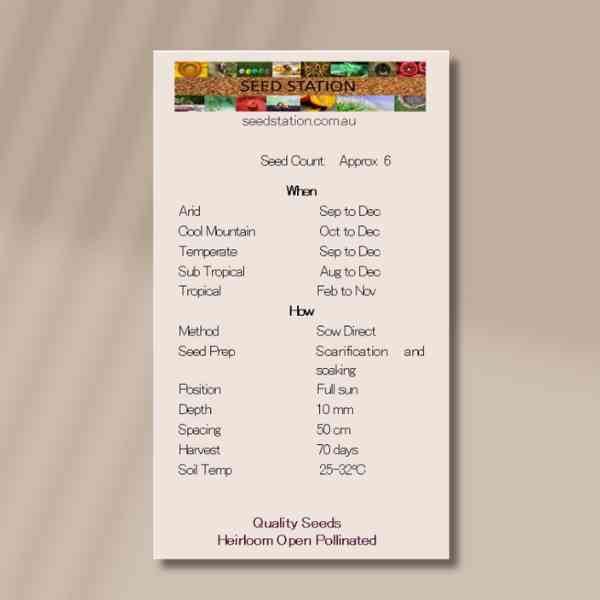
| Method: Sow direct | Soil Temp: 25°C - 32°C |
| Cool Mountain: Oct - Dec | Position: Full sun |
| Arid: Sep - Dec | Spacing: 50cm apart |
| Temperate: Sep - Dec | Planting Depth: 10mm |
| Sub Tropical: Aug - Dec | Harvest: 70 days |
| Tropical: Feb - Nov | Plant Height: Climber |
🌿 Bitter Melon Grow Guide
Bitter melon is a vigorous climbing vine grown for its unusual ridged fruits, edible young shoots, and strong bitter flavour. It is also known as bitter gourd, bitter cucumber, balsam pear, or karela. The plant belongs to the cucurbit family, making it related to cucumbers, pumpkins, melons, and gourds. It produces long tendrils, lobed leaves, yellow flowers, and warty fruits that change from green to yellow-orange as they mature.
This is a productive plant when given warmth, rich soil, regular moisture, and a strong climbing frame. It is best grown vertically, as trellising keeps the fruits cleaner, improves airflow, saves space, and makes harvesting much easier. Bitter melon is generally grown as an annual crop, meaning it is raised, harvested, and replaced rather than kept as a long-term perennial.
🌱 Sowing in Trays vs Direct Sowing
Bitter melon can be grown either in trays or direct in the ground, but sowing in trays is usually the best method for home growers. The seeds have a hard coat and can be slow or uneven to germinate, so starting them in pots allows better control over moisture, warmth, and early growth.
For tray or pot sowing, use a free-draining seed-raising mix and sow seeds about 1 to 2 cm deep. Individual pots are better than open trays because bitter melon dislikes root disturbance. Biodegradable pots, tubes, or small individual cells work well. Keep the mix evenly moist but not soggy. Once seedlings have several true leaves and are growing strongly, plant them into their final position with care, disturbing the roots as little as possible.
Direct sowing can also work well where soil is already warm, loose, moist, and well prepared. Sow seeds directly beside a trellis or climbing frame, then thin to the strongest seedlings. Direct sowing avoids transplant shock, but it gives less control over germination and exposes seed to pests, drying soil, and rotting if conditions are too wet.
For most gardeners, the best approach is to start seeds in individual pots, then transplant carefully once the seedlings are sturdy.
💧 Seed Pre-Treatment
Seed pre-treatment is recommended. Bitter melon seeds have a tough outer coat, and pre-treatment can improve germination speed and consistency.
The simplest method is to soak seeds in warm water for 12 to 24 hours before sowing. Use warm, not boiling, water. After soaking, sow the seeds immediately into moist seed-raising mix.
For older or particularly hard seed, gently nicking or filing a small section of the seed coat can help water enter. Be careful not to damage the inside of the seed. Scarification is optional, but useful when seed has been slow to germinate in the past.
Avoid over-soaking, as seeds left too long in water can rot.
☀️ Soil and Position
Bitter melon needs a sunny, warm, sheltered position with plenty of room to climb. It grows best in full sun with protection from strong, drying winds. A trellis, arch, fence, mesh panel, or sturdy frame should be installed before planting so the vines can climb early.
The soil should be rich, fertile, moisture-retentive, and free draining. Bitter melon is a hungry crop, so prepare the bed with compost, aged manure, worm castings, or other mature organic matter. The ideal soil holds moisture around the roots but does not stay waterlogged.
A slightly raised mound or ridge can help improve drainage, especially in heavier soil. Mix compost through the planting area, then mulch after planting to conserve moisture and reduce weed competition. Avoid planting in compacted soil, as poor root growth will limit vine strength and fruit production.
🌾 Care and Maintenance
Bitter melon grows quickly once established and needs consistent care to produce well. Water deeply and regularly, keeping the soil evenly moist. Irregular watering can lead to poor fruit development, bitterness becoming harsher than usual, flower drop, and plant stress. Avoid letting the plant wilt repeatedly.
Mulch around the base with straw, sugarcane mulch, chopped leaves, or composted mulch. Keep mulch slightly away from the stem to prevent rot.
Feed regularly once the plant begins active growth. A balanced organic fertiliser, compost tea, seaweed solution, or liquid feed can support strong vines and flowering. Avoid overdoing nitrogen once flowering begins, as too much leafy growth can reduce fruiting.
Train vines onto their support while young. Tie stems loosely if needed, but the tendrils will usually grip by themselves once they reach the trellis. Growing vertically improves airflow and reduces disease pressure.
Bitter melon produces male and female flowers. Male flowers usually appear first, followed by female flowers with a tiny immature fruit behind the bloom. Bees and other insects usually pollinate the flowers, but hand pollination can help if fruit set is poor. To hand pollinate, transfer pollen from a freshly opened male flower to the centre of a female flower using a small brush or by touching the flowers together.
🌼 Companion Planting Guide
Bitter melon grows well with plants that enjoy rich soil, steady moisture, and warm conditions. Because it is a climbing vine, it is best placed where it will not shade smaller crops too heavily.
Good companions include beans, basil, coriander, marigold, nasturtium, spring onion, garlic chives, lettuce, radish, amaranth, and sweet corn. Marigold and nasturtium help attract beneficial insects and may distract some pests. Basil and coriander can bring pollinators and predatory insects into the garden. Lettuce and radish can be grown nearby as quick crops before the vine becomes too large.
Avoid planting bitter melon too close to other vigorous cucurbits such as pumpkins, melons, cucumbers, zucchini, and gourds unless you have plenty of space and good airflow. Closely crowded cucurbits can compete heavily and may share pest and disease problems. Also avoid planting it where it will shade sun-loving smaller crops.
✂️ How to Harvest
Harvest bitter melon while the fruits are still firm, green, glossy, and immature. The best eating stage is usually before the fruit begins turning yellow or orange. Younger fruits are more tender, while older fruits become stronger in flavour, more fibrous, and eventually split open to reveal bright red-coated seeds.
Use scissors or secateurs to cut fruit from the vine, leaving a short stem attached. Pulling can damage the vine. Harvest regularly to encourage more fruit production.
The fruits can be used fresh in stir-fries, soups, curries, pickles, and stuffed dishes. To reduce bitterness, slice the fruit and salt it briefly before rinsing, or remove the pith and seeds before cooking. The bitterness is part of its character, so avoid over-maturing the fruit unless you are saving seed.
⚠️ Common Issues and Fixes
| Issue | Likely Cause | Fix |
|---|---|---|
| Seeds do not germinate | Hard seed coat, cool soil, old seed, or excess moisture | Soak seed before sowing, use fresh seed, keep mix warm and moist |
| Seed rots before sprouting | Mix too wet or poorly drained | Use free-draining mix and avoid overwatering |
| Seedlings wilt after transplanting | Root disturbance or transplant shock | Sow in individual pots and transplant carefully |
| Lots of leaves but few fruits | Too much nitrogen, poor pollination, or not enough sun | Reduce nitrogen, improve sunlight, encourage pollinators |
| Flowers drop without fruit | Poor pollination, heat stress, dry soil, or weak plant growth | Water consistently, mulch, and hand pollinate if needed |
| Fruits are misshapen | Incomplete pollination or irregular watering | Hand pollinate and keep soil moisture steady |
| Powdery mildew | Humid conditions, poor airflow, overhead watering | Improve spacing, water at soil level, remove badly affected leaves |
| Leaves yellowing | Nutrient deficiency, waterlogging, or plant stress | Feed with balanced fertiliser and check drainage |
| Aphids or whitefly | Soft new growth attracting sap-sucking insects | Spray with water, encourage beneficial insects, use insecticidal soap if needed |
| Fruit fly damage | Fruit stung by fruit fly | Bag young fruits, harvest early, remove fallen fruit, use traps where appropriate |
🌰 Detailed Seed Saving Guide
Saving seed from bitter melon is easy, but the fruit must be allowed to fully mature on the vine. For eating, fruits are harvested green and immature. For seed, choose a healthy, vigorous plant and leave one or more of the best-shaped fruits to ripen fully.
A mature seed fruit will turn yellow to orange and may begin to soften or split open. Inside, the seeds are surrounded by a bright red coating. This is a clear sign that the fruit is mature enough for seed saving.
Cut the ripe fruit from the vine and open it carefully. Scoop out the seeds and red pulp. Rub the seeds gently in water to remove the coating. Rinse several times until the seeds are clean. Discard flat, damaged, or poorly formed seeds.
Spread the cleaned seeds on a plate, mesh screen, or paper towel in a warm, shaded, airy place. Do not dry them in harsh direct sun, as excessive heat can reduce viability. Stir or turn them daily so they dry evenly. Seeds are ready for storage when they are hard, dry, and no longer bend under pressure.
Store the dried seed in a labelled paper envelope or airtight jar in a cool, dark, dry place. Label with the plant name and collection date. A small moisture absorber can help keep seed dry in humid areas.
Bitter melon can cross with other bitter melon plants nearby, especially if different varieties are grown close together. If you want to keep a variety true, grow only one variety or isolate flowers and hand pollinate. For home gardeners who simply want productive seed for future crops, saving from the healthiest and best-producing plant is usually enough.
🌿 Final Thoughts
Bitter melon is a rewarding climbing crop for gardeners who enjoy productive vines and distinctive flavours. It performs best when started in individual pots, given seed pre-treatment, planted into rich free-draining soil, and trained onto a strong trellis. With regular watering, steady feeding, good airflow, and frequent harvesting, it can produce a generous crop of firm green fruits. Its bold growth, unusual fruit, and useful seed-saving qualities make it a valuable addition to a warm, food-focused garden.

Postage Charge
Orders under $40 attract a $5.50 shipping charge. Orders $35 and above have free shipping.
*** We cannot deliver to Parcel Lockers ***
Order Times
Seed orders are normally dispatched within three business days. You will receive an email when seeds are mailed out.
Postage Days
Seeds are mailed out Tuesday to Friday at 1pm. Except for the Friday of long weekends.
Postage Times
WA 2-3 Days: SA,NT 3-5 Days: NSW, ACT, QLD, VIC: 5-7 Days
Carrier
We use Australia Post Letter Postage for the majority of orders.
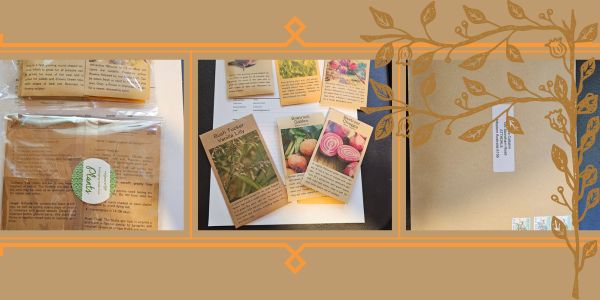
Not only are our seeds packed in recycled paper envelopes, we keep the theme going when we post out website orders. To protect your seeds from moisture and the letter box munchers (snails), we use a very special plastic free material made from plants. They are then put into recycled mailing envelopes. Green all the way ????????
Delivery Guarantee
We take great care to make sure your seeds arrive safely. If your order is lost or damaged in transit, we’ll happily send a replacement. Unfortunately, we can’t replace or refund orders that arrive later than the estimated delivery date, as delays can sometimes occur that are outside our control.
Please note that all dispatch and delivery times listed are estimates only. While we do our best to post promptly, delivery timeframes can vary due to postal service delays, weather events, or other unforeseen circumstances. We’re unable to take responsibility for any loss, damage, or cost that results from a late delivery.
An order is not considered missing until at least 20 business days have passed from the postage date. You’ll receive an email once your seeds have been posted, letting you know they’re on their way. If you don’t see it in your main inbox, please check your Spam or Promotions folders as sometimes our emails like to hide there.

Reviews
There are no reviews yet