



Tansy
$4.95
Tanacetum Vulgare
- Seed count 1000
- Repels insects
- Perennial
In stock
Description
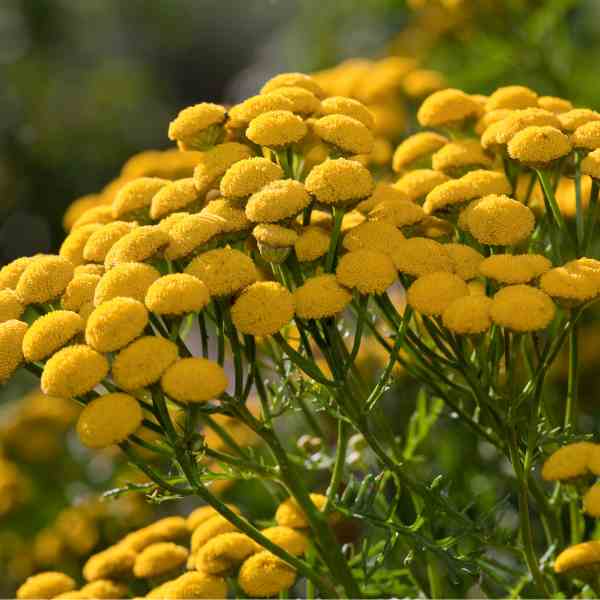
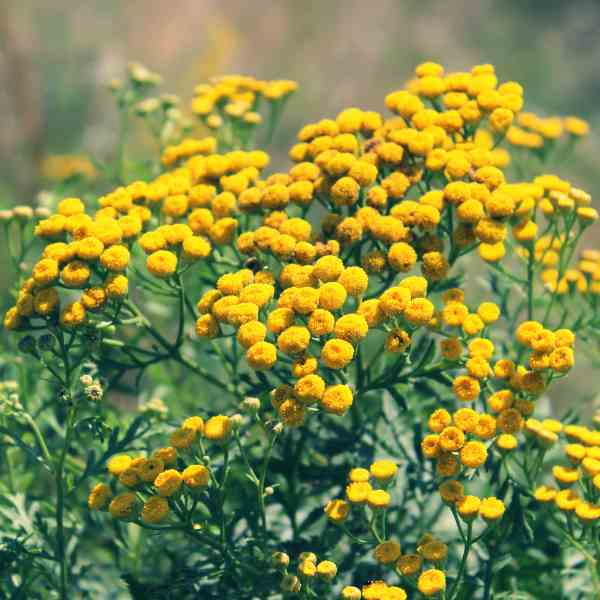
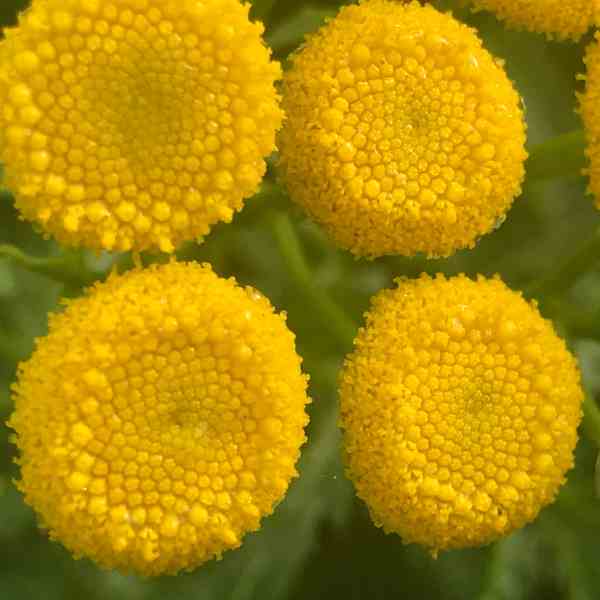
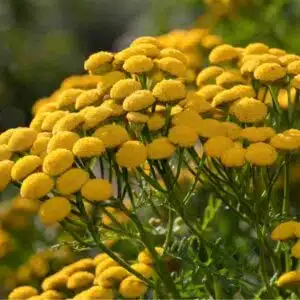
Tansy, sometimes called “Bitter Buttons” or “Golden Buttons”, is one of those old-world plants that deserves a place in every backyard. It’s a fast-growing, hardy perennial that all but thrives on neglect. Plant it once, and you’re set for years. It pops up with vigour in spring, grows tall and narrow through the warmer months, and puts on a bold yellow show with its button-like flower clusters in summer. Then, as autumn rolls in, it quietly dies back to the ground—only to reappear again with fresh green energy the following spring.
Its fern-like, deep green foliage carries a strong camphor scent that naturally deters a host of insect pests such as flies, ants, moths, and beetles. That alone makes it a worthy companion near the vegie patch, where its scent works overtime to mask the delicious aroma of your leafy greens and brassicas.
Whilst the yellow blooms are rich in nectar, making them irresistible to bees, hoverflies, and other good bugs that help balance the garden’s ecosystem. If you’ve been wanting to attract more beneficial insects and pollinators, planting a patch of tansy is a simple, beautiful way to do just that.
Tansy has a distinctive upright form with finely divided, ferny leaves that give it a bit of an ornamental look. It’s a natural fit in informal spaces like cottage gardens, herb spirals, or along fence lines. It doesn’t need rich soil, doesn’t mind a bit of dryness once it’s established, and isn’t too picky about sun or part-shade. In fact, it thrives in rough spots where other plants might struggle.
Toxicity Notes (Especially Around Livestock & Kids)
While tansy has historical uses in folk medicine and as a natural insecticide, it is toxic if ingested in large quantities, particularly the compound thujone. Be cautious around:
- Livestock and poultry
- Pets
- Small children who like to explore with their mouths
Tansy demands respect but rewards with low-maintenance pest control and ecological benefits. By prioritizing containment and safety, Australian gardeners can harness its strengths responsibly.
| Method: Start in trays | Soil Temp: 10°C - 25°C |
| Cool Mountain: Nov - Dec | Position: Full sun |
| Arid: Aug - Jan | Row Spacing: 70 cm |
| Temperate: Sep-Nov, Mar-Jun | Planting Depth: 1 mm |
| Sub Tropical: May - Oct | Harvest: 130 days |
| Tropical: Jun - Aug | Plant Height: 2 m |
🌼 Tansy Grow Guide
🌱 Overview
Tansy is a hardy, aromatic perennial herb grown for its fern-like foliage, clusters of yellow button flowers, and strong pest-repelling qualities. It is often valued in herb gardens, cottage gardens, pollinator areas, and around vegetable patches, but it should be grown with care because it can spread aggressively by seed and underground roots.
This plant is best suited to gardeners who can give it a contained space, harvest flowers before they self-seed, and manage its growth each year. It is not recommended for small unmanaged gardens, grazing areas, or places where pets and livestock may nibble plants, as tansy can be toxic if eaten.
🌱 Sowing in Trays Versus Direct Sowing
Tansy can be grown either by sowing seeds in trays or by sowing directly into the garden, but starting in trays is usually the best method. Tray sowing gives you better control over moisture, spacing, and early growth, and it allows you to plant out only the strongest seedlings. This is especially useful because tansy can become vigorous once established.
For tray sowing, fill a seed tray or small pots with a fine seed-raising mix. Scatter the seed lightly over the surface and press it in gently. Cover with only a very thin layer of mix or vermiculite, as the seeds are small and should not be buried deeply. Keep the mix evenly moist but not wet. Once seedlings are large enough to handle, transplant them into individual pots before planting them into their final position.
Direct sowing can work in a prepared garden bed, but it is less controlled. Seeds may wash away, dry out, or germinate unevenly. Direct sowing also increases the chance of unwanted seedlings appearing where you do not want them. For this reason, direct sowing is better suited to larger herb beds, naturalised areas, or gardens where spreading can be managed.
💧 Seed Pre-Treatment
No special seed pre-treatment is usually required for tansy. The seeds can be sown fresh from the packet into a moist seed-raising mix.
For best results, use a fine, free-draining mix and avoid covering the seed too deeply. A light surface sowing is enough. Gentle moisture, good light, and patience are more important than soaking or chilling. If germination is uneven, continue keeping the tray lightly moist, as some seeds may take longer than others to sprout.
🌿 Soil and Position
Tansy prefers a sunny position with well-drained soil. It will tolerate poorer soils once established, which is one reason it can become so persistent in the garden. Rich soil is not essential, and overly fertile conditions can encourage lush, floppy growth.
A position with full sun is ideal, although light part shade may be tolerated. Good drainage is important because tansy dislikes sitting in soggy soil. Before planting, loosen the soil and remove weeds, especially perennial weeds that may compete with young plants.
Because tansy spreads by underground roots, it is wise to plant it where its growth can be controlled. A large pot, raised bed, contained herb patch, or bordered garden area is often better than an open bed. Avoid planting it near delicate plants that may be crowded out.
🌼 Care and Maintenance
Once established, tansy is a low-maintenance plant. Water young seedlings regularly until they settle in, then reduce watering as the plants become stronger. Mature plants are fairly drought tolerant, but they will look better with occasional deep watering during dry periods.
Mulching around the plant can help conserve moisture and reduce weeds, but keep mulch slightly away from the crown to prevent rotting. Feeding is usually unnecessary. If growth is weak, a small amount of compost around the base is enough.
The most important part of tansy care is control. Remove spent flowers before they form mature seed if you do not want it spreading. Cut plants back after flowering to keep them tidy and reduce self-seeding. Clumps can also be divided or reduced when they become too large.
Wear gloves when pruning or harvesting if you have sensitive skin, as the strong oils in the foliage may irritate some people.
🐝 Companion Planting Guide
Tansy is often used as a companion plant because its strong scent may help confuse or deter some pests. It also attracts beneficial insects when in flower. However, because it can spread and compete, it should be placed carefully rather than planted too close to small vegetables.
Good companions include fruit trees, roses, berries, beans, cucumbers, squash, and ornamental flowering plants. It can be useful near compost areas, garden edges, or as part of a beneficial insect strip.
Avoid planting tansy too close to young seedlings, small herbs, or low-growing vegetables that may be shaded or crowded. It is also best kept away from grazing animals and areas where pets may chew plants.
✂️ How to Harvest
Tansy leaves can be harvested lightly once the plant is established. Pick small amounts of foliage as needed, preferably from healthy, fresh growth. The leaves are very aromatic and should be handled with care, as tansy is not considered a culinary herb for regular eating.
Flowers are usually harvested when the yellow button blooms are fully open but still fresh. Cut flower stems in the morning after dew has dried. Hang small bunches upside down in a dry, airy, shaded place until fully dry.
Tansy is best used for ornamental, garden pest-deterrent, or dried botanical purposes rather than food use. Do not ingest tansy unless guided by a qualified professional, as the plant contains compounds that can be harmful.
🛠️ Common Issues and Fixes
| Issue | Likely Cause | Fix |
|---|---|---|
| Poor germination | Seed buried too deeply, mix too dry, old seed | Surface sow lightly, keep evenly moist, use fresh seed |
| Seedlings collapse | Overwatering or poor airflow | Use free-draining mix, water gently, improve ventilation |
| Plants become floppy | Too much shade or rich soil | Move to a sunnier spot, avoid heavy feeding, prune lightly |
| Plant spreads too much | Self-seeding or root spread | Deadhead flowers early, grow in containers, remove unwanted shoots |
| Leaves yellow | Waterlogged soil or poor drainage | Improve drainage, reduce watering, avoid soggy sites |
| Few flowers | Not enough sun or plant too young | Provide more sunlight and allow plant to mature |
| Pest damage | Young plants stressed or overcrowded | Improve spacing, water consistently, remove damaged growth |
| Skin irritation when handling | Sensitivity to plant oils | Wear gloves and long sleeves when pruning or harvesting |
🌾 Detailed Seed Saving Guide
To save tansy seed, allow a few flower heads to remain on the plant after blooming. The yellow button flowers will gradually dry and darken. Choose seed heads from strong, healthy plants that have the traits you want, such as compact growth, good flowering, and strong fragrance.
Do not save seed from weak, diseased, or overly invasive plants. Since tansy can spread readily, only leave as many seed heads as you truly need. Remove the rest before they mature.
When the flower heads are dry and papery, cut them into a paper bag. Let them finish drying in a warm, dry, shaded place with good airflow. Once fully dry, gently rub the flower heads between your fingers to release the tiny seeds. Separate the seed from chaff by lightly blowing across the material or using a fine sieve.
Store the cleaned seed in a labelled paper envelope or small airtight jar. Include the plant name and collection date. Keep seed in a cool, dark, dry place. Good storage is important because moisture can reduce seed life and encourage mould.
Because tansy can self-seed freely, always harvest seed before it naturally drops if you want control. Any unwanted flower heads should be removed and disposed of responsibly rather than shaken over the garden.
🌿 Final Thoughts
Tansy is a tough, useful, and attractive herb, but it is best grown with clear boundaries. Its bright yellow flowers, ferny foliage, and pest-deterrent reputation make it valuable in the right garden setting. Tray sowing is the best starting method, as it gives better control over germination and placement.
The key to success is simple: give tansy sun, well-drained soil, moderate water while young, and firm management once mature. Grow it where it can be contained, remove flowers before unwanted seed forms, and treat the plant with respect because of its toxicity and spreading habit. When managed well, tansy can be a striking and practical addition to a productive garden.
2 reviews for Tansy

Postage Charge
Orders under $40 attract a $5.50 shipping charge. Orders $35 and above have free shipping.
*** We cannot deliver to Parcel Lockers ***
Order Times
Seed orders are normally dispatched within three business days. You will receive an email when seeds are mailed out.
Postage Days
Seeds are mailed out Tuesday to Friday at 1pm. Except for the Friday of long weekends.
Postage Times
WA 2-3 Days: SA,NT 3-5 Days: NSW, ACT, QLD, VIC: 5-7 Days
Carrier
We use Australia Post Letter Postage for the majority of orders.
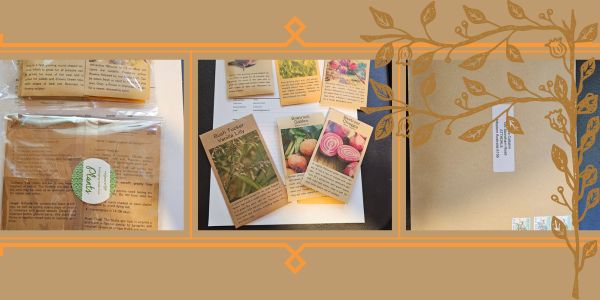
Not only are our seeds packed in recycled paper envelopes, we keep the theme going when we post out website orders. To protect your seeds from moisture and the letter box munchers (snails), we use a very special plastic free material made from plants. They are then put into recycled mailing envelopes. Green all the way ????????
Delivery Guarantee
We take great care to make sure your seeds arrive safely. If your order is lost or damaged in transit, we’ll happily send a replacement. Unfortunately, we can’t replace or refund orders that arrive later than the estimated delivery date, as delays can sometimes occur that are outside our control.
Please note that all dispatch and delivery times listed are estimates only. While we do our best to post promptly, delivery timeframes can vary due to postal service delays, weather events, or other unforeseen circumstances. We’re unable to take responsibility for any loss, damage, or cost that results from a late delivery.
An order is not considered missing until at least 20 business days have passed from the postage date. You’ll receive an email once your seeds have been posted, letting you know they’re on their way. If you don’t see it in your main inbox, please check your Spam or Promotions folders as sometimes our emails like to hide there.
Haven’t planted yet
See all our verified customer reviews on our official CusRev profile.
See all our verified customer reviews on our official CusRev profile.