




Rosella
$4.95
Hibiscus Sabdariffa
- Seed Count 40
- Red Fleshy Fruit
- Frost Tender Annual
In stock
Description
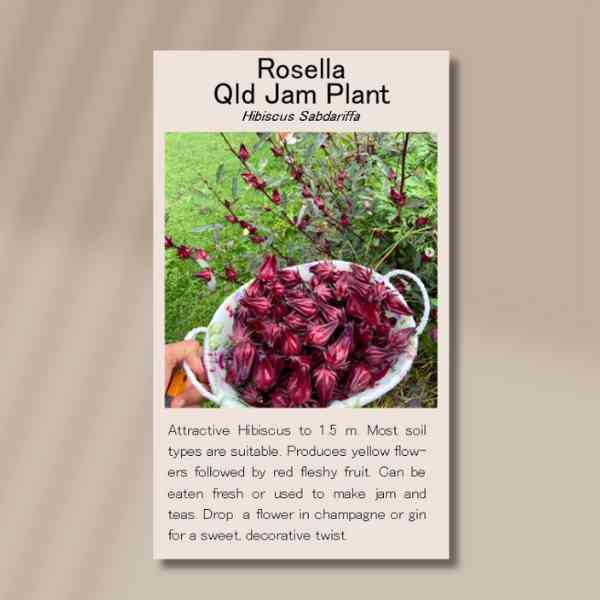
Rosella, also known as the Queensland jam plant, has a long history in the warmer parts of Australia, where it has been grown and used for generations. In the cooler parts of Australia it is best grown in pots so it can be moved to a suitable spot in winter for protection from the frost or you could pop a plastic greenhouse over the top.
It is valued not only for its striking appearance, but for the deep, tangy flavour that has made it a favourite in jams, preserves and drinks. It is especially well suited to preserving as the natural pectin content helps create a good set, and the colour remains rich even after cooking.
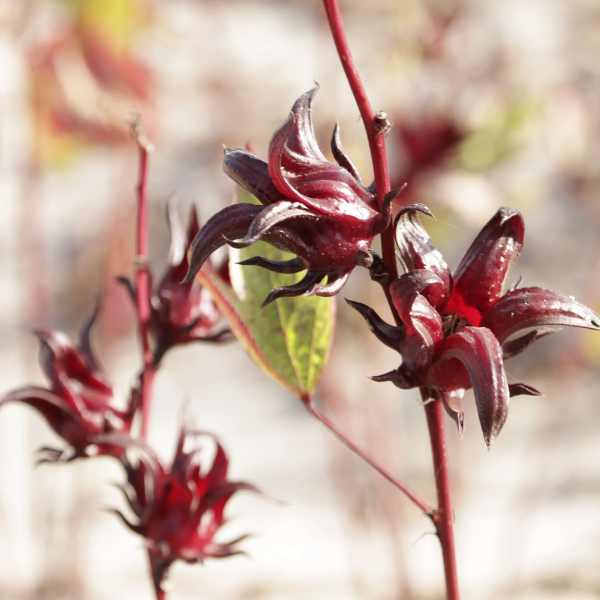
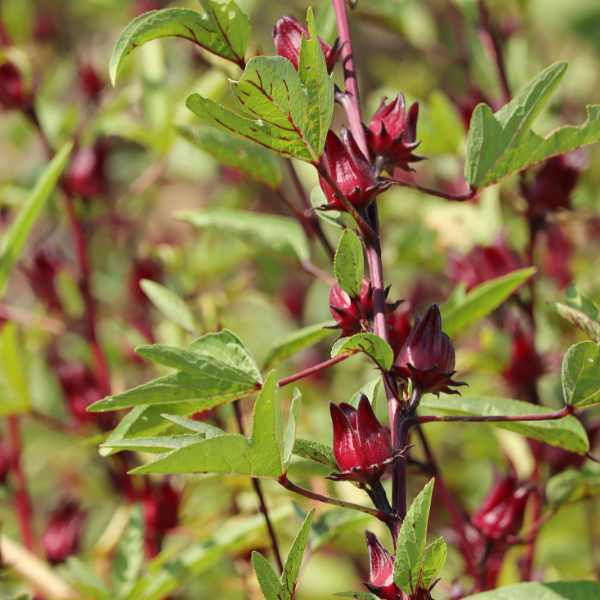
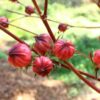
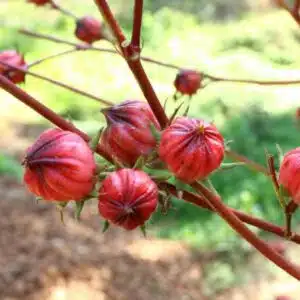
Its deep green foliage is often tinged with red, and the thick stems carry a rich, almost glossy colour. The real highlight comes when the calyces begin to form. These fleshy, ruby red structures are what most people think of when they talk about rosella. They sit beneath the flower and swell as the season progresses, becoming the part that is harvested and used.
The calyces have a sharp, cranberry like tang that softens when cooked and sweetened. This natural acidity is what makes rosella so useful in the kitchen. It brings brightness and balance to recipes, cutting through sweetness and adding depth. A small harvest goes a long way and a handful of calyces can be turned into a rich syrup, a batch of jam, or a refreshing drink.
Rosella leaves are a useful and often overlooked part of the plant. When young, they are gently tart, with a flavour similar to sorrel or lemony spinach, making them well suited to fresh use.
Tender leaves can be added to salads for a light, tangy lift. As the leaves mature, they are best cooked, where their flavour softens and they work well in soups, stews, curries, and stir-fries. They can also be used sparingly in herbal teas, usually blended with other herbs.
In the kitchen, they can be treated much like silverbeet or spinach. Pick them young for the best results, and cook older leaves.
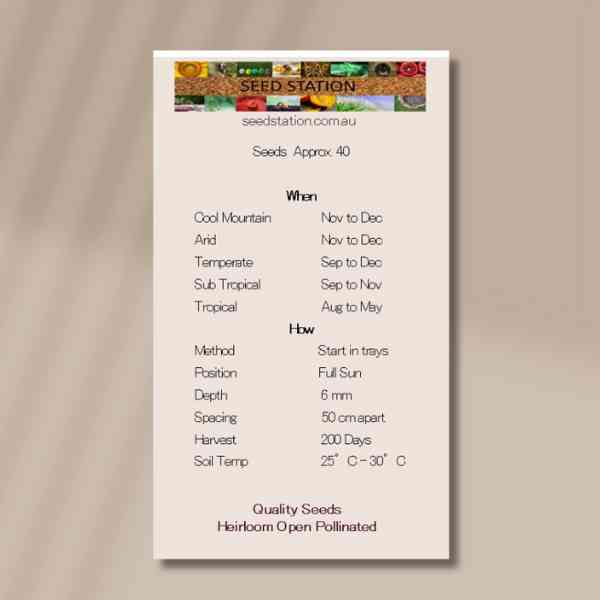
| Method: Set seedlings | Soil Temp: 25°C - 30°C |
| Cool Mountain: Nov - Dec | Position: Full sun |
| Arid: Nov - Dec | Row Spacing: 50 cm |
| Temperate: Sep - Dec | Planting Depth: 12 mm |
| Sub Tropical: Sep - Jan | Harvest: 200 Days |
| Tropical: Aug - May | Plant Height: 1.5 m |
Photo credit https://www.flickr.com/photos/raeallen/
🌺 Rosella Grow Guide
🌱 Overview
Rosella is a vigorous edible flowering plant grown for its fleshy red calyces, tender leaves, attractive flowers, and useful seed pods. It is loved in edible gardens because it gives both ornamental beauty and a generous kitchen harvest. The bold red calyces are commonly used for jams, cordials, syrups, teas, sauces, chutneys, desserts, relishes, and preserves. The leaves are also edible and have a tangy flavour that works well in salads, stir-fries, curries, soups, and cooked greens.
Rosella is a warm-climate crop that grows quickly once established. It can become a tall, branching plant, so it needs space, sun, moisture, and good soil. It is not a tiny herb for a cramped corner. Given the right conditions, it becomes a productive feature plant with beautiful flowers followed by the harvestable red calyces that make rosella so valuable.
The key to success is strong early growth, full sun, fertile well-drained soil, regular watering, and enough room for branching. Plants that are stressed, crowded, or underfed may stay small and produce fewer calyces.
🌾 Sowing in Trays Versus Direct Sowing
Rosella can be grown by direct sowing or by sowing in trays, and both methods can work. However, tray sowing is usually the most reliable method for home gardeners because it gives seedlings a protected start before they face pests, heavy rain, drying winds, ants, slugs, snails, birds, and weed competition.
To sow in trays, use individual cells, small pots, or tubes filled with a quality seed-raising mix. Sow each seed about 1 cm deep, cover lightly, and water gently. Keep the mix evenly moist but not soggy. Once seedlings have several true leaves and are strong enough to handle, transplant them into larger pots or into their final position. Handle carefully and avoid damaging the roots.
Direct sowing can work well where the soil is warm, loose, fertile, and weed-free. Sow seed about 1 cm deep, water gently, and keep the area evenly moist until seedlings emerge. Thin seedlings early so the remaining plants have plenty of space.
Best method: tray sowing is recommended because rosella seedlings benefit from protection and controlled early growth. Direct sowing is suitable where the garden bed is already well prepared and pest pressure is low.
💧 Seed Pretreatment
Rosella seed benefits from soaking before sowing. The seed coat can be firm, and soaking helps soften it so germination is faster and more even.
Soak seeds in room-temperature water for 12 to 24 hours, then sow them promptly. Do not leave seeds soaking for several days, as they may rot. Seeds that swell after soaking are ready to plant.
For older seed or seed that has failed before, gently rubbing one side with fine sandpaper before soaking can help water enter the seed coat. Be gentle. The goal is to weaken the outer coat, not damage the seed inside.
No smoke treatment or chilling is needed.
🪴 Soil and Position
Rosella grows best in full sun. Strong light encourages sturdy stems, healthy branching, flowering, and better calyx production. Plants grown in too much shade may become tall, weak, leafy, and less productive.
The soil should be fertile, well drained, and moisture-retentive. Rosella likes rich soil, but it does not like sitting in waterlogged ground. Before planting, improve the bed with compost, aged manure, worm castings, or well-rotted organic matter. A deep, loose soil helps the plant develop strong roots and support tall growth.
If the soil is sandy, add compost to improve moisture retention. If the soil is heavy clay, plant into a raised bed or mound so excess water drains away from the roots.
For pots, choose a large container with drainage holes. Rosella can become sizeable, so small pots will restrict growth and reduce harvest. Use a premium vegetable potting mix enriched with compost. Potted plants need more regular watering and feeding than plants grown in the ground.
🌿 Care and Maintenance
Rosella grows strongly when moisture and nutrients are steady. Water young plants regularly while they establish. Once plants are larger, water deeply whenever the soil begins to dry. Avoid repeated wilting, as stress can reduce flowering and calyx production.
Mulch around plants with straw, sugarcane mulch, composted leaves, or fine bark. Mulch helps hold soil moisture, suppress weeds, and keep roots cooler. Keep mulch slightly away from the stem so the base does not stay wet.
Feed moderately through active growth. Compost, worm liquid, seaweed solution, aged manure, or a balanced vegetable fertiliser can support strong plants. Avoid overfeeding with high-nitrogen fertiliser, as this can produce lots of leaves with fewer flowers and calyces.
Tip pruning young plants can encourage bushier growth. Once the plant is established and growing strongly, pinch or trim the growing tip to encourage side branches. More branches usually means more flowering points.
Support may be needed if plants grow tall or are exposed to wind. Use stakes or a loose support frame early, before stems become heavy. Keep the area weed-free, especially while seedlings are young.
🌼 Companion Planting Guide
Rosella grows well with companions that enjoy sun, fertility, moisture, and space. It can be used as a tall background plant in edible gardens, with smaller herbs and flowers planted nearby.
Good companions include basil, parsley, coriander, dill, chives, spring onion, calendula, alyssum, marigold, nasturtium, zinnia, cosmos, amaranth, okra, eggplant, capsicum, tomato, beans, cucumber, pumpkin, and sweet potato kept at a respectful distance.
Flowers such as calendula, alyssum, marigold, zinnia, and cosmos attract bees, hoverflies, lacewings, and other beneficial insects. Herbs such as basil, dill, coriander, and parsley help support insect diversity around the crop.
Avoid planting rosella too close to small or slow-growing plants, as it can shade them once mature. Also avoid crowding it with vigorous vines unless there is plenty of space. Pumpkins, melons, and sweet potato can smother young rosella plants if allowed to run through the base.
✂️ How to Harvest
Rosella is mainly harvested for its red calyces, which form after the flowers finish. The flower opens briefly, then drops, leaving the fleshy red calyx around the developing seed pod. This is the part commonly used for jam, tea, syrup, cordial, and preserves.
Harvest calyces when they are plump, bright red, glossy, and full-sized, but before they become dry or woody. Use clean snips or twist them gently from the plant. Harvest regularly to encourage ongoing production and prevent pods from becoming overmature.
To prepare calyces, remove the green seed pod from the centre. The red outer calyx is the main edible part used for cooking and drying. The seed pods can be saved for seed if fully mature.
Leaves can be harvested while young and tender. Pick a few leaves from each plant rather than stripping one plant heavily. Young leaves are tangy and can be used fresh or cooked. Older leaves are often better cooked.
For drying calyces, separate them from the seed pod and spread them in a single layer in a dry, shaded, airy place or use a dehydrator on a low setting. Store only when completely dry and leathery.
⚠️ Common Issues and Fixes
| Issue | Likely Cause | Fix |
|---|---|---|
| Poor germination | Hard seed coat, old seed, cold wet mix, or dry seed mix | Soak seed for 12 to 24 hours, use fresh seed, sow 1 cm deep, and keep evenly moist |
| Seeds rot before sprouting | Overwatering or heavy seed mix | Use free-draining seed mix and keep moist, not soggy |
| Seedlings collapse | Damping off from excess moisture or poor airflow | Use clean mix, avoid overwatering, and increase ventilation |
| Slow early growth | Low warmth, poor soil, weak light, or root restriction | Provide full sun, fertile soil, steady moisture, and pot on if needed |
| Yellow leaves | Waterlogging, nutrient shortage, or root stress | Improve drainage, feed lightly, and water more evenly |
| Lots of leaves but few calyces | Too much nitrogen, not enough sun, or plant too crowded | Reduce high-nitrogen feeding, increase sunlight, and improve spacing |
| Bud or flower drop | Dry soil, heat stress, wind, or irregular watering | Water deeply, mulch well, and reduce stress around flowering |
| Small calyces | Poor fertility, lack of water, crowding, or weak plants | Feed moderately, water consistently, and give plants more space |
| Aphids | Soft new growth or stressed plants | Hose off gently, encourage ladybirds, and avoid overfeeding |
| Whitefly | Warm sheltered conditions and dense growth | Improve airflow, use yellow sticky traps, and remove badly affected leaves |
| Caterpillar damage | Chewing larvae feeding on leaves or buds | Inspect regularly and remove caterpillars by hand |
| Leaf spots | Wet foliage, humidity, or poor airflow | Water at soil level, space plants well, and remove affected leaves |
| Root rot | Poor drainage or waterlogged soil | Plant in raised soil, reduce watering, and avoid soggy positions |
| Plants falling over | Tall growth, wind, shallow roots, or heavy branching | Stake early and avoid exposed positions |
| Calyces become tough | Harvest left too long | Pick when plump, red, and fresh |
| Unwanted seedlings | Mature pods dropped seed | Harvest pods before they split or collect seed promptly |
🌰 Detailed Seed Saving Guide
Saving rosella seed is easy, but the pods must be allowed to mature fully. Choose the healthiest plants with strong growth, good branching, large calyces, rich colour, and strong production. Avoid saving seed from weak, diseased, poor-yielding, or very late plants.
Leave some calyces on the plant after they reach harvest size. The red calyx will eventually become tougher as the seed pod inside matures. For seed saving, allow the seed pod to turn dry, brown, and firm. Do not collect seed from soft green pods, as the seed inside may not be mature.
When pods are dry, cut them from the plant and place them in a paper bag. Keep the bag in a dry, shaded, airy location for several days so the pods finish drying completely. Do not use plastic, as trapped moisture can cause mould.
Once fully dry, crack open the pods by hand. The seeds inside should be firm and mature. Discard any seed that is soft, pale, shrivelled, mouldy, or insect damaged.
Spread the cleaned seed on a plate or tray for another week to ensure it is completely dry. This extra drying step is important because seed stored with hidden moisture may mould.
Store the seed in a labelled paper envelope inside an airtight jar. Keep it somewhere cool, dark, and dry. Add a silica gel sachet if humidity is an issue.
Label the packet with the plant name, collection date, calyx colour, plant size, and notes such as “large calyces”, “best jam plant”, “strong branching”, or “heavy producer”.
Before sowing saved seed, use the same pretreatment method: soak for 12 to 24 hours, then sow into trays or prepared soil.
🌺 Final Thoughts
Rosella is a generous edible plant that brings beauty, flavour, colour, and productivity to the garden. It is especially rewarding for gardeners who enjoy making preserves, herbal teas, cordials, sauces, and tangy cooked greens.
For the best results, soak seed before sowing, start in trays for reliability, grow in full sun, use fertile well-drained soil, water consistently, mulch well, tip prune for branching, and harvest calyces while they are plump and bright. With steady care, rosella becomes a striking and productive plant that earns its space in any edible garden.
6 reviews for Rosella

Postage Charge
Orders under $40 attract a $5.50 shipping charge. Orders $35 and above have free shipping.
*** We cannot deliver to Parcel Lockers ***
Order Times
Seed orders are normally dispatched within three business days. You will receive an email when seeds are mailed out.
Postage Days
Seeds are mailed out Tuesday to Friday at 1pm. Except for the Friday of long weekends.
Postage Times
WA 2-3 Days: SA,NT 3-5 Days: NSW, ACT, QLD, VIC: 5-7 Days
Carrier
We use Australia Post Letter Postage for the majority of orders.
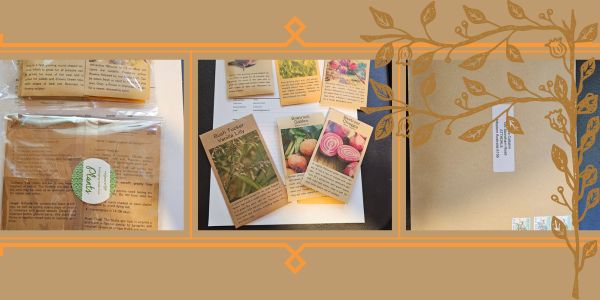
Not only are our seeds packed in recycled paper envelopes, we keep the theme going when we post out website orders. To protect your seeds from moisture and the letter box munchers (snails), we use a very special plastic free material made from plants. They are then put into recycled mailing envelopes. Green all the way ????????
Delivery Guarantee
We take great care to make sure your seeds arrive safely. If your order is lost or damaged in transit, we’ll happily send a replacement. Unfortunately, we can’t replace or refund orders that arrive later than the estimated delivery date, as delays can sometimes occur that are outside our control.
Please note that all dispatch and delivery times listed are estimates only. While we do our best to post promptly, delivery timeframes can vary due to postal service delays, weather events, or other unforeseen circumstances. We’re unable to take responsibility for any loss, damage, or cost that results from a late delivery.
An order is not considered missing until at least 20 business days have passed from the postage date. You’ll receive an email once your seeds have been posted, letting you know they’re on their way. If you don’t see it in your main inbox, please check your Spam or Promotions folders as sometimes our emails like to hide there.
🌺 Rosella Grow Guide
🌱 Overview
Rosella is a vigorous, productive warm-climate plant grown for its fleshy red calyces, attractive flowers, edible leaves, and ornamental value. The calyces are the swollen red structures that form around the seed pods after flowering, and they are commonly used for jams, syrups, teas, cordials, sauces, chutneys, desserts, and preserves. The young leaves can also be used as a tangy leafy green in cooked dishes.
This plant has a naturally shrubby habit and can grow quite large when conditions are favourable, so it needs space, sun, warmth, and consistent moisture during active growth. It is both decorative and useful, making it a great choice for edible gardens, food forests, cottage gardens, tropical-style plantings, and productive backyard beds.
🌱 Sowing in Trays Versus Direct Sowing
Rosella can be grown by sowing in trays or by direct sowing, but starting in trays is usually the best method for most gardeners. The seed is reasonably large and easy to handle, yet young plants benefit from a protected start where moisture, temperature, and pests can be managed more easily. Tray sowing also gives you stronger seedlings to plant out once they have developed a good root system.
To sow in trays, use a free-draining seed raising mix. Sow seed about 1 cm deep, water gently, and keep the mix evenly moist but not soggy. Place the trays in a bright, warm position. Once seedlings have several true leaves and are sturdy enough to handle, they can be transplanted into larger pots or planted into their final position. Harden them off before planting out by gradually exposing them to outdoor conditions.
Direct sowing can also work well where the soil is warm, loose, and protected from pests. Sow seed into well-prepared soil, cover lightly, and keep the area evenly moist until seedlings emerge. Thin seedlings so the strongest plants have enough room to develop into large bushes.
For the most reliable results, tray sowing is preferred, especially when seed is limited, pests are active, or garden conditions are variable. Direct sowing is better suited to warm, settled conditions and well-prepared beds.
🌾 Seed Pre-Treatment
Rosella seed has a firm seed coat, so pre-soaking is helpful. Soak seed in room-temperature water for several hours or overnight before sowing. This can soften the seed coat and encourage quicker, more even germination.
Scarification can also help older or stubborn seed. This means gently nicking or rubbing the seed coat with fine sandpaper before soaking. Take care not to damage the inner seed. Fresh seed often germinates well with soaking alone, but older seed may benefit from both light scarification and soaking.
No chilling or smoke treatment is required.
🌞 Soil and Position
Rosella grows best in a full sun position with plenty of space and good airflow. Strong sunlight encourages sturdy growth, better flowering, and heavier calyx production. In shade, plants may become tall, leafy, and less productive.
The soil should be fertile, well-draining, and moisture-retentive. Rosella is a hungry, fast-growing plant, so it appreciates compost, aged manure, and organic matter worked into the soil before planting. The ideal soil holds enough moisture to support strong growth but drains freely enough to avoid waterlogging.
Avoid compacted or poorly drained soil, as wet roots can weaken plants and reduce productivity. Raised beds can be useful where drainage is poor. In sandy soil, add plenty of compost to improve water and nutrient holding capacity.
Rosella can also be grown in large containers, but the pot must be generous because the plant can become sizeable. Use a quality potting mix, choose a container with drainage holes, and water consistently. Container-grown plants may need more regular feeding than plants in the ground.
💧 Care and Maintenance
Rosella grows quickly when conditions are warm and fertile. Water regularly during establishment and active growth, especially during dry spells. The soil should remain evenly moist but not waterlogged. Inconsistent watering can reduce growth and lead to smaller calyces.
Mulch around the base of the plant to conserve soil moisture, suppress weeds, and protect the root zone. Keep mulch slightly away from the stem to reduce the risk of rot.
Feed moderately during active growth. Compost, aged manure, seaweed solution, or a balanced organic fertiliser can support strong plants. Avoid excessive high-nitrogen feeding once plants are mature, as this can encourage leafy growth at the expense of flowering and calyx production.
Rosella can become tall and bushy, so allow good spacing. Light pruning or tip pruning when young can encourage branching, which may lead to more flowering points. Avoid heavy pruning once flowering begins, as this can reduce harvest.
Keep the area weed-free while plants are young. Once established, rosella usually shades the soil well, but early competition can slow growth. Watch for pest damage on new leaves and flower buds, and deal with issues early.
🌼 Companion Planting Guide
Rosella pairs well with other vigorous, sun-loving plants that enjoy fertile soil and regular moisture. Good companions include basil, marigold, calendula, nasturtium, okra, eggplant, capsicum, chilli, sweet potato, lemongrass, and corn.
Basil, marigold, calendula, and nasturtium help create a diverse planting that attracts pollinators and beneficial insects. Okra, eggplant, capsicum, and chilli enjoy similar warm, sunny conditions and fit well in productive garden beds. Sweet potato can act as a living groundcover if kept from smothering young rosella plants. Lemongrass can be useful nearby in larger gardens, but it should be spaced well so it does not compete strongly for water and nutrients.
Avoid planting rosella too close to small or delicate plants, as it can grow large and cast shade. Also avoid crowding it with heavy feeders unless the soil is well enriched, because rosella needs plenty of nutrition and water to crop well.
✂️ How to Harvest
Rosella is mainly harvested for its red calyces. After the flowers fade, the calyx around the seed pod enlarges and becomes fleshy. Harvest when the calyces are plump, bright, and still tender. They should be firm but not dry or woody.
Use clean snips or secateurs to cut the calyces from the plant. Harvest regularly as they mature, because frequent picking encourages continued production and prevents older calyces from becoming tough.
To prepare them, separate the fleshy calyx from the central seed pod. A small knife, apple corer, or firm push from the base can help remove the seed pod cleanly. The calyces can be used fresh, dried, frozen, or cooked into preserves. The seed pods can be kept aside if you plan to save seed.
Young leaves may also be harvested sparingly for cooking. Pick tender leaves from healthy plants without stripping too much foliage, as the plant needs leaves to keep growing and producing.
⚠️ Common Issues and Fixes
| Issue | Likely Cause | Fix |
|---|---|---|
| Poor germination | Hard seed coat, old seed, cold or overly wet mix | Soak seed before sowing, use fresh seed, keep warm and moist but not soggy |
| Seedlings collapse | Damping off from excess moisture or poor airflow | Use clean seed raising mix, avoid overwatering, improve ventilation |
| Slow growth | Low fertility, cool conditions, compacted soil, lack of sun | Enrich soil with compost, grow in full sun, improve soil structure |
| Yellow leaves | Nutrient deficiency, overwatering, poor drainage | Feed with balanced fertiliser, check drainage, avoid waterlogging |
| Lots of leaves but few calyces | Too much nitrogen, not enough sun, immature plants | Reduce high-nitrogen feeding, provide full sun, allow plants to mature |
| Small calyces | Dry soil, poor fertility, overcrowding | Water consistently, feed moderately, improve spacing |
| Aphids on new growth | Soft growth attracting sap-sucking insects | Spray off with water, encourage beneficial insects, use insecticidal soap if needed |
| Chewed leaves | Caterpillars, beetles, grasshoppers, or snails | Inspect regularly, remove pests by hand, protect young plants |
| Root rot | Soil staying wet for long periods | Improve drainage, grow in raised beds, reduce watering frequency |
| Plants falling over | Wind exposure, weak stems, overcrowding | Stake if needed, space well, avoid overly lush growth |
🌰 Detailed Seed Saving Guide
To save rosella seed, choose healthy, productive plants with strong growth, good calyx size, rich colour, and no major disease problems. Seed saved from the best plants gives you the strongest chance of good future crops.
Allow some calyces to remain on the plant until they mature fully. As they age, the fleshy red calyx will begin to dry and the central seed pod inside will become firm. The seed pod should turn brown and dry before harvest. Mature pods are usually hard, papery, and may begin to split when fully dry.
Cut the dry pods from the plant and place them in a paper bag or on a tray in a dry, airy place. Let them finish drying completely before opening. Do not store damp pods in plastic, as trapped moisture can cause mould.
Once dry, crack open the seed pods carefully and remove the seeds. Mature seed is usually dark, firm, and hard. Discard any pale, soft, damaged, or mouldy seed.
Spread the cleaned seed on a plate, paper towel, or tray for several more days to ensure it is completely dry. This final drying step is important for storage life. Once dry, place the seed in a labelled paper envelope or airtight container. Include the plant name and collection date.
Store seed in a cool, dark, dry place. Heat and humidity reduce viability, so avoid keeping seed near sunny windows, ovens, sheds that become very hot, or damp cupboards. Properly dried and stored rosella seed can remain viable for several years, although fresher seed generally germinates more strongly.
For better genetic strength, save seed from more than one healthy plant where possible. This helps maintain vigour and reduces the chance of selecting from a single weak or unusual plant.
🌻 Final Thoughts
Rosella is a beautiful and productive plant that offers ornamental flowers, edible leaves, and generous harvests of tangy red calyces. It is best started in trays for a strong, protected beginning, although direct sowing can work well in warm, settled conditions.
With full sun, fertile soil, regular moisture, and enough space, rosella can grow into a vigorous shrub with excellent harvest potential. Its calyces are useful in the kitchen, its flowers add beauty to the garden, and its seed is easy to save for future planting.
Was out of stock so disappointed but Jackie kept me in the loop and redunded
See all our verified customer reviews on our official CusRev profile.
See all our verified customer reviews on our official CusRev profile.
See all our verified customer reviews on our official CusRev profile.
See all our verified customer reviews on our official CusRev profile.
Looking forward to growing this..
See all our verified customer reviews on our official CusRev profile.