


Baobab Tree
$9.99
Elaeocarpus Grandis
- Seed Count 3
- Iconic Australian Tree
- Bush Tucker
- Height 5 – 15 m
In stock
Description
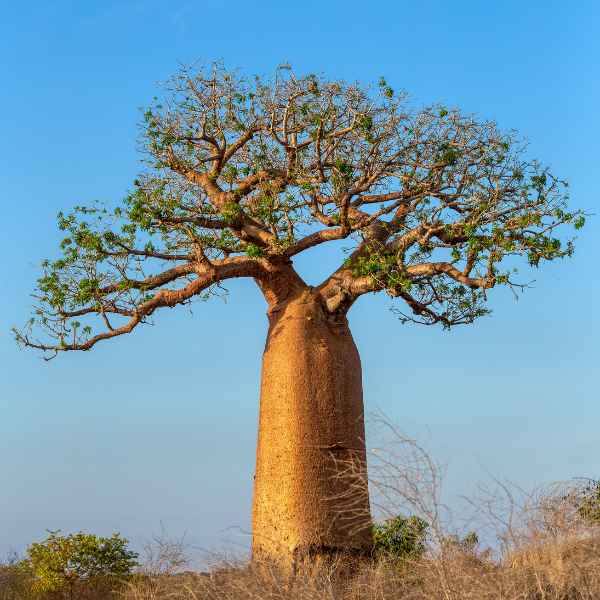
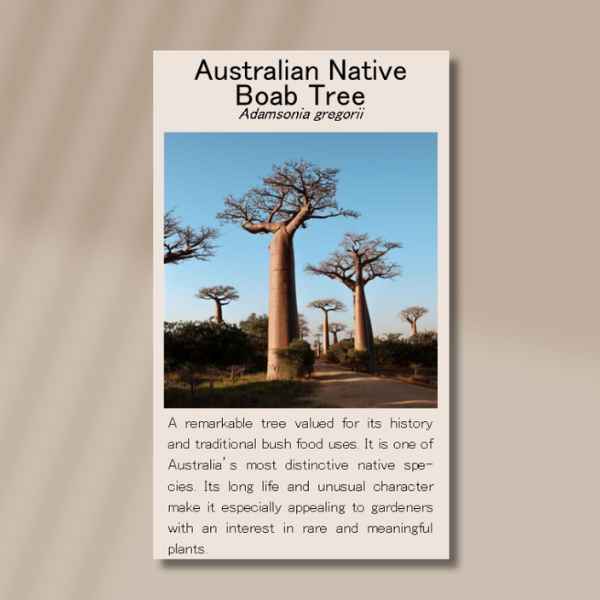
Baobab Tree is one of Australia’s most distinctive native trees, instantly recognisable by its swollen bottle-shaped trunk, broad sculptural branches and strong connection with the landscapes of the Kimberley. Adansonia gregorii, is found naturally across north-western Australia, where mature trees stand out against open woodland, rocky country and tropical grasslands.
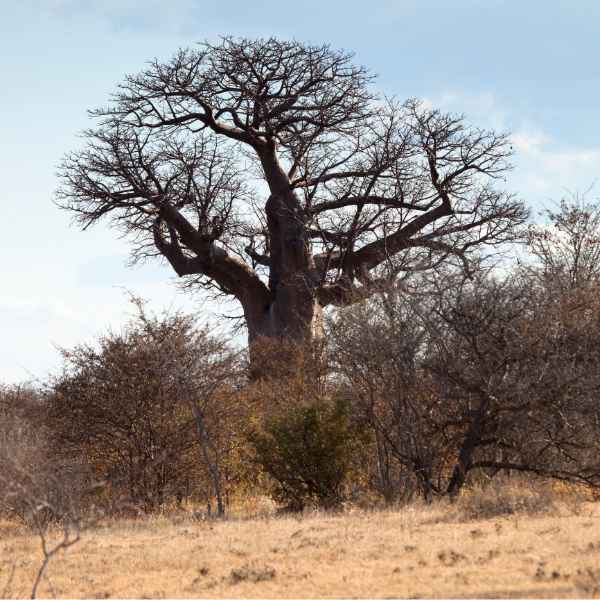
A young tree begins relatively simply, but over time it develops more of the bold, architectural character seen in mature specimens. During the warmer months, Baobab Tree produces fresh green foliage that softens the heavy trunk and branches. The leaves are divided into several leaflets, creating an open, tropical-looking canopy rather than dense foliage. As conditions become drier or cooler, the leaves may fall and reveal the bare framework of the tree.
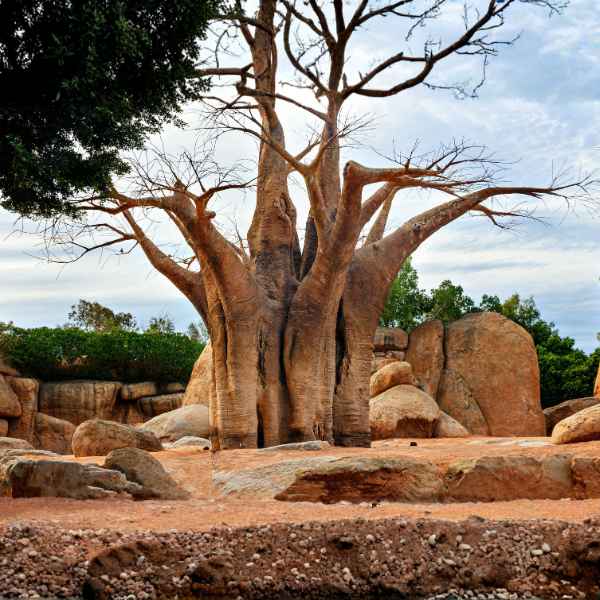
This leafless stage is one of the most attractive features of Baobab Tree. The thick branches twist and spread into the sky in a shape that has often been compared to roots, giving the tree its famous upside-down appearance.
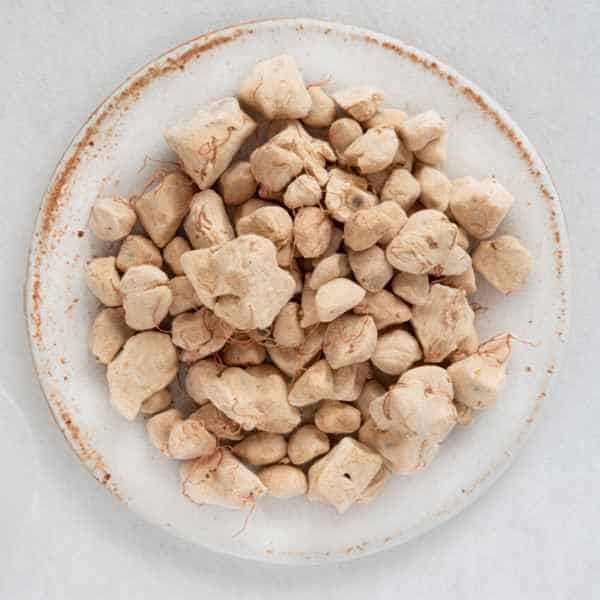
Mature trees can produce large creamy white flowers with prominent stamens and a distinctly tropical appearance. These are followed by hard-shelled fruits containing seeds surrounded by a dry pulp. The fruit has a sharp, tangy flavour, often compared with citrus or tamarind, and has been traditionally used as food. Different parts of the tree, including the fruit, seeds, leaves and roots, have been used traditionally for food and other purposes.
In the garden, Baobab Tree works particularly well as a feature tree. Its swollen trunk and open branching structure create a strong focal point, especially in landscapes inspired by tropical Australia, dry-country gardens or collections of unusual native plants. The pale trunk also contrasts beautifully with grasses, finer-leaved natives and other plants with strong textures.
Unlike many ornamental trees, Baobab Tree does not depend on constant flowering or colourful foliage to hold attention. Its appeal comes from shape, age and seasonal change. The trunk thickens, the branches become more sculptural and the tree gradually develops the unmistakable form associated with mature Australian boabs.
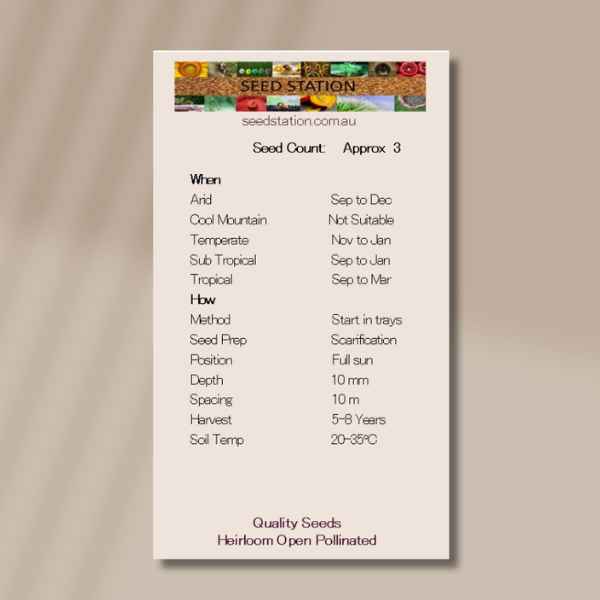
| Method: Start in pots | Soil Temp: 20°C - 35°C |
| Cool Mountain: Not suitable | Position: Full sun |
| Arid: Sep - Dec | Row Spacing: 10 m apart |
| Temperate: Nov - Jan | Planting Depth: 10 mm |
| Sub Tropical: Sep - Jan | Harvest: 5-8 years |
| Tropical: Sep - Mar | Plant Height: 5-15 m |
🌱 Baobab Grow Guide
🌿 Overview
The baobab, often called boab, is a dramatic, long-lived, drought-adapted tree grown for its swollen trunk, sculptural branches, and ornamental presence. It suits growers who can provide excellent drainage, full sun, warmth, and room for a large feature tree. Young plants can also be grown in large pots for many years, especially where ground conditions are too cold, wet, or compacted.
This seed has a very hard coat, so germination is often slow or uneven unless the seed is prepared correctly. Research and grower guidance both indicate that fresh seed can germinate well, but stored seed usually benefits from scarification rather than harsh boiling-water treatment. (ANPSA)
🌰 Seed Pre-Treatment
Pre-treatment is recommended. The safest and most reliable home method is manual scarification.
Lightly file, sand, or nick one small area of the seed coat until the paler inner layer is just visible. Do not cut deeply into the seed. After scarifying, soak the seed in room-temperature water until it swells. Seeds that do not swell can be carefully scarified again and re-soaked.
Avoid prolonged boiling-water treatment. Studies on this baobab type found boiling-water exposure produced poor and inconsistent germination, even though many seeds became water-permeable afterward. (Cambridge University Press)
🪴 Sowing in Trays Versus Direct Growing
Sowing in ordinary shallow trays is not ideal, because baobab seedlings form a strong early root system and dislike being left crowded or root-bound. If using a tray, choose deep cells and move seedlings on early.
The better nursery method is to sow each seed into an individual deep pot, tree tube, or forestry tube. This gives the root room to grow straight, makes watering easier to manage, and reduces transplant shock.
Direct sowing can work only where the final position is warm, sunny, sharply drained, and protected from pests, flooding, and trampling. It is less reliable because scarified seed can rot if the soil stays wet, and young seedlings are vulnerable.
Best method for this seed: sow individually into deep pots or tubes, then plant out once the seedling is sturdy and before roots begin circling.
🌞 Soil and Position
Choose a full-sun, open position with plenty of airflow. This tree performs best in a bright, exposed site rather than shade or damp shelter. Grower guidance recommends full sun and very free-draining sandy to sandy-loam soil. (Bunnings Warehouse)
The soil must drain quickly. Heavy clay, soggy garden beds, and constantly damp potting mixes are the main causes of failure. Improve heavier soils with coarse washed sand, fine gravel, or raised mounding. In pots, use a gritty, open mix such as cactus mix blended with coarse mineral material.
A suitable mix could include:
50% quality potting mix, 30% coarse sand, and 20% fine gravel, pumice, or perlite.
💧 Care and Maintenance
Water young seedlings carefully. Keep the mix lightly moist during germination, but never waterlogged. Once established, water deeply, then allow the mix to partly dry before watering again.
During active leafy growth, the plant appreciates regular moisture. When it becomes leafless or growth slows, reduce watering sharply. Keeping a leafless baobab wet can cause root and stem rot. Retail grower advice also notes that watering should be greatly reduced or withheld after leaf drop. (Bunnings Warehouse)
Feed lightly. A low-phosphorus native-style fertiliser or diluted balanced fertiliser is enough. Too much nitrogen can push soft, weak growth.
Prune only when necessary. Remove damaged, crossing, or poorly placed branches while the plant is young. Avoid heavy pruning unless shaping a container specimen.
Protect young plants from frost, cold wet soil, snails, slugs, and chewing insects. Mature trees are tough, but seedlings are much more sensitive.
🌼 Companion Planting Guide
Baobab is best treated as a feature tree, so companion planting should support drainage, sun exposure, and root health rather than crowding the trunk.
Good companions include low, dry-tolerant plants that enjoy similar open conditions. Suitable choices include native grasses, creeping saltbush, pigface, prostrate rosemary, thyme, oregano, society garlic, and other low-water herbs or groundcovers.
Avoid planting thirsty, dense, or aggressive-rooted plants close to the trunk. Lawn right up to the base is not ideal, because regular shallow watering can keep the root zone too damp. Also avoid large shrubs that shade young trees or compete heavily for moisture.
A good layout is to keep the area around the trunk open, then plant low companions outside the main root zone. Use gravel mulch or coarse organic mulch sparingly, keeping all mulch away from the trunk.
🧺 How to Harvest
Harvest fruit only once it is fully mature and dry. The outer shell should be hard, and the contents should feel dry rather than soft or wet. Cut or collect fruit carefully and avoid damaging branches.
Open the fruit with firm, controlled pressure. Inside, the seeds are embedded in a dry, chalky pulp. Separate the seeds from the pulp by hand. The pulp can be crumbled away, and the seeds can then be cleaned, dried, and sorted.
Only harvest from healthy trees, and leave some fruit for wildlife and natural regeneration where appropriate.
⚠️ Common Issues and Fixes
| Issue | Likely Cause | Fix |
|---|---|---|
| Seeds do not germinate | Hard seed coat has not taken up water | Scarify one small area, soak again, and sow only once swollen |
| Seeds rot before sprouting | Mix too wet or poorly drained | Use a gritty mix, water less often, and improve airflow |
| Seedling collapses at soil level | Damping off from excess moisture | Sow in clean mix, avoid overcrowding, and water from below where practical |
| Leaves yellow | Overwatering, poor drainage, or nutrient imbalance | Let the mix dry slightly, check drainage holes, and feed lightly |
| Soft trunk or mushy base | Root or stem rot | Stop watering, move to a warmer dry position, and check roots if potted |
| Slow growth | Not enough sun, cool conditions, or restricted roots | Move to full sun, use a deeper pot, and avoid heavy feeding |
| Leaf drop | Natural response to dry or resting conditions | Reduce watering and wait for active growth to resume |
| Roots circling in pot | Left too long in a small container | Pot into a deeper container or plant out before the root system tightens |
| Brown leaf edges | Hot dry wind, salt build-up, or irregular watering | Water deeply, flush pots occasionally, and avoid fertiliser excess |
| Pest chewing on seedlings | Snails, slugs, grasshoppers, or caterpillars | Protect young plants with barriers and inspect after dark |
🌾 Detailed Seed Saving Guide
Allow fruit to mature fully on the tree before collecting. The best seed comes from fruit that is dry, firm, and fully developed. Immature fruit may contain seed that is not viable.
After opening the fruit, remove the seeds from the dry pulp. Rub them gently between your fingers or through a coarse sieve to clean away loose material. Do not wash seeds unless needed, because extra moisture can encourage mould during storage.
Spread cleaned seeds in a single layer in a shaded, dry, airy place. Let them dry thoroughly before storage. They should feel hard, dry, and heavy for their size.
Sort the seed before packing. Keep only plump, undamaged seed. Discard cracked, soft, insect-damaged, mouldy, or unusually light seed.
Store seed in a labelled paper envelope or small breathable bag first, then place that inside an airtight jar with a small desiccant sachet if available. Label with the common name, collection location, parent tree details, and collection date.
Keep seed in a cool, dry, dark place. Fresh seed generally performs best, so do a small test batch before relying on long-stored seed. Before sowing saved seed, use the same scarification and soaking process described above.
To maintain strong seed lines, collect from healthy, mature trees with good form. Where there are several unrelated trees nearby, collect from more than one parent tree to preserve diversity.
🌳 Final Thoughts
Baobab is not a fast, ordinary backyard tree. It is a long-term feature plant that rewards patience, careful drainage, and restraint with watering. The most important steps are simple: scarify the seed, sow into a deep container, give full sun, avoid wet feet, and transplant before the roots become cramped.
Once established, it becomes a bold and resilient tree with a striking trunk and unforgettable shape.

Postage Charge
Orders under $40 attract a $5.50 shipping charge. Orders $35 and above have free shipping.
*** We cannot deliver to Parcel Lockers ***
Order Times
Seed orders are normally dispatched within three business days. You will receive an email when seeds are mailed out.
Postage Days
Seeds are mailed out Tuesday to Friday at 1pm. Except for the Friday of long weekends.
Postage Times
WA 2-3 Days: SA,NT 3-5 Days: NSW, ACT, QLD, VIC: 5-7 Days
Carrier
We use Australia Post Letter Postage for the majority of orders.
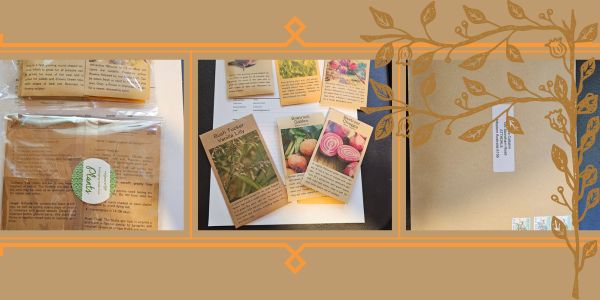
Not only are our seeds packed in recycled paper envelopes, we keep the theme going when we post out website orders. To protect your seeds from moisture and the letter box munchers (snails), we use a very special plastic free material made from plants. They are then put into recycled mailing envelopes. Green all the way ????????
Delivery Guarantee
We take great care to make sure your seeds arrive safely. If your order is lost or damaged in transit, we’ll happily send a replacement. Unfortunately, we can’t replace or refund orders that arrive later than the estimated delivery date, as delays can sometimes occur that are outside our control.
Please note that all dispatch and delivery times listed are estimates only. While we do our best to post promptly, delivery timeframes can vary due to postal service delays, weather events, or other unforeseen circumstances. We’re unable to take responsibility for any loss, damage, or cost that results from a late delivery.
An order is not considered missing until at least 20 business days have passed from the postage date. You’ll receive an email once your seeds have been posted, letting you know they’re on their way. If you don’t see it in your main inbox, please check your Spam or Promotions folders as sometimes our emails like to hide there.
Reviews
There are no reviews yet