Reasons to Love a flower Garden
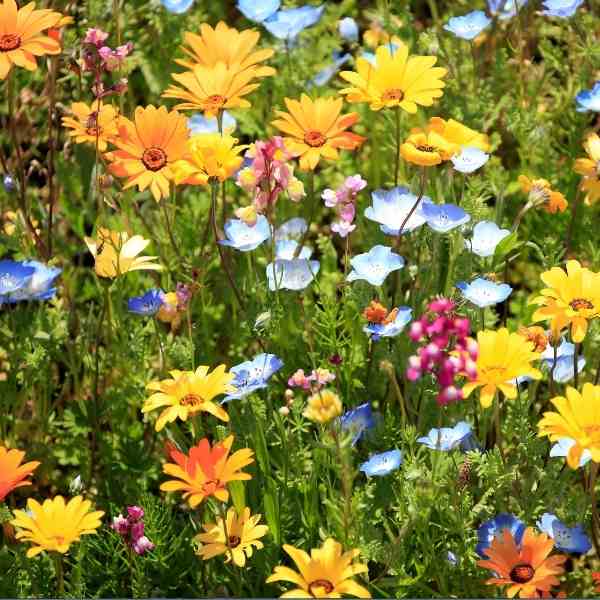
There are few hobbies that give back quite as generously as flower gardening. Of course, there is the obvious reward. Flowers make a garden beautiful. They bring colour to bare spaces, soften fences and paths, fill pots and garden beds, and give you something lovely to look at through the kitchen window. But once you start growing flowers, you quickly realise there is much more going on.
A flower garden can attract pollinators and beneficial insects, support your vegetable patch, provide flowers for the house, encourage you to spend more time outdoors and give you an inexpensive hobby that can grow with you for years. There is also the simple pleasure of watching something you have grown from a tiny seed burst into flower. You certainly do not need a large garden either. A few pots on a balcony, a narrow bed along a fence or a patch beside the vegetable garden can become a productive little flower garden.
That is one of the things I love most about gardening. There is no point at which your garden has to be finished. It changes with the seasons, your interests change, plants come and go, and every year teaches you something new. If you have been wondering whether it is worth making room for flowers, there are plenty of very good reasons to start.
🐝 Flowers Can Help Your Vegetable Garden
Flowers and vegetables do not need to live in separate parts of the garden. Mixing them together can create a more diverse, productive and interesting growing space, while also making the vegetable patch much nicer to spend time in.
One of the biggest benefits is attracting pollinating insects. Bees, butterflies, hoverflies and other insects visit flowers to collect nectar and pollen and, while moving from plant to plant, they also help pollinate many food crops. This is particularly important for cucumbers, pumpkins, zucchini, melons, beans, eggplants, chillies, capsicums and strawberries. Tomatoes are largely self-pollinating, but visiting insects, particularly native bees capable of buzz pollination, can still help move pollen within the flowers.
Having flowers blooming before, during and after your main vegetable crops gives pollinators and beneficial insects a reason to remain in the garden. Rather than planting one so-called companion plant and expecting it to protect everything, I prefer to think in terms of diversity. A vegetable garden filled with a mix of flowering plants is simply more attractive to useful insects than one made up of crops surrounded by bare soil.
🌼 The Best Flowers to Grow Around Vegetables
There is no need to make companion planting complicated. Start with easy flowers that produce plenty of nectar and pollen and flower over a reasonably long period. Calendula, cosmos, zinnias, nasturtiums, sweet alyssum, marigolds and sunflowers are all useful additions to a productive garden.
Cosmos and zinnias are excellent for drawing bees and other beneficial insects into the garden, while sweet alyssum has masses of tiny flowers that are particularly useful to smaller insects such as hoverflies and parasitic wasps. Nasturtiums are sometimes used as a trap crop because aphids and some caterpillars may be attracted to them, while French marigolds have been studied for their ability to suppress certain soil nematodes when grown in suitable conditions. Sunflowers are wonderful for bees while flowering and can later provide seed for birds.
The real advantage comes from growing several types rather than relying on one particular flower. Different flower shapes suit different insects, and having plants flowering at different times creates a more dependable source of nectar and pollen. A garden buzzing with life is usually a much healthier garden.
🐞 Flowers Encourage Beneficial Insects
Not every insect in the garden is a pest. Plenty of them are working quietly on your behalf. Hoverfly larvae feed on aphids, lacewing larvae prey on soft-bodied insects, and tiny parasitic wasps attack pests that might otherwise damage your vegetables.
The adults of many of these beneficial insects feed on nectar and pollen, which is another reason flowering plants are so valuable around edible crops. Small, open flowers are particularly useful because the nectar is easy for insects with short mouthparts to reach. Calendula, alyssum, dill, coriander allowed to flower, cosmos and many daisy-type flowers can all help.
You will still get pests. Every gardener does. But a garden filled with different plants and insects has a better chance of developing some natural balance. I would much rather encourage a hoverfly or lacewing to help with aphids than immediately reach for a spray bottle.
🌱 Flowers and Healthy Soil
Some flowering plants can also contribute to soil health. Legumes such as clover and sweet peas form relationships with specialised soil bacteria that allow them to fix atmospheric nitrogen. This does not mean they instantly feed the vegetable growing beside them, as much of that nitrogen remains within the plant while it is alive. The benefit becomes greater when roots and plant material eventually break down and return organic matter to the soil.
Flowers also help simply by keeping soil covered and alive. Their roots support soil organisms, leafy growth protects the surface from harsh sun and heavy rain, and old stems and leaves can eventually become compost or mulch. Healthy soil is built gradually, and the more living roots and organic material we can keep in it, the better.
There is also a very simple benefit to growing flowers among vegetables. They make the productive garden look good. A row of tomatoes with cosmos behind them, calendula along the edge and nasturtiums spilling over a path is much more inviting than rows of vegetables surrounded by bare ground. When you enjoy being in the garden, you spend more time there, and that means you are more likely to notice when something needs watering, feeding, picking or a little attention.
🚶 Flower Gardening Gets You Moving
Gardening is one of those activities where you can be moving for quite a while without really thinking of it as exercise. There is always something to do. You bend to pull a weed, carry a watering can, reach to tie up a climbing plant, walk back to the shed because you forgot the secateurs and then go back again because you forgot the string.
Digging, raking, carrying, planting, pruning and watering all involve movement. Of course, everyone gardens according to their own ability. Raised beds, lightweight hoses, stools, long-handled tools and containers placed at a comfortable height can make things much easier for anyone who finds bending or kneeling difficult. There is no prize for doing everything the hard way.
The important part is that gardening gives you a reason to get outside and move in practical ways. Even a gentle wander around with a watering wand or ten minutes pottering among the pots is better than spending the entire day sitting indoors.
☀️ A Reason to Spend More Time Outside
Modern life can keep us indoors for far too long. There is work to do, emails to answer, television to watch and an endless number of things competing for our attention. A garden gives you a reason to step outside and notice what is happening around you.
You notice whether the morning is cool, feel the breeze, see what changed after last night’s rain and discover the first flower on a plant you have been watching for weeks. Safe exposure to daylight also helps regulate our normal sleep-wake rhythms, while sunlight on exposed skin can contribute to vitamin D production. In Australia, of course, sensible sun protection is important because UV levels can be very high.
You do not need to spend half the day gardening to feel the benefit. Sometimes ten or fifteen minutes outside among the plants is enough to completely change the pace of the day.
💰 Flower Gardening Can Be Surprisingly Affordable
Gardening can be expensive if you want it to be, but it certainly does not have to be. You can buy elaborate raised beds, designer pots and every gadget in the garden centre, or you can start with a packet of seeds, some soil and somewhere to grow them.
One of the great things about plants is that they reproduce. Seeds become plants, plants produce more seeds, perennials can often be divided and many plants can be propagated from cuttings. Once a garden becomes established, it can start supplying much of its own future planting material.
Second-hand garden equipment can save a lot of money too. Facebook Marketplace, garage sales, op shops, community groups and verge collections can turn up old terracotta pots, watering cans, garden benches, wheelbarrows and tools for very little. They may need a clean or a little repair, but gardening equipment certainly does not need to look new to work well. Personally, I think a few worn pots and old tools give a garden much more character anyway.
🤝 Gardeners Are Very Good at Sharing
Once someone has gardened for a few years, they usually end up with too much of something. Too many seedlings, too many seeds, a perennial that needs dividing or a plant that has decided to take over half the garden.
This is when gardening becomes a wonderfully social hobby. Friends, neighbours and local gardening groups are often happy to swap seeds, cuttings and divisions. Plant swaps are another great option. You take along something you have too much of and come home with something completely different.
These shared plants often become some of the most treasured things in the garden because they come with a story. You are no longer growing simply a daisy or an iris. You are growing the plant that came from a friend’s garden years ago, and every time it flowers you remember where it came from.
🌱 Growing Flowers From Seed Gives You More Choice
If you really want to stretch your gardening budget, seeds are hard to beat. A packet containing dozens of seeds can cost little more than one established plant from a garden centre, and the choice available from seed is much greater.
Garden centres naturally stock plants they expect to sell quickly, which often means familiar varieties in familiar colours. Growing from seed opens the door to heirloom varieties, unusual colours, tall and dwarf forms, cottage garden flowers, native species, cut flowers, drying flowers and old-fashioned varieties that are rarely sold as seedlings.
Instead of choosing from the relatively small range sitting on the garden centre bench, you can choose from hundreds of possibilities. Seeds allow you to create a garden that actually reflects your own taste rather than simply what happens to be available locally.
🌱 There Is Something Special About Starting With a Seed
Growing from seed does require a little more patience. You sow them, water them, check them the next morning even though you know perfectly well nothing will have happened yet, and then check them again that afternoon.
Eventually a tiny green hook pushes through the soil.
I never really get tired of that. Even after growing countless plants, there is still something extraordinary about the fact that everything needed to begin a whole new plant is tucked inside that tiny seed. Within a few weeks, that seedling may be growing strongly, and a few months later it can be covered in flowers, buzzing with bees and producing hundreds of seeds of its own.
That is a pretty impressive return from something small enough to disappear under your fingernail.
🌸 A Flower Garden Gets Better With Time
New gardens often look a little sparse. Plants are small, there are awkward gaps everywhere and you can still see far more mulch than flowers. Give it time. Gardens rarely reach their best in the first season.
Perennials establish stronger root systems and increase in size, climbers cover fences, shrubs fill out and self-seeding annuals begin appearing in places you did not necessarily choose. You also start learning which plants genuinely enjoy your soil and climate rather than which ones are supposed to grow there according to the label.
Every garden has plants that theoretically should thrive but refuse to cooperate, while another plant you barely pay attention to grows magnificently. Gardening gets much easier when you start listening to what the garden is telling you. If something thrives, grow more of it.
🌺 Perennials and Self-Seeding Flowers Keep Giving
Perennials are plants that live for several years rather than completing their whole life cycle in one season. Depending on your climate, these might include echinacea, salvia, rudbeckia and many daisy-type flowers. Once established, many increase in size each year and can eventually be divided, giving you several plants where you originally had one.
Then there are the self-seeders. Calendula, poppies, cosmos, alyssum and nasturtiums are among the flowers that may sow themselves around the garden when conditions suit them. Sometimes the seedlings appear exactly where you want them and sometimes they appear in the middle of the path. That is gardening.
These volunteer seedlings give the garden a relaxed, natural feel and mean every season looks a little different. They are also essentially free plants, which is another reason an established garden can become much cheaper to maintain than a new one.
💐 Fresh Flowers Whenever You Want Them
One of the nicest practical benefits of growing flowers is being able to pick them for the house. You do not need a formal cutting garden or florist-quality arrangements. A few cosmos in a jar, one sunflower in a bottle or a handful of zinnias beside the bed can completely change a room.
Many annual flowers actually benefit from regular picking. Plants such as zinnias, cosmos and sweet peas are trying to reproduce by making seed. When flowers are cut before mature seed develops, the plant will often continue producing more blooms. This is the principle behind cut-and-come-again flowers. Deadheading spent blooms can have a similar effect.
Homegrown flowers also make wonderful gifts. Tie a handful with string or put them in a recycled jar and give them to a friend, neighbour or family member. They might not have perfectly straight stems or identical blooms like commercially grown flowers, but I think that makes them much nicer. Someone took the time to grow them.
🏡 Flowers Change the Way a Home Feels
A flower garden can completely change the appearance of a house without requiring complicated landscaping. A strip of flowers beside a driveway, a flowering climber over a fence or a few large pots beside the front door can soften hard surfaces and make a space feel much more welcoming.
Flowers can add colour, cover bare ground, disguise an unattractive fence, frame an entrance or brighten a balcony. Because different plants flower at different times, the garden also changes through the year. Spring may be filled with poppies and sweet peas, while summer brings zinnias, sunflowers and cosmos. Even old seed heads can add texture and provide food for wildlife.
A front garden also gives something back to the neighbourhood. Everyone walking past gets to enjoy it. I often find myself looking at other people’s gardens, noticing what is flowering and which plants seem particularly happy in the local climate. One gardener’s flowers often inspire another, and before long a whole street can look more colourful.
🐝 A Flower Garden Feeds Wildlife
Flowers are not only decorating the garden for us. They are producing food. Nectar provides energy for many insects, while pollen supplies proteins, fats and other nutrients. Different flower shapes attract different visitors, which is why growing a mixture is so useful.
A flower garden may feed honeybees, Australian native bees, butterflies, moths, hoverflies, beetles, wasps and many other beneficial insects. If flowers are allowed to form seed, they can also become a food source for birds. Sunflowers are an obvious example, but many smaller seed-producing flowers are visited too.
This is another reason I do not rush to tidy every flower as soon as it fades. A slightly untidy garden can be doing far more useful work than a perfectly neat one. Leaving a few seed heads standing and allowing some plants to complete their life cycle can provide food and shelter long after the main flowering display has finished.
🌿 Gardening Helps You Notice the Natural World
One of the biggest changes gardening makes is simply that you begin paying attention. You notice the first warm morning of spring, know when rain is coming because you have been watching the sky, recognise which bees visit particular flowers and realise that a garden bed receives much less sun in winter than it does in summer.
The garden gives you something small to observe every day. A bud forming, a seed germinating, a butterfly you have not seen before or a flower finally opening after weeks of waiting. None of these things is particularly dramatic on its own, but together they make daily life more interesting.
Gardening reconnects us with the seasons in a way that is difficult when most of our time is spent indoors. You begin measuring the year in flowers, weather and what is ready to sow next.
🧠 Flower Gardening and Mental Wellbeing
There is a reason so many gardeners describe the garden as their happy place. Gardening gives the mind something immediate to focus on. When you are sowing seeds, pulling weeds, watering or tying up plants, your attention moves to what is right in front of you.
Research has linked gardening and time spent in green spaces with improved wellbeing and reduced stress for many people. A garden is not a replacement for professional treatment where that is needed, but as part of everyday life it can provide a calming and absorbing place to spend time.
There is also the simple pleasure of anticipation. You sow seeds and wonder when they will germinate, watch buds forming and wait for a new variety to flower for the first time. There is always something coming next. Even after a gardening disaster, and every gardener has plenty of those, there is another season and another packet of seeds. Gardening teaches you that there is nearly always another chance to try again.
🦠 Does Gardening Boost the Immune System?
You may sometimes hear claims that getting soil on your hands directly boosts the immune system. The reality is more complicated. Soil contains enormous communities of bacteria, fungi and other microorganisms, and researchers are interested in how regular contact with diverse natural environments may influence the human microbiome and immune system.
That does not mean deliberately exposing yourself to potentially harmful soil organisms is a good idea. Normal gardening hygiene still matters. Wash your hands after gardening, cover open cuts and take care when handling potting mix and other materials that can contain harmful microorganisms.
The more useful way to think about it is that gardening places us in regular contact with the living natural world. There may be health benefits associated with that broader exposure, but a little dirt under your fingernails is not a substitute for good hygiene.
🌷 Your Flower Garden Does Not Need to Be Perfect
Somewhere along the way, gardening became something we felt we had to be good at. Perfect lawns, perfectly clipped hedges, weeds removed immediately and nothing out of place.
Real gardens are not like that.
Plants flop over, seedlings appear where they were not invited, leaves get eaten, birds dig up things you planted yesterday and one plant becomes enormous while another five centimetres away refuses to grow. That is normal.
A garden is not a display cabinet. It is alive. Once you accept that, gardening becomes much more enjoyable. You stop worrying quite so much about perfection and start noticing whether the plants are healthy, the bees are visiting and the garden is giving you pleasure.
🌱 Start Small and Learn as You Grow
If you are new to flower gardening, there is no need to redesign the whole backyard. Start with one bed, three pots or a packet of zinnias. Choose somewhere suitable, prepare the soil, sow something that suits your climate and season, and see what happens.
You will learn more from actually growing six plants than from spending months trying to create the perfect garden plan. Pay attention to what works. Did the plants get enough sun? Did the soil drain well? Which variety flowered for months? Which one struggled as soon as the weather became hot? Which flowers attracted the most bees?
Then make adjustments next season. That is how good gardens are made, not all at once, but one season at a time.
🌻 A Flower Garden Eventually Starts Giving Back
In the beginning, you put a lot into a garden. You buy seeds, prepare beds, water seedlings, pull weeds and move plants because you put them in completely the wrong place.
Then something changes.
The flowers begin self-seeding, perennials become large enough to divide, you collect your own seed, pollinators become regular visitors and you have enough flowers to cut a bunch without making a visible dent in the garden. Eventually you start giving plants and seeds away because you have more than you need.
That is when a garden really starts to feel established. It begins supplying you with more than you originally put into it.
🌼 Why Flower Gardening Is Worth It
Flower gardening is worth doing because the benefits spread far beyond the flowers themselves. It supports pollinators and beneficial insects, complements the vegetable garden, provides flowers for cutting, encourages you to spend time outdoors and gives you an affordable and creative hobby that changes with every season.
It also gives you something that is increasingly easy to lose in a busy life: a reason to slow down and pay attention. You begin with a packet of seeds because you want some colour. Then the bees arrive, you start cutting flowers for the house, seedlings appear from last year’s plants, a neighbour asks what you are growing and suddenly the garden has become part of the rhythm of everyday life.
You do not need a huge block, expensive equipment or years of experience to begin. A sunny corner, a pot or two and a few seeds are enough.
Most importantly, you do not need to know everything before you start. None of us ever does. Every season brings another variety to try, another mistake to learn from and another flower you decide you absolutely have to grow next year.
That is one of the great pleasures of gardening. The garden never really stops teaching you, and it never quite stops surprising you either.