And the beet goes on!
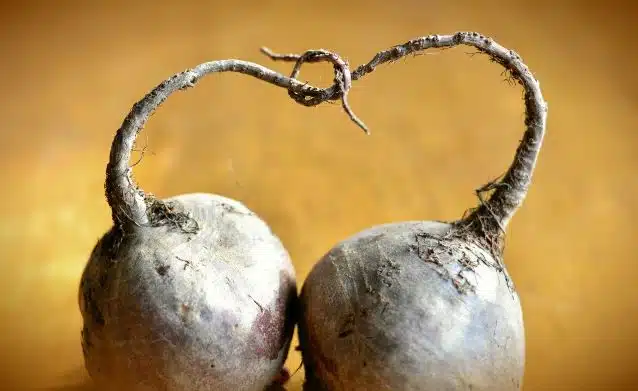
🌱 Beetroot: A Colourful, Nutritious and Surprisingly Easy Crop to Grow!
Beetroot is one of those wonderful vegetables that deserves a place in every garden. Easy to grow, incredibly versatile in the kitchen and packed with goodness, it’s also one of my favourite crops for filling those little gaps between other vegetables. 🌿
You don’t need a dedicated garden bed or lots of space to grow beetroot. Tuck a few seeds between your tomatoes, along the edges of raised beds, or in gaps between slower-growing vegetables. As long as they have enough light and room for their roots to develop, they’ll happily make themselves at home.
And there’s so much more to beetroot than the traditional pickled slices we grew up with!
You can roast, bake, boil, pickle, fry or grate beetroot raw into salads. Roast it with a little olive oil to bring out its natural sweetness, add it to chocolate cake for extra moisture, or blend it into a colourful dip.
My current favourite is beetroot smoothies served in a wine glass! 🍷 Who says a healthy drink can’t feel a little fancy?
🏛️ A Vegetable With Thousands of Years of History
Beetroot has a fascinating history stretching back thousands of years to the ancient Mediterranean.
The wild ancestors of today’s beetroot grew around the Mediterranean coastline, where people originally valued the plant more for its leaves than its roots.
The ancient Greeks and Romans enjoyed beet leaves as a vegetable, much as we eat silverbeet today. In fact, beetroot and silverbeet are members of the same species, Beta vulgaris. One has been selectively bred for its swollen, sweet root, while the other is grown for its generous leafy growth.
The Romans also used beetroot in traditional remedies, believing it could help with various ailments.
For centuries, the roots were relatively small, slender and sometimes more like a parsnip than the familiar round beetroot we know today.
It was through generations of seed saving and selective breeding that gardeners gradually developed larger, sweeter and more rounded roots. By the 1500s, recognisable round and swollen beetroot varieties were appearing in European gardens.
It’s a lovely example of how gardeners, simply by saving seeds from plants with desirable characteristics, helped shape the vegetables we grow today. 🌱
❤️ A Little Powerhouse of Goodness
There’s a good reason beetroot has earned a reputation as a super-healthy vegetable.
It’s naturally rich in fibre, folate, potassium and manganese, along with a range of beneficial plant compounds.
One of beetroot’s most interesting features is its naturally occurring nitrates. Our bodies can convert these into nitric oxide, a compound that helps blood vessels relax and supports healthy circulation.
Research suggests beetroot juice may help lower blood pressure and improve exercise endurance in some people. No wonder it’s become popular with runners, cyclists and other athletes! 🚴
Beetroot also contains special pigments called betalains, responsible for those beautiful deep red and purple colours. These pigments have antioxidant properties and are being studied for their potential role in protecting cells from damage.
And don’t forget those lovely leaves! 🌿
Beetroot leaves are edible and nutritious, providing vitamins and minerals of their own. Young leaves are delicious in salads, while larger ones can be cooked just like silverbeet.
With the growing popularity of microgreens, beetroot leaves have come full circle. Those tiny red-stemmed seedlings are now prized for their beautiful colour and fresh, earthy flavour.
🍬 Did You Know Beetroot Changed the Sugar Industry?
Here’s a surprising little piece of history.
In 1747, German chemist Andreas Marggraf discovered that sugar could be extracted from beet roots, opening the door to an entirely new way of producing sugar.
His work eventually led to the development of sugar beet, a close relative of the beetroot we grow in our vegetable gardens.
Today, around 20% of the world’s sugar comes from sugar beet, with the remainder produced mainly from sugar cane.
Sugar beet is particularly useful in cooler climates where tropical sugar cane cannot be grown. Its water requirements also differ from sugar cane, although the amount needed depends on the climate and farming conditions.
It’s quite remarkable that a humble vegetable family has become so important to the world’s food supply!
🌱 Why Beetroot Is Such a Brilliant Space Filler
One of the things I love most about beetroot is how easily it fits into an already busy vegetable garden.
Unlike sprawling pumpkins, zucchinis or cucumbers, beetroot grows in a fairly compact space. Most of its growth happens beneath the soil, while its attractive leaves form a tidy little cluster above.
This makes it perfect for interplanting, which simply means growing different crops together to make better use of the available space.
For example, you can sow beetroot:
- 🥬 Between young brassicas, before their leaves grow large enough to shade the ground.
- 🍅 Around young tomato plants, while they’re still establishing themselves.
- 🧅 Between rows of onions or garlic, provided there’s enough space for both crops.
- 🥗 Alongside lettuce and other leafy greens, creating a productive mixed planting.
- 🌼 Around the edges of vegetable beds, making use of space that might otherwise remain empty.
The trick is to think about how large your neighbouring plants will eventually become. Beetroot needs enough light to develop good-sized roots, so don’t squeeze it into a spot that will soon be completely shaded.
Another advantage is that you don’t have to harvest every beetroot at once.
Pick some young for tender baby beets and leave the others to grow larger. As you harvest, you create extra space for neighbouring plants to spread.
That’s the beauty of a productive vegetable garden. Every little patch of soil can earn its keep!
🪴 No Garden Bed? No Problem!
Beetroot is an excellent choice for container gardening.
You don’t need expensive pots either. Those polystyrene fruit and vegetable boxes from the greengrocer can make perfectly good growing containers, provided they’re clean, food-safe and have drainage holes.
A depth of around 20 to 25 cm is ideal for most round beetroot varieties. Longer-rooted types appreciate deeper soil.
Fill your container with a good-quality potting mix, keep it consistently moist and position it somewhere that receives plenty of sunlight.
Beetroot also looks quite attractive growing in containers, particularly varieties with rich red stems and dark green leaves.
It’s an inexpensive way to grow a useful crop on a patio, balcony or in a small courtyard.
☀️ Growing Advice: When to Plant Beetroot
Beetroot has a wonderfully long growing season, making it a useful crop for Australian gardens.
As a general guide:
| Climate | Sowing time |
|---|---|
| 🌴 Warm areas | All year, although cooler months are often easier |
| 🌤️ Temperate areas | July to March |
| ❄️ Cool to cold areas | September to February |
These are general planting windows, so local conditions are always worth considering.
In particularly hot areas, beetroot grows best during the milder months. Extreme heat can make germination difficult and cause the soil to dry out too quickly.
In cooler regions, beetroot can tolerate light frost once established, although very cold conditions will slow its growth.
🌿 Position and Soil
Beetroot is reasonably easy-going about where it grows.
Full sun is ideal, but it can also do well in part shade, especially during warmer weather. Around four to six hours of good sunlight is a useful starting point.
Choose a position with loose, well-drained soil, free from large stones and hard clumps that might interfere with developing roots.
Mix in some well-rotted compost before planting to improve soil structure and moisture retention.
Avoid adding large amounts of fresh manure or high-nitrogen fertiliser. Too much nitrogen can encourage lots of lovely leaves at the expense of the roots you’re trying to grow.
🌱 Sowing Beetroot Seeds
Beetroot is best sown directly where you want it to grow. Its developing taproot doesn’t particularly enjoy being disturbed.
Sow seeds approximately 1.5 to 2 cm deep, spacing them a few centimetres apart.
Keep the soil evenly moist while waiting for germination, which usually takes around 5 to 14 days in suitable conditions, sometimes longer when the soil is cold.
Here’s something that surprises many new gardeners.
A beetroot ‘seed’ is often actually a little cluster containing several seeds!
That’s why you may find two, three or even more seedlings appearing together from what looks like one seed.
Once the seedlings are established, thin them to approximately 8 to 10 cm apart for good-sized roots, or a little closer if you’re growing baby beets.
And don’t throw away those thinnings! ✂️
The tiny leaves are perfectly edible and make a lovely addition to salads.
💧 Watering and Looking After Your Crop
Beetroot isn’t a particularly demanding vegetable, but it does appreciate consistent watering.
Allowing the soil to dry out completely and then giving it a heavy soaking can affect root quality.
A light layer of mulch helps retain moisture, particularly as temperatures begin to rise.
You can start harvesting baby beets in around six to eight weeks, while larger roots may take eight to twelve weeks, depending on the variety and growing conditions.
Don’t feel you need to wait until they reach supermarket size.
Personally, I think young, freshly harvested beetroot is one of the nicest ways to enjoy it. The roots are tender, sweet and don’t need much preparation.
🥗 Don’t Waste the Leaves!
One of beetroot’s most overlooked advantages is that you can eat almost the entire plant.
The young leaves are lovely added raw to mixed salads, particularly the beautiful red-stemmed varieties.
Larger leaves can be sautéed with garlic and olive oil, tossed into pasta, added to soups or steamed as you would silverbeet.
Just avoid removing too many leaves while the roots are still developing, as the plant needs its foliage to produce energy.
Harvest the root and leaves together, and you’ve practically got two vegetables from one plant. 🌿
🌈 Keep Sowing for a Continuous Harvest
Rather than planting a large patch of beetroot all at once, try sowing a small number of seeds every two to three weeks during suitable growing weather.
This is called succession planting, and it’s one of the simplest ways to keep your garden producing without ending up with more beetroot than you can possibly eat at once.
A few seeds here, another small row there, and before long you’ll have beetroot ready to harvest at different stages.
It’s also an excellent way to fill spaces as other vegetables finish cropping.
A lettuce comes out? Pop in a few beetroot seeds.
A patch of radishes has finished? Perfect spot for another little sowing.
You don’t always need more garden space. Sometimes you just need to make better use of the space you’ve already got. 🌱
🌈 Explore the Wonderful World of Beetroot Varieties
Not all beetroot is round and red! There are some lovely heirloom varieties to discover, each with its own colour, shape and character. At Seed Station, we have a colourful selection of beetroot seeds to suit different gardens and tastes.
🌱 Beetroot Bulls Blood is famous for its stunning deep burgundy foliage. It’s as ornamental as it is edible, with richly coloured roots and beautiful young leaves that are perfect for salads and microgreens.
💗 Beetroot Chioggia is a real showstopper! Slice it open and you’ll discover gorgeous concentric rings of pink and white, almost like a peppermint lolly. This Italian heirloom is beautifully sweet and looks fantastic sliced raw into salads.
🥕 Beetroot Cylindra is a little different, producing long, cylindrical roots rather than round ones. It’s a brilliant choice for gardeners wanting to make the most of their space, and its shape makes slicing into even rounds wonderfully easy.
❤️ Beetroot Detroit is a reliable old favourite, producing smooth, round, deep red roots with tender, sweet flesh. A lovely all-rounder for roasting, pickling, cooking or grating fresh into salads.
🌿 Beetroot Early Wonder is a popular early-maturing variety, producing tasty red roots and generous leafy tops. It’s particularly useful if you enjoy harvesting both the roots and the greens.
💛 Beetroot Golden is a beautiful change from traditional red beetroot. Its golden-yellow flesh is mild, sweet and delicious roasted. Another bonus is that it won’t stain your hands and chopping boards quite like its red cousins!
🇦🇺 Beetroot Melbourne Early Boltardy is a traditional Australian favourite, valued for its good flavour and resistance to premature bolting. It’s a useful choice for gardeners dealing with changing temperatures.
Whether you love the traditional deep red varieties or fancy trying something a little different, growing several beetroot varieties together is a lovely way to bring colour, flavour and variety to your garden and kitchen. 🌱
❤️ Give Beetroot a Little Room in Your Garden
Whether you’ve got a large vegetable patch, a couple of raised beds or just a few containers, beetroot is one of those crops that’s well worth growing.
It’s easy, productive, colourful, nutritious and wonderfully versatile, with a fascinating history stretching back thousands of years.
And when you grow your own, you can enjoy varieties and colours you rarely see in the supermarket, pick the roots at exactly the size you like and make use of those delicious leaves as well.
So next time you spot a little gap between your vegetables, don’t leave it empty.
Pop in a few beetroot seeds and let them get growing! 🌱💚
You might even end up enjoying a freshly made beetroot smoothie in your favourite wine glass. 🍷