
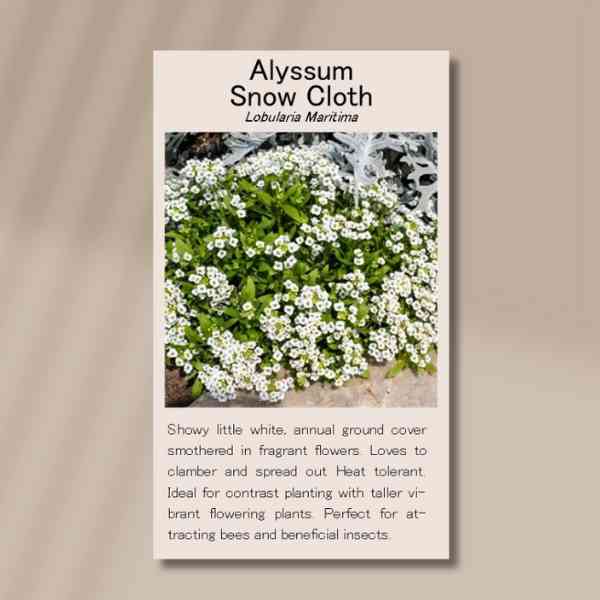


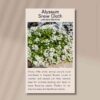

Alyssum Snow Cloth
$4.95
Lobularia Maritima
- Seed Count 750
- Fragrant Flowers
- Perennial
Only 12 left in stock
Description
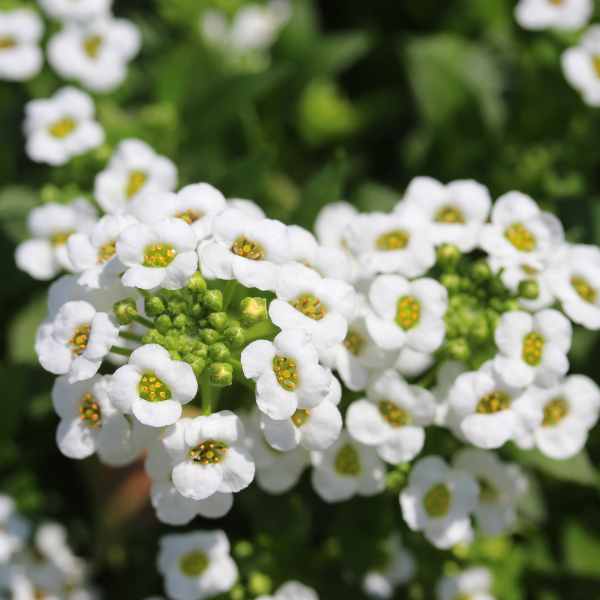
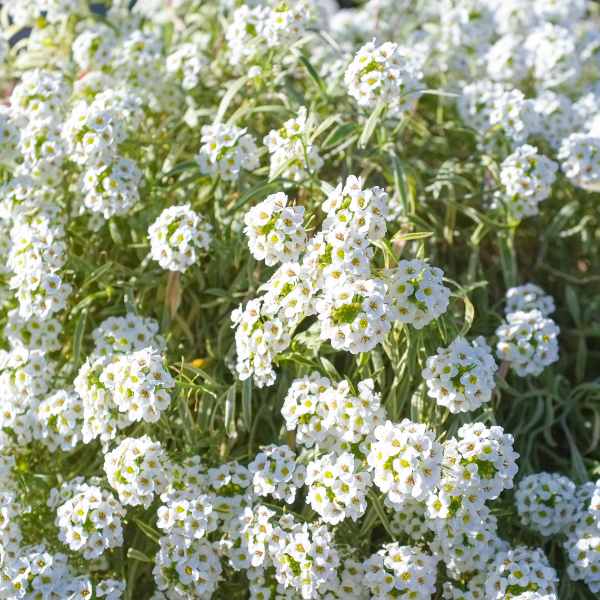
Alyssum Snow Cloth is a great addition to the home landscape. Known for its immense flurry of blooms, the plant is valued for its ornamental value, delightful perfume and its unique ability to attract beneficial insects.
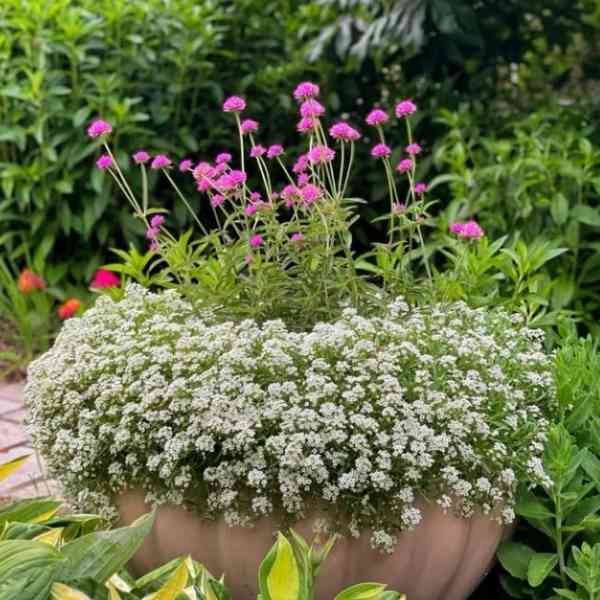
This showy ground cover loves to clamber and spread out and is ideal for contrast planting with taller plants. With shallow roots, it is perfect to plant under fruit trees to attract pollinators
Alyssum grows best where it can receive ample sun throughout the day. However, when grown in regions that are especially hot, alyssum generally benefits from afternoon or part-shade conditions.
It is tolerant of poorer soils conditions and growing the plant in especially rich soil may lead to lush, green plants that produce very few flowers.
Generally free of disease, however, fungal issues and stem rot may occur in beds that drain poorly or have been overwatered.
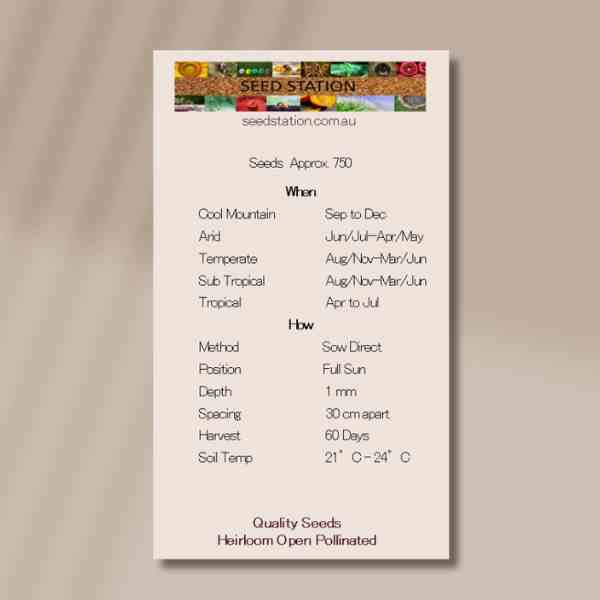
| Method: Raise seedlings | Soil Temp: 21°C - 24°C |
| Cool Mountain: Sep - Dec | Position: Full sun |
| Arid: Jun-Jul, Apr-May | Row Spacing: 30cm apart |
| Temperate: Aug-Nov, Mar-Jun | Planting Depth: 3mm |
| Sub Tropical: Aug-Nov, Mar-Jun | Harvest: 60 Days |
| Tropical: Apr - Jul | Plant Height: 15cm |
🌸 Alyssum Grow Guide
🌱 Overview
Alyssum is a low-growing, softly spreading flower loved for its tiny honey-scented blooms, gentle mounding habit, and excellent value as a companion plant. It is commonly grown in white, lavender, purple, pink, cream, and mixed shades, often forming a carpet of flowers that spills beautifully over paths, pots, baskets, raised beds, and garden edges.
This is one of the best flowers for attracting beneficial insects. Its small clustered blooms are especially useful for feeding hoverflies, lacewings, tiny parasitic wasps, bees, and other helpful garden visitors. Because of this, alyssum is often planted near vegetables, herbs, fruiting crops, and orchard edges to support natural pest balance.
Alyssum is easy to grow from seed, quick to flower, and forgiving in most garden settings. It performs best with shallow sowing, bright light, well-drained soil, steady moisture, and light trimming after flowering flushes.
🌾 Sowing in Trays Versus Direct Sowing
Alyssum can be grown successfully by sowing in trays or by direct sowing, and both methods are useful. Tray sowing is often the most reliable option when seed is limited or when seedlings need protection from slugs, snails, ants, heavy rain, birds, or weeds.
To sow in trays, fill a punnet, cell tray, or small pot with fine seed-raising mix. Moisten the mix first, then scatter the seed thinly over the surface. Alyssum seed is small, so cover it only very lightly with fine mix or vermiculite, around 1 to 2 mm deep. Press the seed gently into the surface and water with a mist spray or from below so the seed is not washed away. Keep the mix evenly moist but not soggy.
Direct sowing also works well in a finely prepared, weed-free bed. Scatter the seed thinly, press it into the soil surface, cover very lightly, and water gently. Keep the surface moist until seedlings are established. Once seedlings are large enough to handle, thin them so each plant has room to form a soft mound.
Best method: tray sowing is recommended for neat borders, pots, and controlled spacing. Direct sowing is excellent for wildflower-style edges, beneficial insect strips, and soft natural drifts.
💧 Seed Pretreatment
Alyssum seed does not require pretreatment. No soaking, chilling, scarifying, or smoke treatment is needed.
The seed is fine and should be handled gently. Avoid soaking, as wet seed becomes difficult to spread evenly. The most important steps are using fresh seed, sowing shallowly, keeping the surface evenly moist, and avoiding rough watering.
Poor germination is usually caused by seed being buried too deeply, seed mix drying out, old seed, or water washing seed into clumps.
🪴 Soil and Position
Alyssum grows best in full sun to light part shade. Full sun gives the densest flowering and most compact growth, while light afternoon shade can help plants stay fresher in hot or exposed positions. In too much shade, alyssum may become stretched, sparse, and less floriferous.
The soil should be well drained and moderately fertile. Alyssum does not need very rich soil. A light garden soil, sandy loam, raised bed, or quality potting mix is ideal. If soil is heavy clay, improve drainage or grow alyssum in pots, baskets, edging containers, or raised beds.
For containers, use a good-quality potting mix and make sure there are drainage holes. Alyssum looks beautiful spilling over the sides of pots and hanging baskets, but container-grown plants dry out faster and need more regular watering.
🌿 Care and Maintenance
Alyssum is simple to care for once established. Keep seedlings evenly moist while young, then water deeply whenever the top layer of soil begins to dry. Mature plants tolerate short dry spells, but they flower better when moisture is steady.
Mulch lightly around plants in garden beds to reduce weeds and protect soil moisture. Fine bark, straw, sugarcane mulch, or composted leaf mulch can be used. Keep mulch loose around the stems so the crown does not stay too wet.
Feeding should be gentle. A small amount of compost before planting is usually enough. If plants are in pots or flowering heavily, use a mild liquid flower feed occasionally. Avoid heavy nitrogen feeding, as this can produce leafy growth with fewer flowers.
After a strong flush of flowers, alyssum can become tired or open in the centre. Trim the plant back lightly by about one third, water well, and give a gentle feed. This encourages fresh growth and another round of flowering.
Regular light trimming is better than waiting until plants are woody and exhausted. Remove dead or yellowing patches to keep the planting fresh and airy.
🌼 Companion Planting Guide
Alyssum is one of the most useful companion flowers because it attracts beneficial insects without taking up much space. Its low habit makes it easy to tuck around vegetables, herbs, fruit trees, and larger flowers.
Good companions include lettuce, spinach, kale, broccoli, cabbage, cauliflower, tomato, capsicum, eggplant, cucumber, zucchini, beans, peas, carrot, beetroot, radish, strawberry, basil, parsley, dill, coriander, chives, calendula, marigold, cornflower, cosmos, nasturtium, and zinnia.
Alyssum is especially helpful near crops that suffer from aphids, because it attracts hoverflies and other beneficial insects whose young feed on soft-bodied pests. It is also useful along bed edges, where it softens the garden while supporting insect activity.
Avoid planting alyssum where it will be smothered by vigorous groundcovers, pumpkins, melons, sweet potato vines, or dense shrubs. It needs light and airflow to flower well.
✂️ How to Harvest
Alyssum is usually harvested for small posies, edible-style decoration only if confirmed safe by the seed supplier, beneficial insect strips, and seed saving. It is mainly grown as an ornamental and companion flower rather than a major cut flower.
For tiny fresh bunches, cut short stems when most flowers on the cluster are open and fragrant. Harvest in the morning once the foliage is dry. Place stems into clean water straight away.
For garden use, the best “harvest” is often regular trimming. Cutting back lightly after flowering keeps the plant compact and encourages another flush of blooms.
For seed, allow selected flower clusters to mature fully on the plant until the seed pods dry.
⚠️ Common Issues and Fixes
| Issue | Likely Cause | Fix |
|---|---|---|
| Poor germination | Seed buried too deeply, old seed, dry surface, or rough watering | Use fresh seed, sow very shallowly, mist gently, and keep evenly moist |
| Seedlings collapse | Damping off from soggy mix or poor airflow | Use clean seed mix, avoid overwatering, and improve ventilation |
| Leggy seedlings | Not enough light or overcrowding | Move to brighter light and thin seedlings early |
| Seedlings disappear | Slugs, snails, ants, birds, or heavy rain | Start in trays or protect direct-sown areas with barriers |
| Few flowers | Too much shade or too much nitrogen | Increase sunlight and reduce rich feeding |
| Plants become woody | Age, heat stress, or lack of trimming | Trim back by one third, water deeply, and feed lightly |
| Yellow leaves | Waterlogging, hunger, or old growth | Improve drainage, feed gently, and remove tired foliage |
| Plants dry out quickly | Shallow roots, pots drying out, or exposed position | Water more consistently and mulch lightly |
| Powdery mildew | Poor airflow, crowding, or moisture stress | Space plants well, trim lightly, and water at soil level |
| Aphids | Soft new growth or nearby pest pressure | Hose off gently and encourage beneficial insects |
| Flowers fading | Heat, dryness, or plant exhaustion | Water deeply, trim spent growth, and refresh with mild feeding |
| Root rot | Soil too wet or poor drainage | Improve drainage, reduce watering, and avoid soggy pots |
🌰 Detailed Seed Saving Guide
To save alyssum seed, choose the healthiest plants with the best flower colour, fragrance, compact habit, and longest flowering period. Avoid saving seed from weak, diseased, sparse, or poorly flowering plants.
Leave selected flower clusters on the plant after blooming. The flowers will fade and form tiny seed pods along the stems. Allow these pods to dry until they turn pale brown, papery, and crisp. Watch closely, because the pods are small and can release seed easily once fully mature.
When the seed stems are mostly dry, snip them into a paper bag. Do not use plastic, as trapped moisture can cause mould. Place the bag in a dry, shaded, airy location for several days so the stems finish drying completely.
Once dry, gently rub the seed pods between your fingers over a white plate or sheet of paper. The seed is small, so work slowly. Remove larger pieces of dry stem and pod by hand, then gently blow away lighter chaff or use a fine sieve.
Spread the cleaned seed on a plate for another week to make sure it is completely dry. Store it in a labelled paper envelope inside an airtight jar. Keep it somewhere cool, dark, and dry. Add a silica gel sachet if humidity is an issue.
Label the packet with the plant name, flower colour, plant habit, collection date, and notes such as “compact white edging”, “best purple flowers”, or “long flowering patch”. If several colours are grown together, saved seed may produce a soft mix of shades.
🌸 Final Thoughts
Alyssum is a small plant with a big role in the garden. It softens edges, fills gaps, spills beautifully from pots, attracts pollinators, supports beneficial insects, and flowers generously with very little fuss.
For best results, sow shallowly, keep seedlings moist, grow in full sun to light part shade, avoid heavy feeding, trim after flowering flushes, and save seed from the strongest plants. With simple care, alyssum becomes one of the easiest and most valuable flowers for both beauty and companion planting.
2 reviews for Alyssum Snow Cloth

Postage Charge
Orders under $40 attract a $5.50 shipping charge. Orders $35 and above have free shipping.
*** We cannot deliver to Parcel Lockers ***
Order Times
Seed orders are normally dispatched within three business days. You will receive an email when seeds are mailed out.
Postage Days
Seeds are mailed out Tuesday to Friday at 1pm. Except for the Friday of long weekends.
Postage Times
WA 2-3 Days: SA,NT 3-5 Days: NSW, ACT, QLD, VIC: 5-7 Days
Carrier
We use Australia Post Letter Postage for the majority of orders.
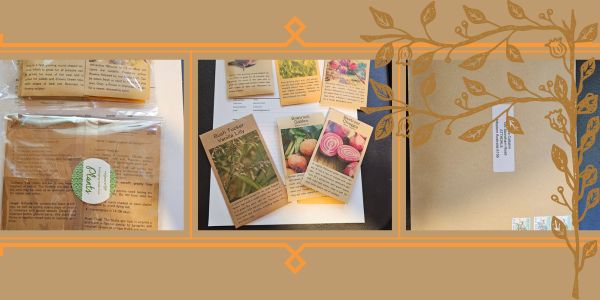
Not only are our seeds packed in recycled paper envelopes, we keep the theme going when we post out website orders. To protect your seeds from moisture and the letter box munchers (snails), we use a very special plastic free material made from plants. They are then put into recycled mailing envelopes. Green all the way ????????
Delivery Guarantee
We take great care to make sure your seeds arrive safely. If your order is lost or damaged in transit, we’ll happily send a replacement. Unfortunately, we can’t replace or refund orders that arrive later than the estimated delivery date, as delays can sometimes occur that are outside our control.
Please note that all dispatch and delivery times listed are estimates only. While we do our best to post promptly, delivery timeframes can vary due to postal service delays, weather events, or other unforeseen circumstances. We’re unable to take responsibility for any loss, damage, or cost that results from a late delivery.
An order is not considered missing until at least 20 business days have passed from the postage date. You’ll receive an email once your seeds have been posted, letting you know they’re on their way. If you don’t see it in your main inbox, please check your Spam or Promotions folders as sometimes our emails like to hide there.

See all our verified customer reviews on our official CusRev profile.
See all our verified customer reviews on our official CusRev profile.