


Eggplant Rosa Bianca
$4.95
Solanum Melongena
- Seed Count 30
- Delicate Mild Flavour
- Frost Tender Perennial
In stock
Description
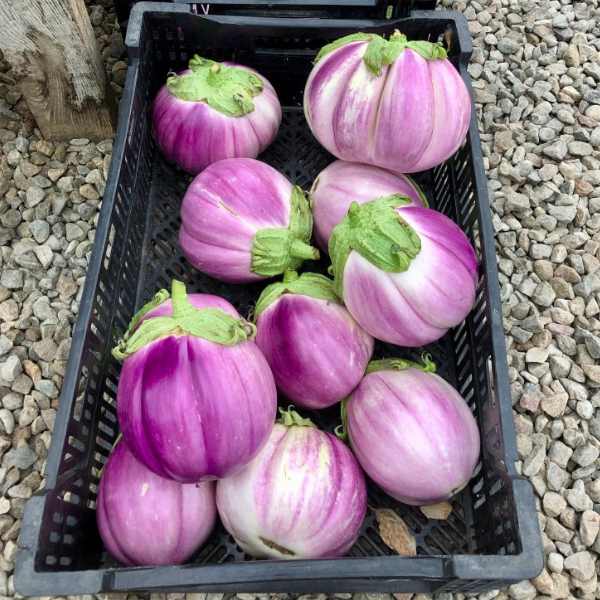
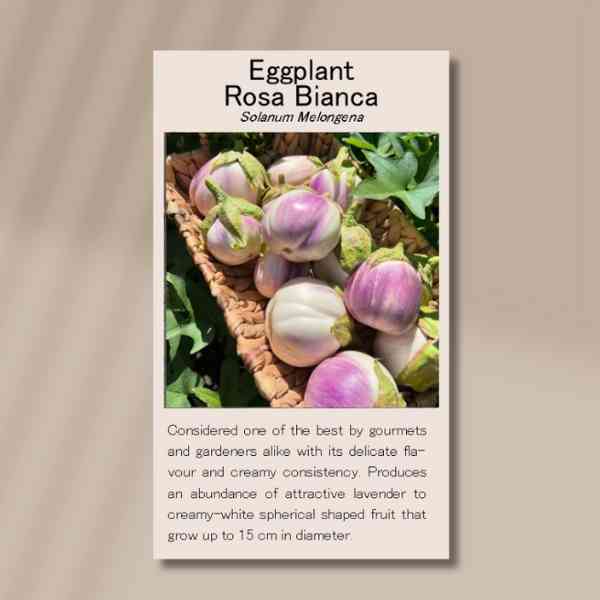
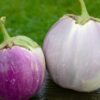
Eggplant Rosa Bianca has been treasured for generations, and both gourmets and gardeners rank it among the best of the eggplants, not just for its good looks but for its delicate, mild flavour and creamy consistency that stands out in any dish.
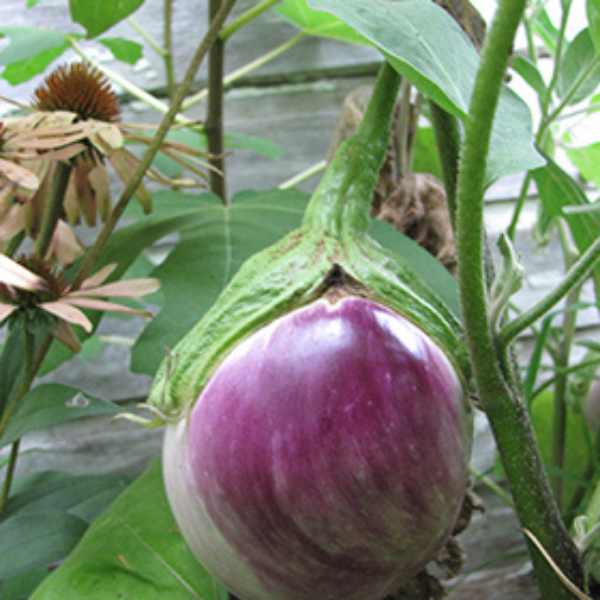
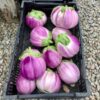
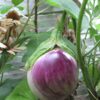
The fruit of Rosa Bianca forms into a rounded, slightly squat sphere that sits comfortably in the hand, usually around 12 to 15 centimeters in diameter. The skin is a soft lavender to creamy white, often marbled or brushed with gentle streaks of violet that fade into the pale background. When the fruits catch the light in the garden, they have that faint pearly sheen that’s unique to healthy eggplants. They are reliable producers, offering an abundance of fruit over the season, which is one of the reasons they’re such a favourite among home growers.
Where other varieties can sometimes carry a hint of bitterness, Rosa Bianca is remarkably mild. That gentleness makes it one of the most versatile eggplants you can grow. It holds its shape well when cooked, becoming soft but not mushy, with a delicate flavour that complements both strong sauces and subtle seasonings.
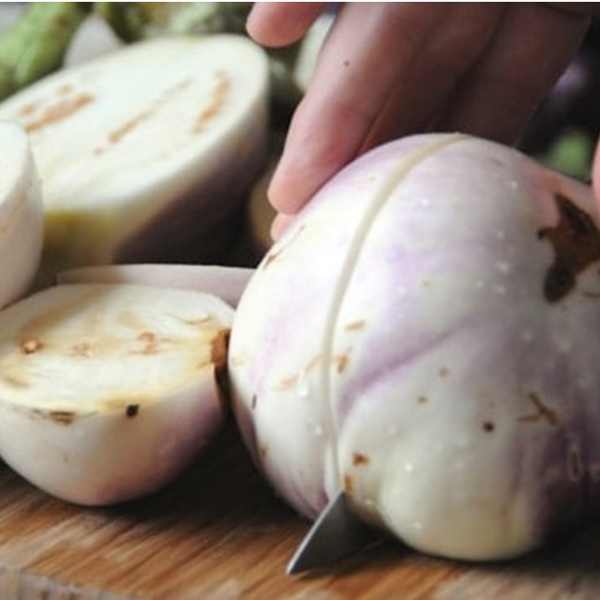
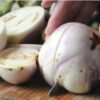
For those who love experimenting in the kitchen, this eggplant opens up endless possibilities. Because of its mild taste and creamy texture, it’s an excellent base for vegetarian dishes as it carries sauces beautifully, pairs well with lentils and chickpeas, and can even be the foundation of a hearty lasagne or moussaka. Its flesh becomes silky when baked or grilled, and it has that satisfying, meaty quality that makes it a staple for anyone exploring plant-based cooking.
Rosa Bianca isn’t a demanding plant in the garden, and each plant can produce a steady supply of fruit across the warm months. The plants themselves are attractive, with sturdy stems and lush green leaves, and the violet flowers that precede the fruit are small but striking.
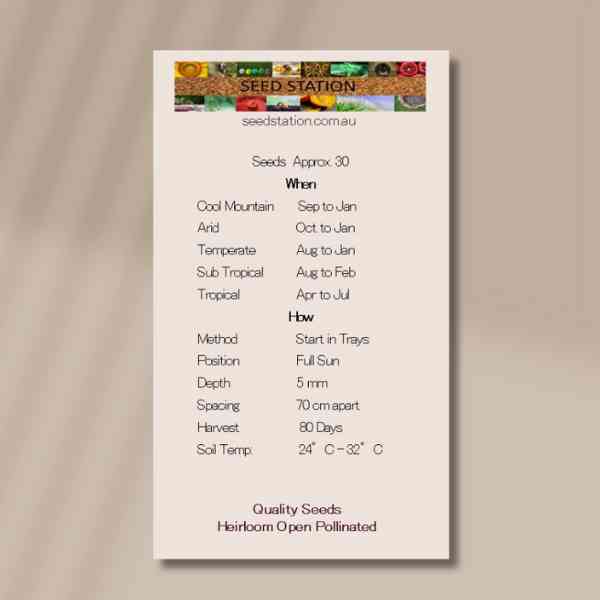
| Method: Set seedlings | Soil Temp: 24°C - 32°C |
| Cool Mountain: Sep - Jan | Position: Full sun |
| Arid: Oct - Jan | Row Spacing: 70 cm |
| Temperate: Aug - Jan | Harvest: 80 Days |
| Sub Tropical: Aug - Feb | Planting Depth: 5 mm |
| Tropical: Apr - Jul | Plant Height: 1 m |
🍆 Eggplant Grow Guide
Eggplant is a productive fruiting vegetable grown for its glossy fruits, attractive flowers, and strong kitchen value. It is a rewarding crop for gardeners who can provide warmth, full sun, rich soil, steady moisture, and regular feeding. The fruits come in many shapes and colours, including deep purple, black, white, striped, long, round, and oval types.
Eggplant is slower to start than many vegetables, but once established it can become a sturdy, attractive plant that produces over a long period. The key is to raise strong seedlings, avoid early stress, keep the plant well fed, and harvest fruit while the skin is still glossy and tender.
🌱 Sowing in Trays Versus Direct Sowing
Eggplant can be direct sown, but sowing in trays is usually the best method. The seed is relatively small, seedlings grow slowly at first, and young plants need steady conditions to develop well. Tray sowing gives better control over moisture, temperature, pests, and early growth.
To sow in trays, use a fine seed-raising mix and sow seed about 5 mm deep. Cover lightly, water gently, and keep the mix evenly moist but not soggy. Eggplant seed can be slower to germinate than fast crops such as beans or zucchini, so patience is important.
Once seedlings have developed several true leaves, pot them on into individual pots. This gives the roots more room and helps produce a stronger plant before planting into the garden. Avoid leaving seedlings cramped for too long, as root restriction can slow later growth.
Direct sowing is less reliable because eggplant seedlings are slow, delicate, and easily outcompeted by weeds or damaged by pests. It may work in a protected, well-prepared bed, but for most gardeners, tray sowing is strongly preferred.
🌾 Seed Pre-Treatment
Eggplant seed does not require special pre-treatment. There is usually no need for chilling, scarifying, or complicated preparation.
A short soak in room-temperature water for a few hours before sowing is optional and may help older or very dry seed absorb moisture more evenly. If soaking, sow the seed promptly and do not leave it sitting in water for too long, as overly wet seed can rot.
Fresh seed gives the most reliable results. The main requirements are shallow sowing, steady moisture, warmth, and patience.
🌞 Soil and Position
Eggplant grows best in full sun. Strong light supports healthy growth, flowering, fruit set, and good fruit colour. Plants grown in too much shade may become leggy, weak, and less productive.
The soil should be rich, fertile, free-draining, and moisture-retentive. Eggplant is a hungry crop, so prepare the soil well before planting. Mix in compost, aged manure, worm castings, or well-rotted organic matter to create a deep, fertile root zone.
Good drainage is important. Eggplant likes steady moisture, but it does not like sitting in waterlogged soil. In heavy clay, improve drainage with compost and plant slightly raised. In sandy soil, add organic matter to help hold moisture and nutrients.
Eggplant also grows well in large containers. Choose a deep, wide pot with drainage holes and use a premium potting mix. Small pots are not ideal because eggplant needs a strong root system and consistent moisture to support fruiting.
A sheltered position is helpful. Strong wind can damage leaves, snap branches, or loosen heavily fruiting plants.
💧 Care and Maintenance
Eggplant needs steady care to crop well. Water deeply and consistently, especially while plants are flowering and fruiting. Irregular watering can cause stress, flower drop, small fruit, or poor fruit quality. Water at the base of the plant rather than over the leaves where possible.
Mulch around plants once they are established. Mulch helps conserve moisture, suppress weeds, and keep the root zone stable. Keep mulch slightly away from the stem to reduce the risk of rot.
Feed regularly once plants are growing strongly. Compost, worm tea, liquid seaweed, fish emulsion, or a balanced vegetable fertiliser can all support growth. Once flowering begins, use a feed that supports fruiting rather than only leafy growth. Too much nitrogen can create large leafy plants with fewer fruits.
Staking is often useful. Eggplant branches can become heavy once fruit develops. Use a stake, small cage, or soft ties to support the main stem and prevent plants from leaning or breaking.
Remove yellowing, diseased, or very crowded leaves to improve airflow. Avoid stripping too many healthy leaves, as the plant needs foliage to feed the developing fruit.
Pollination is usually handled by insects and wind, but poor fruit set can happen. If flowers drop without forming fruit, gently tapping the flowers or stems can help move pollen. Growing flowers nearby also helps bring pollinators into the area.
🐝 Companion Planting Guide
Eggplant grows well with companions that attract pollinators, support beneficial insects, and enjoy similar rich soil and watering.
Good companions include basil, parsley, coriander, dill, thyme, oregano, chives, spring onions, marigold, calendula, alyssum, nasturtium, borage, cosmos, yarrow, beans, lettuce, spinach, silverbeet, capsicum, tomatoes, carrots, beetroot, and radish.
Basil, marigold, calendula, alyssum, borage, and yarrow are especially useful because they help attract pollinators and beneficial insects. Lettuce, radish, and smaller leafy greens can be grown nearby while eggplant is young, provided they are not shaded too heavily later.
Avoid planting eggplant where it will be crowded by large, vigorous crops. It needs airflow, sun, and root space. Also avoid placing it in soil recently used for closely related fruiting crops if disease has been a problem, as this can increase pest and disease pressure.
✂️ How to Harvest
Harvest eggplant when the fruit is full-sized for its type, glossy, firm, and richly coloured. The skin should look shiny rather than dull. If fruit becomes dull, seedy, or overly soft, it has likely been left too long.
Use clean secateurs or a sharp knife to cut fruit from the plant, leaving a short piece of stem attached. Do not pull or twist the fruit, as this can damage the branches.
Pick regularly to encourage more fruit production. Leaving old fruit on the plant signals it to put energy into seed maturity rather than new flowers and fruit.
Wear gloves if the variety has prickly stems or calyxes. Handle fruit gently, as the skin can bruise. Eggplant is best used fresh, but it can also be grilled, roasted, fried, baked, stuffed, stewed, or preserved in cooked dishes.
Only eat the fruit. Do not eat the leaves or stems.
⚠️ Common Issues and Fixes
| Issue | Likely Cause | Fix |
|---|---|---|
| Poor germination | Old seed, mix too cold, seed buried too deeply, uneven moisture | Use fresh seed, sow shallowly, keep mix evenly moist and warm |
| Seedlings collapse | Overwatering, poor airflow, fungal disease | Use clean seed mix, avoid soggy conditions, improve ventilation |
| Leggy seedlings | Not enough light or overcrowding | Move to brighter light and pot on early |
| Slow growth | Poor soil, low warmth, root restriction, lack of nutrients | Improve soil, use larger pots, feed lightly, avoid transplant stress |
| Yellowing leaves | Nutrient shortage, waterlogging, old leaves, root stress | Improve drainage, feed regularly, remove tired foliage |
| Flowers drop | Water stress, poor pollination, heat stress, low plant strength | Water consistently, feed well, attract pollinators, gently tap flowers |
| Lots of leaves but few fruit | Too much nitrogen, not enough sun, poor pollination | Reduce nitrogen feeding, increase light, encourage pollinators |
| Small fruit | Dry stress, poor feeding, too many fruit at once | Water deeply, feed regularly, thin weak fruit if needed |
| Fruit dull and seedy | Harvested too late | Pick while skin is glossy and fruit is firm |
| Misshapen fruit | Incomplete pollination or irregular watering | Encourage pollinators and keep moisture steady |
| Blossom end rot | Irregular watering affecting calcium movement | Water evenly, mulch well, avoid drying out between waterings |
| Aphids | Soft new growth attracting sap-sucking insects | Hose off gently, encourage ladybirds and hoverflies |
| Whitefly | Warm sheltered conditions and dense foliage | Improve airflow, use sticky traps, remove badly affected leaves |
| Spider mites | Hot, dry, stressed plants | Water consistently, rinse foliage gently, encourage beneficial insects |
| Flea beetle holes | Small jumping beetles chewing leaves | Protect young plants, use fine netting, keep plants growing strongly |
| Caterpillar damage | Chewed leaves, flowers, or fruit | Inspect regularly and hand-pick pests |
| Powdery mildew | Poor airflow, plant stress, crowded growth | Space plants well, water at soil level, remove affected leaves |
| Root rot | Heavy wet soil or overwatering | Improve drainage, reduce watering, replant into freer-draining soil |
| Branches snapping | Heavy fruit load or wind | Stake plants and support heavy branches |
🌰 Detailed Seed Saving Guide
Saving eggplant seed is possible, but fruit for seed saving must be allowed to mature far beyond the normal eating stage. Choose healthy, productive plants with strong growth, good fruit shape, good flavour, and no signs of disease. Avoid saving seed from weak plants, poor croppers, or plants with badly misshapen fruit caused by plant weakness.
Eggplant flowers are mostly self-pollinating, but insects can move pollen between plants. If you are growing more than one type and want predictable seed, separate varieties by distance or save seed from flowers that were bagged before opening and then hand-pollinated.
Select one or two of the best fruits and leave them on the plant until fully mature. A seed-saving fruit will usually become dull, firmer, and may change colour depending on the type. It will no longer be good eating quality, but the seed inside will be more mature.
Once fully mature, cut the fruit from the plant and let it sit in a dry, sheltered place for a short curing period. Then cut the fruit open and scoop out the seedy pulp.
Place the pulp in a bowl of water and rub it gently with your fingers to separate the seeds. Good mature seeds are usually firm and heavier, while poor seed and pulp may float. Pour off floating pulp carefully, add fresh water, and repeat until the seed is cleaner.
Spread the cleaned seed in a thin layer on baking paper, a plate, or a fine mesh screen. Dry it in a shaded, airy place. Stir or move the seed daily so it does not clump. Do not dry seed in harsh direct sun or in an oven, as too much heat can damage it.
Seed is ready for storage when it is completely dry and hard. Store in a labelled paper envelope or small airtight jar. Include the plant name, fruit colour or shape, and collection date. Keep seed in a cool, dark, dry place.
For stronger future plants, save seed from several healthy plants if possible. This helps maintain vigour and gives you a better selection of seedlings next time.
🌿 Final Thoughts
Eggplant is a generous and beautiful crop, but it rewards patience and steady care. It is best started in trays because seedlings are slow and benefit from protection during their early stage. No special seed pre-treatment is required, though a short soak can help older seed.
Give eggplant full sun, rich free-draining soil, consistent moisture, regular feeding, and support as fruit develops. Encourage pollinators, harvest fruit while glossy, and keep plants healthy with good airflow and careful watering. With strong seedlings and consistent care, eggplant can become a productive and attractive feature in the edible garden.
1 review for Eggplant Rosa Bianca

Postage Charge
Orders under $40 attract a $5.50 shipping charge. Orders $35 and above have free shipping.
*** We cannot deliver to Parcel Lockers ***
Order Times
Seed orders are normally dispatched within three business days. You will receive an email when seeds are mailed out.
Postage Days
Seeds are mailed out Tuesday to Friday at 1pm. Except for the Friday of long weekends.
Postage Times
WA 2-3 Days: SA,NT 3-5 Days: NSW, ACT, QLD, VIC: 5-7 Days
Carrier
We use Australia Post Letter Postage for the majority of orders.
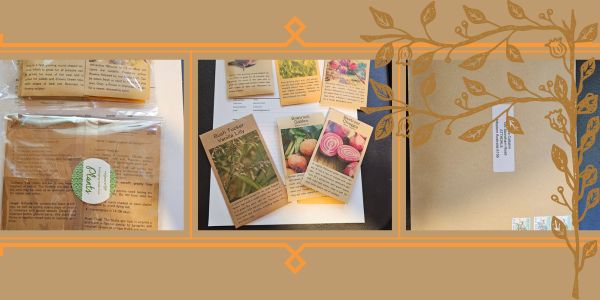
Not only are our seeds packed in recycled paper envelopes, we keep the theme going when we post out website orders. To protect your seeds from moisture and the letter box munchers (snails), we use a very special plastic free material made from plants. They are then put into recycled mailing envelopes. Green all the way ????????
Delivery Guarantee
We take great care to make sure your seeds arrive safely. If your order is lost or damaged in transit, we’ll happily send a replacement. Unfortunately, we can’t replace or refund orders that arrive later than the estimated delivery date, as delays can sometimes occur that are outside our control.
Please note that all dispatch and delivery times listed are estimates only. While we do our best to post promptly, delivery timeframes can vary due to postal service delays, weather events, or other unforeseen circumstances. We’re unable to take responsibility for any loss, damage, or cost that results from a late delivery.
An order is not considered missing until at least 20 business days have passed from the postage date. You’ll receive an email once your seeds have been posted, letting you know they’re on their way. If you don’t see it in your main inbox, please check your Spam or Promotions folders as sometimes our emails like to hide there.

See all our verified customer reviews on our official CusRev profile.