



Broccoli Spigariello
$4.95
Brassica Oleracea
- Seed Count 500
- Leaf Broccoli
- Biennial
In stock
Description
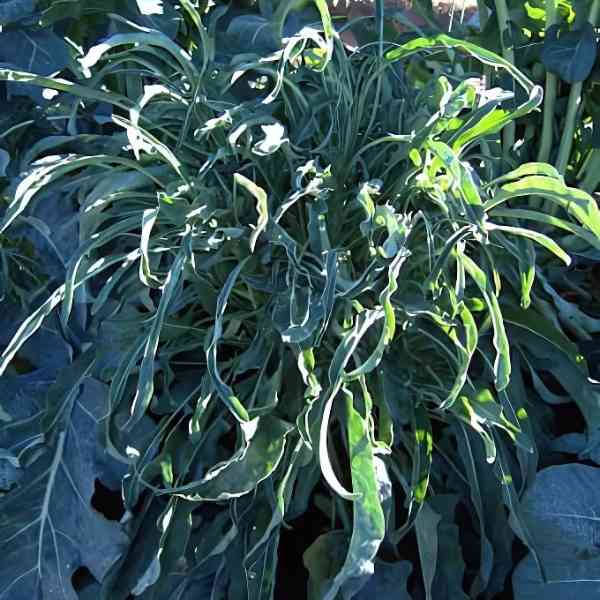
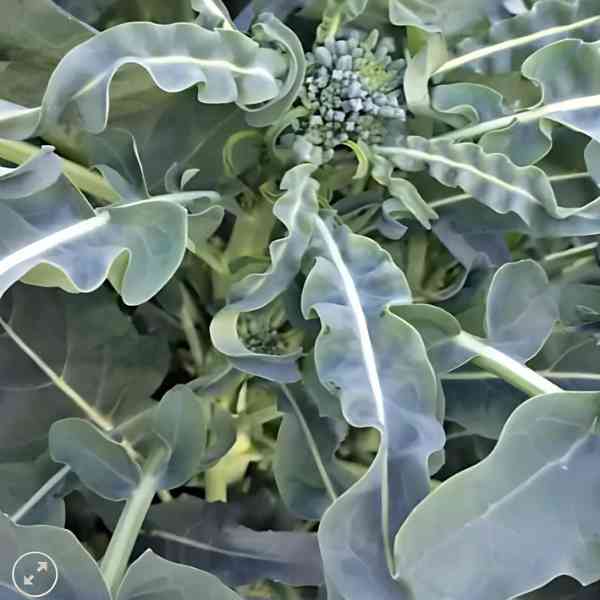
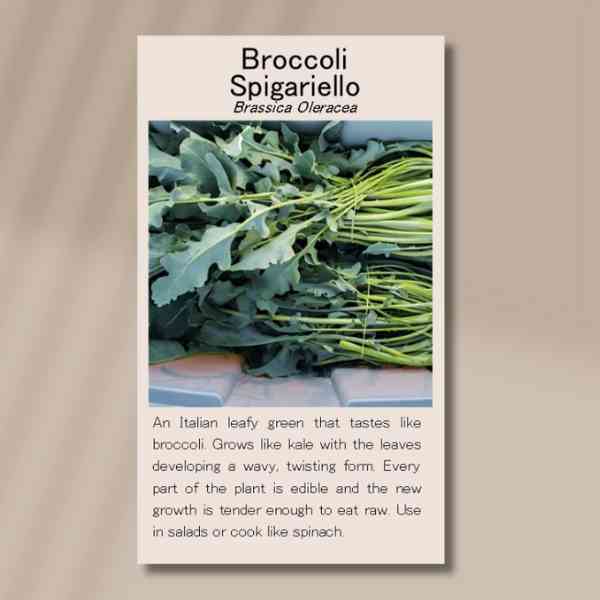
Broccoli Spigariello is an Italian leafy green that tastes a lot like broccoli. But unlike broccoli, you eat the leaves instead of the flowers. The plant grows just like kale, but produces small broccoli-like florets late in the season. Every part of the plant is edible and the new growth is tender enough to eat raw right off the plant.
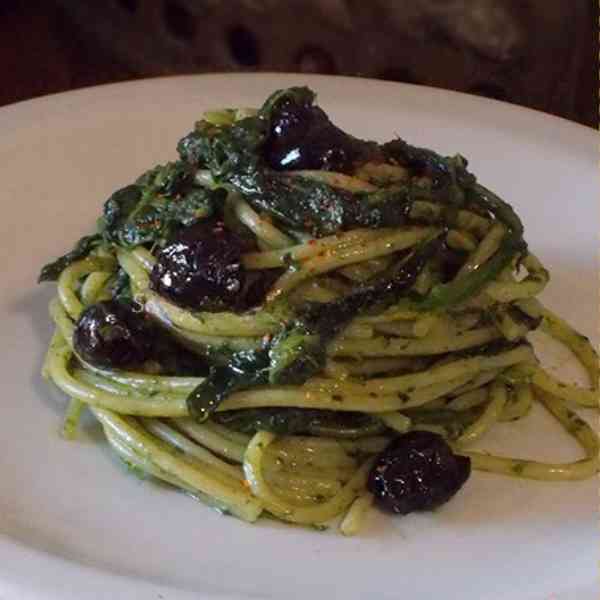
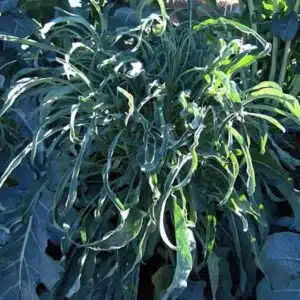
While often likened to rapini in that it does not make a central broccoli “head”, it is much less pungent with a bigger and more heavily branching frame. The narrow, very dark green leaves, develop a wonderful wavy, curvy, twisting form as the plant matures, making for a striking bunch at the market and beautiful addition to braises, sautés, pizzas, and soups.
The hearty flavour is something of a cross between broccoli leaves and Tuscan kale and is perfect for rustic Italian cuisine. Somewhat unusual in the Brassica family, it has white flowers, suggesting that it originally came to southern Italy from Asia as a descendant of Chinese broccoli.
It’s very easy to grow. If you don’t give in to temptation and eat it prematurely, each seedling will grow into a big, sturdy plant. I think of them as broccoli trees. You harvest the leaves as you need them, leaving the plant intact to generate more leaves. Eventually, it produces the tiny white flowers that the bees love.
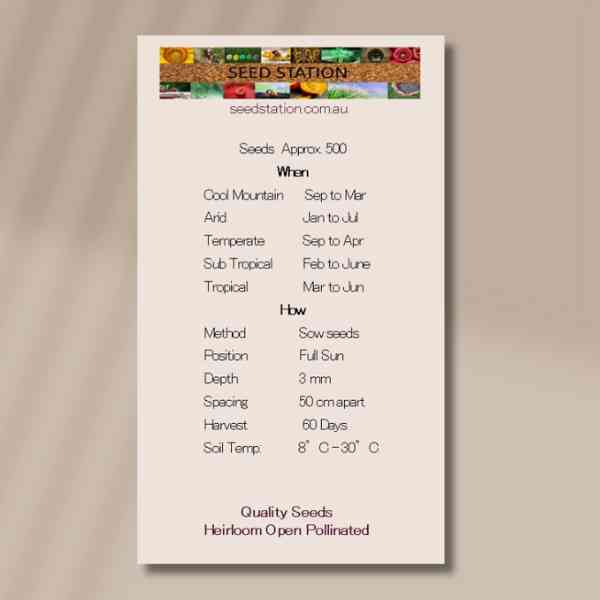
| Method: Sow direct | Soil Temp: 7°C - 30°C |
| Cool Mountain: Sep - Mar | Position: Full sun |
| Arid: Jan - Jul | Row Spacing: 50cm apart |
| Temperate: Sep - Apr | Planting Depth: 3mm |
| Sub Tropical: Feb - Jun | Harvest: 60 Days |
| Tropical: Mar - Jun | Plant Height: 1.2 m |
🥦 Broccoli Leaf Grow Guide
Broccoli leaf is grown mainly for its broad, nutritious leaves rather than large flower heads. It is a useful leafy green for home gardens because the leaves can be harvested gradually over a long period, making it more forgiving than heading broccoli. The flavour is similar to broccoli and kale, with a mild earthy sweetness when picked young. Mature leaves are stronger and better cooked.
This crop is best grown with steady moisture, fertile soil, good spacing, and regular picking. Like other leafy brassicas, it grows quickly when conditions are right but can become tough, pest-damaged, or stressed if neglected. The main goal is to encourage strong leafy growth without overcrowding or letting the plant struggle.
🌱 Sowing in Trays Versus Direct Sowing
Broccoli leaf can be direct sown, but sowing in trays or small cells is usually the best method. Tray sowing gives better control over germination, moisture, pests, and early growth. Young seedlings are attractive to slugs, snails, birds, caterpillars, and beetles, so raising them in a protected area gives them a stronger start.
Sow the seed into a fine seed-raising mix and cover lightly. Keep the mix evenly moist but not soggy. Place the tray in bright light with good airflow. Once seedlings have developed a few true leaves and are sturdy enough to handle, transplant them into the garden. Handle seedlings gently by the leaves rather than the stem.
Direct sowing can work well in a prepared bed if pest pressure is low. Sow shallowly into moist soil, cover lightly, and keep the surface damp until seedlings emerge. Thin early so the strongest plants have room to grow.
For most gardeners, tray sowing is the more reliable method, especially because broccoli leaf is often grown for repeated harvests and benefits from a strong, healthy start.
💧 Seed Pre-Treatment
Broccoli leaf seed does not need special pre-treatment. There is no need to soak, chill, scarify, or treat the seed before sowing.
Fresh seed usually germinates readily when sown shallowly into moist seed mix or fine garden soil. The most important factors are consistent moisture, good seed contact with the soil, and protection from drying out.
Avoid burying the seed too deeply. A light covering is enough. If the soil surface dries out during germination, seedlings may fail to emerge evenly.
🌏 Soil and Position
Broccoli leaf grows best in fertile, well-drained soil that holds moisture. The soil should be rich in organic matter, loose enough for strong root growth, and not compacted. Before planting, improve the bed with compost, aged manure, worm castings, or well-rotted organic matter.
The best position is full sun to light part shade. Strong light encourages sturdy plants and good leaf production. In very hot exposed gardens, light afternoon shade can help reduce stress and keep leaves tender.
Avoid planting into poor, dry, compacted, or waterlogged soil. Dry soil causes slow growth and tougher leaves, while waterlogged soil can lead to root problems. A raised bed is useful if drainage is poor.
For containers, choose a pot or trough at least 25 to 30 cm deep. Use a quality potting mix and keep moisture steady, as leafy greens in containers can dry out quickly.
🪴 Care and Maintenance
Broccoli leaf needs steady watering to produce tender leaves. Keep the soil evenly moist, not saturated. Dry stress can make the leaves tougher and stronger tasting. Mulching around the plants helps conserve moisture, protect shallow roots, and reduce weed competition.
Feed regularly with compost, worm castings, seaweed solution, or a balanced organic liquid fertiliser. Because this crop is grown for leaves, it responds well to fertile soil, but avoid overfeeding with very strong fertiliser. Too much soft growth can attract aphids and other pests.
Space plants well so air can move between them. Crowded plants are more prone to pests, mildew, and weak growth. Remove yellowing or damaged lower leaves to keep plants tidy and reduce hiding places for slugs and snails.
Inspect leaves often, especially the undersides. Caterpillars and aphids can build up quickly on leafy brassicas. Fine insect netting is one of the best ways to protect plants from chewing insects while still allowing healthy growth.
🌼 Companion Planting Guide
Broccoli leaf grows well with companions that attract beneficial insects, cover soil lightly, or use garden space efficiently without crowding the crop.
Good companions include lettuce, beetroot, celery, spring onion, garlic chives, coriander, dill, calendula, alyssum, marigold, nasturtium, peas, and bush beans. Flowering herbs such as dill and coriander help attract beneficial insects. Alyssum and calendula are also useful near brassicas because they bring pollinators and small predator insects into the garden.
Lettuce can work well nearby because it enjoys similar moisture and can grow in the partial shade created by taller broccoli leaf plants. Spring onions and garlic chives are useful upright companions that do not take up much space.
Avoid planting broccoli leaf too close to large spreading crops such as pumpkin, melon, or vigorous cucumber, as they can smother it. Also avoid crowding it with too many related leafy brassicas in one small bed, as this can encourage pest build-up.
🍽️ How to Harvest
Broccoli leaf can be harvested once the plant has enough leaves to keep growing strongly. Pick the outer leaves first, leaving the central growing point intact. This allows the plant to continue producing new leaves.
Young leaves are tender and suitable for quick cooking, stir-fries, soups, omelettes, and steaming. Older leaves are still useful, but the midrib can become firm. Remove the thick central rib from mature leaves before cooking if needed.
Harvest regularly to encourage fresh growth. Do not strip the plant completely unless you are finishing the crop. A good rule is to take a few leaves from each plant rather than taking too much from one plant at once.
The leaves are best used fresh, but they can also be blanched and frozen. Wash well before use, especially if grown near mulch or soil splash.
⚠️ Common Issues and Fixes
| Issue | Likely Cause | Fix |
|---|---|---|
| Poor germination | Seed buried too deeply, dry soil, or old seed | Sow shallowly, keep evenly moist, and use fresh seed |
| Seedlings eaten overnight | Slugs, snails, birds, or beetles | Protect seedlings with netting, barriers, or covers |
| Tall, weak seedlings | Not enough light or overcrowding | Move to brighter light and thin or pot on early |
| Leaves full of holes | Caterpillars, beetles, slugs, or snails | Inspect often, hand-pick pests, and use fine insect netting |
| Aphids on new growth | Soft growth, overcrowding, or pest pressure | Spray off with water, improve airflow, and encourage beneficial insects |
| Yellow lower leaves | Natural ageing, low nitrogen, or water stress | Remove old leaves, feed gently, and water consistently |
| Tough leaves | Dry stress, poor soil, or leaves left too long | Improve watering, mulch well, and harvest younger leaves |
| Purple or reddish leaf tint | Cold stress or nutrient stress | Feed with compost or liquid fertiliser and keep growth steady |
| Root problems | Waterlogged soil or poor drainage | Improve drainage, use raised beds, and avoid overwatering |
| Plants flowering early | Stress, crowding, or irregular watering | Keep plants evenly watered, space well, and harvest regularly |
| Mildew or leaf disease | Poor airflow, overhead watering, or overcrowding | Increase spacing, water at soil level, and remove affected leaves |
🌾 Seed Saving Guide
Broccoli leaf can be saved for seed if you allow selected plants to complete their full life cycle. Instead of harvesting every leaf, choose the strongest plants and let them mature. Select plants with healthy growth, good leaf flavour, strong stems, pest resistance, and slow flowering.
Do not save seed from weak, diseased, badly pest-damaged, or poor-flavoured plants. Seed saving is a selection process, so the quality of the parent plant matters.
Once mature, the plant will send up flowering stems. Small yellow flowers will form, followed by long narrow seed pods. Let the pods develop fully and begin drying on the plant. The pods are ready when they turn dry, pale brown, and brittle.
Watch the pods carefully, as very dry pods can split and drop seed. If rain, wind, or birds become a problem, cut the drying stems and hang them upside down in a dry, airy, sheltered place. Place a paper bag, sheet, or tray underneath to catch falling seed.
When the pods are fully dry, rub them gently between your hands to release the seed. Remove pieces of pod, stem, and chaff. Make sure the seed is completely dry before storing.
Store seed in a labelled envelope or jar in a cool, dry, dark place. Label it with the crop name, leaf type, and collection year.
Broccoli leaf can cross with closely related brassicas flowering nearby. For more reliable seed, save seed from one chosen type at a time, or prevent related crops from flowering at the same time. In a small home garden, the simplest method is to allow only the plants you want seed from to flower and remove flower stems from nearby related crops.
🌿 Final Thoughts
Broccoli leaf is a practical and productive leafy green for gardeners who want regular harvests rather than waiting for one main head. It is nutritious, versatile in the kitchen, and easier to harvest over time than many heading crops.
Tray sowing is usually the best method because it protects young seedlings and gives them a stronger start. No special seed treatment is needed, and the crop grows well when given fertile soil, steady moisture, good spacing, and pest protection.
With regular picking and simple care, broccoli leaf can provide generous harvests of tender greens for steaming, stir-fries, soups, and everyday cooking.
1 review for Broccoli Spigariello

Postage Charge
Orders under $40 attract a $5.50 shipping charge. Orders $35 and above have free shipping.
*** We cannot deliver to Parcel Lockers ***
Order Times
Seed orders are normally dispatched within three business days. You will receive an email when seeds are mailed out.
Postage Days
Seeds are mailed out Tuesday to Friday at 1pm. Except for the Friday of long weekends.
Postage Times
WA 2-3 Days: SA,NT 3-5 Days: NSW, ACT, QLD, VIC: 5-7 Days
Carrier
We use Australia Post Letter Postage for the majority of orders.
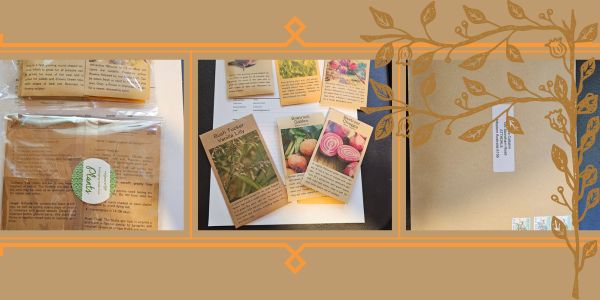
Not only are our seeds packed in recycled paper envelopes, we keep the theme going when we post out website orders. To protect your seeds from moisture and the letter box munchers (snails), we use a very special plastic free material made from plants. They are then put into recycled mailing envelopes. Green all the way ????????
Delivery Guarantee
We take great care to make sure your seeds arrive safely. If your order is lost or damaged in transit, we’ll happily send a replacement. Unfortunately, we can’t replace or refund orders that arrive later than the estimated delivery date, as delays can sometimes occur that are outside our control.
Please note that all dispatch and delivery times listed are estimates only. While we do our best to post promptly, delivery timeframes can vary due to postal service delays, weather events, or other unforeseen circumstances. We’re unable to take responsibility for any loss, damage, or cost that results from a late delivery.
An order is not considered missing until at least 20 business days have passed from the postage date. You’ll receive an email once your seeds have been posted, letting you know they’re on their way. If you don’t see it in your main inbox, please check your Spam or Promotions folders as sometimes our emails like to hide there.
See all our verified customer reviews on our official CusRev profile.