

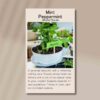

Mint Peppermint
$4.95
Mentha Piperita
- Seed Count 250
- Culinary And Medicinal Herb
- Perennial
Out of stock
Email when stock available
Description
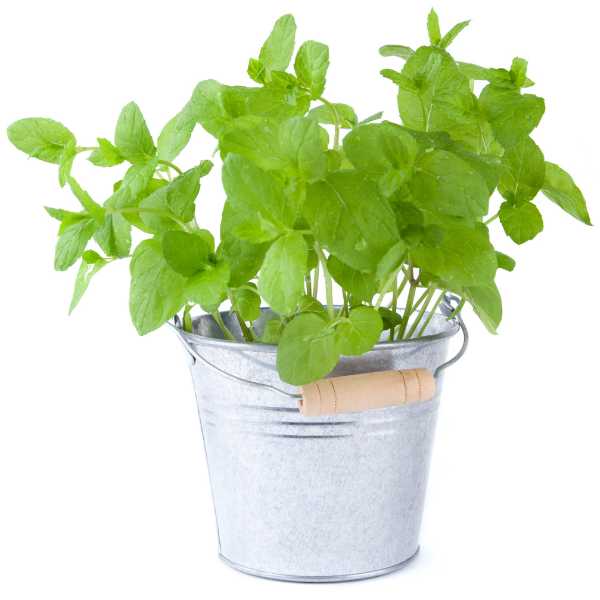
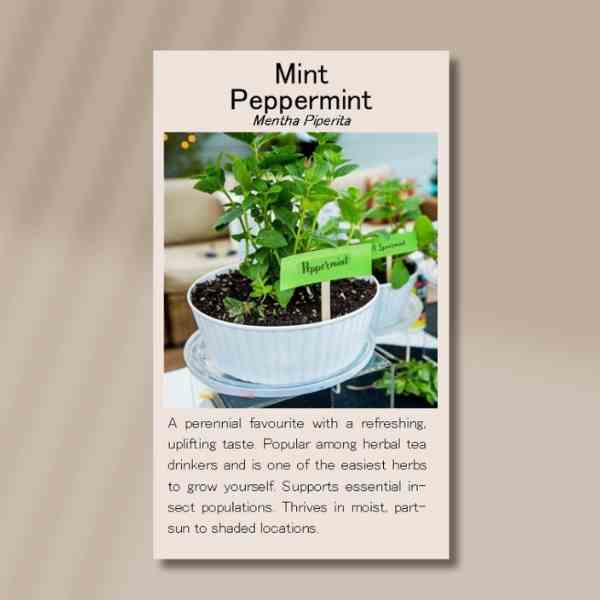
Mint Peppermint is an essential perennial herb to have on hand. It’s bold in flavour, easy to grow, and endlessly versatile.
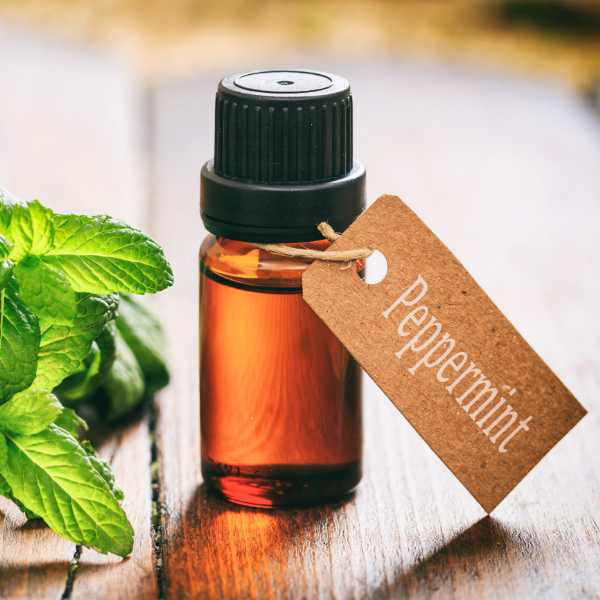
Peppermint is used in everything from simple iced teas to decadent desserts. It’s right at home in sweet and savoury dishes alike, with leaves chopped into chocolate mousse, tossed through fruit salads, or paired with peas and feta in a spring green risotto. Then of course, there are the cocktails, Schnapps, Mint Juleps, Mojitos would be incomplete without a sprig of fresh mint.
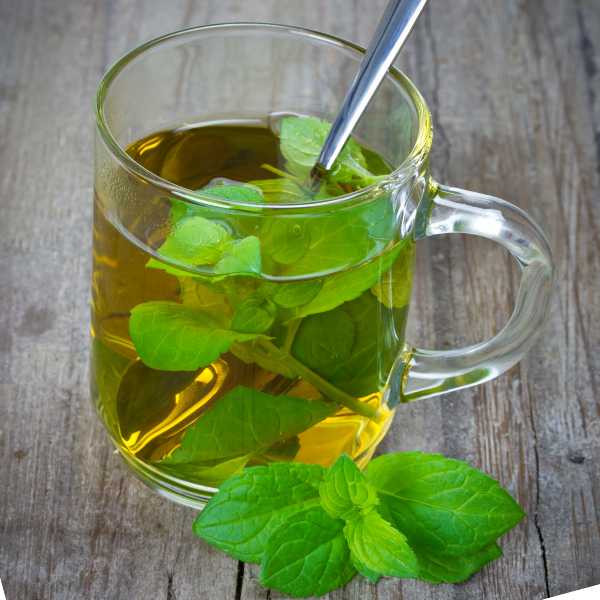
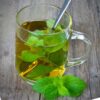
Among the many uses for peppermint, an herbal tea is probably the most treasured with it’s fresh, clean, and mildly sweet flavour. Drop a fresh sprig into hot water for a divine cup of tea or harvest and dry your leaves for later use. Dried peppermint keeps its flavour beautifully, making it a reliable cupboard staple. And if you enjoy blending your own herbal teas, you’ll find peppermint pairs beautifully with lemon balm, chamomile, or nettle.
Peppermint has a strong will to thrive and will happily spread wherever conditions suit it, which is why many gardeners choose to grow it in containers to keep it from overtaking garden beds.
It does particularly well in moist, partly shaded areas where the sun is dappled and the soil stays cool. It’s a smart way to make use of the shadier corners of your garden, or even to dress up a shady patio space with a bit of fragrance and life.
And if you’re planting to support bee and butterfly populations then peppermint deserves a spot. Some beekeepers grow peppermint in quantity to produce a fragrant, lightly flavoured honey. It takes a fair patch to make a noticeable difference in the honey’s flavour, but even a small planting will draw in foraging bees and support your local ecosystem.
| Method: Raise seedlings | Soil Temp: 21°C - 24°C |
| Cool Mountain: Sep - Dec | Position: Part to full sun |
| Arid: Jun-Jul, Apr-May | Row Spacing: 30 cm |
| Temperate: Aug-Nov, Mar-Jun | Planting Depth: 3 mm |
| Sub Tropical: Aug-Nov, Mar-Jun | Harvest: 90 Days |
| Tropical: Apr - Jul | Plant Height: 30 cm |
🌿 Mint Grow Guide
🌱 Overview
Mint is a vigorous, aromatic herb grown for its fresh leaves, cooling flavour, edible flowers, and excellent use in teas, salads, sauces, desserts, drinks, marinades, fruit dishes, herb butters, and savoury meals. It is one of the most useful kitchen herbs, but it is also one of the most determined spreaders in the garden.
Mint grows quickly once established and can form dense patches through creeping roots and stems. For this reason, it is often best grown in pots, troughs, raised planters, or contained garden areas. In open soil, it can spread beyond its intended space and become difficult to remove.
🌾 Sowing in Trays Versus Direct Sowing
Mint is best started in trays or small pots rather than sown directly into the garden. The seed is very fine, seedlings are tiny at first, and early growth is easier to manage in a controlled space. Tray sowing also protects young seedlings from slugs, snails, ants, birds, heavy rain, drying winds, and weed competition.
To sow in trays, fill a punnet, cell tray, or small pot with fine seed-raising mix. Moisten the mix first, then sprinkle the seed thinly over the surface. Mint seed should be surface sown or covered only with the faintest dusting of fine mix or vermiculite, about 1 mm deep. Press the seed gently onto the surface and water with a mist spray or from below so the seed is not washed into clumps.
Keep the mix evenly moist but not soggy. Bright indirect light is helpful, and the seed should not be buried deeply. Once seedlings are large enough to handle, transplant them into small pots and grow them on until they are strong.
Direct sowing is possible, but it is less reliable. Fine seed can dry out, wash away, be buried too deeply, or be overwhelmed by weeds before seedlings are visible.
Best method: tray sowing is strongly recommended for mint because the seed is tiny, germination can be uneven, and seedlings are easier to protect and thin in containers.
💧 Seed Pretreatment
Mint seed does not require pretreatment. No soaking, scarifying, smoke treatment, or special preparation is normally needed.
Because the seed is very small, soaking is not recommended. Wet seed becomes difficult to spread evenly and can clump together. The most important factors are fresh seed, surface sowing, gentle watering, light, and steady moisture.
If germination is slow, do not discard the tray too quickly. Mint seed can be uneven, and some seedlings may appear later than others.
🪴 Soil and Position
Mint grows best in fertile, moisture-retentive, well-drained soil. It enjoys compost-rich soil that stays evenly moist, but it does not like sour, stagnant, waterlogged conditions. A good herb or vegetable potting mix is ideal for containers.
Choose a position in morning sun, full sun with steady moisture, or part shade. In very hot exposed sites, part shade helps keep the leaves lush, soft, and aromatic. Too much deep shade can make plants weak and leggy, while dry full sun can cause small, tough leaves.
For pots, use a wide container with drainage holes. Mint spreads sideways, so a broad pot is better than a narrow one. A pot also makes it easier to keep the plant contained and prevents roots from running through garden beds.
If planting in the ground, consider sinking a large bottomless pot or root barrier into the soil to limit spread. Even then, check regularly for escaping stems.
🌿 Care and Maintenance
Mint likes consistent moisture. Water regularly so the soil stays lightly moist, especially in pots. Do not let container-grown mint dry out completely, as this can make leaves small, tough, and less pleasant. At the same time, avoid leaving pots sitting in water for long periods.
Mulch around garden-grown mint with straw, sugarcane mulch, composted leaves, or fine bark. Mulch helps conserve moisture and keeps roots cool. In pots, a light mulch can also reduce drying.
Feed lightly but regularly during active growth. Compost, worm liquid, seaweed solution, or a mild liquid herb fertiliser can help maintain leafy growth. Avoid excessive feeding, as very soft growth can attract aphids and reduce flavour intensity.
Regular cutting is the best maintenance. Harvesting encourages fresh shoots and prevents plants from becoming woody, tangled, or tired. Trim stems back often to keep the plant bushy.
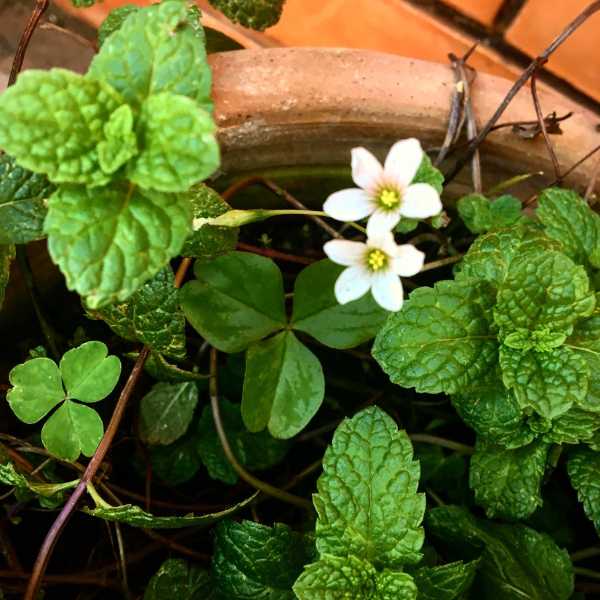
Remove flower stems if you want the plant to keep producing tender leaves. Flowering is useful for bees and seed saving, but once plants flower heavily, leaf quality can decline.
Mint can become congested in pots. Refresh container plants by lifting the root mass, removing old woody sections, and replanting healthy young runners into fresh mix. This keeps plants productive and prevents the pot from becoming root-bound.
🌼 Companion Planting Guide
Mint is useful in companion planting, but it should usually be grown in pots near other plants, not directly among them. Its strong scent may help confuse some pests, and its flowers attract bees, hoverflies, and other beneficial insects. However, its spreading roots can compete aggressively if planted loose in garden beds.
Good companions include tomatoes, capsicum, eggplant, peas, beans, cabbage, broccoli, kale, lettuce, spinach, parsley, coriander, dill, chives, calendula, alyssum, marigold, nasturtium, strawberries, and fruit trees.
Mint in pots can be placed near brassicas to add scent diversity, near fruiting crops to attract pollinators when flowering, or near outdoor sitting areas for fragrance. It also works well beside water bowls or damp herb corners where other Mediterranean herbs would struggle.
Avoid planting mint directly beside delicate herbs such as thyme, oregano, lavender, rosemary, and sage, as these prefer drier, leaner soil and can be overwhelmed by mint’s spreading habit. Also avoid planting mint loose in small vegetable beds unless you are prepared to control it firmly.
✂️ How to Harvest
Harvest mint once plants are well established and have plenty of leafy stems. Pick individual leaves or cut whole stems just above a leaf node. Cutting stems encourages branching and keeps the plant compact.
The best leaves are fresh, green, and aromatic. Young leaves are softer and milder, while older leaves can be stronger. Harvest in the morning once the foliage is dry for the best flavour.
Use mint fresh in teas, salads, fruit dishes, yoghurt sauces, chutneys, dressings, desserts, drinks, rice dishes, peas, potatoes, and lamb or vegetable dishes. Leaves can also be frozen in ice cubes or chopped and frozen for later cooking.
To dry mint, cut healthy stems before the plant becomes old or heavily flowered. Tie small bunches and hang them upside down in a dry, shaded, airy place. Once crisp, strip the leaves from the stems and store them in an airtight jar away from light and moisture.
For the best flavour, harvest regularly and prevent the plant from becoming tired, woody, or overcrowded.
⚠️ Common Issues and Fixes
| Issue | Likely Cause | Fix |
|---|---|---|
| Poor germination | Old seed, deep sowing, dry surface, or rough watering | Use fresh seed, surface sow, mist gently, and keep evenly moist |
| Seedlings collapse | Damping off from soggy mix or poor airflow | Use clean seed mix, avoid overwatering, and improve ventilation |
| Leggy seedlings | Not enough light or overcrowding | Move to brighter light and thin seedlings carefully |
| Seedlings disappear | Slugs, snails, ants, birds, or heavy rain | Start in trays and protect young plants |
| Weak flavour | Too much shade, overfeeding, or very soft growth | Give brighter light, reduce feeding, and harvest mature fresh leaves |
| Small tough leaves | Dry soil, heat stress, or root-bound pots | Water consistently, move to light shade if needed, and repot |
| Yellow leaves | Waterlogging, nutrient stress, or old growth | Improve drainage, feed lightly, and remove tired stems |
| Brown leaf edges | Drying out, hot wind, or salt build-up in pots | Water deeply, shelter plants, and flush pots occasionally |
| Aphids | Soft new growth or stressed plants | Hose off gently, encourage ladybirds, and avoid excessive feeding |
| Spider mites | Hot, dry conditions | Increase humidity around pots, water consistently, and remove badly affected growth |
| Rust spots | Fungal disease encouraged by humidity and poor airflow | Remove affected leaves, improve airflow, and avoid overhead watering |
| Powdery mildew | Crowding, poor airflow, or moisture stress | Trim plants, improve spacing, and water at soil level |
| Plant spreading too far | Natural creeping root habit | Grow in pots, cut back runners, and remove escaped stems early |
| Pot becomes root-bound | Vigorous root growth filling the container | Divide and refresh with new potting mix |
| Leaves lose quality after flowering | Plant putting energy into flowers and seed | Cut back flower stems for leaf production or leave selected stems for seed saving |
🌰 Detailed Seed Saving Guide
Saving mint seed is possible, but seed-grown plants can be variable. If you want a plant exactly like the parent, division or cuttings are usually more reliable. If you enjoy variation and want to select your best seedlings, seed saving can be worthwhile.
Choose the healthiest plants with the best aroma, strongest flavour, good leaf size, and strong growth. Avoid saving seed from weak, diseased, bland, or poor-performing plants.
Allow selected stems to flower fully. The flowers form in small clusters or spikes and are attractive to bees and other insects. After flowering, the flower heads will begin to dry and form tiny seed.
Leave the flower heads on the plant until they become dry and papery. Watch closely, because the seed is very small and can be lost easily. If wind or rain is a problem, place a paper bag or fine mesh bag over drying flower heads.
When the seed heads are mostly dry, cut them into a paper bag. Place the bag in a dry, shaded, airy location for several days so the flower heads finish drying completely. Do not use plastic, as trapped moisture can cause mould.
Once fully dry, rub the flower heads gently between your fingers over a white plate or sheet of paper. The seed will be tiny and mixed with fine chaff. Remove larger pieces by hand, then gently blow away the lighter debris or use a very fine sieve. Work slowly, as mint seed is easy to lose.
Spread the cleaned seed on a plate for another week to ensure it is completely dry. Store it in a labelled paper envelope inside an airtight jar. Keep it somewhere cool, dark, and dry. Add a silica gel sachet if humidity is an issue.
Label the packet with the plant name, leaf scent, flavour notes, collection date, and useful observations such as “strong spearmint flavour”, “best tea plant”, “large leaves”, or “compact pot habit”.
When sowing saved seed, raise several seedlings and taste only once plants are well established and cleanly grown. Keep the best-flavoured plants and remove those with weak aroma or poor growth.
🌿 Final Thoughts
Mint is one of the most useful herbs to grow, but it is best treated as a contained, regularly harvested plant rather than allowed to roam freely through the garden. It rewards simple care with abundant leaves, fragrant stems, edible flowers, and excellent kitchen value.
For the best results, start seed in trays, surface sow, keep moisture steady, grow in fertile well-drained soil, use pots for control, harvest often, and refresh old plants regularly. With good containment and regular cutting, mint becomes a generous and dependable herb for teas, cooking, drinks, desserts, and everyday garden use.
2 reviews for Mint Peppermint

Postage Charge
Orders under $40 attract a $5.50 shipping charge. Orders $35 and above have free shipping.
*** We cannot deliver to Parcel Lockers ***
Order Times
Seed orders are normally dispatched within three business days. You will receive an email when seeds are mailed out.
Postage Days
Seeds are mailed out Tuesday to Friday at 1pm. Except for the Friday of long weekends.
Postage Times
WA 2-3 Days: SA,NT 3-5 Days: NSW, ACT, QLD, VIC: 5-7 Days
Carrier
We use Australia Post Letter Postage for the majority of orders.
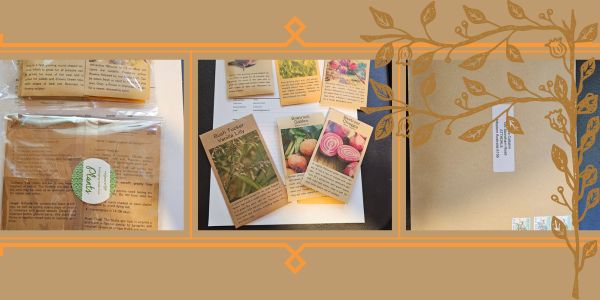
Not only are our seeds packed in recycled paper envelopes, we keep the theme going when we post out website orders. To protect your seeds from moisture and the letter box munchers (snails), we use a very special plastic free material made from plants. They are then put into recycled mailing envelopes. Green all the way ????????
Delivery Guarantee
We take great care to make sure your seeds arrive safely. If your order is lost or damaged in transit, we’ll happily send a replacement. Unfortunately, we can’t replace or refund orders that arrive later than the estimated delivery date, as delays can sometimes occur that are outside our control.
Please note that all dispatch and delivery times listed are estimates only. While we do our best to post promptly, delivery timeframes can vary due to postal service delays, weather events, or other unforeseen circumstances. We’re unable to take responsibility for any loss, damage, or cost that results from a late delivery.
An order is not considered missing until at least 20 business days have passed from the postage date. You’ll receive an email once your seeds have been posted, letting you know they’re on their way. If you don’t see it in your main inbox, please check your Spam or Promotions folders as sometimes our emails like to hide there.
See all our verified customer reviews on our official CusRev profile.
See all our verified customer reviews on our official CusRev profile.