




Chocolate Lily
$6.59
Arthropodium Strictum
- 10 Seeds
- Drought Tolerant
- Perennial Shrub
In stock
Description
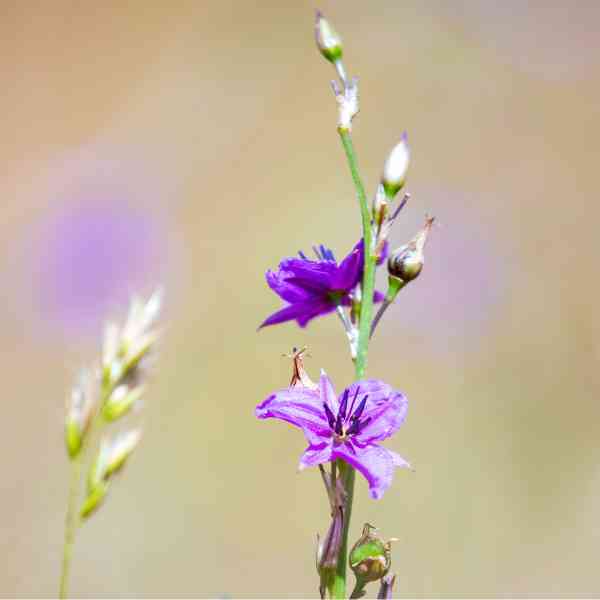
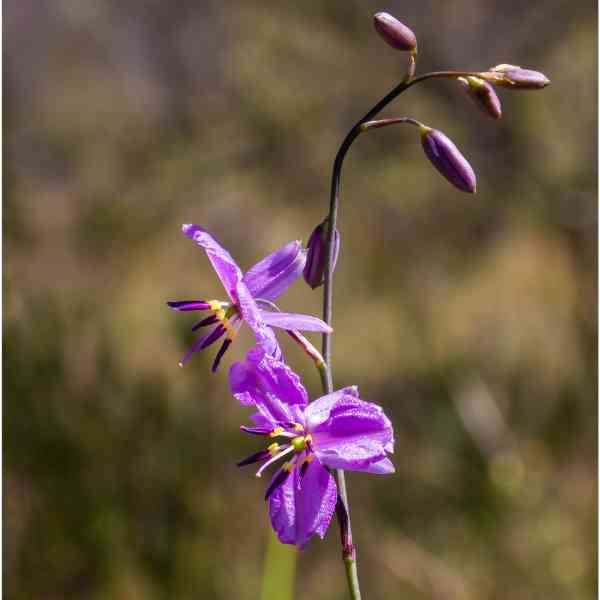
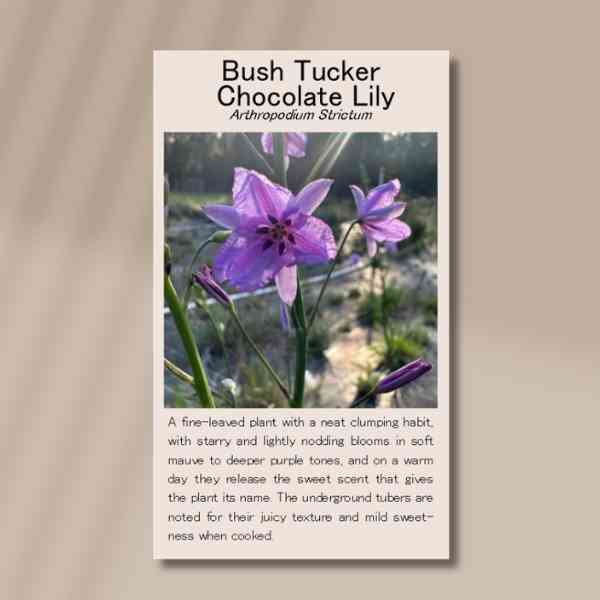
The Chocolate Lily a modest, fine-leaved plant with a neat clumping habit, with starry and lightly nodding blooms in soft mauve to deeper pink-purple tones, and on a warm day they release the sweet scent that gives the plant its name. It is native to south-eastern Australia, occurring naturally through parts of South Australia, Victoria, New South Wales and Tasmania, where it is found in grassy plains, open woodland and similar landscapes.
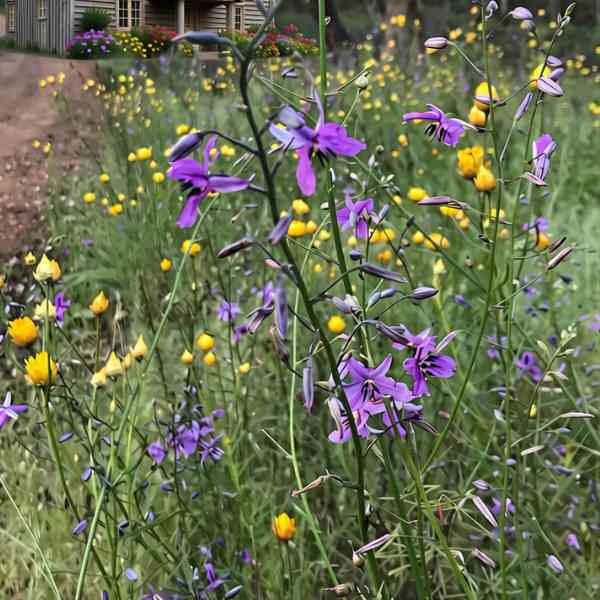
In form, the leaves are narrow, grassy and upright to lightly arching, forming a tidy tuft that sits comfortably among other perennials and native plantings. Flower stems rise above the foliage and can carry a graceful, airy display that never feels heavy or crowded. It brings movement, light and detail to a planting without becoming coarse or overwhelming. In a smaller home garden, that makes it especially useful because it slips easily between shrubs, native grasses and flowering companions without asking for too much space. It is also drought tolerant which adds to its practicality.
Beyond its scented mauve flowers, Arthropodium Strictum chocolate lily has a long history as a traditional food plant, with small underground tubers that were eaten by Indigenous peoples. The tubers are noted for their juicy texture and mild sweetness, especially when cooked, adding another layer of interest to this beautifully ornamental Australian native.
| Method: Start in Trays | Soil Temp: 10°C - 20°C |
| Cool Mountain: Mar - Apr | Position: Full sun - Part Shade |
| Arid: Mar - May | Row Spacing: 40cm apart |
| Temperate: Mar - May | Planting Depth: 5mm |
| Sub Tropical: Apr - Jun | Harvest: 365 days |
| Tropical: NA | Plant Height: 80cm |
Chocolate Lily Grow Guide
🌱 Overview
Chocolate Lily is a graceful, tuber-forming perennial grown for its delicate mauve to purple flowers and sweet chocolate-like scent. It suits naturalistic plantings, rockeries, meadow-style beds, pots, and open garden spaces where low-growing flowers can weave between grasses and small herbs. It is also valued as a bush food plant, with edible tubers that should be harvested carefully so the patch can continue growing year after year.
🌿 Sowing in Trays vs Direct Sowing
Tray sowing is the best method for Chocolate Lily seed. The seed is small, seedlings can be fine and slow at first, and trays give you better control over moisture, weeds, and losses from slugs, birds, ants, and soil crusting.
Use a free-draining native seed-raising mix, press seed lightly onto the surface, and cover with only a very fine layer of mix or washed sand. Keep the mix lightly moist, never soggy, and place the tray somewhere bright with gentle protection.
Direct sowing can work in a weed-free, prepared wildflower bed, especially if you are trying to create a natural drift. However, it is less reliable because tiny seedlings are easily outcompeted. For direct sowing, rake the soil to a fine surface, remove weeds thoroughly, scatter seed thinly, press it into the soil, and protect the area from disturbance.
Once tray-grown seedlings are large enough to handle, move them into deeper tubes or small pots so their roots and future tubers can develop. Transplant with care and avoid teasing the roots apart too roughly.
🔥 Seed Pre-Treatment
No strict pre-treatment is required. Fresh seed is usually the most important factor for success, as older seed may germinate less evenly.
A light smoke-water soak can be trialled as an optional boost, but it should not be treated as essential. Avoid harsh treatments such as boiling water, sanding, or nicking, as the seed does not need hard-coat scarification.
🪴 Soil and Position
Chocolate Lily performs best in well-drained soil with good light. It can grow in full sun or part shade, and it is often found in open grassy places, woodland edges, and rocky, well-drained sites.
In garden conditions, it appreciates a loose loam or sandy loam improved with compost, provided the soil still drains freely. Heavy clay should be opened with coarse sand, fine gravel, composted bark, or raised-bed planting.
For pots, choose a container at least 20 cm deep so the tubers have room to form. Use a free-draining native or low-phosphorus potting mix. Do not leave pots sitting in saucers of water, as tubers dislike stagnant wet conditions.
💧 Care and Maintenance
Chocolate Lily is fairly low-maintenance once established. Water young plants regularly while they are settling in, then reduce watering once they are growing strongly. Established plants tolerate dry periods, especially if grown in well-drained soil, but they will look better and flower more strongly with occasional deep watering during active growth.
Feed lightly. A small amount of compost or a gentle native plant fertiliser is enough. Too much rich fertiliser can encourage soft growth at the expense of flowers and tuber strength.
Allow the leaves to complete their natural cycle. Do not cut foliage back while it is still green, because the plant is feeding the underground tubers for the next flush of growth. Once foliage has fully browned, it can be trimmed away.
🌼 Companion Planting Guide
Chocolate Lily looks and grows best among fine grasses, small lilies, native daisies, low herbs, and open-textured groundcovers. These companions create a meadow-like setting without smothering the plant.
Good companions include wallaby grass, kangaroo grass, bluebells, billy buttons, flax lily, vanilla lily, bulbine lily, native violet, cut-leaf daisy, creeping saltbush, and small lomandra types. These plants support pollinators, create a natural layered look, and leave enough open space for Chocolate Lily to emerge.
Avoid pairing it with aggressive groundcovers, dense lawn grasses, thirsty exotics, or large shrubs that cast deep shade. The goal is light competition, open soil pockets, and good airflow.
🍽️ How to Harvest
The edible part is the underground tuber. Harvest only from strong, established plants, not young seedlings. The best practical sign is when the plant has naturally finished flowering and the foliage begins to die back. At this stage, energy has moved back into the tubers.
Use a hand fork or narrow trowel and loosen the soil gently around the clump. Lift only part of the tuber cluster, then replant some tubers immediately so the patch continues. Water the replanted section in well. Never strip a whole patch unless you are deliberately clearing that area.
Flowers may also be enjoyed for their scent, but leave plenty for pollinators and seed production.
⚠️ Common Issues and Fixes
| Issue | Likely Cause | Fix |
|---|---|---|
| Seed does not germinate | Old seed, uneven moisture, seed buried too deeply | Use the freshest seed available, sow shallowly, keep evenly moist, and be patient |
| Seedlings collapse | Mix too wet, poor airflow, fungal disease | Use free-draining mix, water from below, improve airflow, and avoid overcrowding |
| Weak, floppy growth | Too much shade or excess fertiliser | Move to brighter light and reduce feeding |
| Leaves yellow early | Water stress, poor drainage, or natural dieback | Check soil moisture and drainage before assuming disease |
| Tubers rot | Heavy wet soil or pot sitting in water | Improve drainage, raise the bed, or repot into a freer mix |
| Few flowers | Too much shade, young plants, overcrowding | Give more light, allow plants to mature, and divide crowded clumps carefully |
| Plants disappear | Natural dormancy, dry conditions, or tuber rot | Mark planting spots, avoid overwatering dormant pots, and check drainage |
| Seed heads vanish | Birds, ants, wind, or capsules splitting unnoticed | Bag ripening seed heads with fine mesh before they fully open |
🌾 Detailed Seed Saving Guide
To save seed, begin by choosing the strongest, healthiest plants with good flower colour, strong scent, and upright growth. Leave flowers on the plant so pollinators can do their work and seed capsules can form.
After flowering, watch for small rounded capsules. They are ready when they turn dry and begin to split. Check often, because ripe seed can drop quickly. For best results, place a fine mesh bag, organza bag, or paper bag loosely over the seed head once capsules are nearly dry. This catches seed while still allowing airflow.
Cut the dry stems and place them upside down in a paper bag. Keep the bag in a dry, airy place until the capsules release the seed. Rub the capsules gently between your fingers, then separate seed from chaff using a small sieve or by carefully blowing away the lighter debris.
Store seed in a labelled paper envelope inside an airtight jar. Add a small silica gel sachet if your storage area is humid. Keep it cool, dark, and dry. Label with the plant name, flower colour, collection location in your garden, and collection date.
For best results, sow saved seed while it is still fresh rather than holding it for many years. Keep a few seeds aside as backup, but treat fresh seed as your main crop.
🌟 Final Thoughts
Chocolate Lily is a beautiful choice for gardeners who enjoy subtle, scented flowers, edible native tubers, and meadow-style planting. It is not a plant to rush. Its best performance comes from fresh seed, careful early growing, open well-drained soil, and patience while the tubers build strength. Grow it in groups, let it self-seed lightly where suitable, harvest modestly, and always replant part of the clump so your patch becomes stronger over time.

Postage Charge
Orders under $40 attract a $5.50 shipping charge. Orders $35 and above have free shipping.
*** We cannot deliver to Parcel Lockers ***
Order Times
Seed orders are normally dispatched within three business days. You will receive an email when seeds are mailed out.
Postage Days
Seeds are mailed out Tuesday to Friday at 1pm. Except for the Friday of long weekends.
Postage Times
WA 2-3 Days: SA,NT 3-5 Days: NSW, ACT, QLD, VIC: 5-7 Days
Carrier
We use Australia Post Letter Postage for the majority of orders.
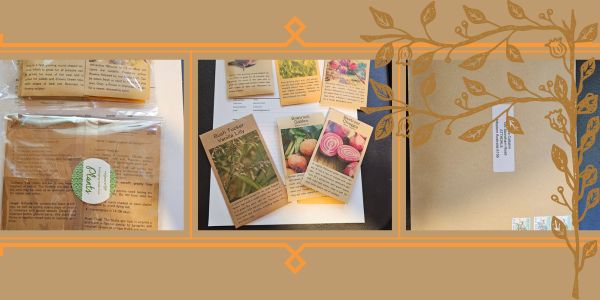
Not only are our seeds packed in recycled paper envelopes, we keep the theme going when we post out website orders. To protect your seeds from moisture and the letter box munchers (snails), we use a very special plastic free material made from plants. They are then put into recycled mailing envelopes. Green all the way ????????
Delivery Guarantee
We take great care to make sure your seeds arrive safely. If your order is lost or damaged in transit, we’ll happily send a replacement. Unfortunately, we can’t replace or refund orders that arrive later than the estimated delivery date, as delays can sometimes occur that are outside our control.
Please note that all dispatch and delivery times listed are estimates only. While we do our best to post promptly, delivery timeframes can vary due to postal service delays, weather events, or other unforeseen circumstances. We’re unable to take responsibility for any loss, damage, or cost that results from a late delivery.
An order is not considered missing until at least 20 business days have passed from the postage date. You’ll receive an email once your seeds have been posted, letting you know they’re on their way. If you don’t see it in your main inbox, please check your Spam or Promotions folders as sometimes our emails like to hide there.

Reviews
There are no reviews yet