


Hacketts Hop Bush
$6.59
Dodonaea Hackettiana
- 35 Seeds
- Drought Tolerant
- Perennial Shrub
In stock
Description
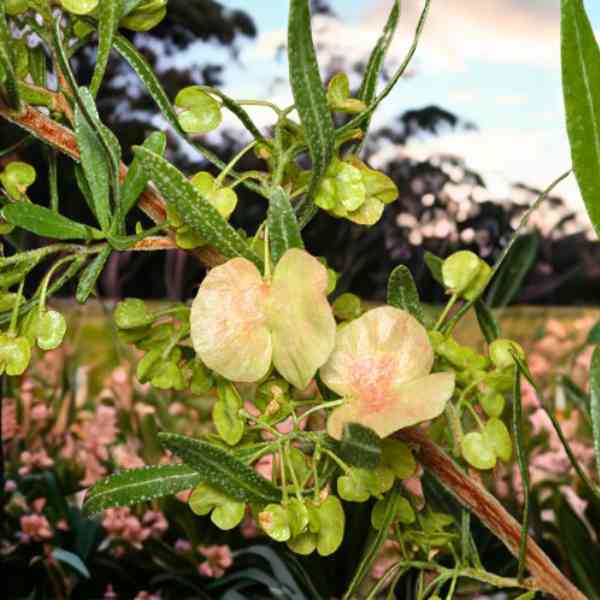
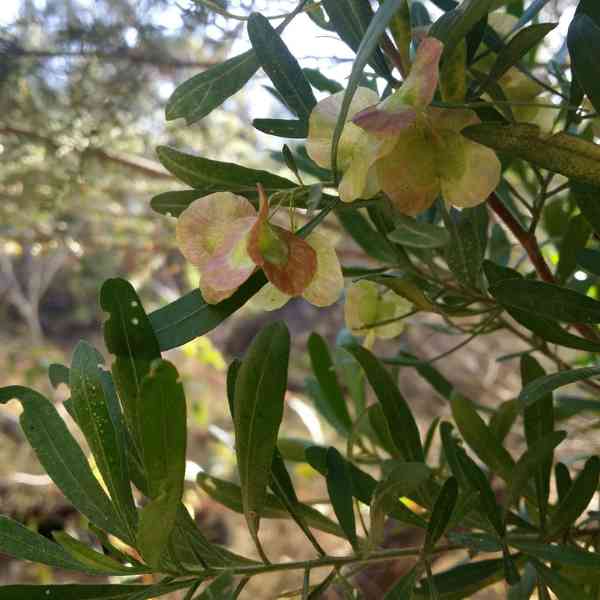
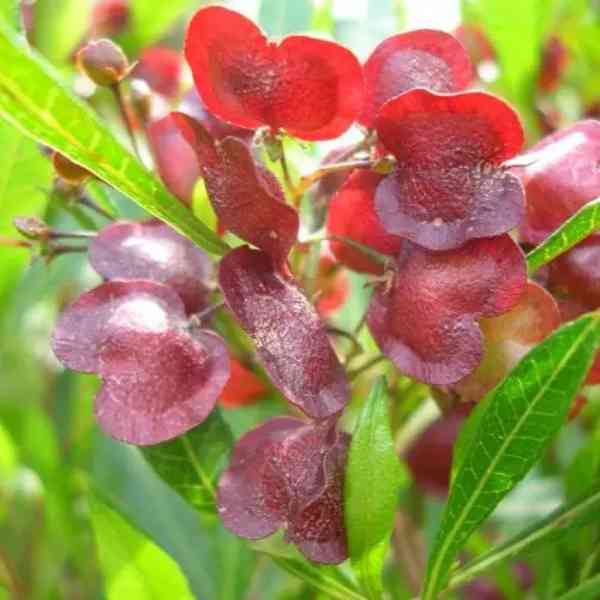
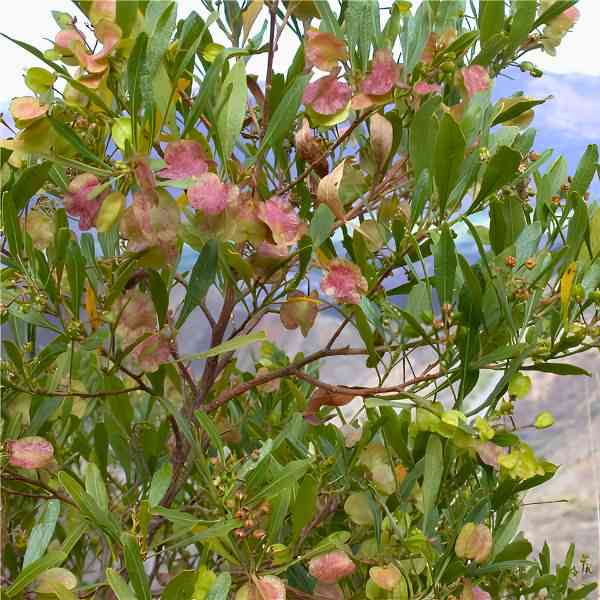
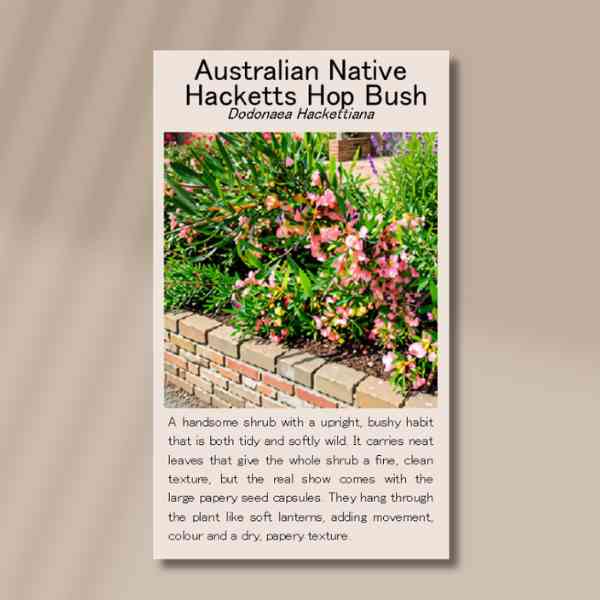
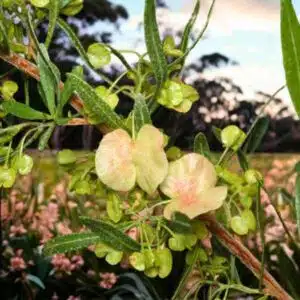
Hacketts Hop Bush is a handsome 3 to 5 metre shrub with a naturally upright, bushy habit and a look that is both tidy and softly wild. Like other hop bushes, it carries neat leaves that give the whole shrub a fine, clean texture, but the real show comes with the large papery seed capsules. These are the feature that catches the eye from a distance. They hang through the plant like soft lanterns, adding movement, colour and a dry, papery texture that contrasts beautifully with denser green foliage around them. The showy papery fruits are ornamental rather than culinary, and are best appreciated for their colour and texture in the garden.
There is a practical beauty to this plant that suits Australian gardens very well offering shape, texture and a distinctly native presence. That makes it easy to place in all sorts of gardens, from a more natural bush-style planting to a cleaner suburban layout where you want something reliable and visually calm. It has enough substance to work as a feature in its own right, but it also blends beautifully with other natives where its fruit and foliage can provide contrast without looking fussy. It flowers from winter through spring The flowers are small and fairly subtle, appearing mainly from July to October in yellow-green to reddish tones.
It is suitable for hedging, especially as an informal native screen or windbreak. It grows as an upright shrub or small tree, so it is best used for a medium to tall hedge rather than a low formal border. For hedging, plant it about 1 to 1.5 metres apart to create a denser screen. It grows best in full sun to part shade, and light regular tip pruning while young will help keep it bushier.
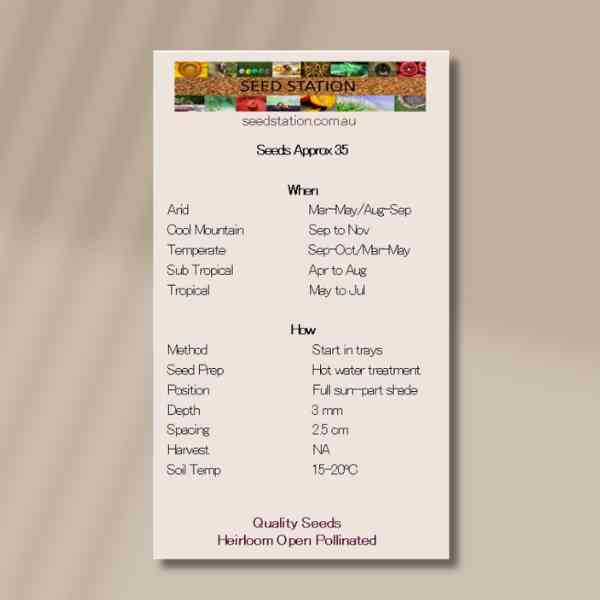
| Method: Start in Trays | Soil Temp: 15°C - 20°C |
| Cool Mountain: Sep - Nov | Position: Full sun - Part Shade |
| Arid: Mar - May | Row Spacing: 2.5m apart |
| Temperate: Mar - May / August - Sep | Planting Depth: 3mm |
| Sub Tropical: Apr - Aug | Harvest: NA |
| Tropical: May - Jul | Plant Height: 13cm |
🌿 Hacketts Hop Bush Grow Guide
🌱 Overview
Hackett’s Hop Bush is a hardy, upright native shrub valued for its bright green foliage and decorative reddish, hop-like seed capsules on female plants. It is naturally suited to sandy, free-draining ground and limestone-influenced soils, and it performs best where drainage is sharp and air movement is good. Mature plants are usually medium to large shrubs around 2 to 3 metres tall and wide.
🌱 Sowing in Trays Versus Direct Sowing
For this seed, sowing in trays or forestry tubes is the best method. Hackett’s Hop Bush has hard-coated seed, and germination is much more reliable when you can control the pretreatment, moisture, depth, and protection from ants, birds, heat spikes, weeds, and drying winds. A tray also lets you select the strongest seedlings before planting them into the garden.
Use a free-draining native seed-raising mix. A good blend is coarse washed sand, perlite, and a small amount of fine seed-raising mix or sieved composted bark. Sow the treated seed shallowly, about 3 to 5 mm deep, then cover lightly with mix or coarse sand. Keep the tray damp but never wet. Once seedlings have formed a strong first set of true leaves, move them into individual tubes and grow them on until the root system holds the mix together.
Direct sowing can work, but it is less dependable. It suits larger revegetation-style areas rather than careful garden growing. The site must be weed-free, well-drained, lightly cultivated on the surface, and protected from disturbance. Because the seed benefits from hot water treatment before sowing, direct sowing untreated seed is not the best choice.
🔥 Seed Pretreatment
Pretreatment is recommended. The seed coat is tough, so hot water helps soften it and improve germination. A practical method is to place the seed in a heatproof cup, pour hot water over it, and leave it to soak as the water cools. Another suitable approach is a brief near-boiling water soak followed by cooling. Trials and grower guidance for hop bush seed show hot water treatment is consistently useful for hard-coated seed in this group.
Do not boil the seed continuously in a saucepan, as excessive heat can damage the embryo. After soaking, sow only the swollen or freshly treated seed, and discard any that are soft, mouldy, or crushed.
🪴 Soil and Position
Hackett’s Hop Bush wants excellent drainage above all else. Sandy soil, gritty loam, raised beds, limestone-based soils, and coastal-style soils are all suitable. Heavy clay should be improved by planting on a mound with coarse mineral material worked through the root zone. Avoid rich, wet soil, as this can produce weak growth and root disease.
Choose a position in full sun to light part shade. Full sun gives the strongest growth and best flowering potential, while light shade can be useful in very exposed gardens. Once established, the plant is quite tough, but young plants need steady moisture while their roots settle.
💧 Care and Maintenance
Water young plants deeply, then allow the soil surface to dry before watering again. This encourages roots to move downward rather than staying shallow. Once established, Hackett’s Hop Bush usually needs little extra water except during long dry periods or in containers.
Fertiliser should be light. Use a low-phosphorus native plant fertiliser only if growth is pale or weak. Too much feeding can create soft, sappy growth that is more attractive to pests and less tolerant of stress.
Tip pruning is useful while the plant is young. Pinch or lightly trim the growing tips to encourage a denser shrub. Avoid hard pruning into old bare wood unless there are healthy shoots below the cut. Because male and female flowers are carried on separate plants, seed capsules only form on female plants, and viable seed is more likely where both flower types are present nearby.
🌼 Companion Planting Guide
Hackett’s Hop Bush pairs best with plants that enjoy the same lean, sunny, free-draining conditions. Good companions include small native shrubs, strappy plants, groundcovers, and flowering species that attract beneficial insects without demanding rich soil or constant irrigation.
For a natural shrubland effect, plant it with kangaroo paw, native rosemary, coastal daisy-bush, westringia, correas, grevilleas, dampiera, scaevola, and native grasses. These companions help create layered habitat, reduce bare soil, and support small birds and insects. Keep vigorous groundcovers away from the trunk so the root crown remains dry and airy.
Avoid pairing it with thirsty vegetables, heavy-feeding annuals, lawn edges that receive frequent fertiliser, or plants that need damp soil. The best companions are those that prefer low nutrient levels and dislike wet feet.
✂️ How to Harvest
Harvest is mainly for seed collection or decorative capsules, not for culinary use. Wait until the papery capsules have fully coloured, then begun to dry. The best sign is a capsule that feels crisp and is close to splitting. If left too long, the capsules can open and drop the seed.
Cut small fruiting stems into a paper bag and let them finish drying in a warm, airy, shaded place. As they dry, the capsules will split and release small, dark seed. Shake the bag gently, then separate seed from wings, capsule pieces, and dust.
⚠️ Common Issues and Fixes
| Issue | Likely Cause | Fix |
|---|---|---|
| Seed does not germinate | Hard seed coat, old seed, no pretreatment | Use fresh seed and hot water pretreatment before sowing |
| Seed rots in tray | Mix too wet or poorly drained | Use a grittier mix, water less often, improve airflow |
| Seedlings collapse | Damping-off disease | Avoid overwatering, use clean trays, sow thinly |
| Yellow leaves | Poor drainage, excess water, or nutrient imbalance | Check drainage first, reduce watering, use only low-phosphorus native fertiliser if needed |
| Weak, stretched seedlings | Not enough light | Move to brighter filtered light, then gradually harden to stronger sun |
| No seed capsules | Plant may be male, or no male plant nearby for pollination | Grow several plants near each other to improve chances of seed set |
| Brown leaf tips | Heat, dry wind, salt exposure, or irregular watering while young | Deep water young plants, mulch lightly, protect seedlings from harsh exposure |
| Sudden decline | Root disease from wet soil | Improve drainage, avoid wet mulch against stem, plant on a mound |
| Chewed foliage | Caterpillars, beetles, or general browsing insects | Inspect at dusk, remove pests by hand, encourage birds and beneficial insects |
| Sparse shape | No early tip pruning or too much shade | Lightly prune growing tips and improve light exposure |
🌰 Detailed Seed Saving Guide
Seed saving is easiest when you have access to a healthy female plant carrying mature capsules. Because not every plant will produce capsules, it is wise to grow several plants if seed saving is a goal. The capsules should be allowed to mature fully on the shrub before collection. Immature capsules may look attractive, but the seed inside may not be fully developed.
Collect by placing a paper bag around a fruiting stem, then clipping the stem so the capsules fall into the bag. Do not use plastic bags, as trapped moisture can cause mould. Label the bag immediately with the plant name, collection location, and collection date. This matters because seed lots can look very similar once cleaned.
Dry the capsules in a single layer in a shaded, airy spot. As they become brittle, they will open naturally. Rub the dry capsules gently between your fingers, then sieve out the larger chaff. Pick out the firm, dark, well-filled seed and discard pale, shrivelled, cracked, or insect-damaged seed.
Store seed in a paper envelope inside an airtight jar. Add a small silica gel packet if conditions are humid. Keep the jar in a cool, dark cupboard. For best results, sow a portion while seed is fresh and keep some as backup. Before sowing stored seed, repeat the hot water pretreatment.
🌿 Final Thoughts
Hackett’s Hop Bush is a rewarding shrub for a dry, sunny, low-maintenance garden. Its main needs are simple: sharp drainage, modest feeding, careful early watering, and hot water-treated seed. Tray sowing gives the best control and the strongest start, especially for a special seed lot. Once established, it becomes a resilient, habitat-friendly shrub with attractive foliage and beautiful papery capsules on female plants.
Postage Charge
Orders under $40 attract a $5.50 shipping charge. Orders $35 and above have free shipping.
*** We cannot deliver to Parcel Lockers ***
Order Times
Seed orders are normally dispatched within three business days. You will receive an email when seeds are mailed out.
Postage Days
Seeds are mailed out Tuesday to Friday at 1pm. Except for the Friday of long weekends.
Postage Times
WA 2-3 Days: SA,NT 3-5 Days: NSW, ACT, QLD, VIC: 5-7 Days
Carrier
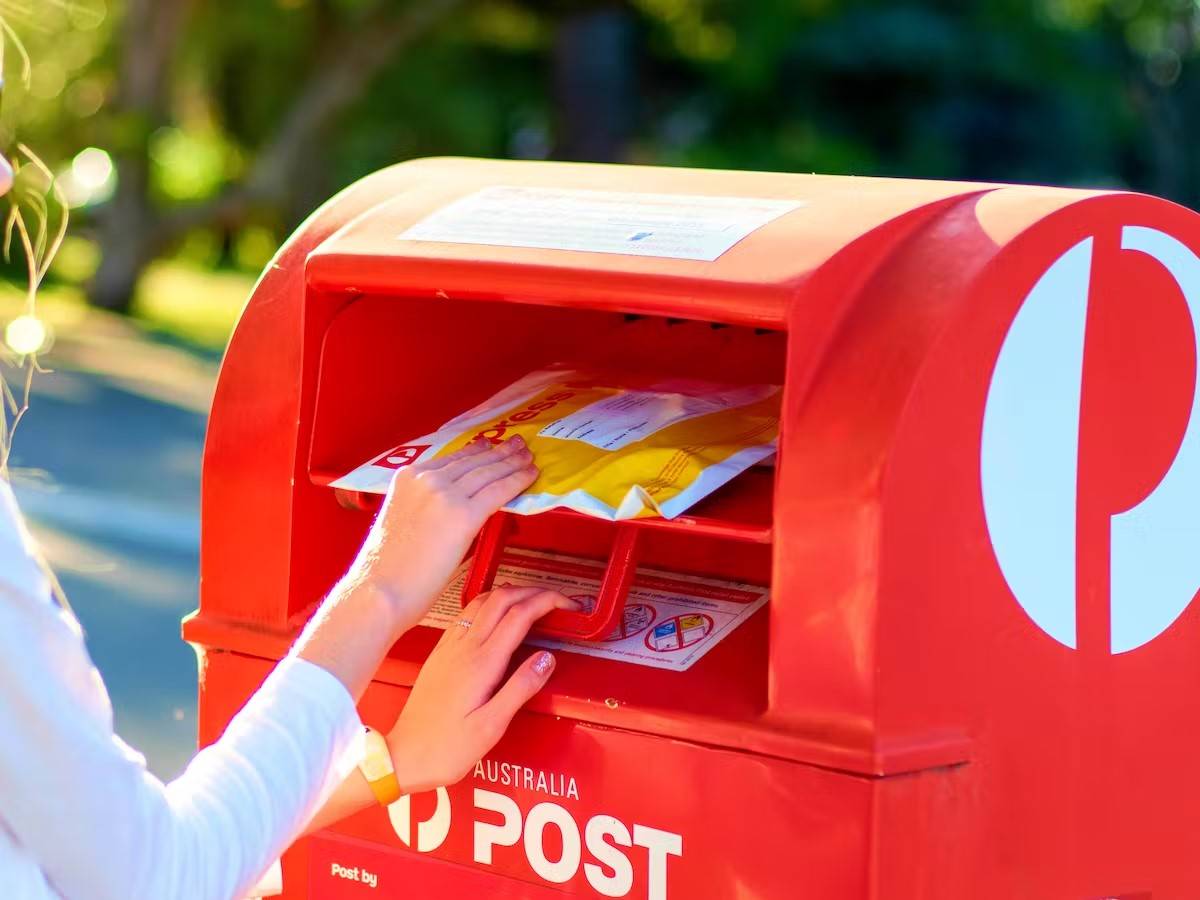
We use Australia Post Letter Postage for the majority of orders.
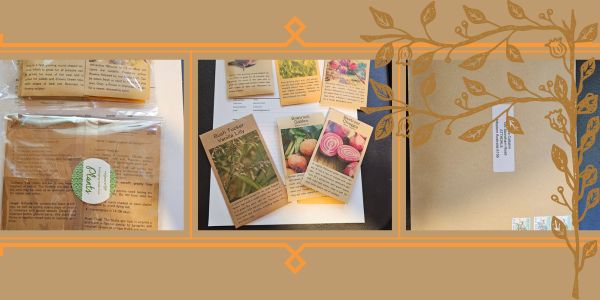
Not only are our seeds packed in recycled paper envelopes, we keep the theme going when we post out website orders. To protect your seeds from moisture and the letter box munchers (snails), we use a very special plastic free material made from plants. They are then put into recycled mailing envelopes. Green all the way ????????
Delivery Guarantee
We take great care to make sure your seeds arrive safely. If your order is lost or damaged in transit, we’ll happily send a replacement. Unfortunately, we can’t replace or refund orders that arrive later than the estimated delivery date, as delays can sometimes occur that are outside our control.
Please note that all dispatch and delivery times listed are estimates only. While we do our best to post promptly, delivery timeframes can vary due to postal service delays, weather events, or other unforeseen circumstances. We’re unable to take responsibility for any loss, damage, or cost that results from a late delivery.
An order is not considered missing until at least 20 business days have passed from the postage date. You’ll receive an email once your seeds have been posted, letting you know they’re on their way. If you don’t see it in your main inbox, please check your Spam or Promotions folders as sometimes our emails like to hide there.
Reviews
There are no reviews yet