



Wild Rosemary
$6.59
Olearia Axillaris
- Seed Count 500
- Bush Tucker
- Perennial
In stock
Description
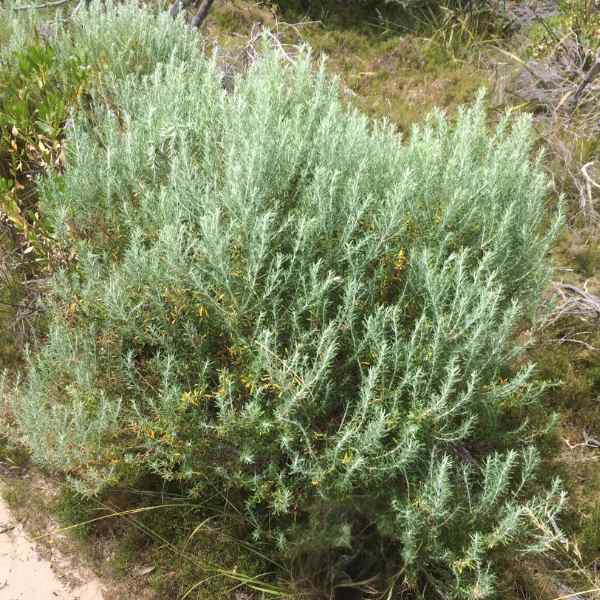
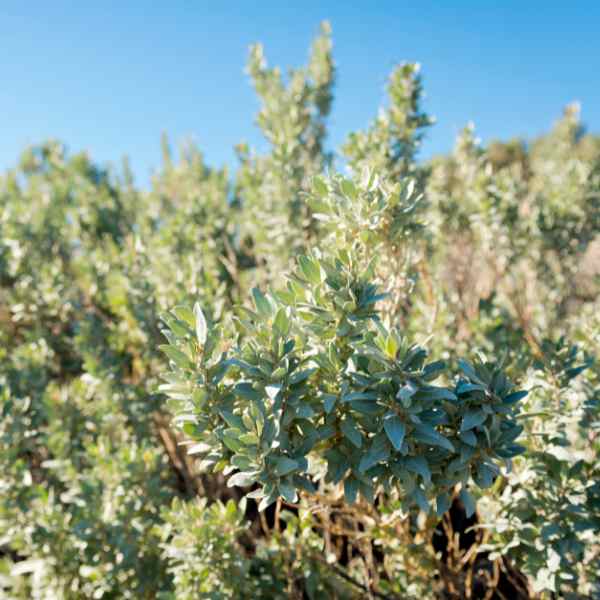
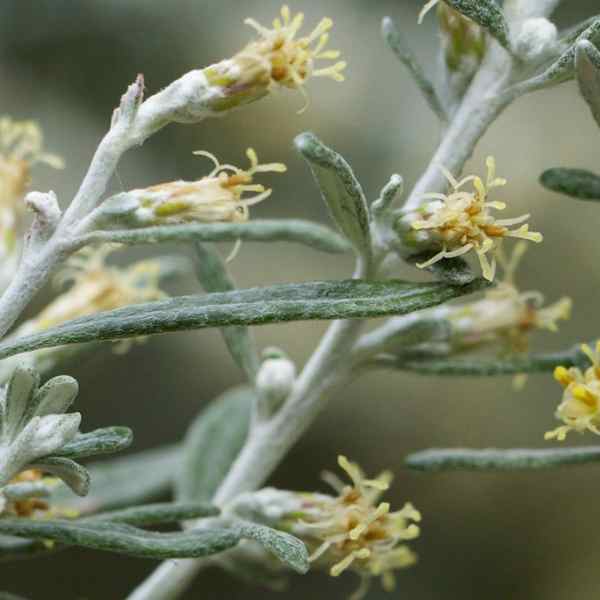
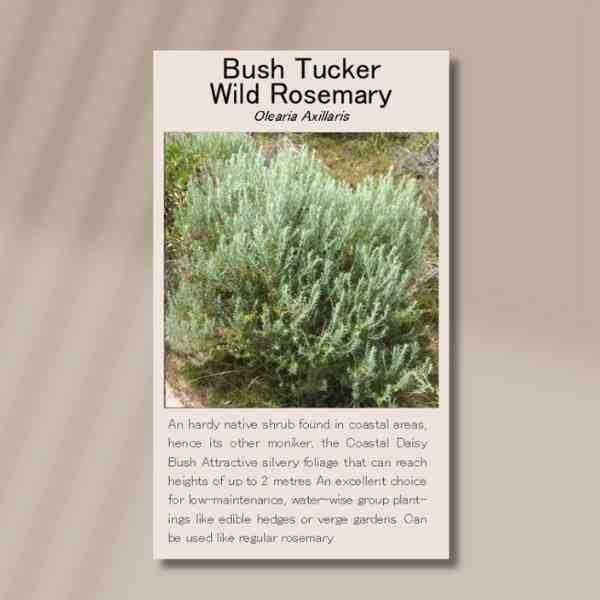
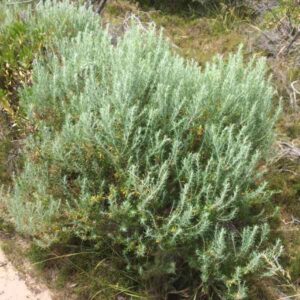
Wild Rosemary is an extremely hardy native shrub found in coastal areas, hence its other moniker, the Coastal Daisy Bush. This species can be found in Western Australia, South Australia, Victoria, New South Wales and Tasmania. With its silvery-green foliage, delicate creamy-yellow blooms, and resilience to harsh coastal conditions, this plant is a standout choice for gardeners seeking a low-maintenance yet visually striking addition to their landscapes.
It is a plant built for Australia’s challenging environments. Thriving in sandy, saline soils and enduring coastal winds, drought, and poor nutrients, it’s a natural fit for erosion control, windbreaks, or coastal gardens. An additional bonus is its insect repelling properties.
The true charm of Wild Rosemary lies in its edible foliage, which offers a warm, grassy aroma reminiscent of its Mediterranean namesake. The slender, silvery leaves can be harvested fresh or dried, adding a distinctly Australian twist to both sweet and savoury dishes. Imagine infusing roasted meats with its earthy notes, sprinkling dried leaves into bread dough, or garnishing desserts with its delicate sprigs. The plant’s small, creamy-yellow flowers—blooming from late summer through autumn—are equally versatile, serving as edible decorations for salads, cakes, or cocktails.
Its dense, silvery foliage forms a compact shrub up to 2–3 metres tall, offering year-round structure and contrast in mixed plantings. Beyond practicality, it’s a wildlife magnet, attracting bees and beneficial insects, while its evergreen leaves ensure visual interest even in the harshest seasons.
| Method: Start in Trays | Soil Temp: 18°C - 24°C |
| Cool Mountain: Sep - Dec | Position: Full sun |
| Arid: Mar - Jul | Row Spacing: 10cm apart |
| Temperate: Mer-Jun/Sep-Nov | Planting Depth: 1mm |
| Sub Tropical: Apr-Jul | Harvest: 250 days |
| Tropical: May - Jul | Plant Height: 1.5 m |
🌿 Wild Rosemary Grow Guide
🌱 Overview
Wild rosemary is a hardy, evergreen shrub grown for its fine grey-green foliage, soft flowers, coastal toughness, and low-maintenance habit. It is often chosen for native-style gardens, hedging, wildlife planting, exposed sites, and dry garden beds. It can be slow and uneven from seed, but once established, it becomes tough, drought tolerant, and forgiving. The key to success is excellent drainage, steady early moisture, bright light, and patience during germination.
🌾 Sowing in Trays Versus Direct Sowing
Wild rosemary is best started in seed trays or small pots rather than sown directly into the garden. The seed can germinate unevenly, and young seedlings are delicate. Starting in trays gives you better control over moisture, warmth, drainage, and protection from slugs, ants, birds, heavy rain, and weed competition.
To sow in trays, fill a punnet or small cell tray with a free-draining native seed-raising mix. Firm the surface gently, scatter the seed thinly, and cover very lightly with fine mix or washed sand. Keep the surface just moist, not wet. A clear cover or mini greenhouse can help maintain humidity, but it should be vented regularly to prevent fungal problems.
Direct sowing can work in a very well-prepared, weed-free, sandy bed, but it is less reliable. Small seeds can be washed away, buried too deeply, or outcompeted before they establish. Direct sowing is only worth trying where the soil is naturally open, gritty, and free draining.
Best method: tray sowing is strongly recommended. It gives the highest level of control and makes it easier to transplant only the strongest seedlings.
🔥 Seed Pretreatment
Seed pretreatment is not strictly required, but it can improve results. Wild rosemary seed may germinate slowly or irregularly, so an optional smoke-water soak or smoke-treated seed-raising paper can be helpful. Use a commercial smoke product according to the label directions, then sow the seed promptly.
Avoid aggressive treatments such as boiling water unless the seed supplier specifically instructs it. Wild rosemary seed is not usually treated like hard-coated wattle or pea-family seed. Overly harsh treatment may damage viability.
A simple approach is to divide the seed into two batches. Sow one batch untreated and treat the other with smoke. This gives you a better chance of success without risking all the seed at once.
🪴 Soil and Position
Wild rosemary prefers well-drained soil above all else. Sandy loam, gravelly soil, raised beds, coastal-style mixes, and open native garden soils are ideal. Heavy clay should be improved before planting by raising the bed, adding coarse mineral material, and avoiding waterlogged pockets. Do not plant it where water sits after rain.
The best position is full sun to light part shade. In full sun, plants usually grow denser and flower more freely. In part shade, growth may be softer and more open, but the plant can still perform well if drainage is excellent.
For pots, use a premium native potting mix with added coarse sand or fine gravel for extra drainage. Choose a pot with generous drainage holes and avoid saucers that hold water.
💧 Care and Maintenance
During the seedling stage, wild rosemary needs gentle, consistent care. Keep the seed mix lightly moist until germination, then gradually reduce watering as seedlings strengthen. Once seedlings have several sets of true leaves and are large enough to handle, transplant them into individual tubes or small pots.
When planting out, water deeply to settle the roots, then water regularly while the plant establishes. After establishment, wild rosemary becomes much more drought tolerant, but it still benefits from occasional deep watering during long dry spells.
Mulch around the plant with gravel, coarse bark, or native mulch, keeping it away from the stem. This helps reduce weeds and stabilise soil moisture without creating a wet collar around the trunk.
Pruning is useful for shape and density. Tip prune young plants to encourage bushiness. For hedges, trim lightly and often rather than cutting hard into old bare wood. Wild rosemary generally responds best to light shaping, not severe renovation pruning.
Fertiliser should be modest. Use a low-phosphorus native fertiliser if growth is weak, and avoid rich, high-phosphorus feeding. Too much fertiliser can create soft growth and reduce the plant’s natural resilience.
🌼 Companion Planting Guide
Wild rosemary pairs well with plants that enjoy similar conditions: sun, airflow, and sharp drainage. It is especially useful as a structural companion because its fine foliage contrasts beautifully with strappy leaves, silver groundcovers, flowering shrubs, and grasses.
Good companions include kangaroo paw, lomandra, dianella, grevillea, correas, everlasting daisies, native grasses, lavender, santolina, creeping boobialla, and saltbush. These plants suit dry, open garden designs and do not demand heavy feeding or constant watering.
Avoid placing wild rosemary beside thirsty vegetables, moisture-loving herbs, or plants that need rich compost and frequent irrigation. It can struggle if crowded by lush plants that trap humidity around the foliage.
In a mixed garden, use wild rosemary as a hedge, border shrub, wind filter, habitat plant, or background shrub behind smaller flowering perennials.
✂️ How to Harvest
Harvest in the morning once the foliage is dry, using clean secateurs.
For the best-looking stems, choose firm, healthy growth with no browning or pest damage. Cut lightly and evenly around the plant so its shape remains balanced. Avoid removing large amounts from one side.
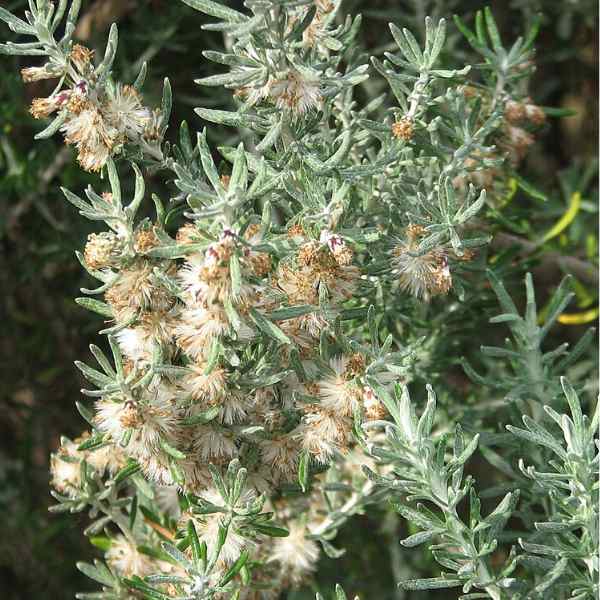
Flowers can be enjoyed fresh on the plant or clipped with short stems for decoration. For seed saving, allow flowers to mature naturally and watch closely as the seed capsules dry.
⚠️ Common Issues and Fixes
| Issue | Likely Cause | Fix |
|---|---|---|
| Poor germination | Seed is slow, old, buried too deeply, or too wet | Sow fresh seed, cover only lightly, use trays, keep mix moist but not soggy, try smoke treatment |
| Seedlings collapse | Damping off from excess moisture or poor airflow | Use sterile seed mix, improve airflow, water from below, avoid overcrowding |
| Yellowing leaves | Waterlogged soil or poor drainage | Reduce watering, improve drainage, move pots out of saucers, plant into a raised position |
| Sparse, leggy growth | Too much shade or not enough pruning | Move to a brighter site and tip prune lightly |
| Brown tips | Heat stress, dry wind, salt exposure, or irregular watering while young | Deep water during establishment and mulch lightly |
| Plant dies suddenly | Root rot from wet soil | Remove affected plant, improve drainage, avoid replanting into the same soggy spot |
| Few flowers | Too much shade, excess feeding, or heavy pruning at the wrong time | Increase sun exposure, reduce fertiliser, prune lightly after flowering |
| Woody bare centre | Lack of regular light pruning | Tip prune from a young age and avoid cutting hard into old wood |
| Scale or sap-sucking pests | Poor airflow or stressed growth | Prune for airflow, hose off pests, use horticultural oil if needed |
| Leaf spotting | Humidity, overhead watering, or poor air movement | Water at soil level, thin crowded growth, improve spacing |
🌰 Detailed Seed Saving Guide
Seed saving from wild rosemary requires patience because the seed is small and easy to miss. Allow the plant to flower fully, then leave selected flower stems on the plant until the seed capsules begin to mature and dry. Do not deadhead the stems you plan to save seed from.
As the capsules turn dry and papery, place a fine mesh bag, paper bag, or organza bag over the seed-bearing tips. This catches seed before it drops. Check the bags regularly, especially during dry, windy weather.
Once the capsules are dry, cut the stems and place them upside down in a paper bag. Keep the bag in a warm, dry, shaded place for several days. Shake gently to release the seed and small chaff. Tip the contents onto a white plate or sheet of paper so the tiny seed is easier to see.
Separate seed from debris by gently blowing away the lighter chaff or using a fine sieve. Work slowly, as the seed can be very small. Discard any mouldy, soft, or insect-damaged material.
Dry the cleaned seed for another week in a cool, shaded, airy place. Store it in a labelled paper envelope inside an airtight jar. Add a small silica gel sachet if your storage area is humid. Label with the plant name, flower colour if known, collection location, and harvest date.
For best results, sow saved seed while it is still reasonably fresh. Older seed may remain viable, but germination can become slower and less reliable over time.
🌿 Final Thoughts
Wild rosemary is a rewarding shrub for patient growers. It may not be the fastest seed to germinate, but its mature performance makes the effort worthwhile. The most important rules are simple: start in trays, use a sharply drained mix, avoid overwatering, give it plenty of light, and prune lightly rather than harshly.
Once established, it becomes a resilient, elegant garden plant with year-round structure, wildlife value, and excellent tolerance of dry, exposed conditions.
1 review for Wild Rosemary
| 5 star | 0% | |
| 4 star | 100% | |
| 3 star | 0% | |
| 2 star | 0% | |
| 1 star | 0% |

Postage Charge
Orders under $35 attract a $4.95 shipping charge. Orders $35 and above have free shipping.
Order Times
Seed orders are normally dispatched within three business days. You will receive an email when seeds are mailed out.
Postage Days
Seeds are mailed out Tuesday to Friday at 1pm. Except for the Friday of long weekends.
Postage Times
WA 2-3 Days: SA,NT 3-5 Days: NSW, ACT, QLD, VIC: 5-7 Days
Carrier
We use Australia Post Letter Postage for the majority of orders

Not only are our seeds packed in recycled paper envelopes, we keep the theme going when we post out website orders. To protect your seeds from moisture and the letter box munchers (snails), we use a very special plastic free material made from plants. They are then put into recycled mailing envelopes. Green all the way ????????
Delivery Guarantee
We take great care to make sure your seeds arrive safely. If your order is lost or damaged in transit, we’ll happily send a replacement. Unfortunately, we can’t replace or refund orders that arrive later than the estimated delivery date, as delays can sometimes occur that are outside our control.
Please note that all dispatch and delivery times listed are estimates only. While we do our best to post promptly, delivery timeframes can vary due to postal service delays, weather events, or other unforeseen circumstances. We’re unable to take responsibility for any loss, damage, or cost that results from a late delivery.
An order is not considered missing until at least 20 business days have passed from the postage date. You’ll receive an email once your seeds have been posted, letting you know they’re on their way. If you don’t see it in your main inbox, please check your Spam or Promotions folders as sometimes our emails like to hide there.
They haven’t been planted yet. Your survey is a bit too soon for this question
See all our verified customer reviews on our official CusRev profile.