


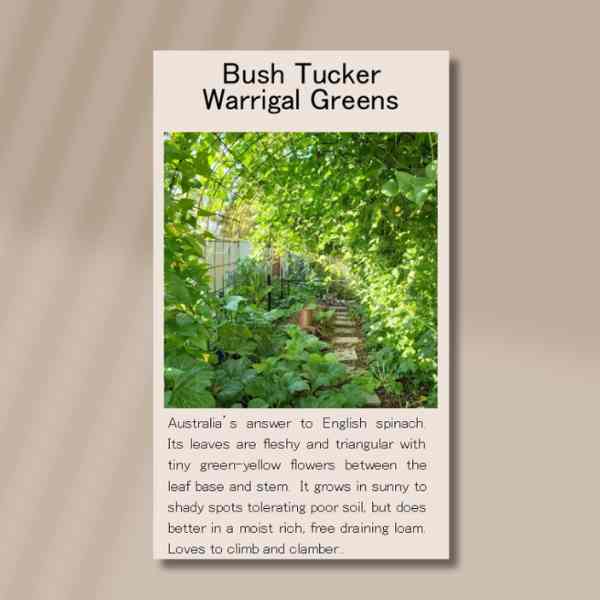





Warrigal Greens
$6.59
Tetragonia Tetragonioides
- Seed Count 30
- Australian Spinach
- Frost Tender Perennial
In stock
Description
If you’re after a plant that’s easy-going, thrives in tough Aussie conditions, and pulls double duty in the garden and the kitchen, then Warrigal Greens are well worth your time Unlike many other greens, they don’t bolt in hot weather. In fact, they revel in it. That makes them an excellent warm-weather alternative to spinach or silverbeet—particularly in regions where summer sun can scorch softer greens
Warrigal Greens are a little powerhouse of a plant. They’re a resilient, sprawling perennial in frost-free areas, and commonly grown as an annual in temperate regions. With their low-growing, trailing habit and attractive foliage, they create a soft mat across the soil, filling gaps, outcompeting weeds, and holding in precious moisture. The spread can reach up to 2 metres across and about 20 centimeters high, making them ideal for edible landscaping, gap-filling between ornamentals, or planting at the base of fruit trees. They’re as practical as they are productive.
But this rugged resilience doesn’t come at the cost of nutrition or flavour. The leaves are packed with vitamins A and C, as well as calcium and iron. That nutritional punch, combined with their versatility in the kitchen, makes them a smart, sustainable choice for home growers who want to make the most of what they plant.
If you’re not already cooking with Warrigal Greens, you’re in for a treat. Their robust, slightly salty flavour works beautifully in all sorts of dishes. A quick stir-fry with garlic and olive oil is perhaps the simplest and most delicious way to serve them—but that’s only the beginning.
They hold up well in soups and stews, where their firm texture doesn’t disintegrate like softer greens might. You can toss them into curries, omelettes, pies or pasta, or even use them in place of spinach in spanakopita or quiche. Once blanched, they can also be frozen for later use—a great option if your plants are producing more than you can eat at once.
Because they’re both mild and hardy, Warrigal Greens are a wonderful “entry” green for those new to native edibles. Kids tend to enjoy their flavour, and the plant’s low maintenance nature makes it a favourite in school or community gardens too.
| Method: Sow direct or seedlings | Soil Temp: 18°C - 35°C |
| Cool Mountain: Oct - Jan | Position: Part Shade |
| Arid: Sep - Feb | Row Spacing: 50 cm |
| Temperate: Sep - Dec | Planting Depth: 15mm |
| Sub Tropical: Aug - Nov | Harvest: 50 Days |
| Tropical: Apr- Jul | Plant Height: Climber/Trailing |
🌿 Warrigal Greens Grow Guide
🌱 Overview
Warrigal greens are a hardy, sprawling edible leafy green grown for their thick, triangular leaves, vigorous groundcover habit, and strong tolerance of dry, sandy, and coastal-style conditions. They are often used as a spinach substitute, especially in cooked dishes, because the leaves hold their texture well and have a mild, earthy green flavour.
This is a useful plant for edible gardens, food forests, herb beds, raised beds, large pots, and low-maintenance vegetable patches. Once established, it can spread generously and provide repeated harvests over a long period. It is especially valuable for gardeners who want a tough leafy green that handles conditions many softer greens dislike.
The leaves should be blanched before eating. Warrigal greens contain oxalates, which are reduced by briefly boiling or blanching the leaves, then discarding the cooking water. After blanching, the leaves can be used in pies, pasta, stir-fries, soups, omelettes, spanakopita-style dishes, curries, and savoury pastries.
🌾 Sowing in Trays Versus Direct Sowing
Warrigal greens can be grown by direct sowing or by sowing in trays, but tray sowing is usually the most reliable method for home gardeners. The seed can be slow and irregular to germinate, and young plants are easier to protect in a controlled space.
To sow in trays, use individual cells, small pots, or tubes filled with a free-draining seed-raising mix. Sow the seed about 1 to 2 cm deep, cover lightly, and water gently. Keep the mix evenly moist but not soggy. Because germination can be uneven, do not discard trays too quickly. Once seedlings are sturdy and have several true leaves, transplant them carefully into their final position.
Direct sowing can work well in a prepared garden bed or large pot. Sow seed into loose, weed-free soil, cover lightly, and water gently. Keep the area moist until seedlings emerge. The main challenge with direct sowing is that seed may rot, dry out, be taken by ants, or be overwhelmed by weeds before it establishes.
Best method: tray sowing is recommended because it gives better control over moisture, germination, and early protection. Direct sowing is suitable where the soil is loose, warm, weed-free, and easy to keep evenly moist.
💧 Seed Pretreatment
Warrigal greens seed benefits from pretreatment because the seed coat can be tough and germination may be slow.
Soak seed in room-temperature water for 12 to 24 hours before sowing. After soaking, sow the seed promptly into moist seed-raising mix or prepared soil. Do not leave seed soaking for several days, as it may rot.
For older seed or seed that has germinated poorly before, gently rubbing the seed coat with fine sandpaper before soaking can help water enter. Do this lightly. The aim is to weaken the outer coat, not damage the seed inside.
No smoke treatment or chilling is usually required. The most important steps are soaking, shallow but covered sowing, steady moisture, and patience.
🪴 Soil and Position
Warrigal greens grow best in well-drained soil with moderate fertility. They tolerate sandy soil and coastal-style conditions, but they produce larger, softer leaves when given compost-enriched soil and steady moisture.
The ideal soil is loose, open, and free draining. Sandy loam, light loam, raised beds, and large containers all work well. Heavy clay should be improved before planting, or the crop should be grown in a raised bed or mound so water does not sit around the roots.
Choose a position in full sun to part shade. Full sun encourages strong growth, while part shade can help produce softer leaves in hot, exposed areas. Warrigal greens will still grow in less-than-perfect soil, but rich, evenly moist soil gives better eating quality.
For pots, use a large container with drainage holes. This plant can spread widely, so a broad pot or trough is better than a small container. Use quality potting mix with added compost and water regularly.
🌿 Care and Maintenance
Warrigal greens are easy once established, but young seedlings need steady care. Keep the soil evenly moist during germination and early growth. Once plants are established, they become more resilient, but regular watering gives better leaf production.
Mulch around plants with straw, sugarcane mulch, composted leaves, or fine bark. Mulch helps conserve soil moisture, reduce weeds, and keep leaves cleaner. Keep mulch slightly away from the main stem to prevent rot.
Feed lightly to moderately. Compost, worm castings, seaweed solution, or a mild liquid vegetable fertiliser can support leafy growth. Avoid excessive nitrogen, as very soft growth can attract pests and become less flavourful.
Tip prune regularly to encourage bushier growth. If left alone, the plant may sprawl widely and become woody in the centre. Regular harvesting keeps it fresh, leafy, and productive.
If plants spread beyond their space, trim runners back firmly. They respond well to cutting and can be kept as a controlled edible groundcover. Remove old, yellowing, or damaged leaves to improve airflow and keep the plant tidy.
🌼 Companion Planting Guide
Warrigal greens work well with plants that enjoy similar soil moisture, sun, and open space. Because they spread, they are best used around the edges of beds, beneath taller crops, or in their own dedicated patch.
Good companions include tomatoes, capsicum, eggplant, corn, beans, peas, basil, parsley, coriander, dill, chives, spring onion, calendula, alyssum, marigold, nasturtium, beetroot, radish, and strawberries.
They can act as a living mulch beneath taller crops if kept trimmed. Their spreading habit helps shade the soil, reduce evaporation, and suppress weeds. Flowers such as alyssum, calendula, dill, and coriander help attract beneficial insects to the same area.
Avoid planting warrigal greens too close to small seedlings or delicate herbs, as the spreading stems can smother them. Also avoid placing them beside plants that need dry, lean soil, such as lavender, thyme, santolina, and many grey-leafed herbs.
✂️ How to Harvest
Harvest warrigal greens by picking the young tips and tender leaves. The best leaves are fresh, green, and not too large or old. Regular tip harvesting encourages the plant to branch and produce more leafy growth.
Use clean scissors or pinch off soft tips by hand. Avoid stripping the plant bare. Take a little from several stems so the plant keeps growing strongly.
Before eating, blanch the leaves in boiling water for about 1 to 2 minutes, then drain and discard the water. After blanching, the leaves can be squeezed dry and used like spinach. They are excellent in pies, pasta sauces, stir-fries, soups, dumplings, savoury muffins, egg dishes, and cooked greens mixes.
Do not rely on large amounts of raw leaves. Blanching is the safest and best preparation method because it reduces oxalates and improves texture.
⚠️ Common Issues and Fixes
| Issue | Likely Cause | Fix |
|---|---|---|
| Poor germination | Hard seed coat, old seed, dry mix, or seed rotting | Soak seed for 12 to 24 hours, use fresh seed, sow into moist free-draining mix, and be patient |
| Seedlings collapse | Overwatering or poor airflow | Use clean seed mix, avoid soggy conditions, and improve ventilation |
| Seedlings disappear | Slugs, snails, ants, birds, or heavy rain | Start in trays, use barriers, and protect young plants |
| Slow early growth | Cool soil, weak seed, poor light, or low fertility | Provide bright light, steady moisture, and a light feed once established |
| Yellow leaves | Waterlogging, nutrient stress, or old leaves | Improve drainage, feed lightly, and remove tired foliage |
| Leaves small and tough | Dry soil, poor fertility, or plant stress | Water more consistently, mulch, and add compost |
| Plant spreading too far | Natural sprawling habit | Tip prune regularly and cut back wandering stems |
| Woody centre | Plant left unharvested for too long | Harvest tips often and trim older stems to refresh growth |
| Aphids | Soft new growth or stressed plants | Hose off gently, encourage beneficial insects, and avoid overfeeding |
| Caterpillar damage | Chewing larvae feeding on leaves | Inspect regularly and remove caterpillars by hand |
| Leaf spots | Wet foliage, poor airflow, or overcrowding | Water at soil level, thin dense growth, and remove affected leaves |
| Root rot | Soil staying too wet | Improve drainage, reduce watering, and grow in raised beds or pots |
| Bitter or strong leaves | Old leaves, dry soil, or stressed growth | Harvest young tips and keep moisture steady |
| Unwanted self-sowing | Seed allowed to mature and drop | Harvest regularly and remove mature seed capsules before they fall |
🌰 Detailed Seed Saving Guide
Saving seed from warrigal greens is straightforward, but the seed structures can be small, hard, and easy to overlook. Choose healthy plants with strong growth, good leaf size, tender young tips, and good resistance to stress. Avoid saving seed from weak, diseased, or poor-flavoured plants.
Allow some flowers and seed capsules to develop on selected plants. Do not harvest every tip from seed plants, as they need time to flower and mature seed. The seed capsules are ready when they become dry, firm, and brown.
Check plants regularly as seed matures. Mature capsules may drop to the ground, so collect them before they fall if possible. You can also place a shallow tray, cloth, or paper beneath seed-bearing stems to catch anything that drops.
Cut dry seed-bearing stems and place them in a paper bag. Keep the bag in a dry, shaded, airy place for several days so the capsules finish drying fully. Do not use plastic, as trapped moisture can cause mould.
Once dry, rub the capsules gently between your fingers to release and clean the seed material. Remove stems, leaves, and loose chaff. Keep only firm, mature seed capsules. Discard any that are soft, mouldy, shrivelled, or insect damaged.
Spread the cleaned seed on a plate or tray for another week to ensure it is completely dry. Store it in a labelled paper envelope inside an airtight jar. Keep it somewhere cool, dark, and dry. Add a silica gel sachet if humidity is an issue.
Label the packet with the plant name, collection date, and notes such as “large leaves”, “strong regrowth”, “best flavour after blanching”, or “vigorous groundcover”.
Before sowing saved seed, use the same pretreatment method: soak for 12 to 24 hours, then sow into free-draining mix or prepared soil.
🌿 Final Thoughts
Warrigal greens are a tough, productive, and useful leafy crop for gardeners who want a resilient spinach substitute with excellent regrowth. They are not difficult, but they reward good early care and regular harvesting.
For the best results, soak seed before sowing, start in trays for reliability, plant into well-drained soil, give sun to part shade, water steadily while young, trim often, and blanch leaves before eating. With simple care, warrigal greens can become a generous edible groundcover that provides repeated harvests and strong garden value.
1 review for Warrigal Greens
| 5 star | 100% | |
| 4 star | 0% | |
| 3 star | 0% | |
| 2 star | 0% | |
| 1 star | 0% |

Postage Charge
Orders under $35 attract a $4.95 shipping charge. Orders $35 and above have free shipping.
Order Times
Seed orders are normally dispatched within three business days. You will receive an email when seeds are mailed out.
Postage Days
Seeds are mailed out Tuesday to Friday at 1pm. Except for the Friday of long weekends.
Postage Times
WA 2-3 Days: SA,NT 3-5 Days: NSW, ACT, QLD, VIC: 5-7 Days
Carrier
We use Australia Post Letter Postage for the majority of orders

Not only are our seeds packed in recycled paper envelopes, we keep the theme going when we post out website orders. To protect your seeds from moisture and the letter box munchers (snails), we use a very special plastic free material made from plants. They are then put into recycled mailing envelopes. Green all the way ????????
Delivery Guarantee
We take great care to make sure your seeds arrive safely. If your order is lost or damaged in transit, we’ll happily send a replacement. Unfortunately, we can’t replace or refund orders that arrive later than the estimated delivery date, as delays can sometimes occur that are outside our control.
Please note that all dispatch and delivery times listed are estimates only. While we do our best to post promptly, delivery timeframes can vary due to postal service delays, weather events, or other unforeseen circumstances. We’re unable to take responsibility for any loss, damage, or cost that results from a late delivery.
An order is not considered missing until at least 20 business days have passed from the postage date. You’ll receive an email once your seeds have been posted, letting you know they’re on their way. If you don’t see it in your main inbox, please check your Spam or Promotions folders as sometimes our emails like to hide there.

See all our verified customer reviews on our official CusRev profile.