








Snap Dragon Tom Thumb
$4.95
Antirrhinum Majus
- Seed Count 1000
- Short Variety
- Annual
- Height 20 cm
Only 9 left in stock
Description
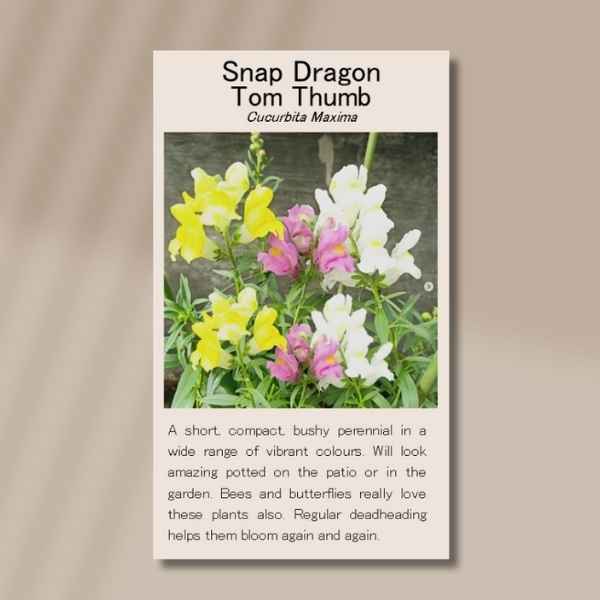
Snapdragon Tom Thumb is a charming old dwarf form of the traditional snapdragon, bringing all the colour and familiar character of the taller varieties into a compact plant. Rather than producing the long, upright stems associated with classic cutting snapdragons, it forms a neat, bushy display covered with short spikes of wonderfully shaped flowers.
The flowers are what make any snapdragon memorable. Each bloom has the distinctive two-lipped shape that inspired the common name, resembling a tiny dragon’s mouth. Gently press the sides of the flower and the “mouth” opens, then closes again when released. It is a small piece of garden theatre that has entertained generations of children and is one reason snapdragons tend to be remembered so fondly.
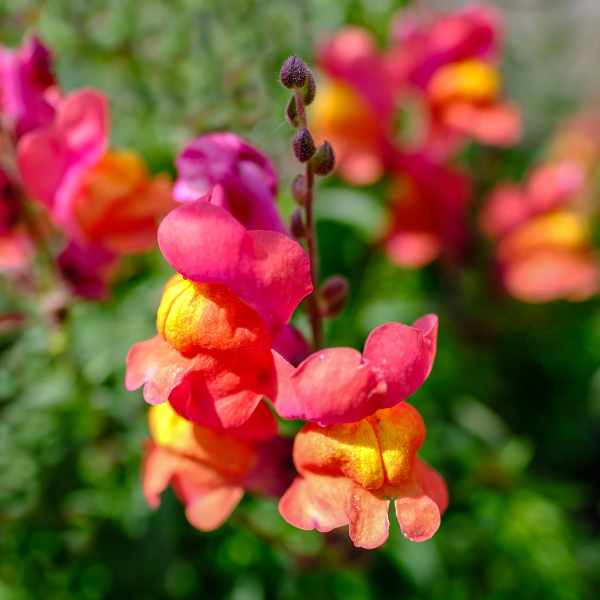
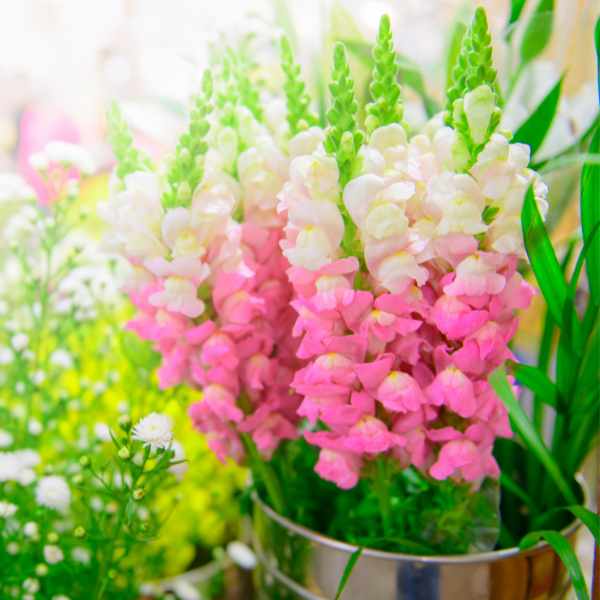
Snapdragon Tom Thumb carries these flowers in a lively mixture of traditional snapdragon colours. Depending on the individual plant, blooms can appear in shades of pink, rose, red, scarlet, yellow, cream and white, along with intermediate tones and beautifully blended combinations.
Snapdragon Tom Thumb generally sits around 20 to 30 cm high, with some strains remaining even shorter, so the flower spikes appear close together and create a dense patch of colour rather than a tall, airy display. The foliage provides a fresh green background, while the clustered flowers rise above it in small upright spikes. Seen together, the plants have a neat, almost miniature appearance, but the individual flowers are still unmistakably those of a full-sized snapdragon.
If you are working with courtyards, verandahs or limited space, it’s compactness is particularly useful. Snapdragon Tom Thumb provides the character of an old cottage-garden flower without demanding a large section of garden. A collection of plants can create a colourful display in a relatively small area, while individual plants can be mixed among other low-growing ornamentals.
| Method: Sow direct or seedlings | Soil Temp:8°C - 24°C |
| Cool Mountain: Feb - Apr / Sep - Dec | Position: Part sun |
| Arid: Apr - Sep | Row Spacing: 50 cm |
| Temperate: Feb - May / Set - Oct | Planting Depth 1 mm |
| Sub Tropical: Feb - Sep | Harvest: 115 Days |
| Tropical: Mar - Sep | Plant Height: 40 cm |
🐉 Snapdragon Grow Guide
Snapdragons are cheerful, upright flowering plants loved for their tall spikes of colourful blooms and their classic “dragon mouth” flowers that open when gently squeezed. They bring height, colour, and structure to garden beds, borders, cottage gardens, containers, and cut-flower patches. Their flowers can appear in many shades, including pink, red, yellow, orange, white, purple, and soft pastel blends, making them one of the most versatile flowers for ornamental planting.
Snapdragons are especially useful where you want long-lasting vertical colour. They look elegant planted in groups, tucked behind lower annuals, or grown in rows for picking. With good light, well-drained soil, and regular deadheading, they can produce a generous display over a long period.
🌱 Sowing in Trays Versus Direct Sowing
Snapdragons can be grown either by direct sowing or by starting them in trays, but sowing in trays is usually the best method. Their seeds are very fine, and young seedlings are delicate, so trays give you better control over moisture, spacing, protection, and early growth.
To sow in trays, fill a seed tray or small cells with a fine seed-raising mix. Scatter the tiny seeds thinly on the surface and press them gently into the mix. Do not bury the seed deeply, as snapdragon seed needs light contact and very shallow covering, if any. Mist gently with water and keep the mix evenly moist, not wet. Once seedlings are large enough to handle, carefully transplant them into individual cells or small pots before planting them out.
Direct sowing can work, but it is less reliable because the seed is small and can be washed away, buried too deeply, eaten, or crowded by weeds. If direct sowing, prepare a very fine seedbed, scatter seed thinly, press it onto the soil surface, and water gently with a fine spray. Thin seedlings early so they are not competing for light and nutrients.
For most gardeners, tray sowing is the preferred method because it produces stronger, more even plants and reduces losses during the delicate seedling stage.
🌾 Seed Pre-Treatment
Snapdragon seed does not require special pre-treatment. Soaking, scarifying, or chilling is not normally needed.
The most important requirement is careful sowing. The seed is extremely small, so it should be sown on or very close to the surface of the growing mix. Press it down lightly to ensure good contact, then keep it moist with gentle misting. Avoid heavy watering, as this can move the seed into clumps or bury it too deeply.
Fresh seed usually gives the best results. Older seed may still germinate, but it can be slower and less even.
🌞 Soil and Position
Snapdragons grow best in a position with full sun to light partial shade. Strong light encourages sturdy stems and better flowering. In very hot, exposed gardens, a little afternoon shade can help reduce stress and keep flowers looking fresh for longer.
The soil should be well-drained, fertile, and improved with compost. Snapdragons do not like sitting in soggy soil, so drainage is important. If your soil is heavy clay, mix in compost and consider raising the planting area slightly. If your soil is sandy, compost will help hold moisture and nutrients around the roots.
A slightly rich soil is beneficial, but avoid overfeeding with high-nitrogen fertiliser. Too much nitrogen can encourage soft leafy growth instead of strong flower spikes. For containers, use a premium potting mix with good drainage and choose pots deep enough to support upright root growth.
Snapdragons also benefit from a position protected from strong wind, especially taller varieties. Their flower spikes can bend or snap in exposed sites, so planting near other sturdy flowers, low shrubs, or a fence can help.
💧 Care and Maintenance
Snapdragons are fairly easy to care for once established, but they perform best with regular attention. Keep young plants evenly moist while they settle in. Once established, water deeply when the top layer of soil begins to dry. Avoid watering constantly, as soggy soil can lead to root problems.
For bushier plants, pinch out the growing tip when young plants have several sets of leaves. This encourages side shoots and more flowering stems. Tall varieties may need staking, especially if grown for cut flowers or in windy areas.
Deadheading is one of the most important maintenance tasks. Remove spent flower spikes before seed pods fully develop if you want the plant to keep producing more flowers. Cut the spike back to a healthy set of leaves or side shoot. This redirects energy into new growth and fresh blooms.
Feed lightly during active growth with a balanced flower fertiliser or compost-based feed. Avoid heavy feeding, especially with nitrogen-rich products. Mulching around plants can help conserve moisture and reduce weeds, but keep mulch slightly away from the stem base to prevent rot.
Good airflow is important. Space plants well, remove weak or diseased foliage, and avoid overhead watering where possible. This helps reduce fungal issues and keeps plants healthier.
🐝 Companion Planting Guide
Snapdragons combine beautifully with many flowering plants and herbs. Their upright form makes them useful for adding height behind shorter companions, while their colourful blooms attract bees and other beneficial insects.
Excellent companions include alyssum, calendula, cornflower, cosmos, dianthus, lavender, marigold, nasturtium, pansy, petunia, salvia, stock, sweet pea, and violas. These plants create a layered, colourful display and help bring pollinators into the garden.
In vegetable gardens, snapdragons can be planted near leafy greens, tomatoes, beans, carrots, and herbs to add flowers and attract beneficial insects. They are especially useful along path edges, bed borders, and near vegetable rows where pollinator activity is welcome.
Avoid pairing snapdragons with very aggressive or sprawling plants that may smother them. They also do not suit constantly wet planting areas, so avoid placing them beside plants that need boggy soil. Taller varieties should not be planted where they will heavily shade smaller sun-loving flowers.
✂️ How to Harvest
For cut flowers, harvest snapdragon stems when the lower flowers on the spike have opened and the upper buds are still closed. This gives a longer vase life and allows more flowers to open indoors.
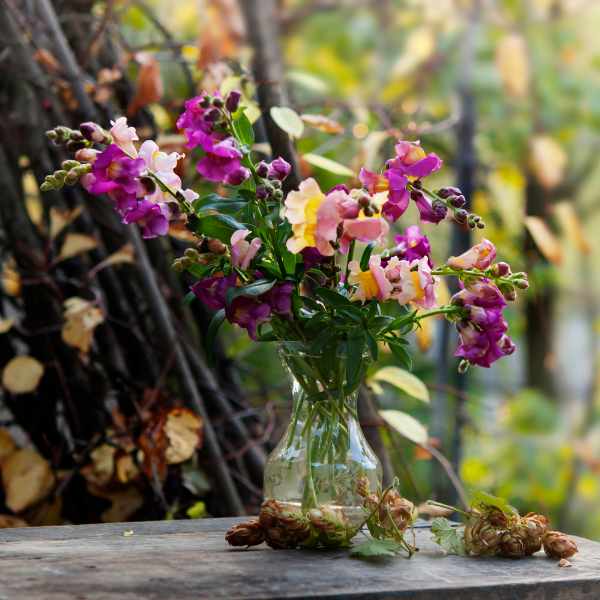
Cut stems early in the day using clean, sharp snips. Place them immediately into clean water. Remove any leaves that would sit below the waterline to reduce bacterial growth. For the longest vase life, change the water regularly and keep arrangements away from direct heat.
For dried seed pods, allow selected flower spikes to remain on the plant after flowering. The flowers will fade and small seed capsules will develop along the stem. These can be harvested once dry and brown for seed saving.
⚠️ Common Issues and Fixes
| Issue | Likely Cause | Fix |
|---|---|---|
| Poor germination | Seed buried too deeply, old seed, uneven moisture | Sow on the surface, use fresh seed, mist gently and keep evenly moist |
| Seedlings collapsing | Overwatering, poor airflow, fungal disease | Use clean seed mix, avoid soggy conditions, improve airflow |
| Leggy seedlings | Not enough light or overcrowding | Move to brighter light and thin or pot on seedlings early |
| Few flowers | Too much shade, too much nitrogen, no deadheading | Grow in stronger light, reduce nitrogen feeding, remove spent spikes |
| Weak or bending stems | Wind exposure, lack of support, overcrowding | Stake tall plants, space properly, plant in a protected position |
| Yellowing leaves | Poor drainage, nutrient stress, overwatering | Improve drainage, water less often, feed lightly if soil is poor |
| Rust spots on leaves | Fungal disease, poor airflow, damp foliage | Remove affected leaves, improve spacing, water at soil level |
| Powdery mildew | Dry roots combined with humid air and poor airflow | Water deeply, space plants well, remove affected foliage |
| Aphids | Soft new growth attracting sap-sucking insects | Hose off gently, encourage ladybirds, use insecticidal soap if needed |
| Flowers fading quickly | Heat stress, dry soil, spent blooms left on plant | Water consistently, provide light afternoon shade in hot spots, deadhead often |
🌰 Detailed Seed Saving Guide
Saving snapdragon seed is simple, but it requires patience because the seed capsules must mature fully on the plant. Choose healthy, vigorous plants with strong stems and flower colours you would like to grow again. Avoid saving seed from weak, diseased, or poorly flowering plants.
Allow several flower spikes to remain on the plant after flowering. As the blooms fade, small rounded seed capsules will form along the stem. Leave these capsules in place until they turn dry and brown. They should feel papery and firm, not soft or green.
When most of the capsules are dry, cut the entire stem and place it upside down in a paper bag. Keep the bag in a dry, airy place so any loose seed is caught as the capsules continue to dry. Once fully dry, gently crush or shake the capsules to release the tiny seeds.
Separate the seed from dry plant material by hand. Because snapdragon seed is very small, work over a clean tray or sheet of paper so it is easy to collect. Remove as much chaff as possible before storage.
Store the seed in a labelled paper envelope or small airtight container. Write the plant name, flower colour, and collection date on the label. Keep the seed in a cool, dark, dry place. Make sure the seed is completely dry before sealing it in a container, as trapped moisture can cause mould.
For stronger future plants, save seed from several healthy plants rather than only one. This helps maintain variety and vigour in your saved seed line.
🌸 Final Thoughts
Snapdragons are a rewarding choice for gardeners who want bold colour, height, and excellent cut flowers. They are best started in trays because their tiny seed and delicate seedlings benefit from controlled conditions. Once planted out into well-drained soil with good light, they are dependable, attractive, and generous with blooms.
With regular watering, light feeding, good spacing, and consistent deadheading, snapdragons can produce a beautiful display in beds, borders, containers, and flower arrangements. Save seed from your strongest plants, and you can continue growing your favourite colours year after year.
2 reviews for Snap Dragon Tom Thumb

Postage Charge
Orders under $40 attract a $5.50 shipping charge. Orders $35 and above have free shipping.
*** We cannot deliver to Parcel Lockers ***
Order Times
Seed orders are normally dispatched within three business days. You will receive an email when seeds are mailed out.
Postage Days
Seeds are mailed out Tuesday to Friday at 1pm. Except for the Friday of long weekends.
Postage Times
WA 2-3 Days: SA,NT 3-5 Days: NSW, ACT, QLD, VIC: 5-7 Days
Carrier
We use Australia Post Letter Postage for the majority of orders.
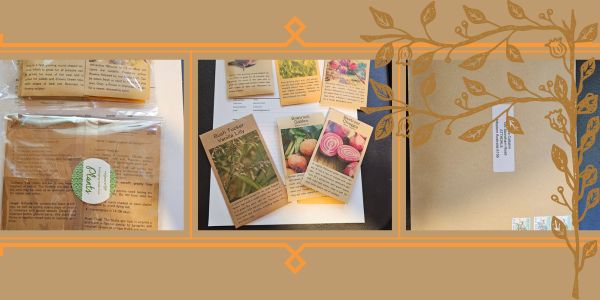
Not only are our seeds packed in recycled paper envelopes, we keep the theme going when we post out website orders. To protect your seeds from moisture and the letter box munchers (snails), we use a very special plastic free material made from plants. They are then put into recycled mailing envelopes. Green all the way ????????
Delivery Guarantee
We take great care to make sure your seeds arrive safely. If your order is lost or damaged in transit, we’ll happily send a replacement. Unfortunately, we can’t replace or refund orders that arrive later than the estimated delivery date, as delays can sometimes occur that are outside our control.
Please note that all dispatch and delivery times listed are estimates only. While we do our best to post promptly, delivery timeframes can vary due to postal service delays, weather events, or other unforeseen circumstances. We’re unable to take responsibility for any loss, damage, or cost that results from a late delivery.
An order is not considered missing until at least 20 business days have passed from the postage date. You’ll receive an email once your seeds have been posted, letting you know they’re on their way. If you don’t see it in your main inbox, please check your Spam or Promotions folders as sometimes our emails like to hide there.

See all our verified customer reviews on our official CusRev profile.
See all our verified customer reviews on our official CusRev profile.