
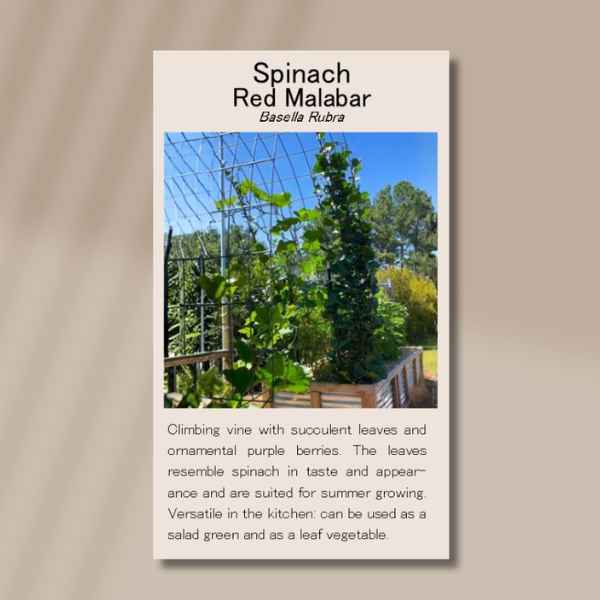





Spinach Red Malabar
$4.95
Basella Rubra
- Seed Count 15
- Summer Spinach
- Frost Tender Perennial
In stock
Description
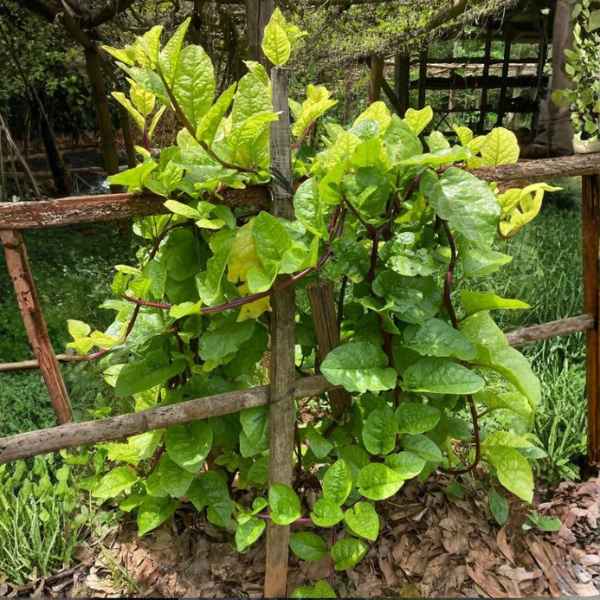
Spinach Red Malabar is a leafy green with a very different character from the familiar spinach found in cool-season vegetable gardens. Rather than forming a low rosette of leaves, it is a vigorous, twining tropical vine with glossy foliage and rich reddish-purple stems. Native to tropical Asia, Malabar spinach has a long history as a food plant in warm climates, where its ability to produce generous leafy growth through hot and humid weather has made it particularly useful.
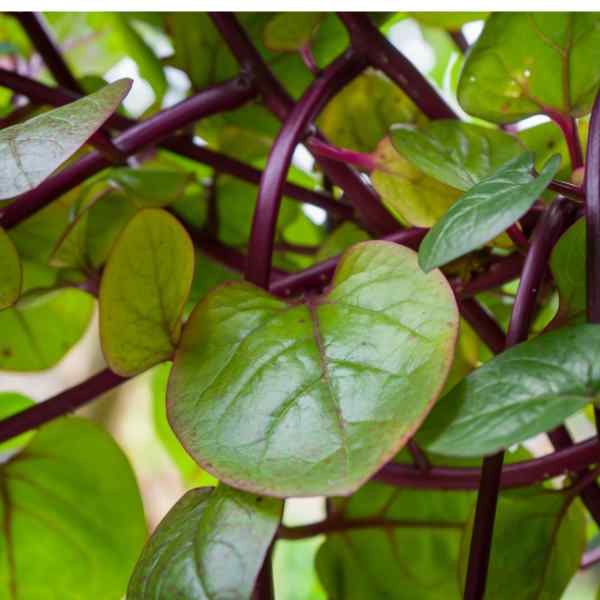
The first thing that sets Spinach red Malabar apart is its appearance. The stems develop deep red, burgundy and purple tones, creating a striking contrast against the thick green leaves. Young shoots can be especially colourful, and the whole plant has a lush, almost ornamental quality. The leaves are smooth, glossy and slightly fleshy rather than thin and papery, giving them a substantial feel in the hand. This red-stemmed form is often valued for its decorative qualities as much as its usefulness in the kitchen. As the plant matures it can also produce small flowers followed by dark purple berries, adding another change of colour and texture to the vine
Despite the familiar name, Malabar spinach is not closely related to true spinach. Its appeal comes from filling a similar place in the kitchen while behaving quite differently in warm weather. For Australian gardeners, that distinction can be particularly worthwhile. Traditional spinach is strongly associated with the cooler part of the year, while Malabar spinach comes from a tropical background and is naturally at home in warmth. In subtropical and tropical districts it suits the character of the summer garden especially well, while gardeners in temperate regions can enjoy it as a warm-season leafy vegetable.
The flavour is mild and fresh, sitting somewhere between spinach and other tender leafy greens such as silverbeet. It does not have an aggressive or strongly bitter taste, which makes it easy to work into everyday meals. Young leaves and tender tips can be eaten fresh, where their glossy texture and attractive colour make a useful addition to salads and mixed greens. Larger leaves can be cooked much as you would spinach, added to stir-fries, curries, soups and vegetable dishes. The thick leaves retain more body than ordinary spinach and have a distinctive succulent quality.
| Method: Start in trays and direct | Soil Temp: 18°C - 24°C |
| Cool Mountain: Not suitable | Position: Full sun |
| Arid: Not suitable | Row Spacing: 30 cm |
| Temperate: Oct - Jan | Planting Depth: 3 mm |
| Sub Tropical: Oct - Jan | Harvest: 65 Days |
| Tropical: Sept - Feb | Plant Height: Climber/Trailing |
🌿 Malabar Spinach Grow Guide
Malabar spinach is a vigorous climbing leafy green grown for its thick, glossy, succulent leaves and tender young shoots. Despite its name, it is not true spinach. It is better understood as a warm-loving vine that produces abundant leafy growth when many delicate greens struggle. It is excellent for home gardens because it grows vertically, looks attractive, and provides repeated harvests over a long period once established.
The leaves have a mild, earthy flavour with a slightly slippery texture when cooked. They can be used in stir-fries, soups, curries, omelettes, stews, and steamed greens. Young leaves can also be eaten raw in small amounts, though the texture is more noticeable than common spinach. Malabar spinach is especially useful for gardeners who want a leafy crop that is both productive and ornamental.
🌱 Sowing in Trays vs Direct Sowing
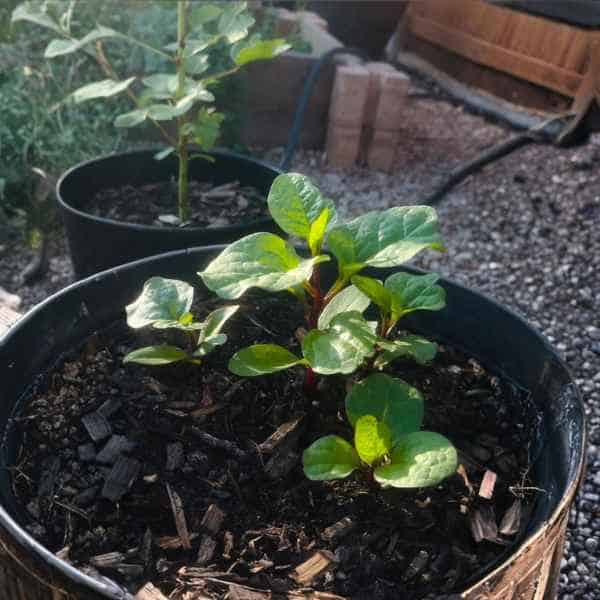
Malabar spinach can be grown by sowing in trays or by direct sowing, and both methods can work well. However, for most home gardeners, starting in trays or small pots is the best method because the seed can be protected while it germinates and the young plants can be transplanted once they are strong enough to handle outdoor conditions.
To sow in trays, use a free-draining seed-raising mix and place one or two seeds per cell or small pot. Cover the seed lightly with mix, firm it gently, and water well. Keep the mix evenly moist but not soggy. Once seedlings have formed strong roots and several healthy leaves, transplant them into their final position beside a trellis, fence, arch, or climbing frame.
Direct sowing is also suitable where the soil is warm, loose, weed-free, and consistently moist. Sow the seed where the vine is to grow, then thin to the strongest seedlings. Direct sowing avoids transplant shock, but young seedlings can be vulnerable to pests, drying soil, and competition from weeds.
Best choice: sow in trays or small pots first for better control and stronger establishment. Direct sowing is useful for larger plantings or very well-prepared beds, but tray sowing is more reliable for small gardens and valuable seed.
💧 Seed Pre-Treatment
Malabar spinach seed has a hard outer coating, so pre-treatment is recommended to improve germination.
Soak the seed in room-temperature water for 12 to 24 hours before sowing. This helps soften the seed coat and allows moisture to enter more easily. Very hard or older seed may also benefit from gentle scarification. To do this, lightly rub one small area of the seed coat with fine sandpaper or carefully nick the outer coat without damaging the inside.
Do not use boiling water. The goal is to soften the seed coat gently, not cook or damage the seed.
After soaking, sow the seed straight away into moist seed-raising mix or prepared soil. Germination can be uneven, so do not discard seed trays too quickly.
☀️ Soil and Position
Malabar spinach grows best in a sunny to lightly shaded position. It enjoys strong light, but in very hot, exposed gardens, some afternoon shade can help keep the leaves tender and reduce stress. Too much shade can lead to weak, stretched vines and fewer harvestable leaves.
The soil should be rich, loose, moisture-retentive, and well drained. Malabar spinach is a leafy vine, so it appreciates more fertility and moisture than many dry-loving herbs. Work compost or well-rotted organic matter into the soil before planting. Good soil preparation helps the plant produce lush leaves rather than thin, slow growth.
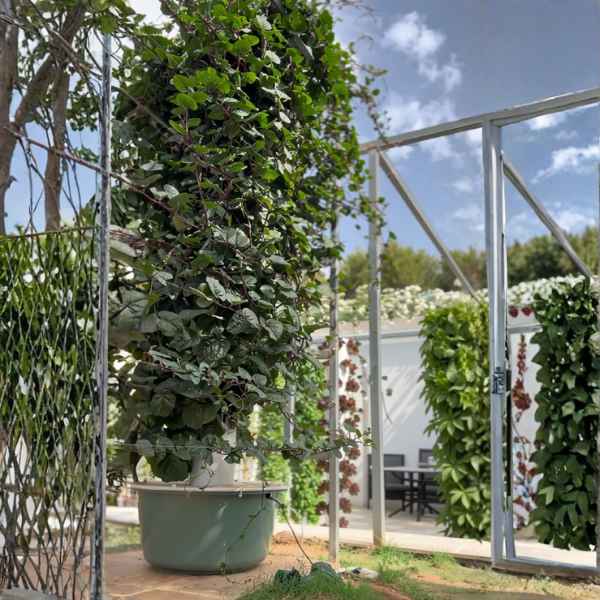
Although it likes moisture, it does not enjoy waterlogged soil. Heavy clay should be improved with compost and drainage, or the plant can be grown in a large container with quality potting mix. A pot should be deep and wide enough to support strong root growth and should have a sturdy climbing frame.
Give each plant enough space and support. Malabar spinach can become a large vine, so a strong trellis, mesh panel, tripod, fence, or arch is ideal. Growing it vertically keeps the leaves cleaner, improves airflow, saves space, and makes harvesting much easier.
🌿 Care and Maintenance
Malabar spinach is easy to care for once established, but it performs best with regular water and steady feeding. Keep the soil evenly moist, especially while the plant is putting on leafy growth. Dry stress can slow growth and make leaves smaller or tougher.
Mulch around the base with straw, sugarcane mulch, composted bark, or another organic mulch to hold soil moisture and reduce weeds. Keep mulch slightly away from the stem to prevent dampness around the crown.
Feed regularly with compost, worm castings, liquid seaweed, fish emulsion, or a balanced organic fertiliser. Because this plant is grown mainly for leaves, it responds well to gentle, regular feeding. Avoid extreme overfeeding, as very soft growth can attract aphids and other sap-sucking pests.
Train young vines onto their support early. Tie them loosely if needed, but do not bind stems tightly. Once they begin climbing, they usually continue upward with little help. Pinch out the growing tips to encourage bushier growth and more side shoots. Regular harvesting also encourages fresh tender leaves.
Remove yellowing, damaged, or old leaves to improve airflow and keep the plant productive. If vines become too long or tangled, cut them back lightly. Malabar spinach handles pruning well and usually responds with fresh growth.
🥬 Companion Planting Guide
Malabar spinach is a useful companion in productive gardens because it grows upward and can provide leafy abundance without taking up too much ground space. It works well near plants that enjoy rich soil and regular watering.
Good companions include basil, parsley, coriander, spring onion, chives, beans, peas, eggplant, capsicum, chilli, tomato, marigold, calendula, nasturtium, amaranth, okra, and sweet corn. Flowers such as marigold, calendula, and nasturtium help attract pollinators and beneficial insects, while herbs add diversity around the garden bed.
Malabar spinach can also be grown on the sunny side of a trellis where lower-growing herbs or flowers sit beneath it. This creates a layered garden that uses space efficiently.
Avoid planting it where it will smother small or slow-growing crops. It should not be allowed to climb over delicate herbs, young seedlings, or low vegetables that need full light. It is also not ideal beside plants that prefer dry, lean soil, such as rosemary, thyme, and lavender, because their watering needs are very different.
✂️ How to Harvest
Harvest Malabar spinach by picking the young leaves, tender tips, and soft side shoots. Use clean scissors or pinch the stems with your fingers. Regular harvesting keeps the plant compact, productive, and full of fresh new growth.
For the best eating quality, choose leaves that are glossy, fresh, and tender. Older leaves are still edible, but they can become thicker and more mucilaginous when cooked. Tender shoot tips are especially useful in stir-fries and soups.
Harvest lightly from young plants until they are well established. Once the vine is growing strongly, you can harvest more often. Cut stems just above a leaf node so new side shoots can form.
After harvesting, rinse the leaves well and use them fresh. They can be stored briefly in the fridge wrapped in a slightly damp towel or placed in a container, but they are best used soon after picking.
⚠️ Common Issues and Fixes
| Issue | Likely Cause | Fix |
|---|---|---|
| Poor germination | Hard seed coat, old seed, dry mix, or cool soil | Soak seed before sowing, use fresh seed, keep mix moist, and provide warmth |
| Seed rots before sprouting | Mix too wet or poorly drained | Use free-draining seed mix, avoid overwatering, and improve airflow |
| Weak or leggy seedlings | Not enough light or overcrowding | Move seedlings to brighter light and thin or pot them on early |
| Slow growth | Low fertility, dry soil, or lack of warmth | Add compost, water consistently, and grow in a protected sunny position |
| Yellowing leaves | Overwatering, poor drainage, low nitrogen, or root stress | Check drainage, adjust watering, and feed lightly with a balanced fertiliser |
| Small tough leaves | Irregular watering, poor soil, or plant stress | Keep moisture steady, mulch well, and feed regularly |
| Aphids on tips | Soft new growth and pest pressure | Spray off with water, encourage ladybirds and lacewings, and avoid excessive feeding |
| Leaf chewing | Caterpillars, beetles, slugs, or snails | Inspect leaves often, handpick pests, and protect young plants |
| Powdery mildew | Poor airflow, crowding, or overhead watering | Space plants well, prune excess growth, and water at soil level |
| Vine not climbing well | No support or stems not trained early | Provide a strong trellis and guide young stems onto it |
| Plant becomes tangled | Lack of pruning or missed harvests | Harvest regularly and trim long stems back to healthy nodes |
| Too many seedlings nearby | Berries left to drop seed | Remove berries before they fall or collect them for seed saving |
🌾 Detailed Seed Saving Guide
Saving seed from Malabar spinach is simple once the plant flowers and forms berries. Choose your healthiest and most productive plant for seed saving. The best plant should have strong growth, good leaf size, tender shoots, rich colour, and no major pest or disease problems.
Allow some flowers to remain on the vine. These will develop into small berries that darken as they mature. Seed is ready when the berries become deep purple to black and soft. Do not collect pale or immature berries, as the seed inside may not be fully developed.
Wear gloves if you do not want stained fingers, as ripe berries contain a strong purple juice. Pick the ripe berries into a bowl or paper bag. Gently crush the berries in water to separate the seed from the pulp. The seed is usually found inside the soft fruit coating.
Rinse the seed well through a fine sieve until most of the pulp is removed. This step is important because leftover fruit pulp can encourage mould during drying or storage. After rinsing, spread the seed in a single layer on a plate, paper towel, or fine mesh screen in a shaded, airy place.
Allow the seed to dry completely. Turn it occasionally so all sides dry evenly. Seed that feels damp, soft, or sticky should not be stored yet. Once fully dry, place it in a labelled paper envelope or small airtight jar.
Store the seed in a cool, dark, dry place. Label it with the plant name and collection date. For best results, sow saved seed while it is still relatively fresh. Before sowing saved seed, soak it again to improve germination.
Do not leave unwanted berries to fall if you do not want self-sown plants. Remove excess berries and dispose of them responsibly, or collect only what you need for future sowing.
🌼 Final Thoughts
Malabar spinach is a generous and attractive leafy climber that earns its place in productive gardens. It is especially valuable where a vertical crop is needed, where leafy greens are in high demand, or where a lush edible screen would be useful.
The keys to success are soaking the seed, starting in trays or pots, providing rich well-drained soil, watering consistently, feeding gently, and giving the vine a strong support. Once established, it can provide repeated harvests of tender leaves and shoots with very little fuss. Regular picking is the secret to keeping it lush, manageable, and productive.
2 reviews for Spinach Red Malabar

Postage Charge
Orders under $40 attract a $5.50 shipping charge. Orders $35 and above have free shipping.
*** We cannot deliver to Parcel Lockers ***
Order Times
Seed orders are normally dispatched within three business days. You will receive an email when seeds are mailed out.
Postage Days
Seeds are mailed out Tuesday to Friday at 1pm. Except for the Friday of long weekends.
Postage Times
WA 2-3 Days: SA,NT 3-5 Days: NSW, ACT, QLD, VIC: 5-7 Days
Carrier
We use Australia Post Letter Postage for the majority of orders.

Not only are our seeds packed in recycled paper envelopes, we keep the theme going when we post out website orders. To protect your seeds from moisture and the letter box munchers (snails), we use a very special plastic free material made from plants. They are then put into recycled mailing envelopes. Green all the way ????????
Delivery Guarantee
We take great care to make sure your seeds arrive safely. If your order is lost or damaged in transit, we’ll happily send a replacement. Unfortunately, we can’t replace or refund orders that arrive later than the estimated delivery date, as delays can sometimes occur that are outside our control.
Please note that all dispatch and delivery times listed are estimates only. While we do our best to post promptly, delivery timeframes can vary due to postal service delays, weather events, or other unforeseen circumstances. We’re unable to take responsibility for any loss, damage, or cost that results from a late delivery.
An order is not considered missing until at least 20 business days have passed from the postage date. You’ll receive an email once your seeds have been posted, letting you know they’re on their way. If you don’t see it in your main inbox, please check your Spam or Promotions folders as sometimes our emails like to hide there.

See all our verified customer reviews on our official CusRev profile.
See all our verified customer reviews on our official CusRev profile.