
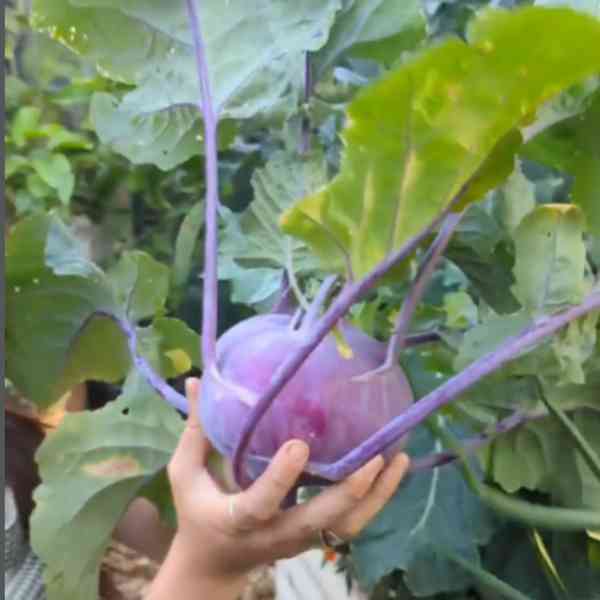
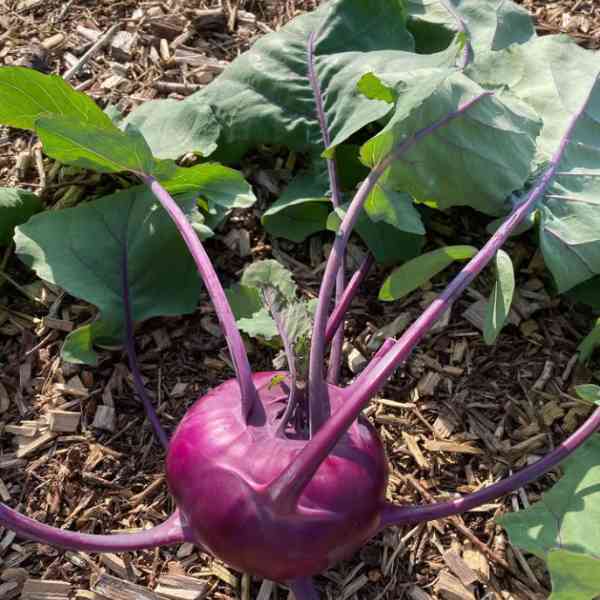
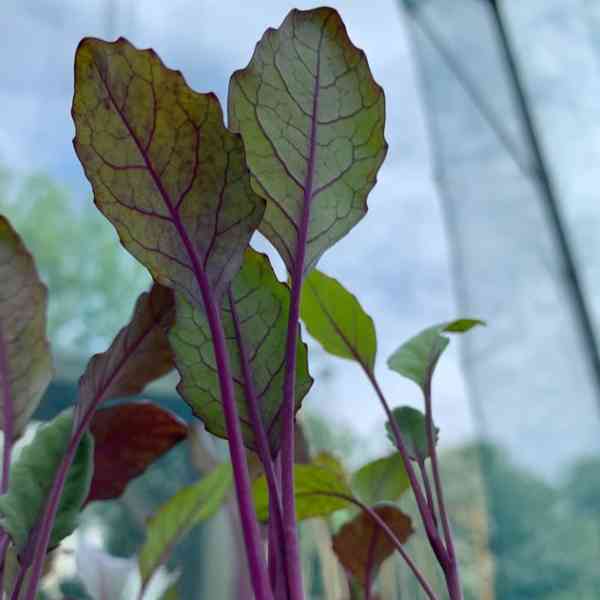
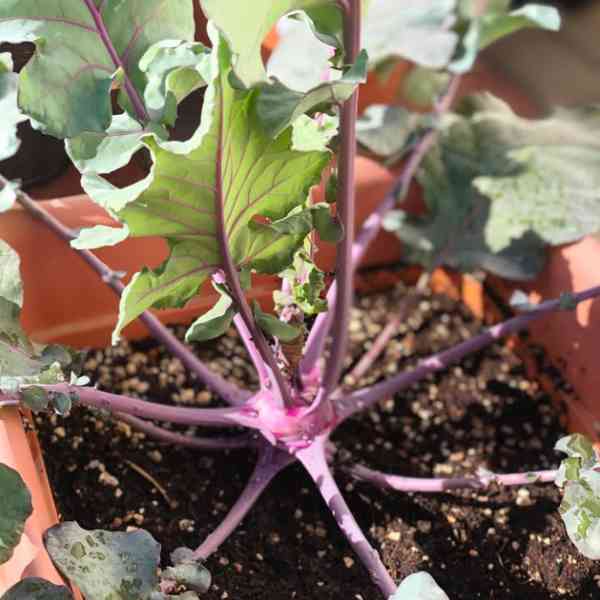

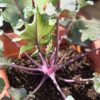
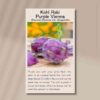

Kohl Rabi Purple Vienna
$4.95
Brassica Oleracea Var. Gongylodes
- Seed Count 250
- Great Pop Of Colour
- Hardy Biennial
In stock
Description
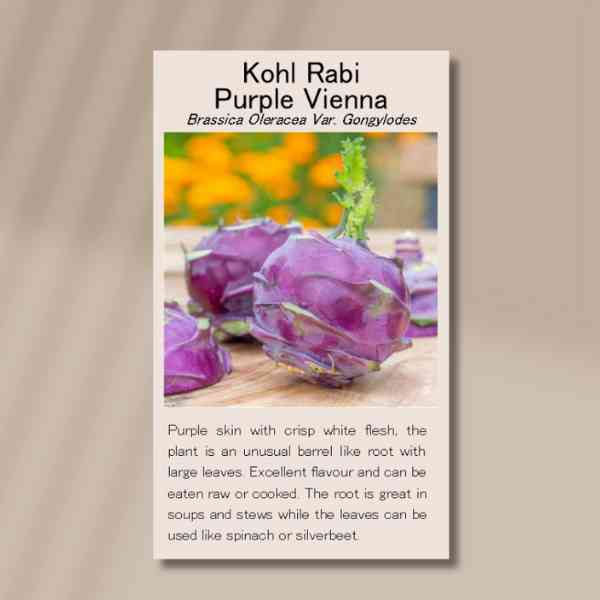
Kohl Rabi Purple Vienna is an ideal companion to White Vienna as it matures a little later. Producing a crop that is slightly more tender and with more flavour, it is low growing, reaching about 30cm in height and matures quickly, progressing from sowing to harvesting in a couple of months.
By and large the hardiest cultivars are those with purple skins, sow from late February to the end of August for a continuous supply. Approximate weight is 150g. Purple Vienna has good standing ability for up to 30 days after maturity and is tolerant to cracking.
Kohlrabi is crisp with a delicate, sweet flavour and incredible crunch like a water chestnut. The young stem in particular can be as crisp and juicy as an apple, although much less sweet. The outer skin peels off without much effort to uncover a dense white flesh.
The taste is difficult to describe, if you can imagine a cross between a pear, a turnip, and a potato; but with notes of cauliflower and celeriac. Either way, it’s delicious and I would wager that most people who try it will be surprised and really enjoy the taste.
In the kitchen, it’s great for slicing or shaving into a salad, shredding into coleslaw, stir-frying, or roasting. The leaves are quite a treat, too, slow cooked like you would other greens or sauté with garlic and olive oil.
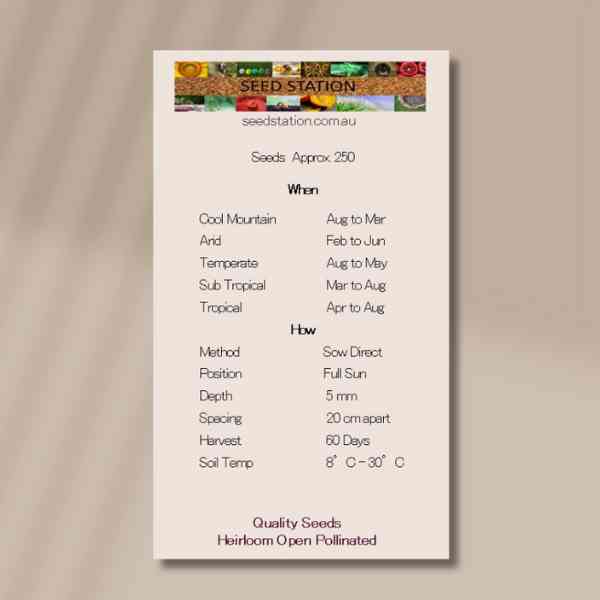
| Method: Sow direct | Soil Temp: 8°C - 30°C |
| Cool Mountain: Aug - Mar | Position: Full sun |
| Arid: Feb - Jun | Row Spacing: 25cm |
| Temperate: Aug - May | Planting Depth: 3mm |
| Sub Tropical: Mar - Aug | Harvest: 60 Days |
| Tropical: Apr - Aug | Plant Height: 25cm |
🌱 Kohl Rabi Grow Guide
Kohl rabi is a fast-growing brassica grown for its swollen, crisp stem, which forms just above the soil surface. Although it is often grouped with root vegetables, the edible round portion is actually an enlarged stem rather than a true root. It has a mild, sweet flavour with a texture somewhere between broccoli stem, turnip, and apple.
The best kohl rabi is grown quickly and evenly. When growth is steady, the bulbs are tender, juicy, and mild. When plants are stressed by dryness, overcrowding, poor soil, or heat, the bulbs can become woody, tough, cracked, or strong tasting.
🌿 Seed Pretreatment
Seed pretreatment is not required. Kohl rabi seed usually germinates readily when sown into suitable seed-raising mix or prepared garden soil.
There is no need to soak, chill, scarify, or otherwise treat the seed before sowing. Use fresh seed for the most even germination, and keep the sowing area consistently moist until seedlings emerge.
🪴 Sowing in Trays vs Direct Sowing
Kohl rabi can be grown either by direct sowing or by starting in trays, but tray sowing is often the best method for most home gardens because it gives better control over spacing, pests, moisture, and early growth.
Starting in trays allows you to raise strong seedlings away from slugs, snails, birds, and chewing insects. It also helps you plant only the strongest seedlings into the garden at the correct spacing. Use small pots or cell trays rather than a crowded open tray, because brassicas transplant best when their roots are not badly disturbed.
Sow seed shallowly into a quality seed-raising mix and keep it evenly moist. Once seedlings are sturdy and have several true leaves, transplant them gently into the garden. Plant them at the same depth they were growing in the tray, firm the soil around the roots, and water them in well.
Direct sowing also works well where the soil is finely prepared and pests are not severe. Sow seed shallowly in rows or stations, then thin seedlings early. Do not leave plants crowded, as crowding is one of the most common causes of small or poorly shaped bulbs.
🥬 Soil and Position
Kohl rabi grows best in a sunny, open position with fertile, well-drained soil. A little light afternoon shade can be helpful in warmer districts, especially where plants are prone to stress.
The soil should be rich, loose, and moisture-retentive without becoming waterlogged. Before planting, work in compost or well-rotted organic matter. Avoid fresh manure, as it can encourage soft leafy growth and may contribute to uneven development.
Kohl rabi prefers a steady supply of nutrients. A balanced vegetable fertiliser or compost-enriched bed is usually suitable. The aim is to keep the plant growing at a consistent pace so the swollen stem remains tender.
Good drainage is important. Waterlogged soil can cause weak growth, root problems, and disease. Very sandy soil should be improved with compost and mulch so it holds moisture more evenly.
💧 Care and Maintenance
The most important part of growing kohl rabi is maintaining consistent moisture. Dry soil can quickly make the bulbs woody, tough, or split. Water deeply and regularly, especially once the stems begin to swell.
Thin or space plants properly. Crowded plants compete for light, moisture, and nutrients, producing small bulbs and weak stems. Give each plant enough room to form a rounded bulb with good airflow around the leaves.
Mulch around the plants once they are established. A light mulch of straw, fine compost, sugar cane mulch, or chopped leaves helps conserve moisture, keep soil temperature more even, and reduce weed competition.
Feed lightly if growth slows. Kohl rabi does not need excessive fertiliser, but it does need steady nutrition. A liquid feed or side-dressing of compost can help plants that are pale or sluggish. Avoid overfeeding with high-nitrogen fertilisers, as this may produce lush leaves without improving bulb quality.
Keep weeds down with shallow cultivation or hand weeding. Be careful not to damage the shallow roots.
🌼 Companion Planting Guide
Kohl rabi grows well with plants that support beneficial insects, make efficient use of space, or do not compete heavily with its root zone. Good companions include lettuce, spinach, silverbeet, beetroot, onions, leeks, celery, peas, beans, dill, chamomile, calendula, nasturtiums, marigolds, and thyme.
Leafy crops such as lettuce and spinach can be useful nearby because they occupy space quickly and help shade the soil. Onions and leeks fit well around brassicas and do not compete strongly when spaced properly. Flowers such as calendula, nasturtiums, and marigolds add diversity and help attract beneficial insects.
Avoid planting kohl rabi too close to other brassicas such as cabbage, cauliflower, broccoli, kale, turnip, mustard, and swede if pest or disease pressure is high. These crops share many of the same pests and soil diseases, so crop rotation is important. Also avoid overcrowding it with large, hungry plants that shade it heavily.
🍽️ Harvesting
Harvest kohl rabi while the swollen stems are still young, firm, and tender. Smaller bulbs usually have the best texture and flavour. Very large bulbs can become woody or fibrous, especially if growth has been uneven.
To harvest, cut the stem at the base with a sharp knife. Remove the leaves and store the bulb in the fridge. The young leaves are also edible and can be cooked like other brassica greens. If harvesting leaves while the plant is still growing, only take a few at a time so the plant can continue feeding the developing stem.
Do not leave mature bulbs sitting too long in the garden. Once they reach a good eating size, harvest promptly for the best quality.
⚠️ Common Issues and Fixes
| Issue | Likely Cause | Fix |
|---|---|---|
| Woody bulbs | Slow growth, dry soil, poor nutrition, or bulbs left too long | Water consistently, feed lightly, mulch, and harvest young |
| Split bulbs | Irregular watering or sudden moisture after dryness | Keep soil evenly moist and use mulch |
| Small bulbs | Overcrowding, low fertility, lack of light, or poor thinning | Space plants correctly, improve soil, and thin early |
| No bulb formation | Stress, overcrowding, too much shade, or very poor soil | Give full sun, steady water, fertile soil, and proper spacing |
| Leaf holes | Caterpillars, flea beetles, or other chewing insects | Inspect leaves often, hand-pick pests, use fine netting, and encourage beneficial insects |
| Wilting plants | Dry soil, damaged roots, cabbage root fly, or disease | Water deeply, check roots, rotate crops, and protect young plants |
| Yellowing leaves | Nutrient deficiency, waterlogging, old leaves, or pest stress | Improve drainage, feed lightly, remove old leaves, and inspect for pests |
| Bolting | Plant stress, heat, or interrupted growth | Keep plants growing steadily and harvest promptly |
| Clubbed or distorted roots | Soil-borne brassica disease | Rotate brassicas, improve drainage, avoid moving infected soil, and maintain suitable soil pH |
| Seedlings collapse | Damping off from excess moisture and poor airflow | Use clean seed mix, avoid overwatering, provide airflow, and avoid overcrowding |
🌾 Detailed Seed Saving Guide
Kohl rabi is a biennial brassica, meaning it usually forms its edible swollen stem first, then flowers and sets seed after a later growth phase. Saving seed therefore requires keeping selected plants alive until they flower.
Choose only the best plants for seed. Select plants with strong growth, healthy leaves, smooth well-shaped bulbs, good colour, and no signs of disease. Do not save seed from plants that bolt too early, form woody bulbs quickly, split badly, or show weak growth. Seed saving is a chance to improve your strain over time, so selection matters.
Kohl rabi can cross with other closely related brassicas of the same species group, including many cabbages, broccoli, cauliflower, kale, Brussels sprouts, and some collards. If these are flowering nearby at the same time, insects may cross-pollinate them. To keep seed true to type, isolate flowering plants from compatible brassicas, or grow only one flowering type at a time.
Leave selected plants in place if conditions are suitable, or carefully lift and replant them. If lifting, keep as much root as possible and replant firmly into fertile, well-drained soil. Water in well and allow the plants to regrow.
When the plants flower, they will send up tall stems with yellow flowers. These flowers develop into narrow seed pods. The stems may need staking, especially in windy gardens. Keep plants watered during flowering and pod formation, but reduce excess overhead watering as pods begin to dry.
Allow pods to mature on the plant until they turn dry and brown. Watch closely, because dry pods can split and drop seed. When most pods are dry, cut the stems and place them upside down in a paper bag or on a clean sheet in a dry, airy place.
Once fully dry, crush the pods gently to release the seed. Separate seed from chaff by sieving or winnowing. Make sure the seed is completely dry before storing, as damp seed can mould.
Store seed in a labelled paper envelope or airtight container in a cool, dark, dry place. Label it with the crop name and date saved. Well-dried kohl rabi seed can remain viable for several years, but fresher seed generally gives stronger and more even germination.
🌟 Final Thoughts
Kohl rabi is an excellent crop for gardeners who want a quick, crisp, and versatile vegetable. It is usually best started in trays for reliable establishment, though direct sowing also works well in finely prepared beds. It needs no seed pretreatment, but it does need steady water, fertile soil, good spacing, and prompt harvesting.
The secret to tender kohl rabi is uninterrupted growth. Keep it evenly moist, protect it from pests, and harvest while the bulbs are young and firm. When grown well, it is sweet, crunchy, and useful raw, roasted, steamed, stir-fried, or grated into salads.
3 reviews for Kohl Rabi Purple Vienna

Postage Charge
Orders under $40 attract a $5.50 shipping charge. Orders $35 and above have free shipping.
*** We cannot deliver to Parcel Lockers ***
Order Times
Seed orders are normally dispatched within three business days. You will receive an email when seeds are mailed out.
Postage Days
Seeds are mailed out Tuesday to Friday at 1pm. Except for the Friday of long weekends.
Postage Times
WA 2-3 Days: SA,NT 3-5 Days: NSW, ACT, QLD, VIC: 5-7 Days
Carrier
We use Australia Post Letter Postage for the majority of orders.
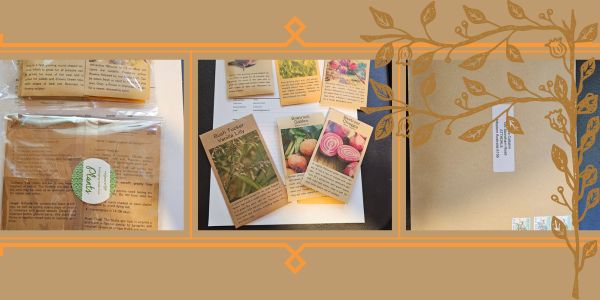
Not only are our seeds packed in recycled paper envelopes, we keep the theme going when we post out website orders. To protect your seeds from moisture and the letter box munchers (snails), we use a very special plastic free material made from plants. They are then put into recycled mailing envelopes. Green all the way ????????
Delivery Guarantee
We take great care to make sure your seeds arrive safely. If your order is lost or damaged in transit, we’ll happily send a replacement. Unfortunately, we can’t replace or refund orders that arrive later than the estimated delivery date, as delays can sometimes occur that are outside our control.
Please note that all dispatch and delivery times listed are estimates only. While we do our best to post promptly, delivery timeframes can vary due to postal service delays, weather events, or other unforeseen circumstances. We’re unable to take responsibility for any loss, damage, or cost that results from a late delivery.
An order is not considered missing until at least 20 business days have passed from the postage date. You’ll receive an email once your seeds have been posted, letting you know they’re on their way. If you don’t see it in your main inbox, please check your Spam or Promotions folders as sometimes our emails like to hide there.
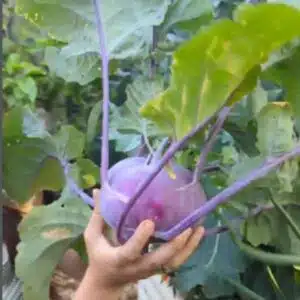
See all our verified customer reviews on our official CusRev profile.
Bought these last year and they were vigorous growers. Had to buy them again for this year’s cooler growing season.
See all our verified customer reviews on our official CusRev profile.
I’m giving 5 stars although there is NO WAY I have used these seeds yet!
See all our verified customer reviews on our official CusRev profile.