





Hamburg Root Parsley
$4.95
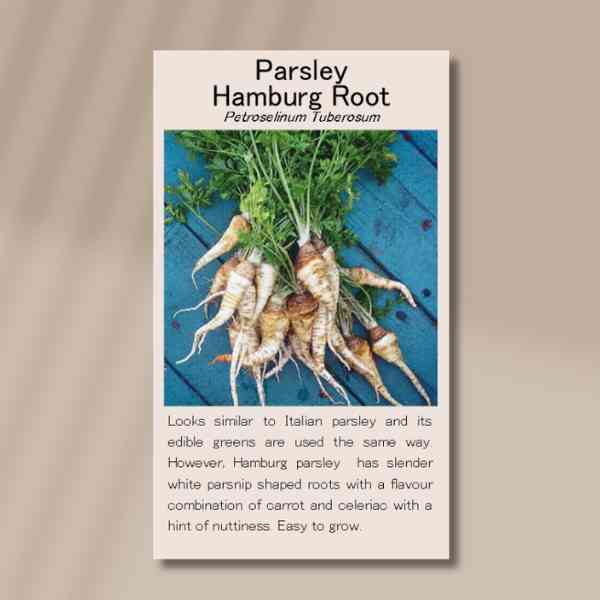
Petroselinum Tuberosum
- Seed Count 300
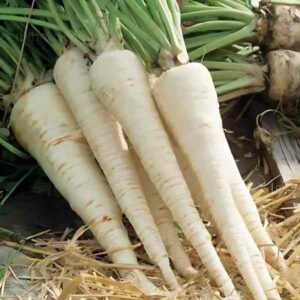
- Parsnip Like Roots
- Biennial
In stock
Description
Hamburg Root Parsley is an unusual vegetable. Although not as common as other root veggies, parsley root is extremely delicious and deserves to be better known.
This unique plant serves a dual purpose, offering both flavourful roots and aromatic leaves and is ideal for gardeners eager to explore new flavours and textures.
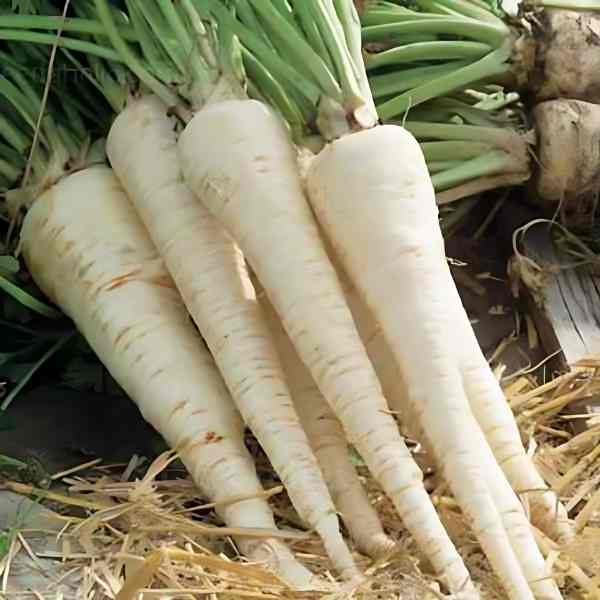
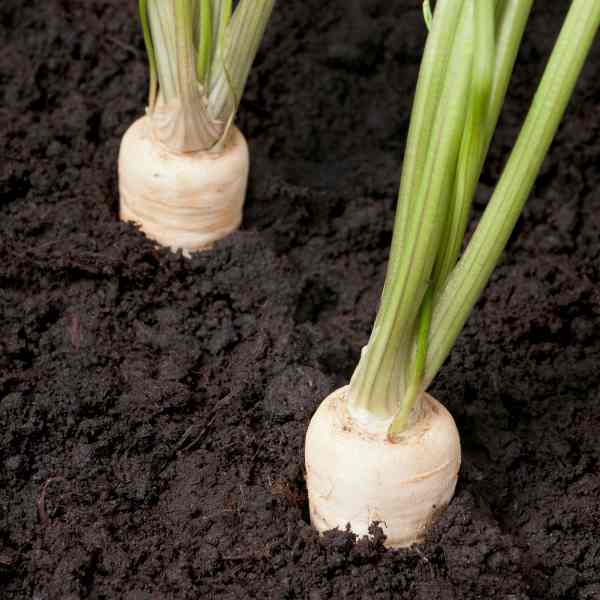
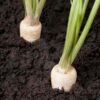
The roots look like parsnips, and are about 15cm long and 5cm wide in muted tones of white with a furrowed texture; however looks is where the similarities end.
Its taste is quite different from parsnip, it is sweet, tender, without any of the earthiness of a parsnip – rather like a carrot that’s been cooked with parsley for flavouring. It’s intriguingly, deliciously different.
Parsley Root is very common in Central and Eastern European cuisines, particularly in winter recipes. The root is snappy, yet tender when raw, and smooth and creamy once cooked.
It works particularly well in combination with other roots and tubers such as carrots, potatoes, turnips, and onions.
The root can be used like other root vegetables, and it can be raw in salads or cooked in soups, stews, and casseroles.
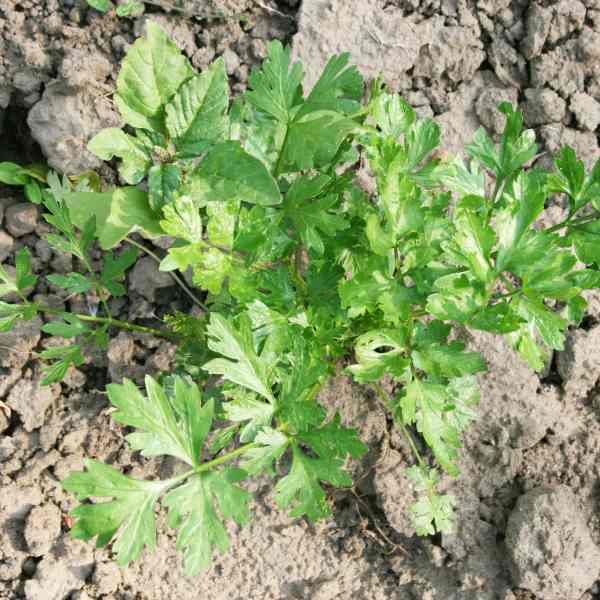
Its leaves can also be used as a fresh herb, adding flavor to dishes similarly to flat-leaf parsley.
Once harvested, the roots can be stored in a cool, dry place for several weeks. They can also be kept in the refrigerator for longer freshness.
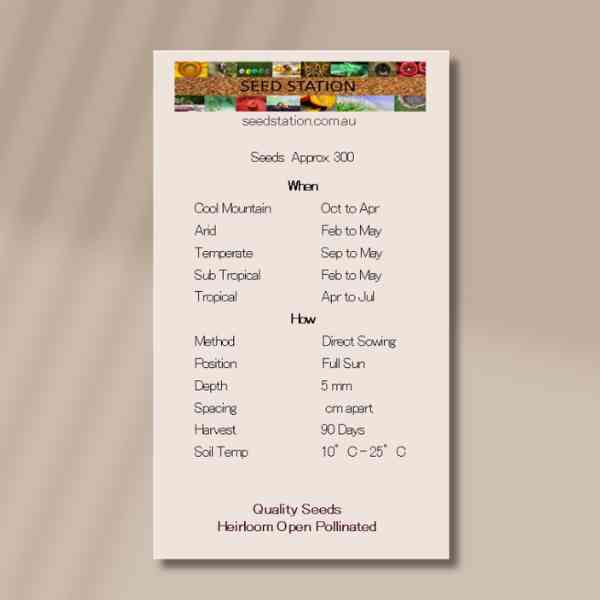
| Method: Start in trays | Soil Temp: 10°C - 30°C |
| Cool Mountain: Oct -Apr | Position: Full sun |
| Arid: Feb - May | Row Spacing: 25 cm apart |
| Temperate: Sep - May | Planting Depth: 5mm |
| Sub Tropical: Feb - May | Harvest: 120 Days |
| Tropical: Apr - Jul | Plant Height: 60cm |
🌿 Hamburg Rooted Parsley Grow Guide
Hamburg rooted parsley, also called root parsley or parsley root (Petroselinum crispum var. tuberosum), is a dual-purpose crop grown for both its edible leaves and its long, pale, tapered root. The foliage looks similar to flat-leaf parsley and can be used in much the same way, while the root has a flavour often compared with parsnip, celery, and carrot, though usually finer and sweeter. It is a useful crop for growers who want something between a herb and a root vegetable, but it performs best when treated primarily as a root crop from the beginning.
🌱 Starting From Seed: Trays vs Direct Sowing
For Hamburg rooted parsley, direct sowing is the better method. This is the most important choice you can make with this plant. Because it develops a central taproot that needs to grow straight down into the soil, transplanting can interrupt early root development and cause forked, stunted, or misshapen roots.
Raising it in trays can be done, but it is usually not ideal unless deep modules are used and seedlings are moved very young with almost no root disturbance. Even then, the result is usually less reliable than sowing directly where the crop will grow to maturity.
Sow the seed shallowly into finely prepared soil and keep the surface evenly moist. Germination is often slow and irregular, so patience is important. It can take quite a while for seedlings to appear, and uneven sprouting is common.
💧 Seed Pre-Treatment
Seed pre-treatment is not essential, but it can help. Hamburg rooted parsley does not require cold stratification. However, parsley seed is known for slow germination, and soaking the seed in water for about 24 hours before sowing can sometimes improve speed and evenness.
So the practical answer is simple. No required pre-treatment is needed, but an overnight soak is worthwhile if you want to encourage more even sprouting. After soaking, sow the seed promptly into prepared soil.
🪴 Soil and Position
Hamburg rooted parsley grows best in deep, loose, stone-free, moisture-retentive but well-drained soil. Soil preparation matters a great deal with this crop. If the ground is compacted, full of stones, freshly manured, or prone to waterlogging, the roots are much more likely to fork, split, or stay thin.
Choose a position in full sun to partial shade. It can tolerate a little shade, but the best root development usually comes from a bright open position with steady moisture and good soil structure.
Before sowing, prepare the bed deeply and remove stones, clods, and other obstacles. Add mature compost only if the soil is poor and the organic matter is well broken down. Avoid rich fresh manures and heavy nitrogen feeding, because these encourage lush leaf growth at the expense of good root formation.
🌿 Care and Maintenance
Once established, Hamburg rooted parsley is not difficult, but it performs best with steady, even growth. That means regular moisture, low weed competition, and minimal disturbance around the roots.
Watering matters most during germination and while the roots are swelling. Keep the seed bed consistently moist while waiting for emergence, then water deeply whenever the soil begins drying below the surface. Irregular watering can slow growth and lead to woody or undersized roots.
Thin seedlings once they are large enough to handle. Spacing strongly affects root size. Crowded plants produce narrow roots, while properly thinned plants develop thicker, better-shaped roots.
Weeding should be gentle and shallow. Because the crop is slow to germinate and establishes gradually, weeds can outcompete it early. Remove them before they become established, but avoid deep cultivation near the plants, as this can disturb the developing roots.
Feeding should remain light. If the soil was prepared properly, extra fertiliser is often unnecessary. Too much feeding, especially with nitrogen, encourages top growth when the goal is a clean, useful root.
🌼 Companion Planting Guide
Hamburg rooted parsley fits best into a mixed edible bed with companions that do not compete heavily below ground and that help with pest balance, space use, or light soil cover.
Good companions include onions, leeks, chives, lettuce, beetroot, and low-growing salad crops. These usually share similar watering needs without crowding the root zone too aggressively. Low flowers such as alyssum, calendula, and dill nearby but not smothering the crop can also help attract beneficial insects into the area.
Avoid crowding it with heavy root competitors such as densely planted carrots, parsnips, or large sprawling feeders in the same tight space. Since Hamburg rooted parsley is grown for a straight usable root, the surrounding planting should favour open soil, low competition, and easy harvest access.
🥕 How to Harvest
Hamburg rooted parsley gives you two harvests from one plant. The leaves can be picked lightly as the plant grows, using the outer leaves first and leaving enough inner growth to keep the plant strong. The root is harvested once it has reached a useful size and feels well developed.
To lift the root, loosen the soil first with a fork and then harvest carefully rather than pulling hard by the leaves. This helps prevent the root from snapping and keeps it in good condition.
The roots can be used fresh, stored briefly in the refrigerator, or kept longer in cool dark conditions. In suitable ground they can also remain in the soil until needed.
🛠️ Common Issues and Fixes
| Problem | Likely cause | What you will see | Fix |
|---|---|---|---|
| Slow or patchy germination | Naturally slow seed, surface drying, old seed | Seedlings appear unevenly over time | Keep the bed evenly moist, sow shallowly, use fresh seed, and soak seed overnight before sowing |
| Forked or distorted roots | Stones, clods, fresh manure, transplant shock | Twisted or branched roots instead of straight taproots | Direct sow into deep stone-free soil and avoid fresh manure and unnecessary transplanting |
| Thin roots | Crowding, poor thinning, low light | Long skinny roots with little bulk | Thin seedlings properly and grow in an open bright position |
| Lush leaves but poor roots | Too much nitrogen | Plenty of leafy growth but disappointing root size | Reduce feeding and rely on well-prepared soil instead |
| Yellowing or stalled growth | Water stress or poor drainage | Pale leaves and weak development | Improve drainage, water steadily, and avoid extremes of wet and dry |
| Seedlings disappearing | Slugs and snails | Ragged young plants or complete overnight loss | Protect seedlings early with barriers, traps, or suitable controls |
| Bolting | Stress in a biennial plant | Flower stalk forms and root quality declines | Keep growth steady, reduce stress, and harvest before second-year flowering |
| Woody older roots | Left too long or uneven growth | Coarse texture and reduced eating quality | Harvest once roots are well formed and still tender |
🌰 Detailed Seed Saving Guide
Hamburg rooted parsley is a biennial, so seed saving takes patience. In the first season it forms leaves and root. In the second, it sends up flower stalks, produces umbels, and sets seed. That means you must leave selected plants in place long enough to flower instead of harvesting every root.
Choose seed parents carefully. Save seed only from healthy, vigorous, well-shaped roots with good flavour and strong foliage. Because this is a root crop, selection should focus on straightness, size, lack of forking, and eating quality before committing plants to seed production.
Parsley is insect pollinated, so crossing with other parsley types can occur. If you want to maintain a variety as reliably as possible, keep it isolated from other flowering parsley.
When the seed heads mature, the umbels dry and the seeds change from green to brown. At that stage, cut the umbels and dry them further in a bag, tray, or container until crisp. Then rub the seed heads gently between your hands or over a screen to release the seed. Remove the chaff and store the cleaned seed fully dry in a cool, dark place.
Because parsley seed loses vigour more quickly than many larger seeds, it is best used reasonably fresh for the strongest germination.
🌟 Final Thoughts
Hamburg rooted parsley is best grown with the mindset used for a fine root vegetable rather than just a kitchen herb. Direct sowing is best, deep loose soil is essential, and restraint with fertiliser usually produces better roots than trying to force fast leafy growth. It is slower and more patient than ordinary parsley, but that is part of its charm. Treated properly, it gives useful leaves, elegant roots, and a crop that feels both practical and special.
3 reviews for Hamburg Root Parsley
| 5 star | 100% | |
| 4 star | 0% | |
| 3 star | 0% | |
| 2 star | 0% | |
| 1 star | 0% |

Postage Charge
Orders under $35 attract a $4.95 shipping charge. Orders $35 and above have free shipping.
Order Times
Seed orders are normally dispatched within three business days. You will receive an email when seeds are mailed out.
Postage Days
Seeds are mailed out Tuesday to Friday at 1pm. Except for the Friday of long weekends.
Postage Times
WA 2-3 Days: SA,NT 3-5 Days: NSW, ACT, QLD, VIC: 5-7 Days
Carrier
We use Australia Post Letter Postage for the majority of orders
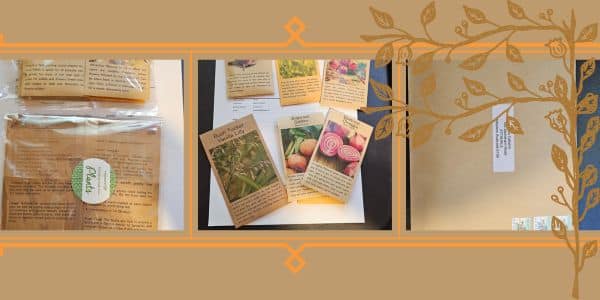
Not only are our seeds packed in recycled paper envelopes, we keep the theme going when we post out website orders. To protect your seeds from moisture and the letter box munchers (snails), we use a very special plastic free material made from plants. They are then put into recycled mailing envelopes. Green all the way ????????
Delivery Guarantee
We take great care to make sure your seeds arrive safely. If your order is lost or damaged in transit, we’ll happily send a replacement. Unfortunately, we can’t replace or refund orders that arrive later than the estimated delivery date, as delays can sometimes occur that are outside our control.
Please note that all dispatch and delivery times listed are estimates only. While we do our best to post promptly, delivery timeframes can vary due to postal service delays, weather events, or other unforeseen circumstances. We’re unable to take responsibility for any loss, damage, or cost that results from a late delivery.
An order is not considered missing until at least 20 business days have passed from the postage date. You’ll receive an email once your seeds have been posted, letting you know they’re on their way. If you don’t see it in your main inbox, please check your Spam or Promotions folders as sometimes our emails like to hide there.
See all our verified customer reviews on our official CusRev profile.
Very happy with purchase and price
See all our verified customer reviews on our official CusRev profile.
See all our verified customer reviews on our official CusRev profile.