
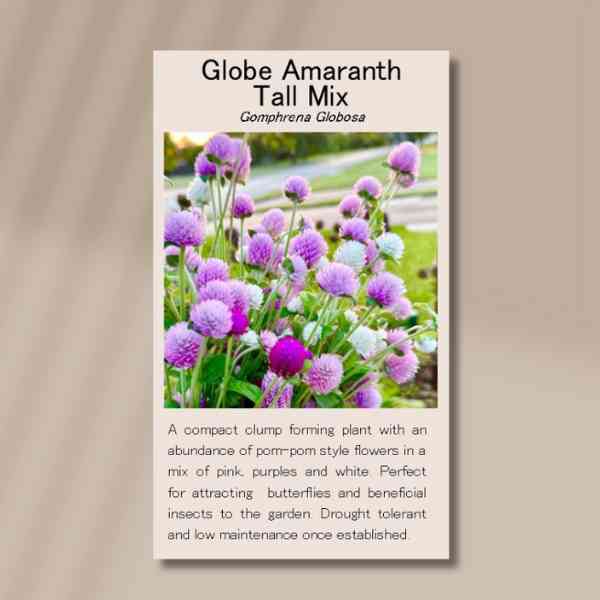





Globe Amaranth Mix
$4.95
Gomphrena Globosa
- Seed Count 50
- Pollinator Friendly
- Annual
- Height 60 cm
Only 5 left in stock
Description
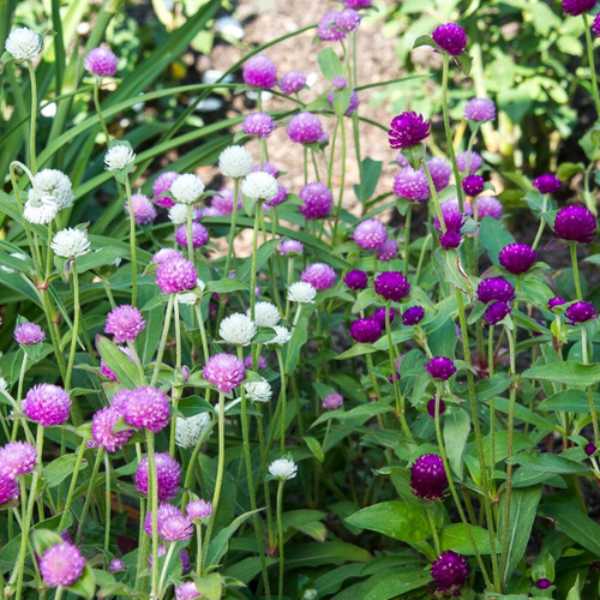
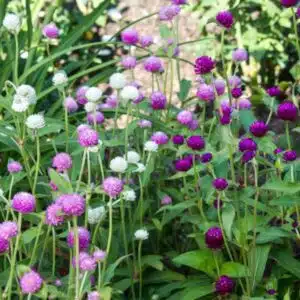
Globe Amaranth Mix is a cheerful, enduring flower that asks for very little and gives back so much. Forget the high-maintenance blooms that sulk at the first sign of heat or a missed watering. Globe Amaranth is made of tougher stuff. It’s a sun-lover through and through, thriving in conditions that send more delicate flowers packing.
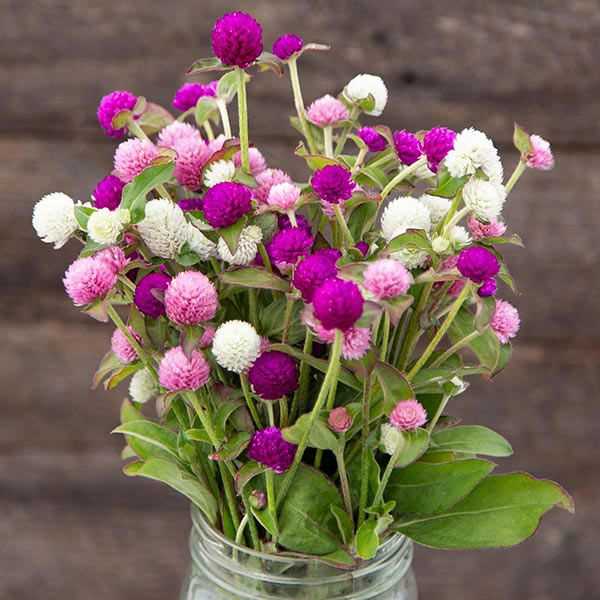
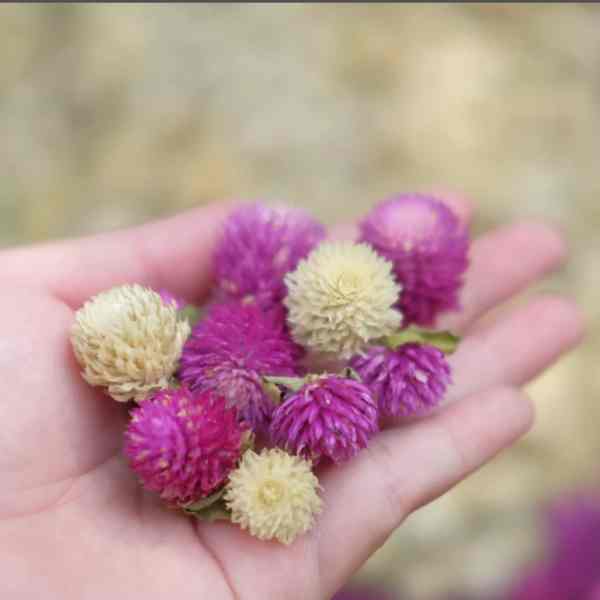
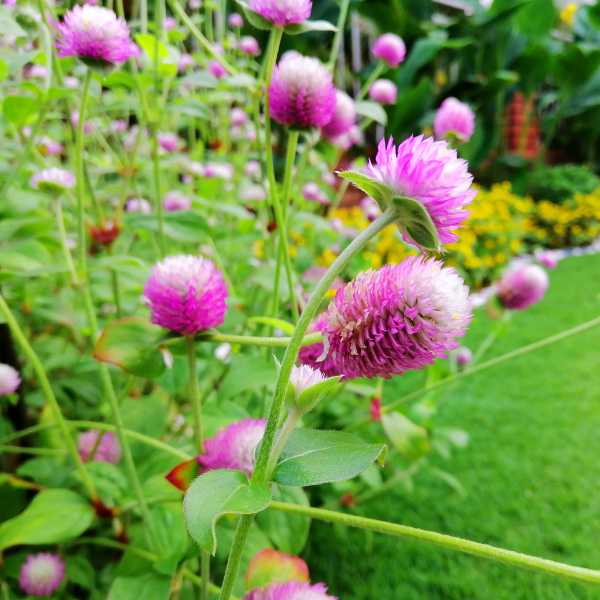
It grows in a neat mound of mid-green foliage with bright, button-like pom-poms that seem to float above the leaves. The flowers come in a joyful mix of pinks, purples, and whites, each one a tiny globe of colour that stays looking fresh for weeks on end. It’s the sort of plant that quietly fills in the gaps, ties together your garden palette, and brings the bees and butterflies fluttering in for a visit.
It’s one of those flowers that used to be found in every country garden, growing happily alongside zinnias and marigolds, and it’s easy to see why. Its durability is unmatched. Once established, Globe Amaranth is remarkably drought-tolerant and thrives in lean soils where other flowers might struggle. It doesn’t need rich compost or constant watering to look its best. In fact, it seems to shine all the more when conditions are on the tough side. From early spring right through to the end of autumn, these blooms keep on coming, unfazed by scorching days or dry spells.
The flowers themselves are surprisingly long-lasting, both on the plant and after picking. Cut a handful for a vase, and you’ll find they stay looking fresh far longer than most garden blooms. But where they truly shine is in dried arrangements. Once picked and hung to dry, the flowers keep their vivid colours beautifully, retaining their pinks, purples, and whites long after the garden has gone quiet for winter.
Beyond its ornamental charm, Globe Amaranth is edible. The small, globe-shaped flowers can be used as garnishes for salads and desserts, adding a playful burst of colour that feels as good as it looks. They can also be infused in teas, lending a mild, earthy-sweet flavour and a soft blush of pink to the cup. Some even use them in syrups or as decorative touches in drinks and cakes.
For those who love growing for pollinators, Globe Amaranth is a real gift. The flowers draw in bees, butterflies, and other beneficial insects, adding life and movement to the garden.
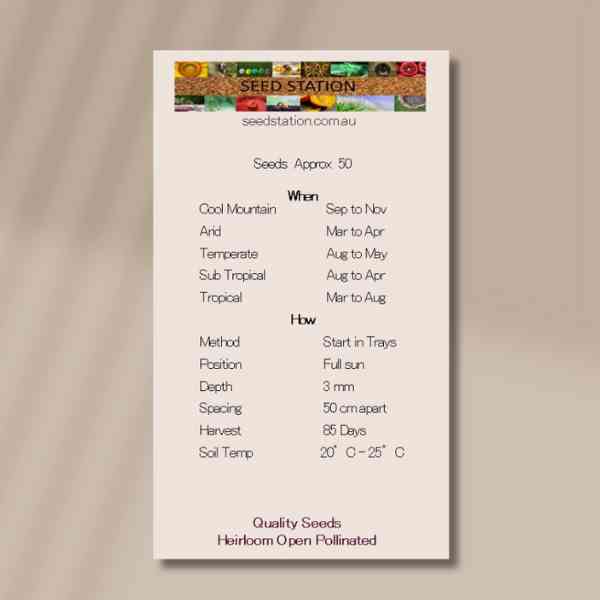
| Method: Sow direct | Soil Temp: 20°C - 25°C |
| Cool Mountain: Sep - Nov | Position: Full sun |
| Arid: Mar - Apr | Row Spacing: 50cm apart |
| Temperate: Aug - May | Planting Depth: 3mm |
| Sub Tropical: Aug - Apr | Harvest: 85 days |
| Tropical: Mar - Aug | Plant Height: 60cm |
🌾 Amaranth Grow Guide
🌱 Overview
Amaranth is a fast-growing, heat-loving plant grown for its colourful leaves, edible greens, decorative flower plumes, and tiny nutritious seeds. Depending on the variety, it may be grown mainly as a leafy vegetable, a grain crop, a microgreen, an ornamental feature, or a dramatic cut flower. Leaf colours can include green, red, burgundy, bronze, purple, and variegated tones, while flower heads may be upright, drooping, feathery, or tasselled.
Amaranth is a generous plant for productive gardens because it grows quickly, tolerates warm conditions once established, and offers several harvest options. Young leaves can be picked like spinach, mature leaves can be cooked, flower heads can be used ornamentally, and seed heads can be dried for grain or future sowing.
The key to success is warm soil, full sun, good drainage, steady early moisture, and careful thinning. Amaranth can become large and vigorous, so give it space and avoid letting unwanted seed heads scatter if you do not want it self-sowing around the garden.
🌾 Sowing in Trays Versus Direct Sowing
Amaranth can be grown by direct sowing or by sowing in trays, and both methods work well. However, direct sowing is usually the best method for most garden plantings because the seed germinates readily, the plants grow quickly, and seedlings establish strongly when sown where they are to grow.
To direct sow, prepare a fine, weed-free bed. Amaranth seed is tiny, so scatter it thinly over the surface and cover with only a very light layer of fine soil or seed-raising mix, about 2 to 3 mm deep. Water gently with a soft spray so the seed is not washed away. Keep the soil evenly moist until seedlings emerge. Once seedlings are large enough to handle, thin them early so the strongest plants have room to grow.
Tray sowing is useful if seed is limited, pests are active, or you want more control over spacing. Use a punnet, cell tray, or small pot filled with fine seed-raising mix. Scatter seed thinly, cover very lightly, and water with a mister or from below. Transplant seedlings while they are still young and compact, before they become crowded or root-bound.
Best method: direct sowing is recommended for amaranth grown as leafy greens, grain, or ornamental garden plants. Tray sowing is useful for careful spacing, pot culture, or protecting young seedlings from slugs, snails, ants, birds, and heavy rain.
💧 Seed Pretreatment
Amaranth seed does not require pretreatment. No soaking, chilling, scarifying, or smoke treatment is needed.
Because the seed is very small, soaking is not recommended. Wet seed becomes difficult to spread evenly and can clump together. The most important steps are using fresh seed, sowing shallowly, keeping the surface evenly moist, and avoiding heavy watering that washes seed away.
Poor germination is usually caused by old seed, seed buried too deeply, dry soil surface, cold wet soil, or rough watering.
🪴 Soil and Position
Amaranth grows best in full sun. Strong light encourages vigorous growth, deeper leaf colour, sturdy stems, and better flower and seed production. In too much shade, plants may become stretched, weak, and less productive.
The soil should be well drained, fertile, and loose enough for strong root growth. Amaranth appreciates compost-enriched soil, but it does not need overly rich feeding. A good garden loam, sandy loam, raised bed, or improved vegetable bed is ideal. It can tolerate less-than-perfect soil, but growth and leaf quality improve when moisture and fertility are steady.
Avoid waterlogged ground. If soil is heavy clay, plant into a raised bed or mound to improve drainage. For pots, use a quality vegetable potting mix and choose a container large enough for the variety. Leaf types can grow well in medium pots, while tall grain or ornamental types need deep, sturdy containers and may need support.
🌿 Care and Maintenance
Amaranth grows quickly once established, but young seedlings need gentle care. Keep the soil evenly moist during germination and early growth. Once plants are stronger, water deeply whenever the soil begins to dry. Mature plants can handle short dry spells, but regular moisture gives better leaves and stronger growth.
Thin seedlings early. This is important because crowded amaranth becomes weak, spindly, and more prone to disease. If growing for baby leaves, plants can be kept closer together and harvested young. If growing for large leaves, flowers, or seed heads, allow much more space so each plant can branch and develop fully.
Mulch around established plants with straw, sugarcane mulch, composted leaves, or fine bark. Mulch helps conserve moisture, suppress weeds, and reduce soil splash onto the leaves. Keep mulch slightly away from the stem to avoid rot.
Feed moderately. Compost before planting is usually enough for garden beds, but leafy types may benefit from a mild liquid feed during active growth. Avoid excessive nitrogen, as it can create soft growth and may reduce flowering or seed production.
Tall varieties may need staking, especially in windy positions or when carrying heavy seed heads. Use bamboo stakes, twine, or a loose support frame before stems become top-heavy.
Remove unwanted flower heads before they mature if you do not want self-sown seedlings. Amaranth can produce a lot of seed, and loose seed may appear in nearby beds later.
🌼 Companion Planting Guide
Amaranth is a useful companion plant because it grows upright, attracts pollinators, provides habitat, and can act as a living support or light shelter for smaller crops. Its flowers and seed heads can bring insects and birds into the garden.
Good companions include beans, peas, corn, cucumber, zucchini, pumpkin, capsicum, eggplant, tomato, basil, parsley, coriander, dill, calendula, alyssum, marigold, nasturtium, zinnia, cosmos, lettuce, spinach, radish, beetroot, and spring onion.
Amaranth can provide light shade for tender leafy greens if positioned carefully, but it should not be allowed to completely block sunlight. It can also sit well near fruiting crops where its flowers help support beneficial insect activity.
Avoid planting amaranth too close to small slow-growing crops, as vigorous plants can shade and outcompete them. Also avoid placing tall varieties where they will cast heavy shade over sun-loving vegetables or where seed heads can drop freely into beds where you do not want volunteers.
✂️ How to Harvest
Amaranth can be harvested for baby leaves, mature leaves, stems, flowers, seed heads, grain, and seed saving.
For baby leaves, snip tender young growth once plants are large enough to recover. Baby leaves are mild and useful in salads, stir-fries, soups, and mixed greens.
For mature leaves, pick the outer leaves first and leave the growing tip intact so the plant keeps producing. Larger leaves are usually best cooked. They can be steamed, sautéed, added to curries, soups, stews, omelettes, or used like spinach.
For tender stems, harvest young shoots before they become woody. Older stems can become fibrous, so pick while growth is still soft.
For ornamental flowers, cut stems when flower plumes are well coloured and firm. Harvest in the morning once plants are dry. Remove lower leaves before placing stems in water.
For grain, allow seed heads to mature and begin drying on the plant. Cut seed heads when they are dry enough that seed rubs free easily, then finish drying under cover before threshing.
⚠️ Common Issues and Fixes
| Issue | Likely Cause | Fix |
|---|---|---|
| Poor germination | Old seed, deep sowing, dry soil surface, or rough watering | Use fresh seed, sow shallowly, mist gently, and keep evenly moist |
| Seedlings disappear | Slugs, snails, ants, birds, or heavy rain | Start in trays or protect direct-sown areas with barriers |
| Leggy seedlings | Not enough light or overcrowding | Provide full sun and thin seedlings early |
| Plants stay small | Poor soil, crowding, low warmth, or lack of water | Improve soil, thin plants, water deeply, and mulch |
| Yellow leaves | Waterlogging, nutrient stress, or old lower leaves | Improve drainage, feed lightly, and remove old foliage |
| Weak floppy growth | Too much shade, crowding, or excess nitrogen | Increase sunlight, space plants well, and avoid heavy feeding |
| Leaves become tough | Drought stress or harvesting too late | Water consistently and harvest younger leaves |
| Holes in leaves | Caterpillars, beetles, grasshoppers, or other chewing pests | Inspect regularly, remove pests by hand, and use fine netting if needed |
| Aphids | Soft new growth or stressed plants | Hose off gently, encourage ladybirds, and avoid overfeeding |
| Leaf spots | Wet foliage, poor airflow, or overcrowding | Space plants well, water at soil level, and remove affected leaves |
| Plants falling over | Tall variety, wind, shallow roots, or heavy seed heads | Stake early and avoid exposed positions |
| Unwanted self-sowing | Seed heads left to mature and drop | Harvest seed heads early or remove flowers before seed ripens |
| Grain difficult to clean | Seed heads harvested too wet or mixed with chaff | Dry thoroughly, rub gently, sieve, and winnow slowly |
🌰 Detailed Seed Saving Guide
Saving amaranth seed is easy because each mature plant can produce a large amount of seed. Choose the healthiest plants with strong stems, good leaf colour, vigorous growth, pest resistance, and the flower or seed head type you prefer. Avoid saving seed from weak, diseased, badly flopping, or poor-performing plants.
Allow selected flower heads to mature on the plant. As the seed ripens, the flower head will become drier and more papery. Test readiness by gently rubbing part of the seed head between your fingers over a plate. If tiny seeds fall free easily, the head is ready or close to ready.
Cut mature seed heads with a section of stem attached. Place them upside down in a paper bag or lay them on a clean sheet in a dry, shaded, airy place. Do not use plastic, as trapped moisture can cause mould. Let the heads dry fully until crisp.
Once dry, rub the seed heads gently between your hands over a large tray, bucket, or sheet. The tiny seed will fall out mixed with chaff. Work slowly, as the seed is small and can scatter easily.
Separate seed from chaff by sieving first, then gently winnowing. To winnow, pour the seed and chaff slowly from one container to another in a light breeze or in front of a very gentle fan. The lighter chaff will blow away while the heavier seed drops. Repeat until the seed is reasonably clean.
Spread the cleaned seed on a plate or tray for another week to make sure it is completely dry. Store it in a labelled paper envelope inside an airtight jar. Keep it somewhere cool, dark, and dry. Add a silica gel sachet if humidity is an issue.
Label the packet with the plant name, leaf colour, flower colour, plant height, collection date, and notes such as “best red leaf type”, “large seed heads”, “strong upright stems”, or “best leafy harvest”.
If different amaranth varieties grow close together, saved seed may produce plants with mixed colours, heights, and flower forms. This can be attractive and useful in home gardens, but save seed from carefully selected plants if you want to keep particular traits.
🌾 Final Thoughts
Amaranth is a productive, colourful, and versatile plant that earns its place in both edible and ornamental gardens. It offers tender greens, dramatic flowers, nutritious seed, pollinator value, and easy seed saving from a single planting.
For the best results, direct sow shallowly, grow in full sun, thin early, water steadily while young, avoid overfeeding, support tall varieties, and collect seed heads before they scatter. With simple care, amaranth can become one of the most generous and striking plants in the garden.
2 reviews for Globe Amaranth Mix

Postage Charge
Orders under $40 attract a $5.50 shipping charge. Orders $35 and above have free shipping.
*** We cannot deliver to Parcel Lockers ***
Order Times
Seed orders are normally dispatched within three business days. You will receive an email when seeds are mailed out.
Postage Days
Seeds are mailed out Tuesday to Friday at 1pm. Except for the Friday of long weekends.
Postage Times
WA 2-3 Days: SA,NT 3-5 Days: NSW, ACT, QLD, VIC: 5-7 Days
Carrier
We use Australia Post Letter Postage for the majority of orders.
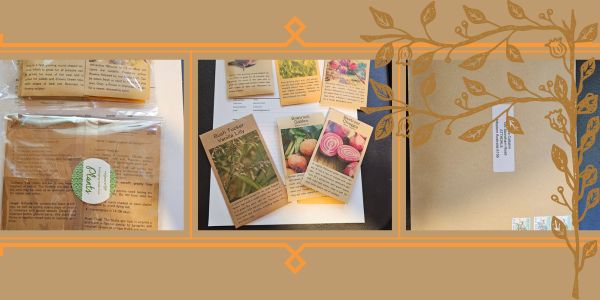
Not only are our seeds packed in recycled paper envelopes, we keep the theme going when we post out website orders. To protect your seeds from moisture and the letter box munchers (snails), we use a very special plastic free material made from plants. They are then put into recycled mailing envelopes. Green all the way ????????
Delivery Guarantee
We take great care to make sure your seeds arrive safely. If your order is lost or damaged in transit, we’ll happily send a replacement. Unfortunately, we can’t replace or refund orders that arrive later than the estimated delivery date, as delays can sometimes occur that are outside our control.
Please note that all dispatch and delivery times listed are estimates only. While we do our best to post promptly, delivery timeframes can vary due to postal service delays, weather events, or other unforeseen circumstances. We’re unable to take responsibility for any loss, damage, or cost that results from a late delivery.
An order is not considered missing until at least 20 business days have passed from the postage date. You’ll receive an email once your seeds have been posted, letting you know they’re on their way. If you don’t see it in your main inbox, please check your Spam or Promotions folders as sometimes our emails like to hide there.
See all our verified customer reviews on our official CusRev profile.
See all our verified customer reviews on our official CusRev profile.