




Broccoli Broccoletti
$4.95
Brassica Oleracea var. Italica
- Seed Count 125
- Highly Nutritious
- Perennial in Cool Climates
Out of stock
Email when stock available
Description
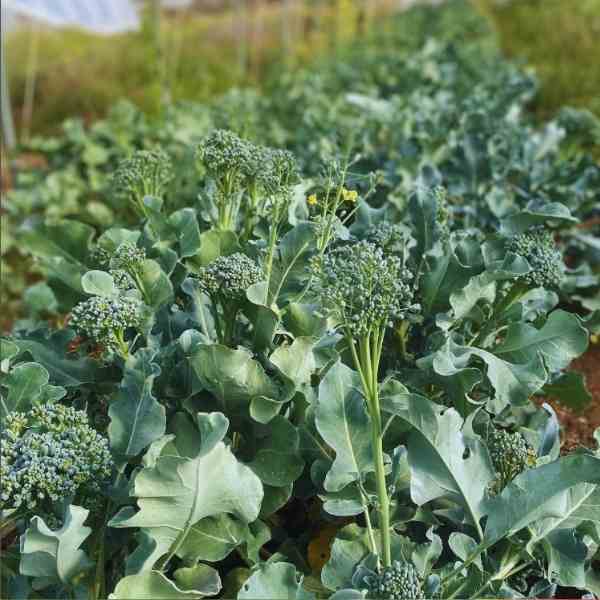
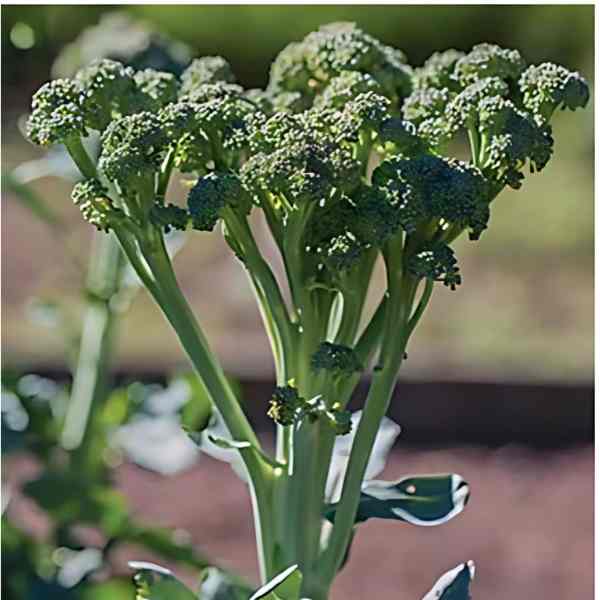
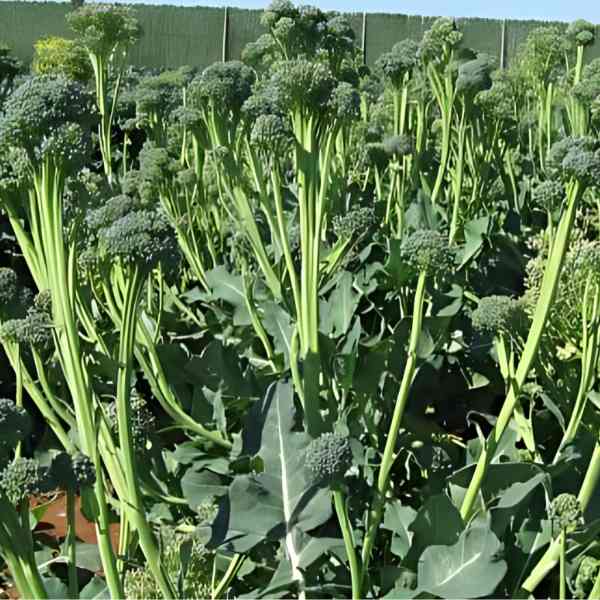
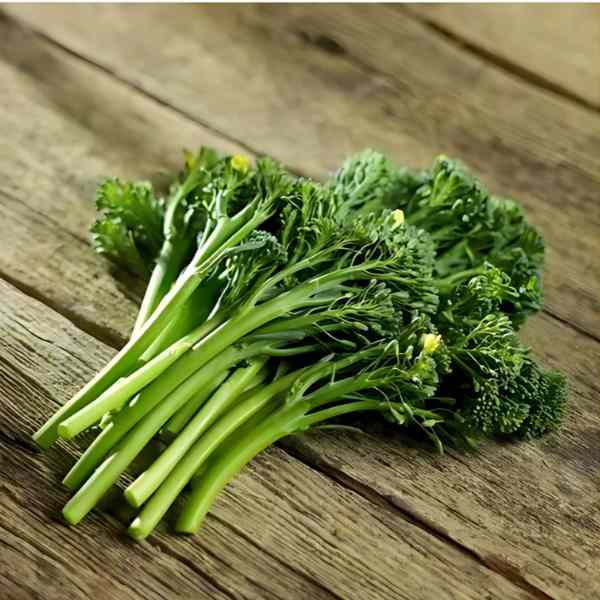
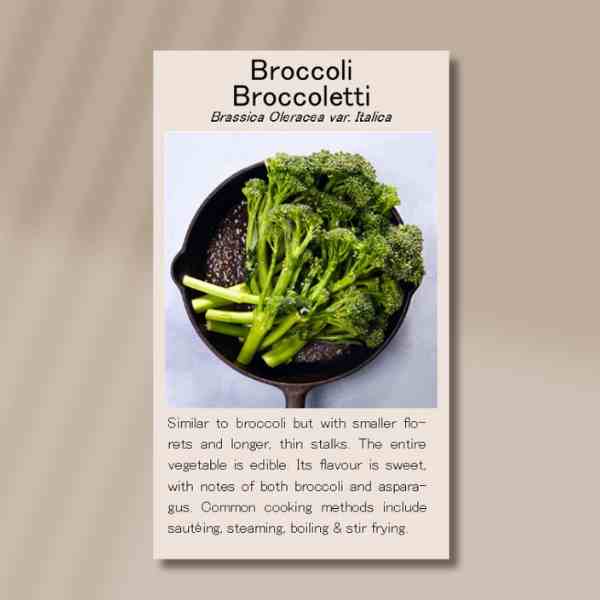
The Broccoli Broccoletti, more commonly known in many kitchens as broccolini, has found its place in modern Australian cooking for its versatility, flavour, and sheer ease of use.
Like broccoli and other members of the brassica family, it thrives when planted in the cooler months. In much of Australia, autumn is the ideal time to get it going, as it avoids the extremes of summer heat that can stress plants and interfere with the formation of good-quality shoots. The fact that every part of the plant is edible also means there’s virtually no waste, which makes it a practical addition to the kitchen garden.
Broccoletti matures a little faster than standard broccoli, and because you’re harvesting smaller stems rather than waiting for one big head to form, you’ll usually start picking earlier. It tends to feel like less of a gamble as you don’t have to wait quite as long for your reward. It also handles temperature fluctuations a bit better as regular broccoli can bolt (run to seed) quickly if the weather heats up, making it more forgiving if autumn throws you a warm spell.
If space is an issue then Broccoletti plants are usually a bit more compact than the big-headed broccoli varieties making them great for smaller garden beds or containers.
While broccoli will always hold its place as a staple, Broccoletti brings a fresh twist that resonates with modern tastes. Whether it’s a quick side dish, a centerpiece in a vegetarian meal, or a fresh addition to a family dinner, it offers something that feels just right.
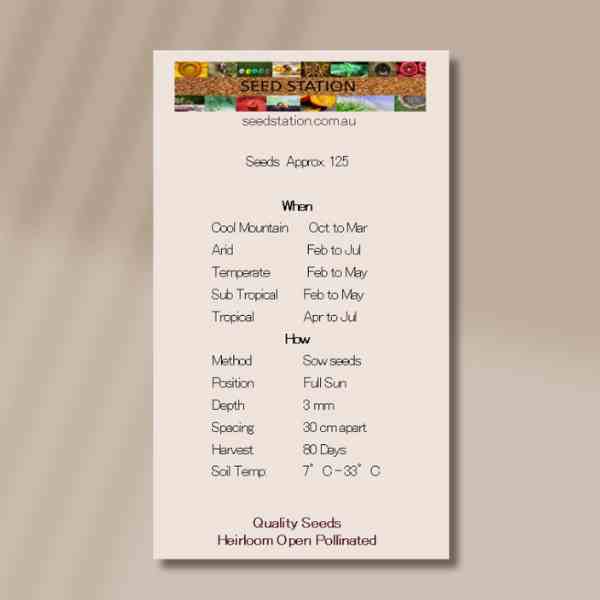
| Method: Sow direct | Soil Temp: 7°C - 30°C |
| Cool Mountain: Oct - Mar | Position: Full sun |
| Arid: Feb - Jul | Row Spacing: 30cm apart |
| Temperate: Feb - May | Planting Depth: 3mm |
| Sub Tropical: Feb - May | Harvest: 80 Days |
| Tropical: Apr - Jul | Plant Height: 40cm |
🥦 Broccoli Grow Guide
Broccoli is a productive, nutritious vegetable grown for its firm central head, tender side shoots, leaves, and flower stems. It is a rewarding crop for home gardeners because one well-grown plant can provide more than a single harvest. After the main head is cut, many varieties continue producing smaller side shoots, giving you extra pickings over time.
Broccoli grows best when it is given steady care from the beginning. It likes fertile soil, consistent moisture, good airflow, and protection from common leaf-eating pests. The aim is to grow a strong leafy plant before the head forms, because healthy leaves feed the developing head.
🌱 Sowing in Trays Versus Direct Sowing
Broccoli can be grown by direct sowing or by starting seed in trays, but sowing in trays is usually the best method. Tray sowing gives better control over moisture, spacing, pests, and early seedling growth. Broccoli seedlings are attractive to snails, slugs, caterpillars, and other pests, so raising them in a protected area helps prevent early losses.
To sow in trays, fill seed trays or small cells with a quality seed-raising mix. Sow the seeds about 5 mm deep, cover lightly, and water gently. Keep the mix evenly moist but not soggy. Once seedlings have several true leaves and are sturdy enough to handle, plant them into their final position.
When transplanting, handle seedlings by the leaves rather than the stem. Plant them firmly into prepared soil and water them in well. A strong start is important because stressed young broccoli plants may produce smaller heads later.
Direct sowing can work in a well-prepared, weed-free bed, but it is less reliable. Sow seeds shallowly, keep the soil moist, and thin seedlings so the strongest plants have enough space. Direct-sown seedlings need early protection from pests and competition from weeds.
For most home gardeners, tray sowing is preferred because it produces stronger, easier-to-manage plants and reduces pest damage during the vulnerable seedling stage.
🌾 Seed Pre-Treatment
Broccoli seed does not require special pre-treatment. There is usually no need for soaking, chilling, or scarifying.
Fresh seed generally germinates well when sown into a clean, moist seed-raising mix. The most important factors are shallow sowing, steady moisture, and good airflow. Avoid overwatering, as constantly wet mix can lead to seed rot or seedling disease.
🌞 Soil and Position
Broccoli grows best in full sun with rich, fertile, well-drained soil. It is a hungry crop and needs plenty of organic matter to support strong leaf growth and head formation.
Before planting, improve the soil with compost, aged manure, or well-rotted organic matter. The soil should hold moisture but drain freely. Broccoli does not like drying out, but it also dislikes sitting in waterlogged ground.
A slightly firm soil is helpful because broccoli plants can become top-heavy as they grow. After planting, press the soil gently around the roots so the plant is secure. In loose or sandy soil, add compost to improve moisture and nutrient retention. In heavy soil, improve structure and drainage before planting.
Broccoli can also be grown in large containers, but the pot must be deep and wide enough to support a large leafy plant. Use a premium potting mix and water consistently, as container-grown broccoli dries out faster than plants in garden beds.
💧 Care and Maintenance
Broccoli needs consistent moisture from seedling stage through to harvest. Water deeply and regularly, keeping the soil evenly moist. Irregular watering can cause stress, smaller heads, poor side-shoot production, or early flowering.
Mulching around the plants helps conserve moisture, suppress weeds, and keep the root zone stable. Keep mulch slightly away from the stem to reduce the risk of rot.
Feed broccoli regularly because it is a heavy feeder. Compost, worm castings, liquid seaweed, fish emulsion, or a balanced vegetable fertiliser can all support healthy growth. A nitrogen-rich feed can help during early leafy growth, while balanced feeding supports strong head development. Avoid overfeeding late in growth, as excessive soft growth can attract pests.
Keep the bed weed-free. Broccoli does not like competition, especially while young. Weed carefully so the shallow roots are not disturbed.
Good airflow is important. Space plants well so leaves can dry after watering or rain. Crowded plants are more likely to suffer from fungal problems and pest pressure.
Pest protection is highly recommended. Fine insect netting can help protect plants from caterpillars and other pests. Check leaves regularly, especially the undersides, where eggs and young caterpillars may hide.
🐝 Companion Planting Guide
Broccoli grows well with companions that attract beneficial insects, improve garden diversity, or make good use of space around the crop.
Good companions include lettuce, spinach, silverbeet, beetroot, celery, onions, garlic, chives, dill, coriander, parsley, thyme, sage, rosemary, calendula, alyssum, marigold, nasturtium, and chamomile.
Alyssum, calendula, dill, coriander, and parsley are especially useful because their flowers attract hoverflies, tiny wasps, and other beneficial insects. These helpful insects can assist with natural pest balance in the garden.
Leafy greens can be grown nearby because they enjoy similar moisture and fertility. Alliums such as onions, garlic, and chives are often used in mixed vegetable beds to add strong scent diversity around brassica crops.
Avoid planting broccoli too close to strawberries or heavy-feeding crops that compete strongly for nutrients. Also avoid overcrowding it with large spreading plants, as broccoli needs space, airflow, and light to form good heads.
✂️ How to Harvest
Harvest broccoli when the central head is firm, tight, and well-formed. The small buds should still be closed. Do not wait until the buds loosen or yellow flowers appear, as the eating quality declines once flowering begins.
Use a clean, sharp knife to cut the main head with a section of stem attached. Cut at a slight angle so water does not sit on the cut surface. Leave the plant in the ground after harvesting the main head, because many broccoli plants will produce smaller side shoots from the leaf joints.
Check plants often once heads begin forming. Broccoli can move from perfect harvest stage to flowering quickly if left too long. Side shoots should be harvested regularly while they are young and tender.
The leaves are also edible. Young leaves can be cooked like other leafy greens, while larger leaves are best sliced and cooked well.
⚠️ Common Issues and Fixes
| Issue | Likely Cause | Fix |
|---|---|---|
| Poor germination | Old seed, dry mix, seed buried too deeply | Use fresh seed, sow shallowly, keep evenly moist |
| Seedlings collapse | Overwatering, poor airflow, fungal disease | Use clean seed mix, avoid soggy conditions, improve airflow |
| Leggy seedlings | Not enough light or overcrowding | Provide stronger light and thin or pot on seedlings early |
| Small heads | Stress, poor soil, irregular watering, overcrowding | Improve soil, water consistently, space plants properly |
| Heads flowering too quickly | Heat stress, dry soil, plant stress, late harvest | Harvest promptly, water evenly, mulch well |
| Yellowing lower leaves | Nitrogen shortage, old leaves, water stress | Feed lightly, water consistently, remove old leaves |
| Purple-tinged leaves | Nutrient stress, cool soil, root stress | Improve soil fertility and keep plants growing steadily |
| Holes in leaves | Caterpillars, snails, slugs, or beetles | Inspect often, hand-pick pests, use fine insect netting |
| Aphids in heads | Dense growth, soft new growth, pest buildup | Hose off early, encourage beneficial insects, avoid excess nitrogen |
| Whitefly | Warm sheltered conditions and crowded plants | Improve airflow, use insect netting, remove badly infested leaves |
| Clubroot-like swelling | Soil-borne disease in affected beds | Rotate crops, improve drainage, avoid moving infected soil |
| Downy mildew | Damp leaves, poor airflow, crowded planting | Space plants well, water at soil level, remove affected foliage |
| Plants falling over | Loose soil, shallow roots, wind, top-heavy growth | Firm soil at planting, stake if needed, protect from strong wind |
🌰 Detailed Seed Saving Guide
Saving broccoli seed takes patience because the plant must be allowed to grow past the eating stage, flower, and form seed pods. This means you need to choose seed-saving plants before harvesting the best heads. Select only the strongest, healthiest plants with good head shape, strong stems, good side-shoot production, and no signs of disease.
Do not save seed from plants that produce tiny heads, flower too early, grow weakly, or suffer badly from pests. Seed saving works best when you save from several good plants rather than just one, as this helps maintain stronger future crops.
Allow the chosen plants to keep growing after the head stage. They will send up branching flower stems with many small yellow flowers. These flowers are insect-pollinated, so they need access to bees and other pollinators.
Broccoli can cross with closely related crops that are flowering nearby, including cabbage, cauliflower, kale, Brussels sprouts, and some Asian greens. For more predictable seed, allow only one compatible crop type to flower for seed in the area, or separate flowering crops by a generous distance.
After flowering, long slender pods will form. Leave these pods on the plant until they turn dry and brown. Watch them closely, because fully dry pods can split and drop seed. If wet weather threatens while pods are nearly dry, cut the stems and hang them upside down in a dry, airy place to finish drying.
Once the pods are completely dry, place them in a paper bag or on a clean tray and crush them gently to release the seeds. Separate the small round seeds from the dry pod pieces by hand, with a sieve, or by gentle winnowing.
Spread the cleaned seed on a plate or paper towel for several more days to ensure it is fully dry. Store it in a labelled paper envelope or airtight jar. Write the plant name and collection date on the label. Keep the seed in a cool, dark, dry place.
For best results, use saved seed within a few years and always keep it dry. Moisture, heat, and direct light reduce seed quality.
🌿 Final Thoughts
Broccoli is a generous and worthwhile vegetable for gardeners who can provide fertile soil, regular water, and good pest protection. It is best started in trays because young seedlings are easier to protect and manage before planting out.
With rich soil, steady moisture, regular feeding, and close attention to pests, broccoli can produce a firm central head followed by useful side shoots. Harvest at the tight bud stage, keep the plant healthy after the first cut, and you can enjoy multiple pickings from a single crop.
4 reviews for Broccoli Broccoletti
| 5 star | 100% | |
| 4 star | 0% | |
| 3 star | 0% | |
| 2 star | 0% | |
| 1 star | 0% |
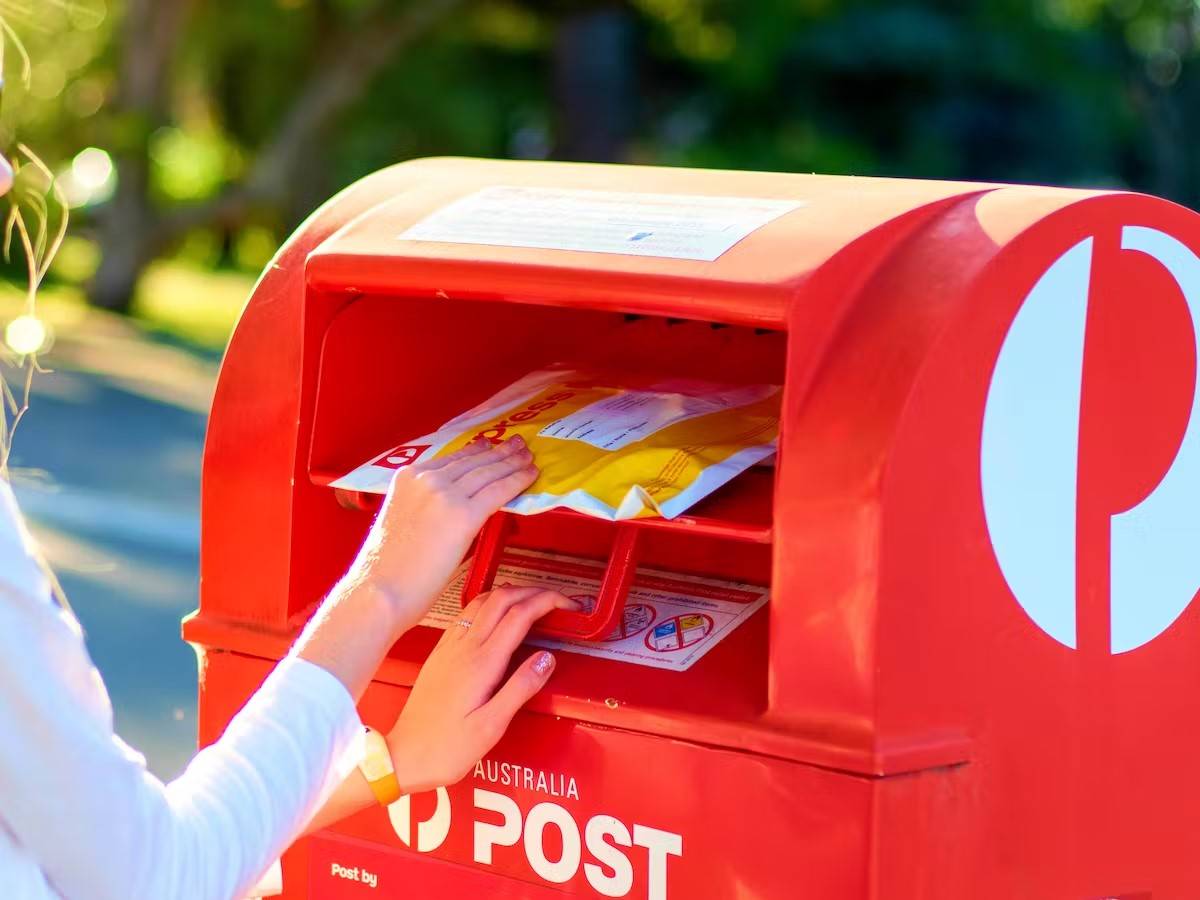
Postage Charge
Orders under $35 attract a $4.95 shipping charge. Orders $35 and above have free shipping.
Order Times
Seed orders are normally dispatched within three business days. You will receive an email when seeds are mailed out.
Postage Days
Seeds are mailed out Tuesday to Friday at 1pm. Except for the Friday of long weekends.
Postage Times
WA 2-3 Days: SA,NT 3-5 Days: NSW, ACT, QLD, VIC: 5-7 Days
Carrier
We use Australia Post Letter Postage for the majority of orders
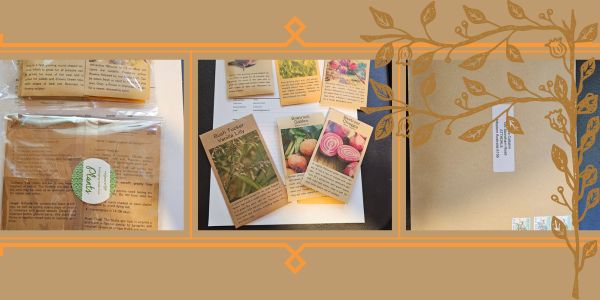
Not only are our seeds packed in recycled paper envelopes, we keep the theme going when we post out website orders. To protect your seeds from moisture and the letter box munchers (snails), we use a very special plastic free material made from plants. They are then put into recycled mailing envelopes. Green all the way ????????
Delivery Guarantee
We take great care to make sure your seeds arrive safely. If your order is lost or damaged in transit, we’ll happily send a replacement. Unfortunately, we can’t replace or refund orders that arrive later than the estimated delivery date, as delays can sometimes occur that are outside our control.
Please note that all dispatch and delivery times listed are estimates only. While we do our best to post promptly, delivery timeframes can vary due to postal service delays, weather events, or other unforeseen circumstances. We’re unable to take responsibility for any loss, damage, or cost that results from a late delivery.
An order is not considered missing until at least 20 business days have passed from the postage date. You’ll receive an email once your seeds have been posted, letting you know they’re on their way. If you don’t see it in your main inbox, please check your Spam or Promotions folders as sometimes our emails like to hide there.
See all our verified customer reviews on our official CusRev profile.
See all our verified customer reviews on our official CusRev profile.
See all our verified customer reviews on our official CusRev profile.
See all our verified customer reviews on our official CusRev profile.