
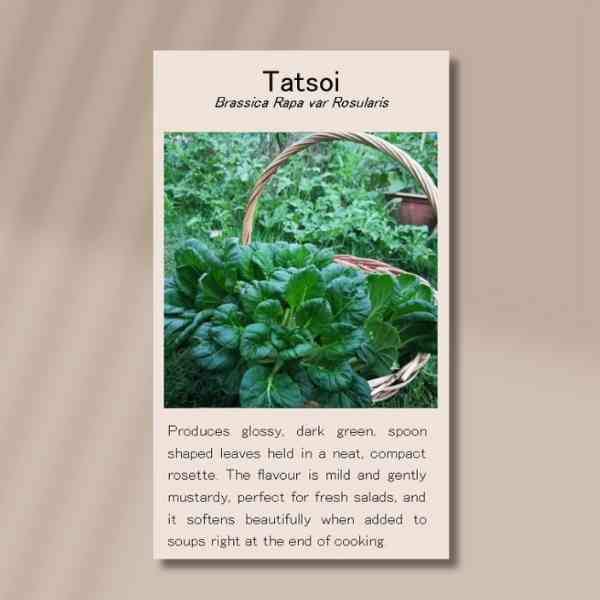


Tatsoi
$4.95
Brassica Rapa var Rosularis
- Seed Count 2000
- Long Harvest Period
- Biennial
Only 8 left in stock
Description
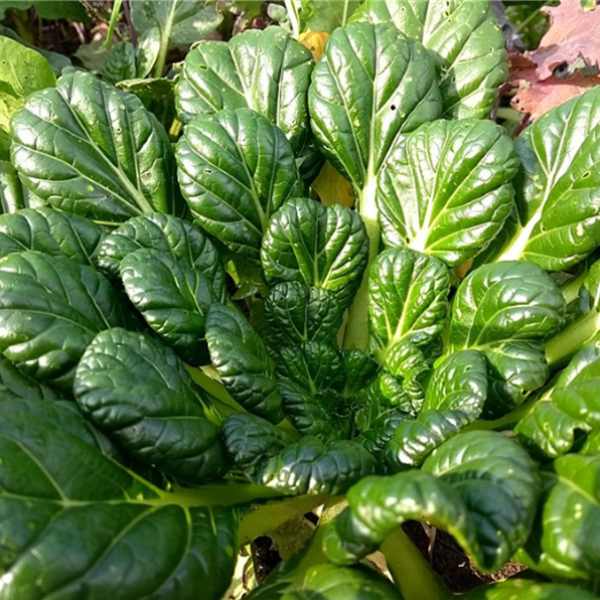
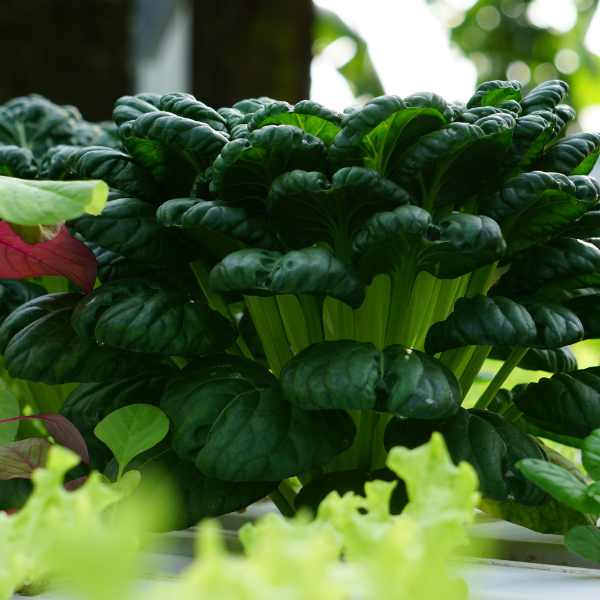
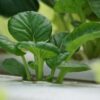
Tatsoi is immediately recognisable by its non hearting habit and its distinctive spoon shaped leaves. The colour is a deep emerald green, rich and healthy looking, with gentle veining and the leaves are naturally convex, cupping slightly as they grow, which gives the plant a layered, almost sculptural quality when viewed from above. As the leaves develop, they form a low growing rosette that spreads outward rather than upward, arranging itself into wide, symmetrical circles.
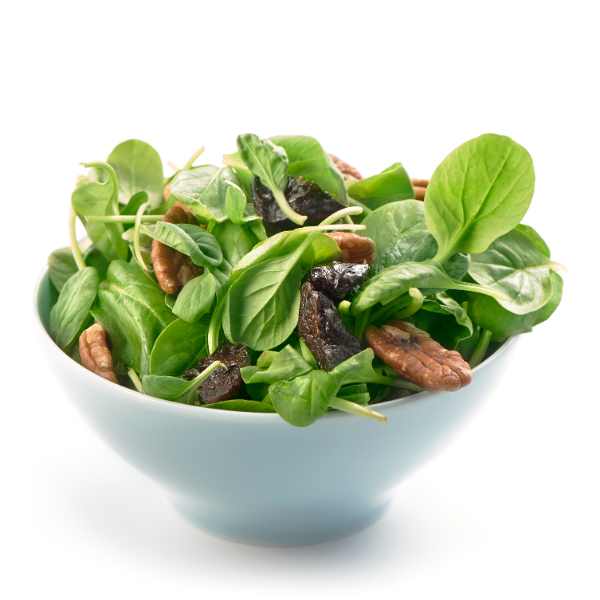
Tatsoi truly shines in its eating qualities. The leaves are tender, even when they reach a generous size, and the texture remains soft without becoming limp. When harvested young, the leaves have a pleasant crunch that adds interest to fresh dishes, while still being delicate enough to eat raw without any bitterness. The raw leaves offer a mild mustard note that is gentle rather than sharp and it works well with other ingredients, enhancing salads without overpowering them and mixing easily with dressings, citrus, nuts and cheeses. When cooked, the mustard edge softens, the leaves wilt down beautifully and the sweetness deepens, developing a warm, earthy flavour often compared to spinach, though with more character and body.
Nutritionally, Tatsoi fits comfortably among the leafy greens valued for their contribution to a balanced diet. Like many members of the brassica family, it offers a range of vitamins and minerals while remaining light and easy to digest. Its tender texture makes it accessible to a wide range of eaters, including those who may shy away from tougher or more pungent greens.
In an Australian context, Tatsoi fits neatly into the broader appreciation for Asian greens that has grown steadily over time. Its adaptability in the kitchen and its approachable flavour make it a bridge between familiar greens like spinach and it offers something slightly different without being intimidating.
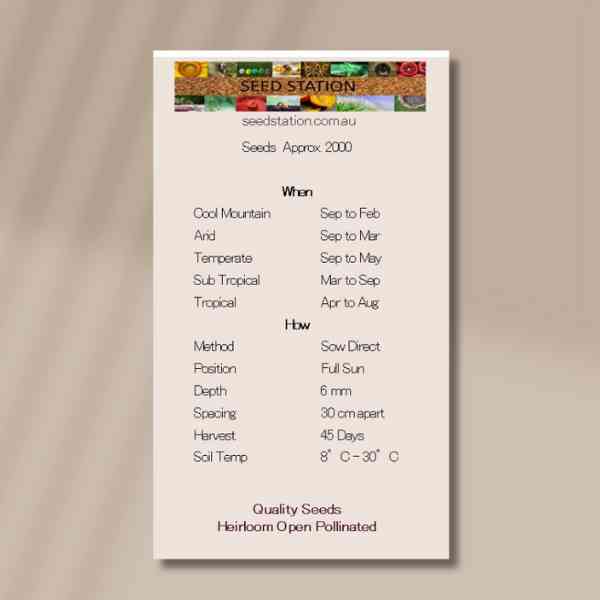
| Method: Sow direct | Soil Temp: 8°C - 30°C |
| Cool Mountain: Sep - Feb | Position: Full sun |
| Arid: Sep - Mar | Row Spacing: 30cm |
| Temperate: Sep - May | Planting Depth: 6mm |
| Sub Tropical: Mar - Sep | Harvest: 45 Days |
| Tropical: Apr - Aug | Plant Height: 40cm |
?🥬 Tatsoi Grow Guide
🌱 Overview
Tatsoi is a fast-growing leafy green valued for its spoon-shaped leaves, mild mustard flavour, and attractive low rosette form. It is often grown for baby leaf harvests, stir-fries, salads, soups, steamed greens, and mixed Asian-style vegetable beds. The leaves are tender when young and become more substantial as the plant matures, making tatsoi useful at several harvest stages.
Tatsoi is generally easy to grow and suits garden beds, raised beds, containers, and wicking beds. It grows quickly, so the best results come from steady moisture, fertile soil, and regular picking. Although it is quite hardy compared with many leafy greens, it can become stressed by heat, dryness, pest pressure, or poor nutrition. A healthy, fast-growing plant gives the best flavour and texture.
🌱 Sowing in Trays Versus Direct Sowing
Tatsoi can be grown successfully from seed either in trays or by direct sowing. Direct sowing is usually the best method because tatsoi grows quickly, germinates readily, and does not need a long nursery stage. Sowing straight into its final position also avoids transplant stress and allows the roots to establish without interruption.
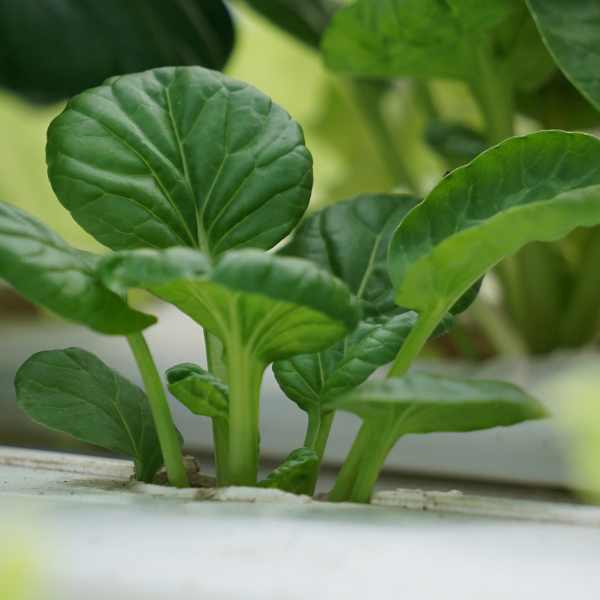
For direct sowing, prepare a fine, crumbly seed bed with compost worked through the soil. Sow the seed shallowly, cover lightly with fine soil or seed raising mix, and water gently. Keep the area evenly moist while the seed germinates. Once seedlings appear, thin them gradually so the remaining plants have enough space to form strong leaves and healthy rosettes. Thinnings can be eaten as microgreens or baby greens.
Tray sowing is also useful when garden space is not ready, pests are active, or you want more control over early growth. Sow into seed trays, small cells, or punnets filled with seed raising mix. Cover the seed lightly, keep evenly moist, and provide bright light. Transplant seedlings while they are still young, before they become root-bound. Older seedlings may pause after planting out, especially if conditions are hot, dry, or windy.
For most home gardeners, direct sowing is the simplest and most reliable option, while tray sowing is helpful when protecting seedlings from slugs, snails, birds, or very changeable conditions.
🌾 Seed Pre-Treatment
Tatsoi seed does not require any special pre-treatment. There is no need for soaking, chilling, scarifying, or smoke treatment. Fresh seed should germinate readily when sown shallowly into moist soil.
The most important step is keeping the seed bed evenly moist until germination. If the surface dries out repeatedly, germination may be patchy. Avoid sowing too deeply, as shallow sowing gives quicker and more even emergence.
🌞 Soil and Position
Tatsoi grows best in a position with good light and some protection from harsh stress. It can grow in full sun when conditions are mild, but it also appreciates light afternoon shade in hot or drying conditions. Too much deep shade can lead to stretched growth and slower production.
The soil should be fertile, moisture-retentive, and well-draining. Tatsoi is a leafy vegetable, so it needs enough nutrition to support quick, tender growth. Before sowing, enrich the soil with compost, aged manure, or well-rotted organic matter. The goal is soil that holds moisture without becoming waterlogged.
A slightly firm, fine surface helps with even germination. Remove stones, large clods, and weeds before sowing. In sandy soil, add compost to improve moisture retention. In heavy soil, improve structure with organic matter and consider raised beds to prevent waterlogging.
Tatsoi also grows very well in containers. Use a quality potting mix, choose a container with drainage holes, and water regularly because leafy greens in pots dry out quickly.
💧 Care and Maintenance
Tatsoi performs best with steady, even moisture. Water regularly so the soil remains damp but not soggy. Dry spells can cause tough leaves, stronger flavour, slower growth, and premature flowering. Mulching lightly around larger plants can help conserve moisture and reduce weeds, but keep mulch away from the crown to prevent rot.
Feed tatsoi lightly but consistently if growth slows or leaves become pale. A liquid fertiliser suitable for leafy greens can be used during active growth. Avoid overfeeding with very strong fertilisers, as this can encourage soft growth that is more attractive to pests.
Weed control is important because tatsoi is low-growing and can be overwhelmed by competing plants. Remove weeds gently by hand, especially while seedlings are small.
Protect young plants from slugs, snails, birds, and caterpillars. Fine insect netting can be very effective, especially against cabbage white butterfly and other brassica pests. Check the undersides of leaves regularly for eggs and small caterpillars.
Harvest regularly to encourage fresh new growth. You can pick individual outer leaves while leaving the centre to continue growing, or harvest whole rosettes when they are large enough. Regular picking also helps prevent older leaves from becoming coarse.
🌼 Companion Planting Guide
Tatsoi grows well with many other leafy greens, herbs, flowers, and vegetables that enjoy fertile soil and regular watering. Good companions include lettuce, spring onion, coriander, dill, calendula, nasturtium, marigold, beetroot, carrot, radish, and peas.
Spring onion can help make efficient use of space and grows upright without shading tatsoi heavily. Coriander and dill attract beneficial insects when allowed to flower, supporting natural pest control. Calendula, nasturtium, and marigold bring pollinators and beneficial insects into the garden while adding colour near vegetable beds.
Radish is a useful short-term companion because it grows quickly and can be harvested before tatsoi needs more room. Carrots and beetroot use a different root zone and can share space well if plants are not crowded.
Avoid planting tatsoi too close to other heavy-feeding brassicas such as cabbage, broccoli, cauliflower, kale, and pak choi in tight spaces, as they compete for similar nutrients and attract similar pests. Also avoid crowding it with sprawling plants that block airflow and light.
✂️ How to Harvest
Tatsoi can be harvested at several stages. For baby leaves, pick young leaves once they are large enough to use. This is ideal for salads, garnish, and quick cooking. For a cut-and-come-again harvest, remove the outer leaves and leave the growing centre intact. The plant will continue producing new leaves.
For mature rosettes, cut the whole plant at the base with a clean knife. Harvest in the cooler part of the day for the crispest leaves. After harvesting, rinse gently, drain well, and store in a container or bag in the fridge. Leaves are best used fresh, as they are tender and can wilt if stored too long.
Tatsoi can be eaten raw when young, but larger leaves are especially good lightly cooked. Use it in stir-fries, soups, noodle dishes, steamed greens, omelettes, and mixed vegetable sautés. Avoid overcooking, as the leaves are tender and cook quickly.
⚠️ Common Issues and Fixes
| Issue | Likely Cause | Fix |
|---|---|---|
| Poor germination | Seed sown too deeply, dry seed bed, old seed | Sow shallowly, keep evenly moist, use fresh seed |
| Seedlings disappear overnight | Slugs, snails, birds, or earwigs | Protect with barriers, netting, traps, and regular checks |
| Holes in leaves | Caterpillars, flea beetles, or other chewing pests | Use fine insect netting, inspect undersides of leaves, remove pests by hand |
| Pale leaves | Low nitrogen, poor soil, water stress | Add compost before sowing and feed lightly with a leafy green fertiliser |
| Tough or bitter leaves | Heat stress, dry soil, slow growth | Keep moisture steady, provide light shade in harsh conditions, harvest younger leaves |
| Plants flowering early | Stress from heat, drought, crowding, or old seedlings | Water consistently, thin plants properly, harvest promptly |
| Yellow lower leaves | Natural ageing, overcrowding, nutrient shortage, or overwatering | Remove old leaves, improve spacing, check soil moisture, feed lightly if needed |
| Root rot | Soil too wet or poorly drained | Improve drainage, avoid waterlogging, grow in raised beds or containers |
| Mildew or leaf disease | Poor airflow, overcrowding, overhead watering | Space plants well, water at soil level, remove affected leaves |
| Stunted growth | Compacted soil, nutrient shortage, pest damage | Loosen soil before sowing, enrich with compost, inspect roots and leaves for pests |
🌰 Detailed Seed Saving Guide
Saving tatsoi seed is best done from healthy, vigorous plants that have shown strong growth, good flavour, and resistance to pests and stress. Choose several good plants rather than saving from only one, as this helps maintain stronger future seed.
Allow selected plants to remain in the garden without harvesting the centre. Eventually, they will send up flower stems. The flowers are small and yellow, followed by narrow seed pods. Let the pods develop and mature on the plant for as long as possible. They are ready when they turn dry and brown, and the seeds inside become hard and dark.
Because dry pods can split open and drop seed, watch them closely as they mature. If rain or strong wind threatens near maturity, cut the stems when most pods have browned and hang them upside down inside a paper bag in a dry, airy place. The bag catches any seed that falls as the pods finish drying.
Once the pods are fully dry, rub them gently between your hands over a clean tray or sheet of paper. The pods will crack and release the seeds. Separate the seed from the chaff using a sieve or by gently blowing away the lighter dry material. Make sure the seed is fully dry before storing.
Store tatsoi seed in a labelled paper envelope or airtight container. Include the plant name and collection date. Keep it in a cool, dark, dry place. Moisture, heat, and sunlight reduce seed life, so storage conditions matter.
Tatsoi belongs to the same broad vegetable group as many other mustard greens and Asian greens, so plants grown close to related flowering crops may cross-pollinate. To keep seed more true to type, save seed from tatsoi plants that are isolated from flowering related greens, or grow only one related seed crop at a time. For casual home use, some variation may be acceptable, but for reliable future crops, isolation is important.
🌻 Final Thoughts
Tatsoi is a productive, attractive, and versatile leafy green that rewards simple, consistent care. It is best grown by direct sowing because the seed germinates readily and the plants grow quickly, though tray sowing is useful when young seedlings need protection.
With fertile soil, steady moisture, good light, and pest protection, tatsoi produces tender leaves for salads and cooking over a generous harvest period. Regular picking keeps plants useful for longer, while a few healthy plants can be left to flower and set seed for future crops.

Postage Charge
Orders under $35 attract a $4.95 shipping charge. Orders $35 and above have free shipping.
Order Times
Seed orders are normally dispatched within three business days. You will receive an email when seeds are mailed out.
Postage Days
Seeds are mailed out Tuesday to Friday at 1pm. Except for the Friday of long weekends.
Postage Times
WA 2-3 Days: SA,NT 3-5 Days: NSW, ACT, QLD, VIC: 5-7 Days
Carrier
We use Australia Post Letter Postage for the majority of orders
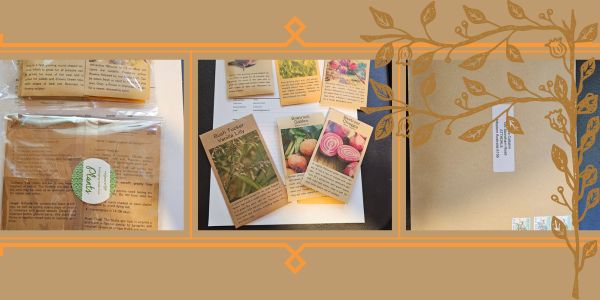
Not only are our seeds packed in recycled paper envelopes, we keep the theme going when we post out website orders. To protect your seeds from moisture and the letter box munchers (snails), we use a very special plastic free material made from plants. They are then put into recycled mailing envelopes. Green all the way ????????
Delivery Guarantee
We take great care to make sure your seeds arrive safely. If your order is lost or damaged in transit, we’ll happily send a replacement. Unfortunately, we can’t replace or refund orders that arrive later than the estimated delivery date, as delays can sometimes occur that are outside our control.
Please note that all dispatch and delivery times listed are estimates only. While we do our best to post promptly, delivery timeframes can vary due to postal service delays, weather events, or other unforeseen circumstances. We’re unable to take responsibility for any loss, damage, or cost that results from a late delivery.
An order is not considered missing until at least 20 business days have passed from the postage date. You’ll receive an email once your seeds have been posted, letting you know they’re on their way. If you don’t see it in your main inbox, please check your Spam or Promotions folders as sometimes our emails like to hide there.

Reviews
There are no reviews yet