




Borage
$4.95
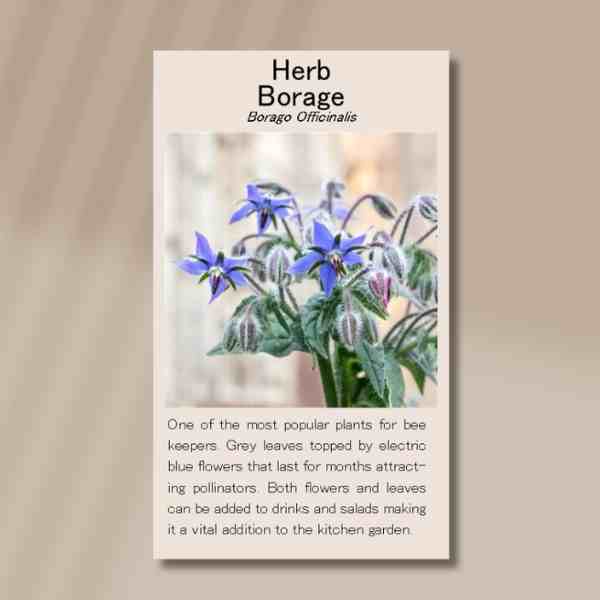
Borago Officinalis
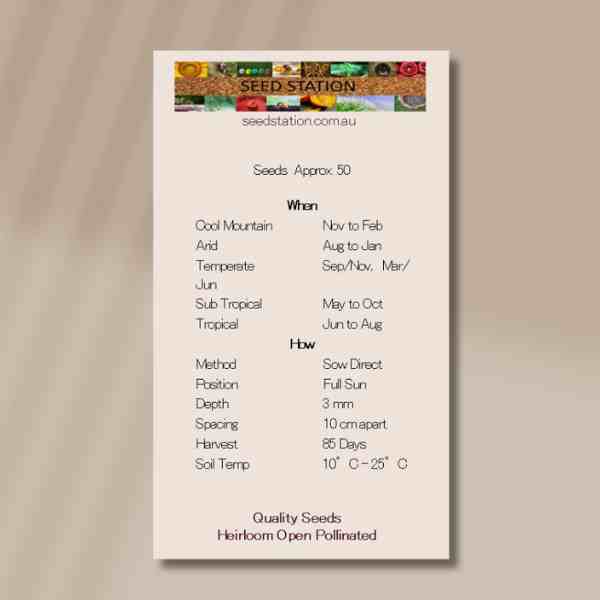
- Seed Count 40
- Bee Keepers Friend
- Annual
- Height 50 cm
In stock
Description
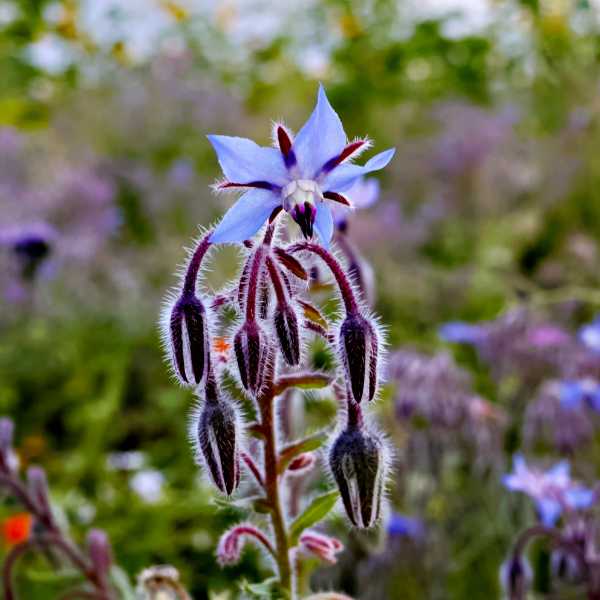
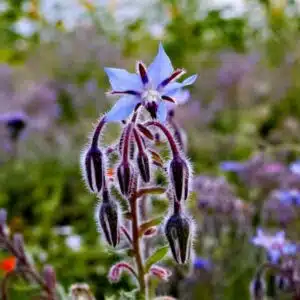
Blue is a colour that’s often hard to come by naturally in the garden, but Borage delivers it in spades. Its stunning, sky-blue, star-shaped flowers appear just a couple of months after sowing, often within eight weeks and they keep on coming for months afterward.
While Borage is at its best in a full-sun position, where you’ll see a slightly more compact, upright growth habit, it’s also remarkably tolerant of partial shade. That means you don’t have to give it the sunniest real estate in the garden to get good results. It’ll grow happily in the dappled light alongside taller veggies or fruit trees, making it a flexible option for planting anywhere you want to invite a few more pollinators in.
It’s not a fussy feeder and doesn’t need rich conditions to thrive. As long as your soil drains well and you keep it somewhat moist during the growing season, it’ll do just fine. Because it sends down a long taproot early on, borage is not suitable for container growing. It prefers to stretch out in the garden, anchoring itself deep and drawing up minerals that shallower-rooted plants can’t reach.
Borage is a generous self-sower. Once you’ve planted it, chances are you’ll never need to buy seed again, at least not for the same patch. After flowering, the plant sets seed and those seeds often drop into the soil to quietly sprout next season.
This self-seeding habit makes borage a lovely fit for informal cottage gardens, wildflower borders, or anywhere you’re happy to let nature take the reins a little. Of course, if you prefer a tidy garden, it’s easy enough to deadhead before the seeds form.
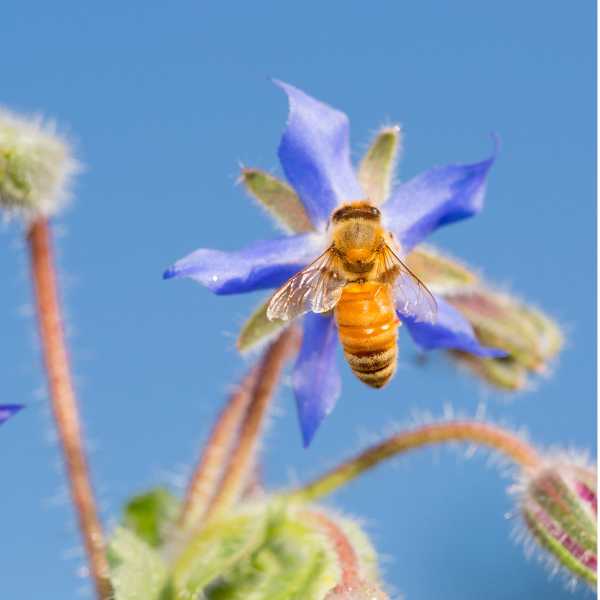
Ask any beekeeper and they’ll likely tell you that borage is a bee magnet. The flowers produce nectar and pollen in prodigious quantities, and they keep doing so over a long stretch of the year. That makes borage one of the most valuable plants you can grow for supporting healthy bee populations.
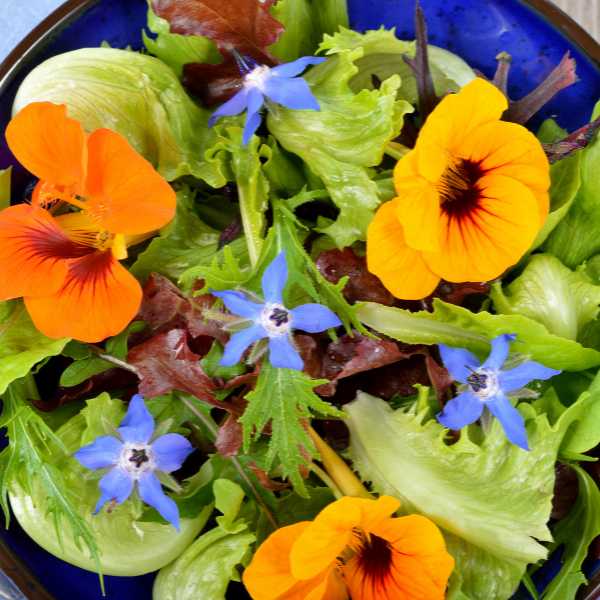
Every part of the borage plant has a use and not just in the garden. The leaves and flowers are edible and carry a light, cucumber-like flavour that’s subtle and refreshing. The delicate blooms make a unique addition to summer salads, desserts, or drinks. One of my favourite tricks? Freeze the flowers into ice cubes and pop them into sparkling water or a G&T for a garden party touch.
You can also brew a herbal tea using a small bunch of the leaves and flowers. Steep them in boiling water for five minutes, then strain. Add honey if you like—it’s a soothing drink that’s especially helpful if you’re fighting off a cold or need a gentle pick-me-up.
There’s one last thing to love about borage, it’s brilliant as a green manure. Because its taproot mines nutrients from deeper layers of the soil, those minerals are stored in the leaves. If you dig the plant back into the garden before it flowers, it will break down and release those nutrients into the topsoil, right where your next crops need them.
| Method: Sow seedlings | Soil Temp: 10°C - 25°C |
| Cool Mountain: Nov - Feb | Position: Full sun |
| Arid: Aug - Jan | Row Spacing: 10cm apart |
| Temperate: Sep/Nov - Mar/June | Planting Depth: 3mm |
| Sub Tropical: May - Oct | Harvest: 85 Days |
| Tropical: Jun - Aug | Plant Height: 50cm |
🌸 Borage Grow Guide
🌿 Overview
Borage is a vigorous, easy-growing herb and flower valued for its bright blue star-shaped blooms, fuzzy leaves, pollinator appeal, and usefulness in vegetable gardens. It is one of the best plants for attracting bees, making it especially helpful near fruiting crops that rely on insect pollination.
The flowers are edible and are often used as a pretty garnish for salads, cakes, drinks, ice cubes, and desserts. The young leaves have a mild cucumber-like flavour and can be used sparingly in salads, soups, herbal drinks, and cooked dishes. Because the leaves are hairy and can become coarse with age, they are best picked young or cooked.
Borage is also a generous self-seeder. Once grown in a garden, it may return naturally if some flowers are allowed to form seed. This makes it useful and low-effort, but it should be managed so it does not appear where it is not wanted.
🌱 Sowing in Trays vs Direct Sowing
Borage can be started in trays or sown directly into the garden, but direct sowing is usually the best method. It grows a strong taproot and does not enjoy unnecessary root disturbance. Plants sown where they are to grow usually establish faster and become stronger than transplanted seedlings.
For direct sowing, prepare a loose, weed-free patch of soil. Sow the seed shallowly, cover lightly, and water gently. Keep the soil evenly moist until seedlings appear. Once seedlings are large enough to handle, thin them so each plant has room to grow into its broad, leafy shape.
Tray sowing can still be useful if pests are a problem or if you want more control over early growth. If sowing in containers, use individual cells, tubes, or small pots rather than a shared tray. Transplant seedlings while they are still young, before the taproot becomes crowded. Handle the whole root ball gently and avoid teasing the roots apart.
For borage, direct sowing is recommended because it suits the plant’s natural growth habit and reduces transplant stress.
💧 Seed Pre-Treatment
Borage seed does not require pre-treatment. There is no need for soaking, chilling, scarifying, or any special preparation before sowing. Fresh seed usually germinates readily when planted into moist, free-draining soil.
A short soak in room-temperature water can be used for older seed, but it is optional. Do not soak for too long, as wet seed can rot if conditions are not ideal. The most important step is to sow into soil that is moist but not waterlogged.
🌞 Soil and Position
Borage grows best in a sunny position with good airflow. It can tolerate light shade, but stronger light encourages sturdier plants, more flowers, and better pollinator activity.
The soil should be well-drained, moderately fertile, and loose enough for deep root growth. Borage is not a fussy plant and can grow in average garden soil, but it performs best when the soil has been improved with compost. Avoid very wet, compacted soil, as this can lead to weak growth and root problems.
Overly rich soil can make borage grow large, soft, and floppy. A balanced soil with moderate fertility is better than heavy feeding. If growing in containers, choose a deep pot with good drainage and use a quality herb or vegetable potting mix.
Give borage enough space. It may start small, but mature plants can become wide, leafy, and heavy, especially once flowering begins.
🌿 Care and Maintenance
Borage is low-maintenance once established. Water young plants regularly while they develop strong roots. Once established, borage can handle short dry periods, but it flowers better when the soil does not dry out completely.
Mulch lightly around the base to conserve moisture and reduce weed competition. Keep mulch away from the main stem so the crown does not stay damp.
Feeding is usually minimal. A little compost before sowing is enough for most gardens. Avoid heavy nitrogen feeding, as it can create large leafy plants with fewer flowers and weaker stems.
Borage can become top-heavy. In windy areas or rich soil, plants may lean or sprawl. You can support them with short stakes, twiggy branches, or nearby sturdy companion plants. Pinching out the growing tip when young can encourage a bushier shape.
Remove spent flowers if you want to limit self-seeding. Leave some flowers to mature if you want the plant to drop seed naturally or if you plan to save seed.
🌼 Companion Planting Guide
Borage is one of the most useful companion plants in a productive garden because it attracts bees and other beneficial insects. It is especially helpful near crops that rely on pollination.
Good companions include tomatoes, cucumbers, zucchini, pumpkins, rockmelon, watermelon, strawberries, beans, peas, lettuce, cabbage-family crops, basil, parsley, dill, coriander, calendula, marigold, alyssum, and nasturtium.
Borage is particularly valuable near cucurbits such as cucumbers, melons, pumpkins, and zucchini because its flowers help draw pollinators into the area. It is also useful near strawberries, where it adds flowers, insect activity, and garden diversity.
Because borage can grow large, avoid planting it too close to small seedlings or delicate low-growing crops. Give it space at the edge of beds, between larger crops, or in dedicated pollinator patches. It can shade smaller plants if placed too densely.
🧺 How to Harvest
Harvest borage flowers when they are fully open and bright. Pick them gently by hand, ideally when they are fresh and dry. The flowers bruise easily, so handle them carefully. They can be used fresh as a garnish, frozen into ice cubes, or scattered over salads and desserts.
Young leaves can be harvested before they become large and coarse. Pick smaller leaves from healthy plants and use them fresh or cooked. The texture is hairy, so many people prefer the leaves cooked, chopped finely, or infused rather than eaten whole.
Use borage as a culinary herb in moderation. People who are pregnant, breastfeeding, have liver concerns, or are avoiding certain plant compounds should be cautious and seek appropriate advice before consuming it regularly.
For ornamental use, flowering stems can be cut and placed in water, but the flowers are delicate and do not last as long as many cut flowers. Harvesting regularly can encourage the plant to continue flowering.
⚠️ Common Issues and Fixes
| Issue | Likely Cause | Fix |
|---|---|---|
| Poor germination | Old seed, soil too dry, seed buried too deeply | Use fresh seed, sow shallowly, keep soil evenly moist |
| Seedlings disappearing | Slugs, snails, birds, or chewing insects | Protect young plants, check at night, use barriers if needed |
| Plants wilting | Dry soil, transplant shock, damaged taproot | Direct sow where possible, water deeply, avoid disturbing roots |
| Tall floppy growth | Too much shade, rich soil, excess nitrogen | Grow in stronger light, avoid heavy feeding, provide support |
| Few flowers | Too much nitrogen, not enough sun, plant still immature | Reduce feeding, improve light, allow the plant to mature |
| Yellowing leaves | Overwatering, poor drainage, nutrient stress | Check soil moisture, improve drainage, add compost only if needed |
| Powdery white leaves | Poor airflow, dry stress, crowded plants | Space plants well, water at soil level, remove badly affected leaves |
| Aphids on new growth | Soft growth, crowded plants, low beneficial insect activity | Spray off with water, improve airflow, avoid overfeeding |
| Chewed leaves | Caterpillars, beetles, grasshoppers, slugs or snails | Inspect regularly, hand-remove pests, protect young seedlings |
| Plant spreading too much | Self-seeding from dropped seed | Remove spent flowers, collect seed before it drops, pull unwanted seedlings |
| Leaves too rough to eat | Leaves harvested too late | Pick young leaves, cook older leaves, use flowers for fresh garnish |
| Root problems | Waterlogged or compacted soil | Improve drainage, grow in loose soil, avoid overwatering |
🌾 Detailed Seed Saving Guide
Saving borage seed is simple, but timing matters because the seed drops easily once mature. Begin by choosing strong, healthy plants with good flower colour, sturdy growth, and strong pollinator activity. Avoid saving seed from weak, diseased, or badly pest-affected plants.
Allow some flowers to remain on the plant after blooming. As the flowers fade, small seeds will develop at the base. The seeds mature from green to dark brown or black and become firm when ready. Once fully mature, they can fall quickly, so check plants often.
To catch seed, place a paper bag, cloth, or tray under ripening flower clusters. You can also cut stems when many seeds are mature and place them upside down in a paper bag. Keep the bag somewhere dry and airy so the remaining seed can finish drying.
Once dry, shake or rub the stems gently to release the seed. Separate the seed from dry flower parts by hand or with a sieve. Good seed should be dark, firm, and dry. Discard pale, soft, damaged, or mouldy seed.
Spread the cleaned seed on a plate or tray for several more days to make sure it is fully dry. Store in a labelled paper envelope or airtight jar. Include the plant name and year collected. Keep seed in a cool, dark, dry place.
Borage often self-seeds naturally, so you may not need to save much seed. If you want to control where it grows, collect seed before it drops and sow it only where you want future plants.
🌟 Final Thoughts
Borage is one of the easiest and most useful flowering herbs to grow from seed. It brings beauty, bees, edible flowers, garden diversity, and strong companion planting value with very little effort.
The keys to success are direct sowing, shallow planting, full sun, well-drained soil, moderate fertility, regular early watering, and space for its broad growth. Once established, borage is generous, resilient, and highly attractive to pollinators, making it a valuable addition to vegetable beds, herb gardens, cottage borders, and wildlife-friendly plantings.
7 reviews for Borage

Postage Charge
Orders under $40 attract a $5.50 shipping charge. Orders $35 and above have free shipping.
*** We cannot deliver to Parcel Lockers ***
Order Times
Seed orders are normally dispatched within three business days. You will receive an email when seeds are mailed out.
Postage Days
Seeds are mailed out Tuesday to Friday at 1pm. Except for the Friday of long weekends.
Postage Times
WA 2-3 Days: SA,NT 3-5 Days: NSW, ACT, QLD, VIC: 5-7 Days
Carrier
We use Australia Post Letter Postage for the majority of orders.
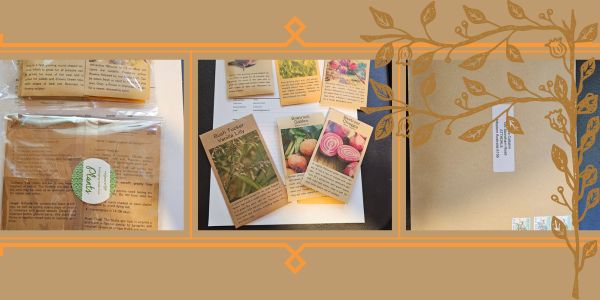
Not only are our seeds packed in recycled paper envelopes, we keep the theme going when we post out website orders. To protect your seeds from moisture and the letter box munchers (snails), we use a very special plastic free material made from plants. They are then put into recycled mailing envelopes. Green all the way ????????
Delivery Guarantee
We take great care to make sure your seeds arrive safely. If your order is lost or damaged in transit, we’ll happily send a replacement. Unfortunately, we can’t replace or refund orders that arrive later than the estimated delivery date, as delays can sometimes occur that are outside our control.
Please note that all dispatch and delivery times listed are estimates only. While we do our best to post promptly, delivery timeframes can vary due to postal service delays, weather events, or other unforeseen circumstances. We’re unable to take responsibility for any loss, damage, or cost that results from a late delivery.
An order is not considered missing until at least 20 business days have passed from the postage date. You’ll receive an email once your seeds have been posted, letting you know they’re on their way. If you don’t see it in your main inbox, please check your Spam or Promotions folders as sometimes our emails like to hide there.
See all our verified customer reviews on our official CusRev profile.
See all our verified customer reviews on our official CusRev profile.
Not planted as yet due to hot weather
See all our verified customer reviews on our official CusRev profile.
Pretty flowers
See all our verified customer reviews on our official CusRev profile.
See all our verified customer reviews on our official CusRev profile.