







Larkspur Imperial Mix
$4.95
Consolida Regalis
- Seed Count 250
- Cottage Garden Favourite
- Annual
- Height 100 cm
Only 4 left in stock
Description
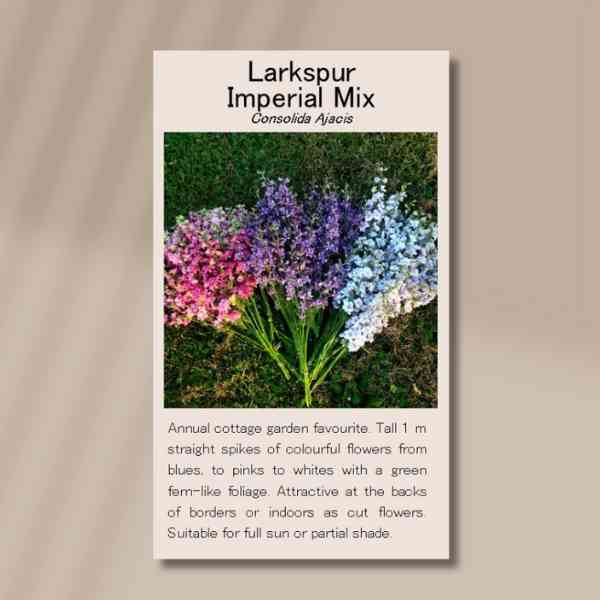
Larkspur Imperial mix is for anyone who loves a tall, showy plant that brings real presence to a summer garden. It carries all the charm of an old-fashioned hardy annual and has the kind of stature that makes you stop and appreciate what a simple seed can become when it has sunshine and room to stretch.
The flowers are big, double blooms packed tightly along the top section of each stem. Up close, each flower looks like a ruffled rosette, full of detail and texture. The colours feel like a celebration of summer. Deep purples with a velvety richness sit next to blues that shift from pale morning-sky tones to deeper twilight shades. Soft pinks bring warmth and gentle contrast, while crisp whites brighten everything around them
These impressive blooms sit on long, strong stems that naturally guide how you use them in the garden. Larkspur is not a front-border plant. It shines at the back of a sunny bed where it can lift the whole space and give it shape. A row of these tall spires creates the feeling of an established garden, even in a newer space. In island beds, they make a striking centerpiece that draws the eye from every direction. They suit full sun beautifully but can handle light shade too, which makes them handy for spots where the light shifts during the day.
One of the loveliest things about Larkspur Imperial Mix is how well it works as a cut flower. A single stem in a vase is enough to make a room feel brighter. When mixed with other blooms, those tall spires give height and structure to an arrangement. With a clean cut and a bit of conditioning, the stems hold themselves well in water and keep their shape. Larkspur also dries with very little fuss and a few weeks hanging upside down in a dry, dark spot will give you colourful, long-lasting stems that look wonderful in winter arrangements.
Even before the flowers appear, the plants offer beauty. The foliage is soft and finely cut, almost like delicate palm fronds. It forms a light green skirt at the base that sets off the bold flower spikes perfectly. The plants are attractive from their earliest stages right through to bloom, which makes them a joy to watch as they grow.
Because these plants reach impressive heights, they appreciate a bit of support. A simple grow-through frame or a few discreet stakes put in early will keep the stems straight and proud. It is not a sign that the plant is fragile. It is just part of working with tall, heavy flowering varieties. A little care early on pays off when those spires start rising above the garden.
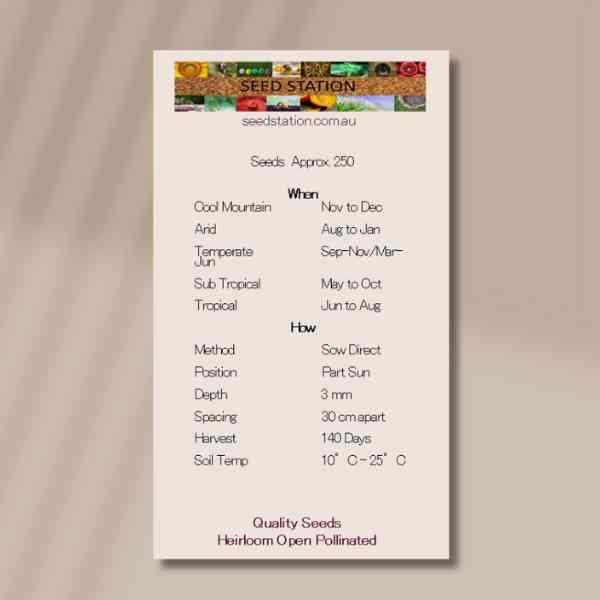
| Method: Sow direct or seedlings | Soil Temp: 10°C - 25°C |
| Cool Mountain: Nov - Dec | Position: Part sun |
| Arid: Aug - Jan | Row Spacing: 30cm apart |
| Temperate: Sep-Nov, Mar-Jun | Planting Depth: 3 mm |
| Sub Tropical: May - Oct | Harvest: 140 days |
| Tropical: Jun - Aug | Plant Height: 1m |
🌸 Larkspur Grow Guide
🌱 Overview
Larkspur is an elegant flowering annual grown for its tall spires of delicate blooms in shades of blue, purple, pink, white, and lavender. It is especially loved in cottage gardens, cut flower beds, pollinator plantings, mixed borders, and romantic informal garden designs. Its upright flower spikes add height and softness, making it useful behind lower annuals or among other flowers with rounder forms.
Larkspur is beautiful, but it is also important to treat it with care. All parts of the plant are toxic if eaten, and the seed is especially hazardous. Keep it away from pets, livestock, and young children, and wear gloves if your skin is sensitive.
This plant performs best when allowed to develop a strong root system early. It dislikes root disturbance, heavy wet soil, and hot stressful conditions. Once established in a sunny, well-drained position, it can produce a beautiful display and provide excellent stems for fresh or dried arrangements.
🌱 Sowing in Trays Versus Direct Sowing
Larkspur can be sown in trays or directly into the garden, but direct sowing is usually the best method. It forms a taproot and does not enjoy being transplanted. When seedlings are moved from trays, root disturbance can cause stress, stunting, poor establishment, or weaker flowering.
For direct sowing, prepare the soil finely by removing weeds, stones, and large clods. Scatter or sow the seed shallowly where the plants are to grow, then cover lightly with fine soil or seed raising mix. Water gently so the seed is not washed away. Keep the soil lightly moist while germination takes place, but avoid making it soggy.
Once seedlings appear, thin them gradually so the strongest plants have room to develop. Thinning is important because crowded larkspur becomes weak, stretched, and more prone to disease. The removed seedlings should not be eaten or fed to animals.
Tray sowing can still be used when protection from pests or weather is needed, but it should be done carefully. Use deep cells, root trainers, or biodegradable pots to reduce root disturbance. Transplant while seedlings are still small, before roots circle the pot. Handle them gently and avoid breaking the taproot.
For most gardeners, direct sowing into the final position gives the strongest plants and best flowering.
🌾 Seed Pre-Treatment
Larkspur seed often benefits from cold treatment before sowing. A period of cool, moist conditions can improve germination and make sprouting more even. This is especially helpful when conditions are warm or when seed has been stored for a while.
A simple method is to place the seed in a labelled bag with slightly damp seed raising mix, sand, or vermiculite, then keep it in the fridge for around two weeks before sowing. The mix should be barely moist, not wet. After chilling, sow the seed shallowly into prepared soil or trays.
Another method is to place the seed packet in the fridge before sowing, though moist chilling is usually more effective than dry chilling. No soaking, scarifying, or smoke treatment is required.
🌞 Soil and Position
Larkspur grows best in a full sun position with open airflow. Strong light encourages sturdy stems, good flowering, and rich colour. In very hot or exposed gardens, a little light protection from harsh afternoon heat can help reduce stress, but deep shade should be avoided.
The soil should be well-draining, moderately fertile, and finely prepared. Larkspur does not like heavy, waterlogged ground. Wet soil around young roots can cause poor germination, seedling collapse, and root disease. If soil is clay-heavy, improve drainage with compost and grow in raised beds if needed.
Avoid overly rich soil and heavy nitrogen feeding. Too much lush growth can lead to weak stems that flop or snap. A soil improved with well-rotted compost before sowing is usually enough.
Because larkspur is tall and upright, choose a position sheltered from strong wind or provide support. It looks excellent in groups or drifts, where plants can help support one another.
💧 Care and Maintenance
Keep the soil evenly moist while seeds germinate and seedlings establish. Once plants are growing strongly, water deeply during dry spells rather than giving frequent shallow water. Avoid waterlogging, as larkspur prefers moisture without soggy roots.
Thin seedlings to allow good airflow and strong stem development. Crowding is one of the most common causes of weak plants and disease. Remove weeds early, as larkspur seedlings can be slow to compete at first.
Taller plants may need support. Use stakes, twiggy branches, flower netting, or grow-through supports before stems become heavy with blooms. Supporting early is easier than trying to rescue bent plants later.
Feeding should be light. If soil is poor, apply a mild balanced fertiliser, but avoid high-nitrogen feeding. Too much nitrogen may produce soft leafy growth instead of strong flowering stems.
Deadhead spent flowers if you want to extend the display and keep plants tidy. For seed saving, leave selected flower spikes to mature fully. Cut plants back once they have finished flowering and the seed has been collected, or remove whole plants if they are declining.
🌼 Companion Planting Guide
Larkspur combines beautifully with other cottage garden flowers and pollinator-friendly plants. Good companions include sweet peas, cornflower, calendula, poppies, cosmos, snapdragon, foxglove, dianthus, yarrow, lavender, and salvia.
Cornflower, poppies, calendula, and cosmos create a relaxed meadow-style planting with similar open, sunny preferences. Snapdragon and sweet peas add more vertical flower form and make excellent cut flower companions. Lavender, salvia, and yarrow suit well-drained sunny beds and attract pollinators.
Avoid planting larkspur with moisture-loving plants that need constantly wet soil. Also avoid placing it where vigorous sprawling plants will smother young seedlings. Larkspur needs light, airflow, and space around its stems to grow well.
Because larkspur is toxic, do not plant it where it may be confused with edible flowers or harvested accidentally with culinary herbs.
✂️ How to Harvest
Larkspur is excellent as a cut flower. Harvest stems when around one-third to one-half of the flowers on the spike have opened. Cut in the cooler part of the day using clean, sharp snips. Place stems into water immediately after cutting.
Remove any leaves that would sit below the waterline, as submerged foliage shortens vase life. Change vase water regularly and keep arrangements away from direct heat.
For dried flowers, harvest when most of the flowers on the spike have opened but before they begin to shatter. Tie stems in small bunches and hang them upside down in a dark, dry, airy place. Darkness helps preserve colour, and airflow prevents mould. Once dry, handle gently because the petals and stems can become brittle.
Do not use larkspur flowers for edible decoration. They are ornamental only.
⚠️ Common Issues and Fixes
| Issue | Likely Cause | Fix |
|---|---|---|
| Poor germination | Seed too warm, old seed, dry soil, seed buried too deeply | Use fresh seed, cold treat before sowing, sow shallowly, keep lightly moist |
| Seedlings collapse | Damping off from excess moisture or poor airflow | Avoid overwatering, improve drainage, thin seedlings, use clean seed raising mix if tray sowing |
| Weak, stretched growth | Too much shade, overcrowding, excess nitrogen | Provide full sun, thin properly, reduce feeding |
| Plants flop over | Tall stems, wind exposure, rich soil, lack of support | Stake early, grow in groups, avoid heavy feeding |
| Few flowers | Not enough sun, root disturbance, poor soil balance | Direct sow, provide strong light, use moderate fertility |
| Yellow leaves | Poor drainage, nutrient stress, waterlogging | Improve drainage, water less often, feed lightly only if needed |
| Powdery mildew | Poor airflow, dry roots with humid foliage, crowding | Space plants well, water at soil level, remove affected leaves |
| Aphids | Soft new growth and flower spikes attracting sap-sucking insects | Spray off with water, encourage ladybirds and lacewings, use insecticidal soap if needed |
| Slug or snail damage | Young seedlings exposed in damp conditions | Protect seedlings, remove hiding places, use barriers or traps |
| Flowers shatter quickly after cutting | Harvested too late, heat stress, lack of water after cutting | Harvest earlier, cut in cool conditions, place straight into water |
🌰 Detailed Seed Saving Guide
To save larkspur seed, choose healthy plants with strong stems, good colour, and well-formed flower spikes. Select plants that grew well without major disease or flopping, as these traits are worth keeping.
Allow selected flower spikes to remain on the plant after blooming. The flowers will fade and form seed pods along the spike. Leave the pods to mature until they turn brown and dry. The seed inside should become dark and hard.
Watch the pods closely as they dry, because they may split and drop seed when fully mature. To prevent losses, cut the stems when most pods are dry and place them upside down in a paper bag. Keep the bag in a dry, airy place until the pods finish drying and release seed.
Once dry, gently crush or shake the pods over a clean tray or sheet of paper. Separate the seeds from the chaff by hand, with a sieve, or by gently blowing away the lighter debris. Wear gloves and avoid breathing dust from dried plant material.
Spread the cleaned seed in a dry, shaded, airy place for several more days to ensure it is fully dry before storage. Store seed in a clearly labelled paper envelope or airtight container. Include the plant name, flower colour, and collection date.
Keep seed in a cool, dark, dry place, away from children, pets, and livestock. Because larkspur seed is toxic, label it clearly and never store it near food, herbs, or edible seed.
For a wider range of healthy seedlings, save seed from several good plants rather than just one. Flower colour may vary in future generations, especially if different colours are grown together and pollinators move between them.
🌻 Final Thoughts
Larkspur is a graceful and rewarding flower that brings height, colour, and cottage-garden charm to sunny beds and cut flower patches. It is best grown by direct sowing because its taproot dislikes disturbance, though careful tray sowing can work when protection is needed.
The keys to success are cool-treated seed, shallow sowing, well-drained soil, full sun, good spacing, and support for taller stems. With thoughtful placement and safe handling, larkspur can provide beautiful fresh and dried flowers while adding elegance and movement to the garden.
1 review for Larkspur Imperial Mix

Postage Charge
Orders under $35 attract a $4.95 shipping charge. Orders $35 and above have free shipping.
Order Times
Seed orders are normally dispatched within three business days. You will receive an email when seeds are mailed out.
Postage Days
Seeds are mailed out Tuesday to Friday at 1pm. Except for the Friday of long weekends.
Postage Times
WA 2-3 Days: SA,NT 3-5 Days: NSW, ACT, QLD, VIC: 5-7 Days
Carrier
We use Australia Post Letter Postage for the majority of orders
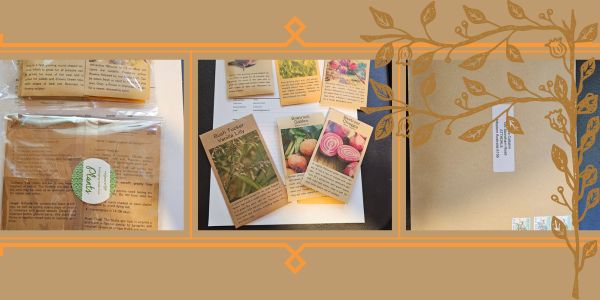
Not only are our seeds packed in recycled paper envelopes, we keep the theme going when we post out website orders. To protect your seeds from moisture and the letter box munchers (snails), we use a very special plastic free material made from plants. They are then put into recycled mailing envelopes. Green all the way ????????
Delivery Guarantee
We take great care to make sure your seeds arrive safely. If your order is lost or damaged in transit, we’ll happily send a replacement. Unfortunately, we can’t replace or refund orders that arrive later than the estimated delivery date, as delays can sometimes occur that are outside our control.
Please note that all dispatch and delivery times listed are estimates only. While we do our best to post promptly, delivery timeframes can vary due to postal service delays, weather events, or other unforeseen circumstances. We’re unable to take responsibility for any loss, damage, or cost that results from a late delivery.
An order is not considered missing until at least 20 business days have passed from the postage date. You’ll receive an email once your seeds have been posted, letting you know they’re on their way. If you don’t see it in your main inbox, please check your Spam or Promotions folders as sometimes our emails like to hide there.

See all our verified customer reviews on our official CusRev profile.