




Rhubarb Glaskins Perpetual
$4.95
Rheum Undulatum
- Seed count 10
- Quick Variety
- Perennial
In stock
Description
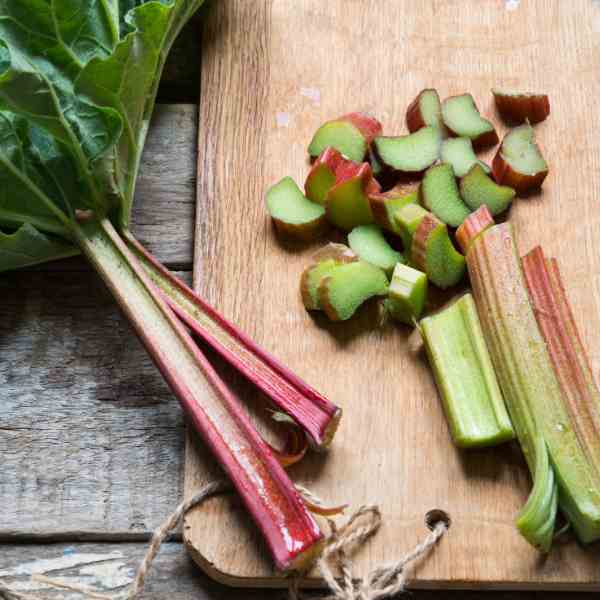
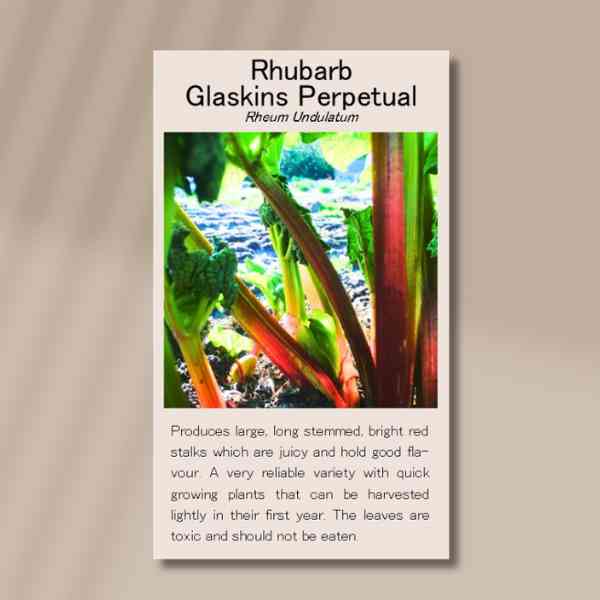
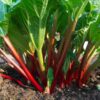
Rhubarb Glaskins Perpetual produces large, long stems that carry a bright red colouring, often with subtle variations depending on the individual plant. The stalks are juicy and full of flavour, striking that familiar balance between tartness and sweetness that makes rhubarb so versatile in the kitchen. When cooked, the colour softens but still holds enough richness to give that classic pink hue to desserts, preserves, and sauces.
One of the appealing characteristics of this variety is its reliability. Glaskins Perpetual is known for producing plants that establish well and grow with vigour, even when conditions are less than perfect. In a home garden setting, where attention can be divided between many different crops, this kind of resilience is a real advantage. Rhubarb in general has a reputation for toughness, and this variety lives up to that expectation. Once established, it tends to persist and perform without demanding constant care, making it well suited to gardeners who appreciate plants that can look after themselves to a degree.
Seed-grown rhubarb is a slightly different experience compared to planting crowns, and it is worth understanding what to expect. Plants started from seed typically take a little longer to reach their full potential, with around two years needed to achieve a really strong harvest. That said, in the right climate and with favourable conditions, it is quite possible to see satisfactory results within a single growing season. This makes it an appealing option for those who enjoy the process of raising plants from the very beginning and watching them develop over time.
Another aspect to keep in mind is the natural variation that comes with seed-grown plants. Unlike cloned varieties, seedlings will show a range of characteristics. With Glaskins Perpetual, this often means a mix of stem colours, from green through to soft pink, with some plants producing the deeper crimson tones that many gardeners favour. This variation can be part of the charm. It gives a planting a more natural, diverse look and allows gardeners to select and appreciate individual plants for their own unique qualities.
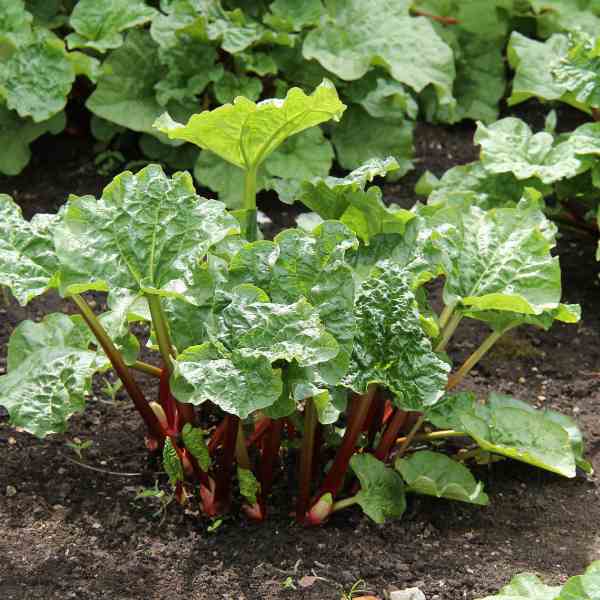
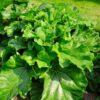
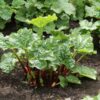
Beyond its use as a productive edible plant, Rhubarb Glaskins Perpetual also has a strong ornamental presence. Mature plants develop large, bold leaves that create a lush, leafy display in the garden. These leaves can be quite dramatic, forming a dense clump that draws the eye and adds structure to a planting area. When the plant sends up its tall flower stalks, topped with clusters of white blooms with a green tinge, it adds another layer of visual interest. In the right setting, rhubarb can easily hold its own among ornamental plants, blending productivity with beauty in a very natural way.
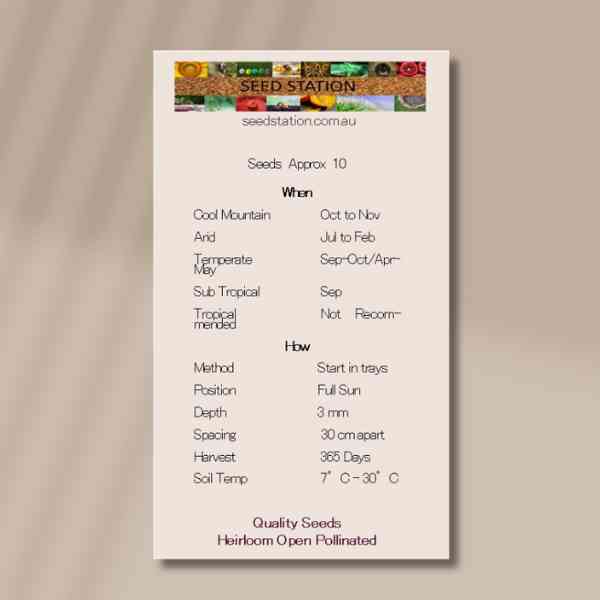
| Method: Sow direct | Soil Temp: 5°C - 20°C |
| Cool Mountain: Oct - Nov | Position: Part Shade |
| Arid: Jul - Feb | Row Spacing: 90 cm |
| Temperate: Sep/Oct - Apr/May | Planting Depth: 3 mm |
| Sub Tropical: Sep | Harvest: 365 Days |
| Tropical: Not Recommended | Plant Height: 1 m |
🌿 Rhubarb Grow Guide
Botanical name: Rheum rhabarbarum
Rhubarb is a long-lived, clump-forming perennial grown for its thick, tart leaf stalks. It is a productive garden plant when given rich soil, steady moisture, and enough space to form a strong crown. Although the stalks are commonly cooked in desserts, sauces, jams, and preserves, the plant itself is more like a vegetable in the garden. A well-grown rhubarb crown can produce for many years, but plants raised from seed are naturally variable, so stalk colour, thickness, vigour, and flavour may differ from plant to plant.
Rhubarb is best treated as a permanent crop rather than a short-term vegetable. It develops a large root system and a central crown, so it should be planted where it can remain undisturbed. Patience is important, especially when growing from seed. Seed-grown plants need time to build strength before regular harvesting begins.
🌱 Sowing in Trays vs Direct Sowing
Rhubarb can be grown either in trays or direct in the garden, but sowing in trays is the best method for most home growers. Tray sowing gives better control over moisture, temperature, pests, and early root development. Rhubarb seedlings are not especially difficult to raise, but they are slow compared with many annual vegetables and can be easily overwhelmed by weeds if sown directly.
For tray sowing, use a quality seed-raising mix that holds moisture but drains freely. Sow seed about 1 to 2 cm deep, cover lightly, and keep the mix evenly moist. Once seedlings have formed several true leaves and are large enough to handle, move them into individual pots. Allow them to grow into sturdy young plants before planting them into their permanent bed.
Direct sowing is possible in a well-prepared bed, but it is less reliable. Seed may rot if the soil is too wet, dry out if the surface crusts, or be lost among weeds. Direct sowing is mainly suitable where the bed can be kept consistently moist, weed-free, and protected from slugs and snails.
💧 Seed Pre-Treatment
Seed pre-treatment is not required for rhubarb. Fresh, viable seed usually germinates well when sown into a moist, free-draining seed mix.
A simple soak in room-temperature water for a few hours before sowing can help soften the seed coat and encourage more even germination, but this is optional. Avoid soaking seed for too long, as overly wet seed can become prone to rotting. Sow soaked seed promptly.
☀️ Soil and Position
Rhubarb grows best in a rich, deep, fertile soil that holds moisture without becoming waterlogged. It is a hungry plant, so prepare the bed well before planting. Dig in aged compost, well-rotted manure, or mature organic matter to improve structure and water retention. The ideal soil is slightly acidic to neutral, loose enough for strong root growth, and rich enough to support large leaves and thick stalks.
Choose a position with full sun to part shade. In hot, dry districts, afternoon shade can help reduce stress and prevent the plant from wilting badly. In cooler or milder areas, more sun usually gives stronger growth and better stalk production.
Good drainage is important. Rhubarb likes moisture, but it dislikes sitting in boggy soil. If your soil is heavy clay, raise the planting area slightly and improve the structure with compost. Avoid planting the crown too deeply. The growing point should sit just at or slightly above soil level so it does not rot.
🌾 Care and Maintenance
Rhubarb needs steady moisture to produce tender, thick stalks. Water deeply rather than lightly, especially during dry spells. A mulch of straw, compost, sugarcane mulch, lucerne, or chopped leaves helps keep the root zone cool and moist. Keep mulch away from direct contact with the crown to reduce the risk of rot.
Feed plants generously. Apply compost or well-rotted manure around the plant during active growth, and use a balanced organic fertiliser if growth is weak. Rhubarb responds well to nitrogen-rich organic feeding, but avoid excessive fresh manure directly against the crown, as it can burn roots or cause rotting.
Remove flower stalks as soon as they appear. Flowering uses energy that would otherwise go into the crown and edible stalks. Cut or twist flower stems out close to the base.
Allow young seed-grown plants to establish before heavy harvesting. During the first year, focus on building a strong crown. Harvest only lightly once the plant is clearly vigorous. In later years, harvest regularly but never strip the plant bare. Always leave enough leaves for the plant to keep feeding itself.
Every few years, older crowns may become crowded and less productive. Lift and divide mature crowns, keeping firm sections with healthy buds and roots. Replant the strongest pieces into refreshed soil.
🌼 Companion Planting Guide
Rhubarb is useful in a mixed food garden because its large leaves shade the soil and help suppress weeds. It pairs well with plants that enjoy rich soil and regular moisture, provided they are not crowded by its broad canopy.
Good companions include strawberries, brassicas, beans, garlic, onions, chives, lettuce, spinach, calendula, nasturtiums, and borage. Strawberries work well nearby because they enjoy fertile soil and can grow around the edges of the rhubarb bed. Garlic, onions, and chives may help confuse some pests. Calendula, nasturtiums, and borage attract pollinators and beneficial insects, making them helpful around the broader garden.
Avoid planting rhubarb too close to plants that need dry, lean soil, such as rosemary, lavender, thyme, and many Mediterranean herbs. Also avoid crowding it with vigorous root crops or sprawling plants that compete heavily for space and nutrients. Rhubarb needs room around the crown and should not be smothered.
✂️ How to Harvest
Harvest rhubarb by pulling or twisting stalks from the base rather than cutting them with a knife. Grip the stalk low down, then pull sideways and slightly outward so it comes away cleanly from the crown. Cutting can leave stubs behind, which may rot.
Only harvest firm, healthy stalks. The stalks are the edible part. Do not eat the leaves, as rhubarb leaves contain toxic compounds and should be discarded. After harvesting, cut the leaf blade off and compost it only if your compost system is well managed and not accessible to pets or livestock. Otherwise, dispose of leaves safely.
Do not overharvest. Take only a portion of the stalks at one time and leave the plant with enough foliage to recover. Stop harvesting if stalks become thin, weak, or floppy, as this indicates the plant needs time to rebuild strength.
⚠️ Common Issues and Fixes
| Issue | Likely Cause | Fix |
|---|---|---|
| Poor germination | Old seed, dry mix, or seed sown too deeply | Use fresh seed, keep mix evenly moist, and sow shallowly |
| Seedlings collapse | Damping-off from excess moisture or poor airflow | Use clean trays, avoid overwatering, improve airflow |
| Thin weak stalks | Young plant, low fertility, crowding, or overharvesting | Feed with compost, reduce harvesting, and allow plant to rebuild |
| Wilting leaves | Heat stress, dry soil, or shallow watering | Water deeply and mulch well |
| Crown rot | Waterlogged soil, crown planted too deep, or mulch against crown | Improve drainage, keep crown slightly raised, and pull mulch back |
| Flowering | Plant stress, maturity, or natural tendency | Remove flower stalks early and maintain steady moisture |
| Chewed leaves | Slugs, snails, caterpillars, or beetles | Hand-pick pests, use barriers, and keep the area tidy |
| Yellowing leaves | Nutrient deficiency, poor drainage, or old foliage | Feed with compost and check soil moisture |
| Red spots or leaf disease | Fungal infection encouraged by humidity and poor airflow | Remove affected leaves and improve spacing |
| Plant declining after years | Crown is old, crowded, or exhausted | Lift, divide, and replant healthy crown sections |
🌰 Detailed Seed Saving Guide
Saving rhubarb seed is possible, but it comes with one important point: seed-grown rhubarb does not always come true to type. If you save seed from a named variety, the seedlings may not have the same stalk colour, thickness, flavour, or vigour as the parent plant. For reliable copies of a favourite plant, division is better. For variation and selection, seed saving is worthwhile.
To save seed, allow a strong, healthy plant to send up a flower stalk. Choose a mature plant rather than a young or weak one, because flowering takes energy from the crown. Let the flower head develop fully and remain on the plant until the seed turns dry, papery, and brown. The seed heads should feel crisp before collection.
Cut the dry flower stalk and place it upside down in a paper bag. Keep it in a dry, airy, shaded place for further drying. Once fully dry, rub the seed heads gently between your hands to release the seeds. Winnow or pick out the chaff, keeping the plumpest seeds for storage.
Spread the cleaned seed on a plate or tray for several more days to make sure it is completely dry. Store it in a labelled paper envelope or airtight jar in a cool, dark, dry place. Label it with the plant name, parent details if known, and collection date.
For best results, use saved seed while it is still fresh. Older rhubarb seed can lose vigour, so sow extra if using seed that has been stored for a long time. When growing saved seed, raise several plants and keep the strongest, healthiest individuals with the best stalk quality.
🌿 Final Thoughts
Rhubarb is a rewarding perennial crop for gardeners who can provide rich soil, steady moisture, good drainage, and patience. Starting from trays is the most reliable way to raise strong plants from seed, while direct sowing is possible but less controlled. It does not need special pre-treatment, although a short soak can help. Once established, rhubarb can become a dependable long-term producer, giving generous harvests of tart, colourful stalks year after year.

Postage Charge
Orders under $35 attract a $4.95 shipping charge. Orders $35 and above have free shipping.
Order Times
Seed orders are normally dispatched within three business days. You will receive an email when seeds are mailed out.
Postage Days
Seeds are mailed out Tuesday to Friday at 1pm. Except for the Friday of long weekends.
Postage Times
WA 2-3 Days: SA,NT 3-5 Days: NSW, ACT, QLD, VIC: 5-7 Days
Carrier
We use Australia Post Letter Postage for the majority of orders
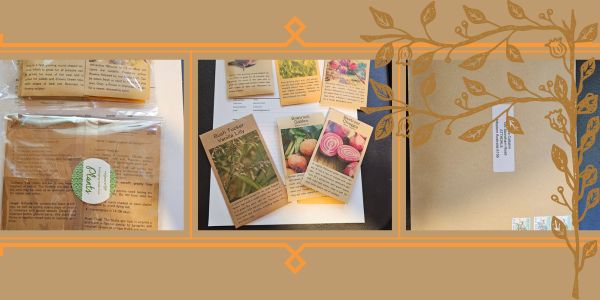
Not only are our seeds packed in recycled paper envelopes, we keep the theme going when we post out website orders. To protect your seeds from moisture and the letter box munchers (snails), we use a very special plastic free material made from plants. They are then put into recycled mailing envelopes. Green all the way ????????
Delivery Guarantee
We take great care to make sure your seeds arrive safely. If your order is lost or damaged in transit, we’ll happily send a replacement. Unfortunately, we can’t replace or refund orders that arrive later than the estimated delivery date, as delays can sometimes occur that are outside our control.
Please note that all dispatch and delivery times listed are estimates only. While we do our best to post promptly, delivery timeframes can vary due to postal service delays, weather events, or other unforeseen circumstances. We’re unable to take responsibility for any loss, damage, or cost that results from a late delivery.
An order is not considered missing until at least 20 business days have passed from the postage date. You’ll receive an email once your seeds have been posted, letting you know they’re on their way. If you don’t see it in your main inbox, please check your Spam or Promotions folders as sometimes our emails like to hide there.

Reviews
There are no reviews yet